

Chinatown, New York
Otto Berchem
Monstera Deliciosa
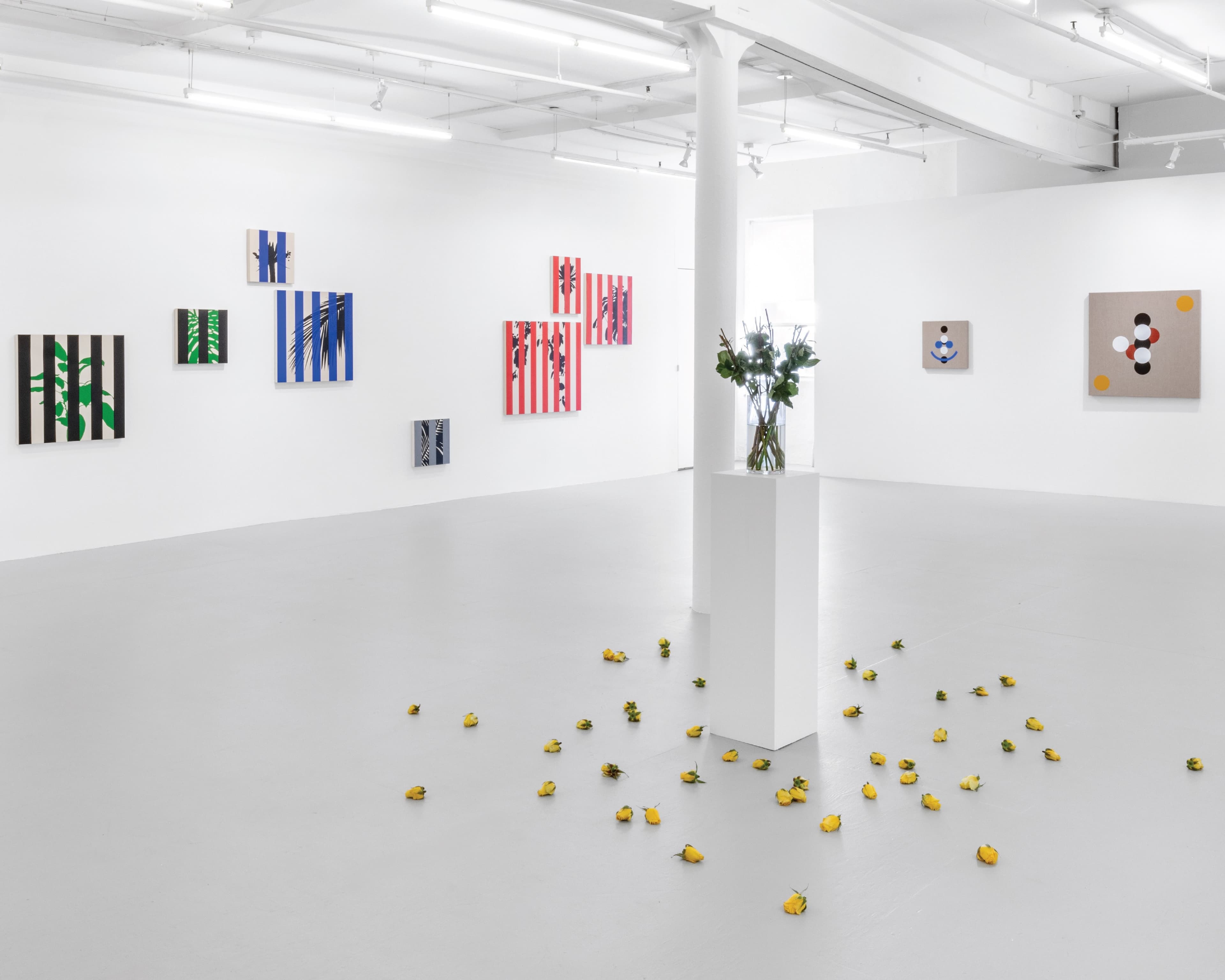
Instituto de VisiónMonstera Deliciosa is an exhibition featuring the work of Otto Berchem, showcasing projects from some of his earliest pieces to his most recent. Through various media, including painting, photography, installation, and video, this exhibition delves into recurring themes in his art: codes, symbols, human relationships, landscape, and art history. The exhibition title, Monstera Deliciosa, is the scientific name of a plant common in tropical countries, which is also known by various nicknames. For Berchem, this plant exemplifies how context can reshape language, adding layers of meaning based on the experiences of those who inhabit it. In Colombia, a country with a history marked by systemic violence, Monstera Deliciosa is called "balazos" (gunshots) because the holes in its leaves resemble bullet holes, evoking imagery of gunfights. This linguistic phenomenon—where an object or plant takes on a name with social or historical resonance—reveals how language powerfully reflects a community’s shared experiences. While Monstera Deliciosa may be known elsewhere by neutral or descriptive names, such as "Swiss cheese plant" or "Ojales" due to its appearance, in Colombia, it takes on a darker, more evocative name: balazos. The names we assign to things are rarely neutral; they often convey collective narratives and experiences. This invites reflection on how even the most ordinary objects can acquire symbolic depth that shifts radically across contexts. For instance, in his series Tropical Burens, Berchem highlights two traditions with opposing theoretical approaches. One involves an obsession with cataloging and renaming Latin American nature, echoing the colonial legacy of the Botanical Expedition. The other focuses on eradicating representation, a goal of postwar American art. Berchem’s work frequently explores themes of communication, information systems, and the complex interplay between nature and art history. A distinctive aspect of his practice is his interest in visual, linguistic, and symbolic codes as methods of encoding meaning, reflecting a broader interest in how information is transmitted, interpreted, and sometimes lost in translation. Having lived in diverse geographical and cultural contexts, from the Low Countries of Europe to the Andean peaks of South America, Berchem’s experiences have transformed his understanding of Western hegemonic frameworks. His work reflects how different sociocultural realities influence our perceptions of coding systems, meaning, and emotion. Otto Berchem’s practice explores social and visual codes, focusing on the relationships between language, architecture, history, and poetry. Berchem’s interest in codes goes back to 1994’s Men’s Room Etiquette, a public intervention touching upon the unwritten codes of how men behave with other men in public toilets. With The Dating Market, a project conceived in 2000, Berchem created a series of shopping baskets for patrons of supermarkets to themselves “available” and looking for a date. In Temporary Person Passing Through, a work for the 2005 the Istanbul Biennial, Berchem investigated the relationship of Istanbul’s street children and their movement within the city, using the visual language of Hobo Signs, a system of symbols employed by itinerant workers in the USA from the 19th to the mid 20th century. With his recent work the artist continues his exploration of signs, human relationships and codes, to create a chromatic alphabet. Berchem’s chromatic code is inspired by the writings of Jorge Adoum and Vladimir Nabokov, Peter Saville’s designs for the first three New Order albums, and the condition of Synaesthesia. Through this alphabet, Berchem has proposed a series of work reviewing iconic images, creating his own documents by strategically deleting pre-existing meanings and slogans, and replacing them with his own.