
Chinatown, New York
Carolina Caycedo
Scintillae on Earth
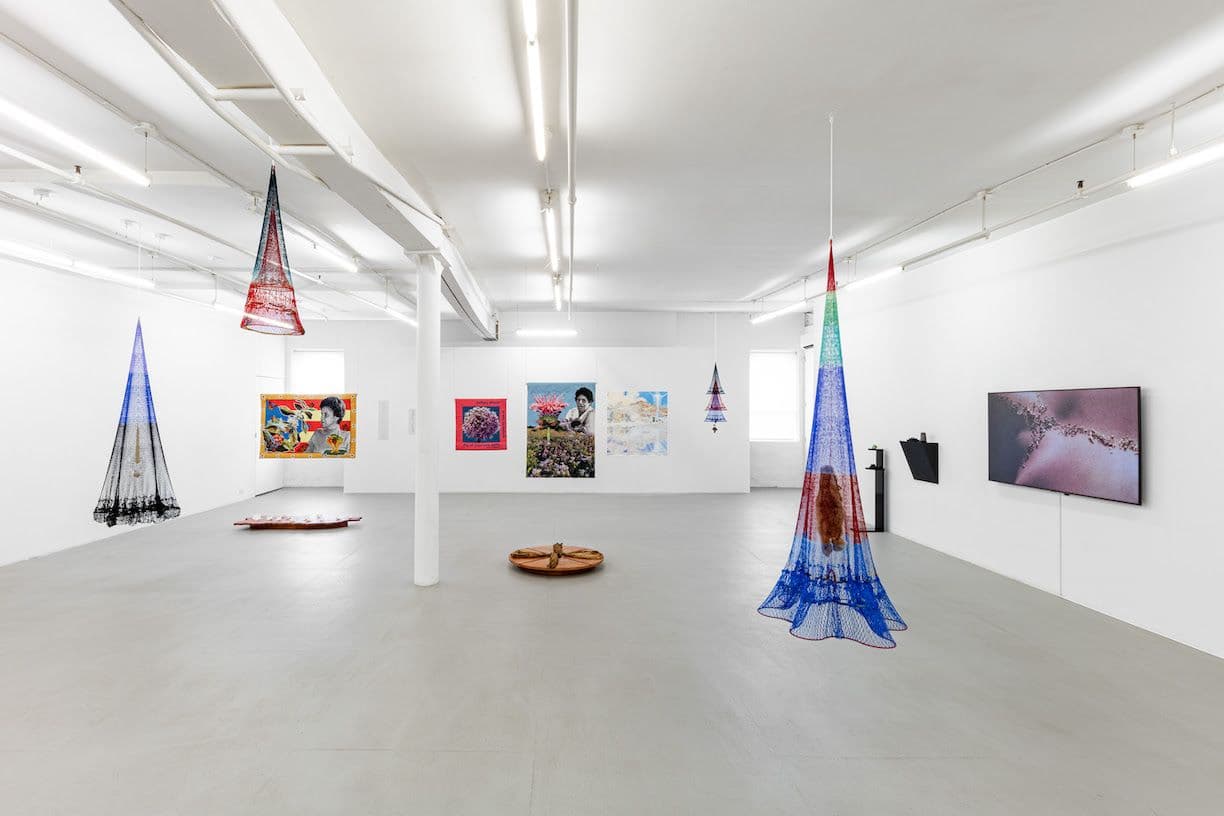
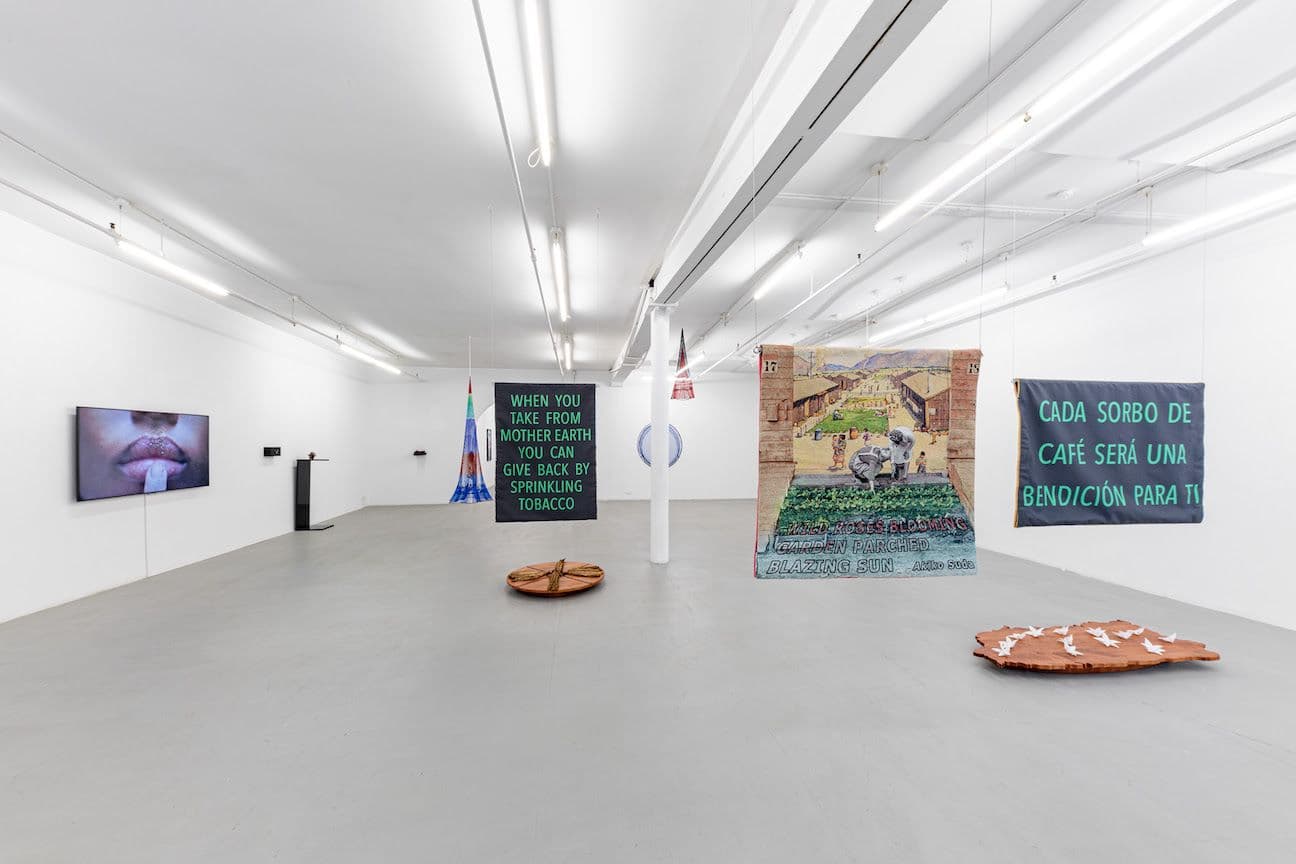
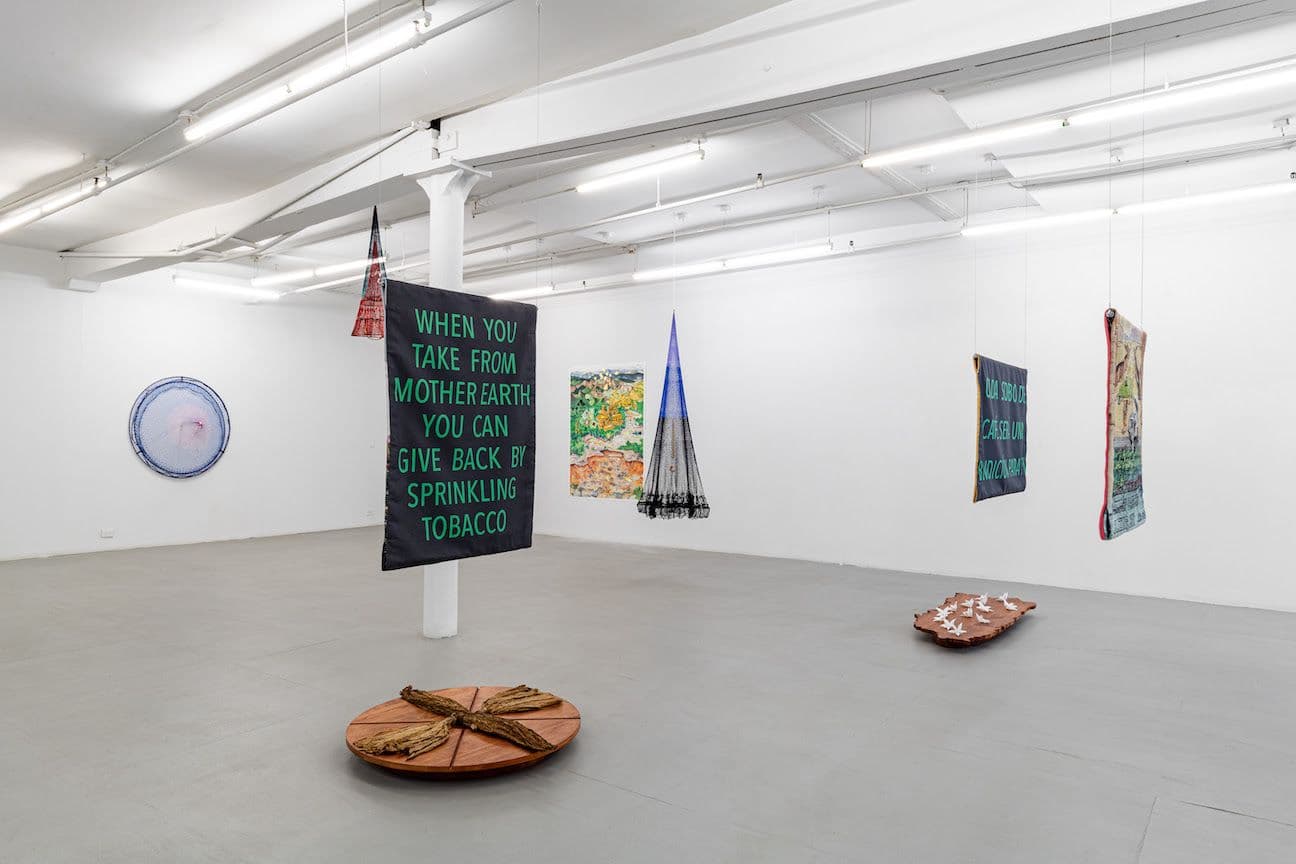
Instituto de VisiónScintillae on Earth, is Carolina Caycedo’s first solo exhibition at Instituto de Visión- New York. This presentation reviews recent work that conveys the ability to establish cooperation and relationships between beings (animate or inanimate) that inhabit the pluriverse. Pieces conceived in 2023 for the Sharjah Biennial and the Clark Art Institute, are presented in dialogue with a selection of the most recent Cosmoatarrayas and two inedit large-format drawings from the series Mineral Intensive. Scintillae on Earth seeks to trace constellations of meaning among Carolina’s concerns on the talismanic properties of certain objects, the reciprocal practices of pagamento (payback), and women’s work in sustaining community life and the environment. As well, how these properties, practices and labour are threatened by systems based on power relations that impose absolutist and harmful ways, which throughout history have been inserted on a small and large scale in the natural and social bodies and imaginaries. The work of Caycedo, who experiments with different media; from performance, video, sculpture, textile, and drawing, is permeated with tributes and revisions of the work of women who have nurtured her thinking. For example, Nipple, Saludo a Zilia (2022) is a dedication to Cuban artist Zilia Sánchez, who is key to understanding the formal references in Carolina’s practice. A fundamental question arises out of the research conducted for the Sharjah Biennial: How to establish another kind of relationship with minerals? The Arabic language keeps alive the understanding of minerals in tune with the pluriverse’s palpitations. In Arab, the words miner and astrologist differ only by an accent. The person dedicated to mining is the one who can see glimmers in the Earth; the one who recognizes the light of the stars in the sinkhole. In another latitude, the Yanomami cosmovision of the Amazon tells us that the universe once collapsed over the Earth, originating the world and the beginning of time in an act of regeneration. This is explained by Davi Kopenawa in the book The Falling of the Sky: “What the white people call minerals are the fragments of the sky, moon, sun, and stars, which fell down in the beginning of time. This is why our long-ago elders have always called the shiny metal mareaxi and xitikarixi, which are also our names for what the white people call the stars.” Pagamento is a way of giving back part of the stars that constitute the Earth. This ancestral practice has both an economic and ecological purpose that goes beyond the symbolic: the minerals are buried as underground altars to guarantee the planet’s inhabitants that the balance between the sky and the Earth remains stable. The burial, then, is transformed into life. Through Pagamento, or retribution to nature, death and life become steps of the same path. However, the exploitation of minerals has sown death in other ways. Millions of native people died poisoned and enslaved in the gold and silver mines of the European colonies in the Americas - they continue to be the most vulnerable communities by illegal garimpo (mining), and by the large-scale mining carried out by transnational capitals in our continent. Digging up metals and oil inordinately brings disease and death to the surface, symbolically and literally. In Scintillae on Earth, textile work is present in two ways. On one hand, the Cosmoatarrayas, which, in addition to being survival technologies for riverine communities, are cartographies of the poetic relationship that is established daily between these communities and their environment. On the other hand, the tapestries, which recall a previous work of the artist -slogan banners- and which, in this case, evolve towards the construction of emotional landscapes as a tribute to women who maintain current the conversations about sovereignty, reciprocity and care for the land and its fruits. We, women, are glimmers in the Earth. From different coordinates, we carry out the work of warming our communities, ensuring food and understanding the rhythms of the permanent dance between beings. We are beacons of hope in the extractivist world, where minerals are strategically classified as natural resources instead of common goods, a term proposed by Caycedo, with the intention of recovering their talismanic value. The amulets, made with minerals extracted mainly in the Global South to supply the energy transition and the decarbonization of the Global North, reflect directly on the artist’s work and its potential. These small sculptures created to be used as protective amulets - hence their size - continue an approach in Caycedo’s work, where objects are conceived as visual spells. The art practice itself becomes a space for unlearning, and for the construction of her own artistic genealogies. Works of art have the power to be protective, healing and knowledge transmitter objects; created to question established perceptions of reality. Carolina Caycedo reconsiders the hegemonic ways in which we relate to each other, inviting us to transform these relationships into spaces of affection, reciprocity, and mutual care. As she says in her poem Heavy Water, it is the “time for new amalgams, alchemies for life”. —Beatriz López and Dulce Yanomamo