
Marais, Paris
Ding Yi
Constellations
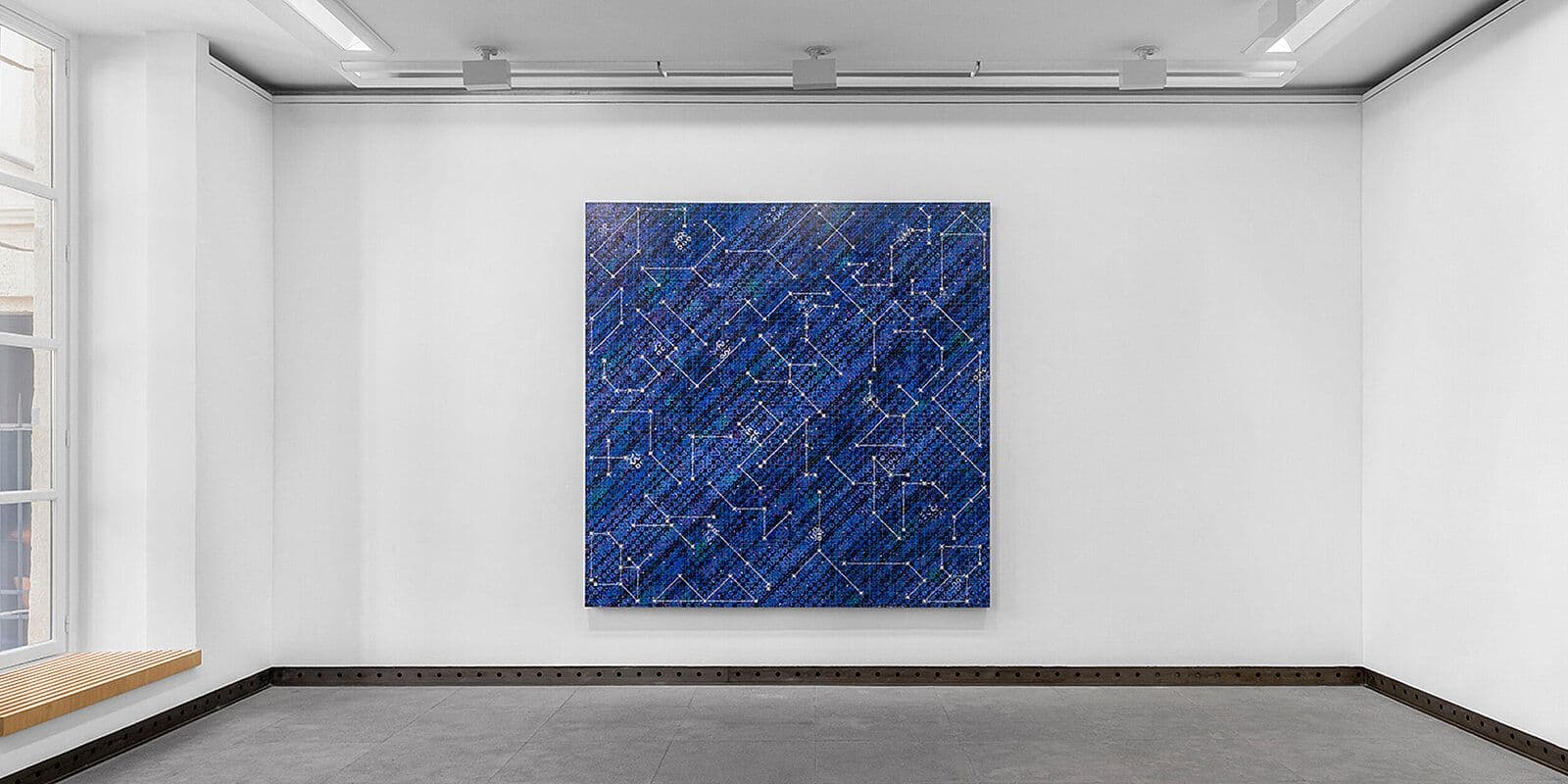
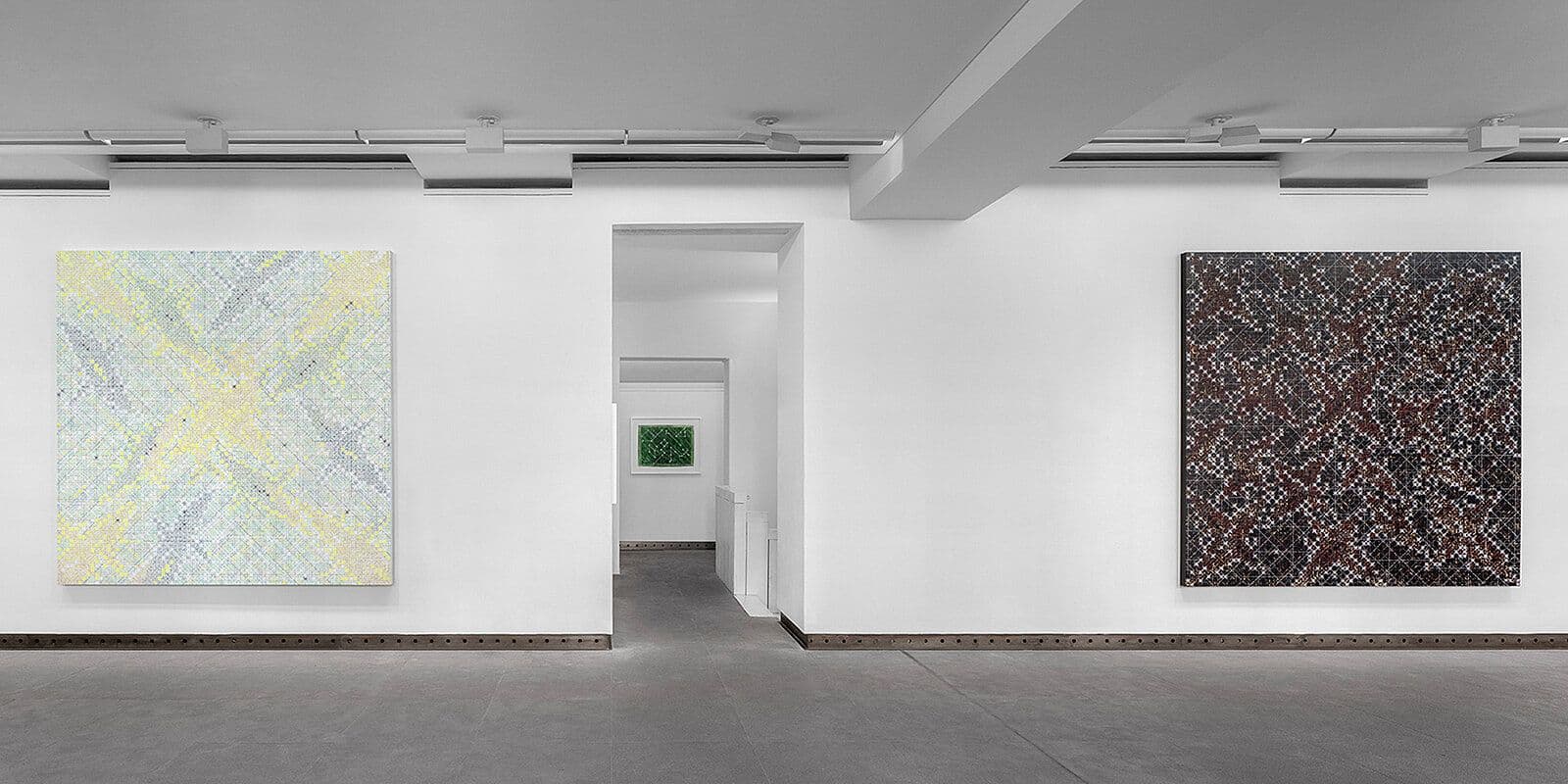
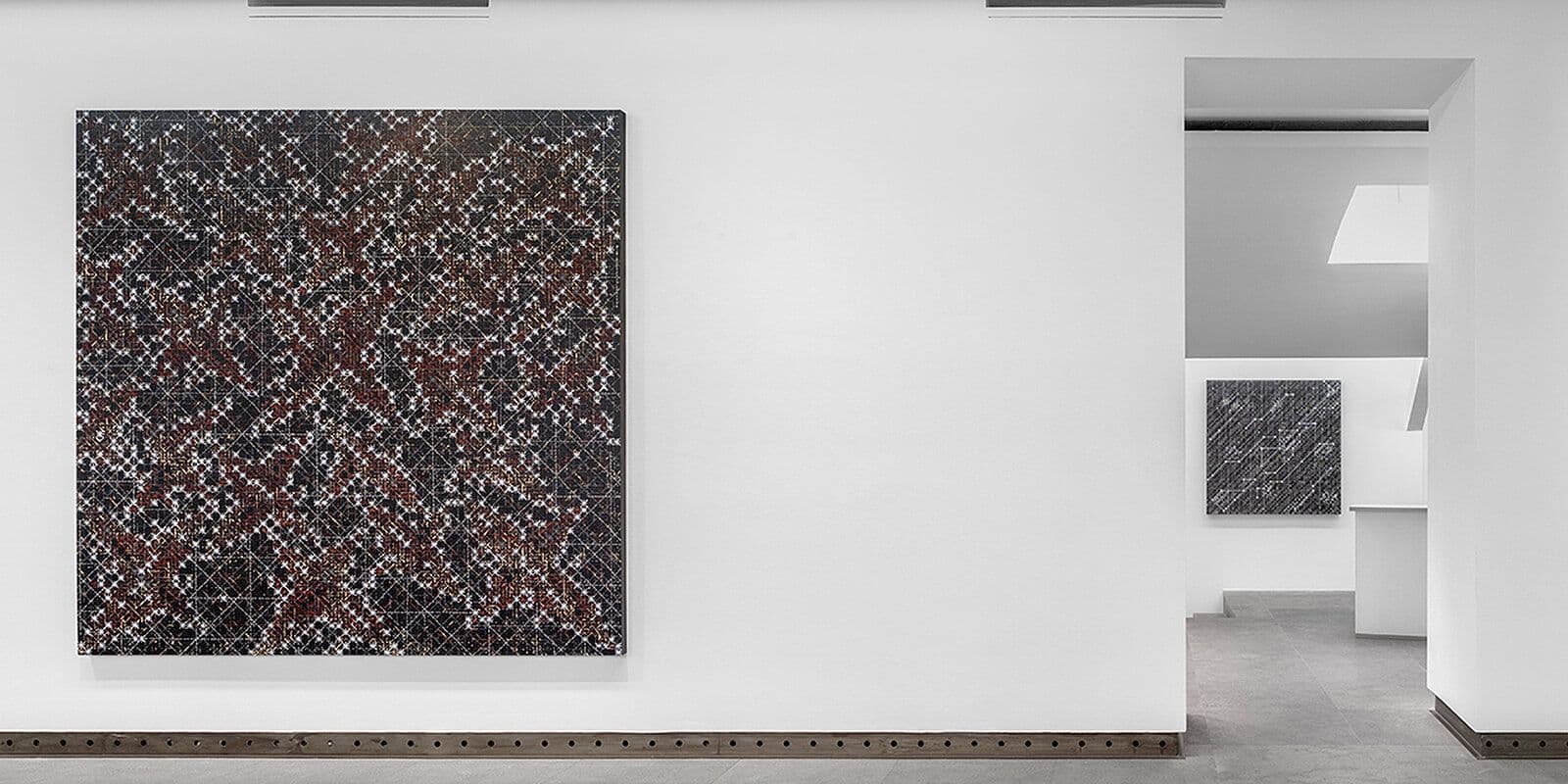
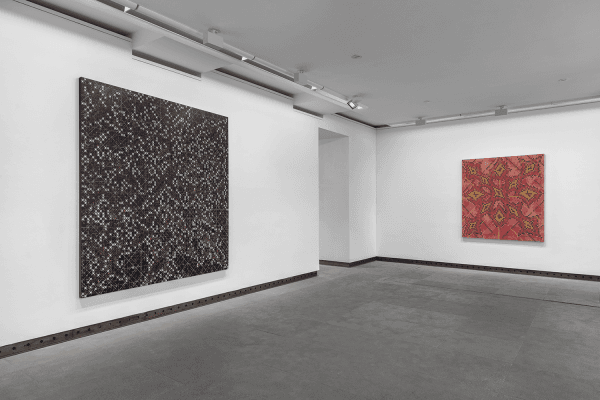
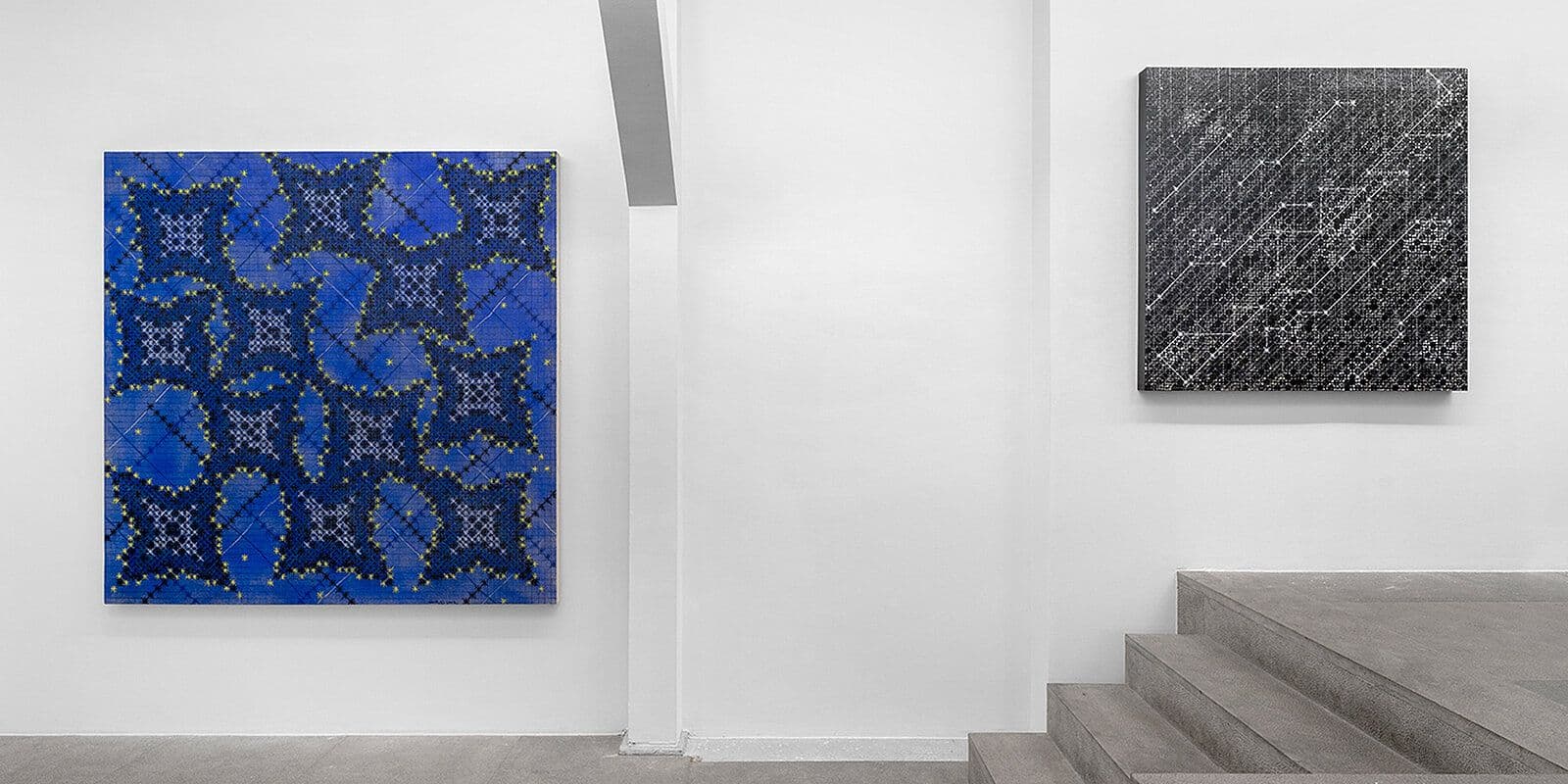
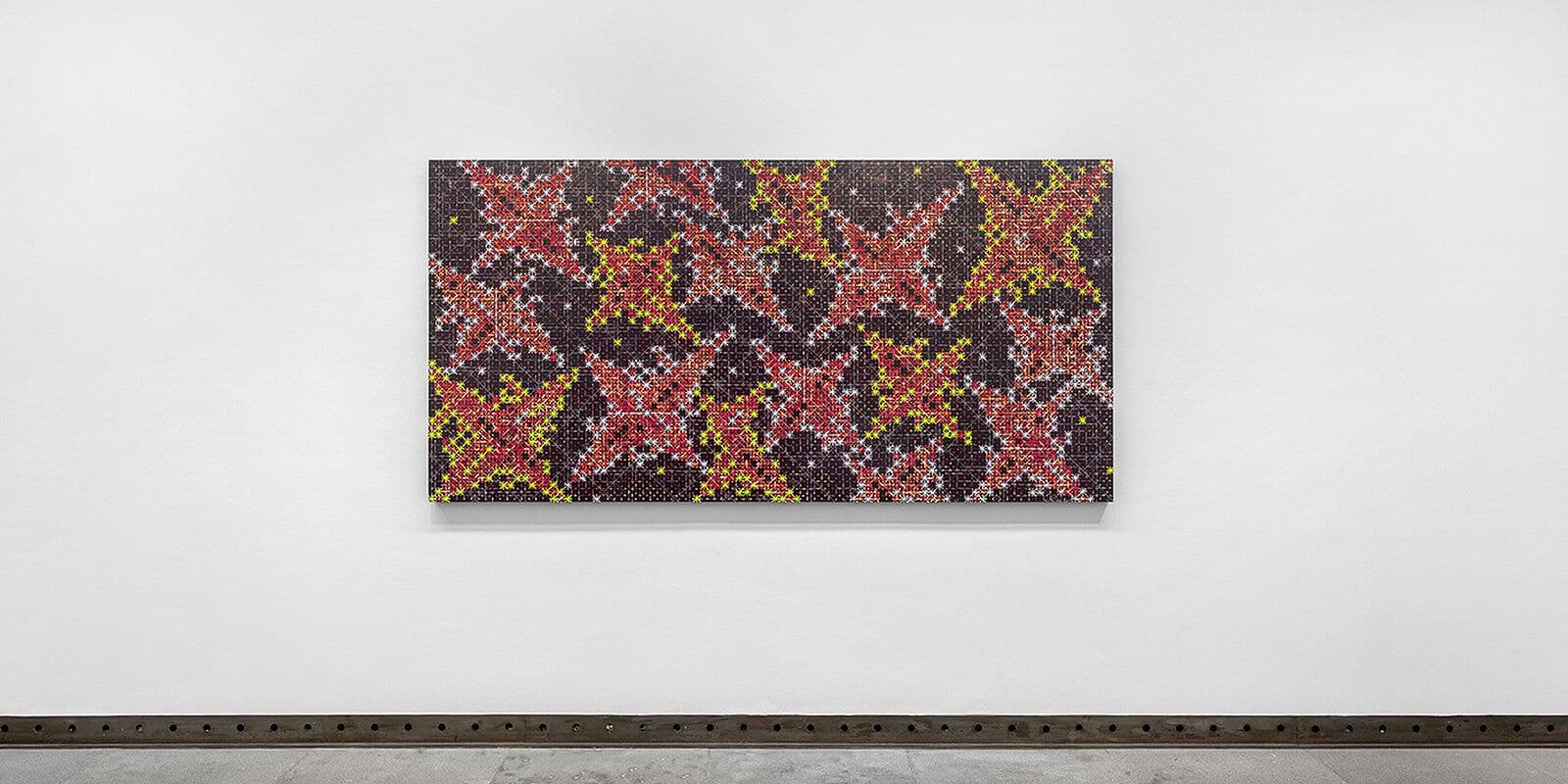
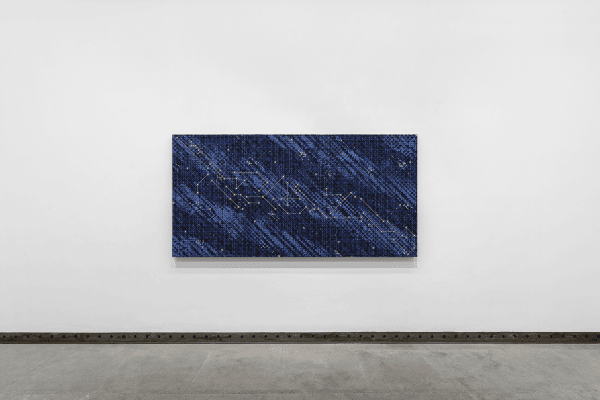
Karsten Greve[Scroll down for French version / Veuillez trouver ci-dessous la version française] Galerie Karsten Greve is pleased to present Constellations, a solo exhibition of Ding Yi, major figure of the contemporary Chinese abstraction. The gallery has been working with the artist since 2006, maintaining a longstanding and ongoing collaboration for nearly two decades. Widely represented in major international institutions, Ding Yi beneficiates from critical and institutional recognition through numerous exhibitions worldwide. Since the late 1980s, he has been developing a rigorous and singular body of work centered around a single motif: the cross. The exhibition brings together a selection of recent works across a wide variety of media, introducing the star as a new variation in his cruciform vocabulary. Repeated tirelessly since the beginning of his Appearance of Crosses series in 1988, the cross appears in various forms, like an infinite tapestry woven point by point, unfolding across each canvas with precision and consistency. Ding Yi explores the orthonormal sign in a continual quest for its geometric stability and its ability to generate meaning without bearing any in itself. As he often reminds us: “The cross means nothing and contains, at the same time, a multitude of things.” His visual language evokes the codes of printing, night constellations, or the networks of a city seen from above. Shanghai, where he lives, pulses throughout his work like an underground rhythm, with its lights, its tempo and its urban density. Perception lies at the heart of his approach: without narrative or focal point, his canvases envelop the viewer in a dense, hypnotic visual weave where any attempt at interpretation dissolves into pure sensation. The term appearance suggests this active seeing, this slow vibration that emerges from the motif. A significant shift in his work occurred in 2022, during a residency and exhibition in Lhasa, Tibet. Over thirty years after a first journey in 1989, which coincided with the beginning of the Appearance of Crosses series, the artist “returned to the origins.” Far from the bustle of the megacity, Ding Yi discovered a different temporality, another relationship to space and the sacred. For the first time, he experimented with using blue as the dominant color, inspired by the vast skies that stretch over the roof of the world. He worked on handmade Tibetan paper, whose irregular texture provided a living surface for his gestures. Most notably, he introduced a new symbol into his visual grammar: the star. This hybrid form, between cross and celestial body, evokes constellations as much as the vajra, a sacred symbol in Buddhism. Through this new presence, his recent work opens up to a more spiritual, almost ritualistic dimension. His strict formal language is enriched by a wide range of materials and supports. Canvases, wooden panels, handmade papers…their textures and irregularities influence the composition. At times, the artist applies up to twenty layers of paint before incising or placing the crosses; elsewhere, he works with chalk, charcoal, fluorescent or metallic pigments, using stencils and stamps. More than a pictorial syntax, Ding Yi offers an intense sensory experience, an invitation to surrender to the rhythm of the sign, where each viewer may trace their own constellation. “Don’t look for the meaning of the image. Look, feel, observe for yourself.” Born in 1962, Ding Yi lives and works in Shanghai. He earned his first diploma from the Shanghai Arts and Crafts Institute in 1983 and a second from the Fine Arts Department of Shanghai University in 1990. Internationally acclaimed, he has participated in several biennials, including the Venice Biennale (1993), the Yokohama Triennale (2001), the Guangzhou Biennale (2002), the Shanghai Biennale (2006), and the Busan Biennale (2016). He has had solo exhibitions at institutions such as the Shenzhen Museum of Contemporary Art (China, 2023), the Minsheng Art Museum in Shanghai (2011), and the Museum of Modern Art in Bologna, Italy (2008). He has also taken part in group exhibitions at the Guggenheim Museum in New York and Bilbao (2017 and 2018), as well as at the Musée National d’Art Moderne in Paris (2015). His works are held in major institutional collections including the Centre Pompidou in Paris, M+ Museum in Hong Kong, the MoCA Shanghai, the UBS Art Collection in Zurich, and the British Museum in London. Since 2005, Ding Yi has been a professor of art at the Shanghai Institute of Visual Arts. ***** La galerie Karsten Greve a le plaisir de présenter Constellations, une exposition personnelle de Ding Yi, figure majeure de l’abstraction contemporaine chinoise. La galerie accompagne l’artiste depuis 2006, entretenant depuis près de deux décennies une collaboration régulière. Représenté dans les plus grandes institutions internationales, Ding Yi bénéficie d’une reconnaissance critique et muséale d’envergure, avec de nombreuses expositions à travers le monde. Depuis la fin des années 1980, il façonne une oeuvre exigeante et singulière, construite autour d’un motif unique : la croix. L’exposition réunit une sélection d’oeuvres récentes sur une large diversité de supports, introduisant l’étoile comme nouvelle variation de son vocabulaire cruciforme. Déclinée sous différentes versions, la croix est répétée inlassablement depuis le début de sa série Appearance of Crosses en 1988. Comme une tapisserie infinie, tissée point après point, elle s’étend sur chaque toile avec rigueur et régularité. Ding Yi explore le signe orthonormé, en une quête éternelle autour de sa stabilité géométrique et de sa capacité à générer du sens sans en porter. Il aime d’ailleurs à le rappeler : « la croix ne signifie rien et renferme en même temps une foule de choses ». Son vocabulaire visuel évoque les codes de l’imprimerie, les constellations nocturnes, ou les réseaux d’une ville en surplomb. Shanghai, où il vit, traverse toute son oeuvre comme une pulsation souterraine, avec ses lumières, son rythme et sa densité urbaine. La perception est centrale à sa démarche : sans narration ni centre, ses toiles sollicitent le spectateur, immergé dans une trame visuelle dense, hypnotique, où toute tentative de sens se dissout au profit du ressenti. Le terme appearance suggère cette vision active, cette vibration qui émerge lentement du motif. Un tournant significatif dans son oeuvre s’opère en 2022, lors d’une résidence et exposition à Lhassa, au Tibet. Plus de trente ans après un premier voyage en 1989, concomitant au début de sa série Appearance of Crosses, l’artiste « revient aux origines ». Loin du tumulte de la mégalopole, Ding Yi redécouvre une temporalité différente, un autre rapport à l’espace et au sacré. Il y expérimente pour la première fois l’usage du bleu comme couleur dominante, inspiré par les ciels immenses qui dominent les plateaux du toit du monde. Il travaille sur papier tibétain artisanal, dont la texture irrégulière devient un terrain vivant pour son geste. Surtout, il introduit un nouveau signe dans sa grammaire visuelle : l’étoile. Ce motif hybride, entre croix et astre, évoque autant les constellations que le vajra, symbole sacré du bouddhisme. À travers cette apparition, sa peinture récente s’ouvre à une dimension plus spirituelle, presque rituelle. Son langage formel strict s’enrichit d’une grande variété de supports et médiums. Toiles, panneaux de bois, papiers faits main ; leurs différentes textures et irrégularités influencent la composition. Parfois, l’artiste applique jusqu’à vingt couches de peinture avant d’inciser ou de déposer les croix ; ailleurs, il travaille à la craie, au fusain, avec des pigments fluorescents ou métalliques, use de pochoirs et tampons. Plus qu’une syntaxe picturale, Ding Yi invite à une expérience sensorielle intense, à un abandon au rythme du signe, où chacun peut tracer sa propre constellation. « Ne cherchez pas le sens de l’image. Regardez, ressentez, observez par vous-même. » Né en 1962, Ding Yi vit et travaille à Shanghai. Il obtient un premier diplôme du Shanghai Arts and Crafts Institute en 1983 et un deuxième auprès du Département des beaux-arts de l’Université de Shanghai en 1990. Reconnu à l’international, il a participé à plusieurs biennales, notamment à la Biennale de Venise (1993), à la triennale de Yokohama (2001), à la Biennale de Guangzhou (2002), de Shanghai (2006) et à la Biennale de Busan (2016). Plusieurs expositions personnelles lui ont été dédiées notamment au Shenzhen Museum of Contemporary Art à Shenzhen, Chine en 2023, au Minsheng Art Museum à Shanghai en 2011 et au Musée d’Art Moderne de Bologne en Italie en 2008. Il a fait partie d’expositions collectives au Guggenheim Museum New York et Bilbao en 2017 et 2018 ainsi qu’au Musée National d’Art Moderne à Paris en 2015. Ses oeuvres ont intégré d’importantes collections institutionnelles comme celle du Centre Pompidou à Paris, du Musée M+ à Hong Kong, du MoCA Shanghai, de la UBS Art Collection à Zurich ou du British Museum à Londres. Depuis 2005, Ding Yi est professeur d’art à l’Institut d’Arts visuels de Shanghai.