
West, London
Group Exhibition
Base Materialism
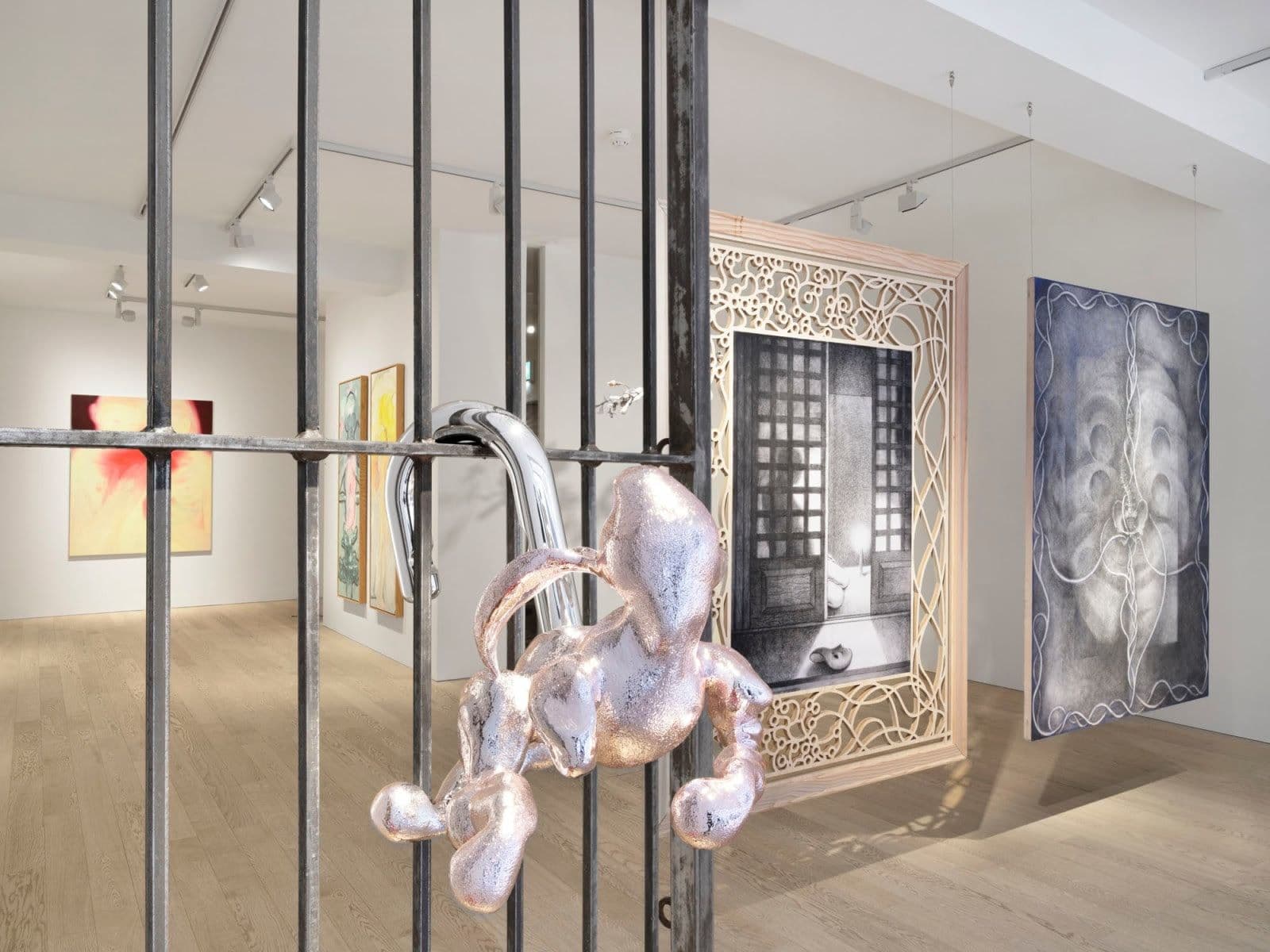
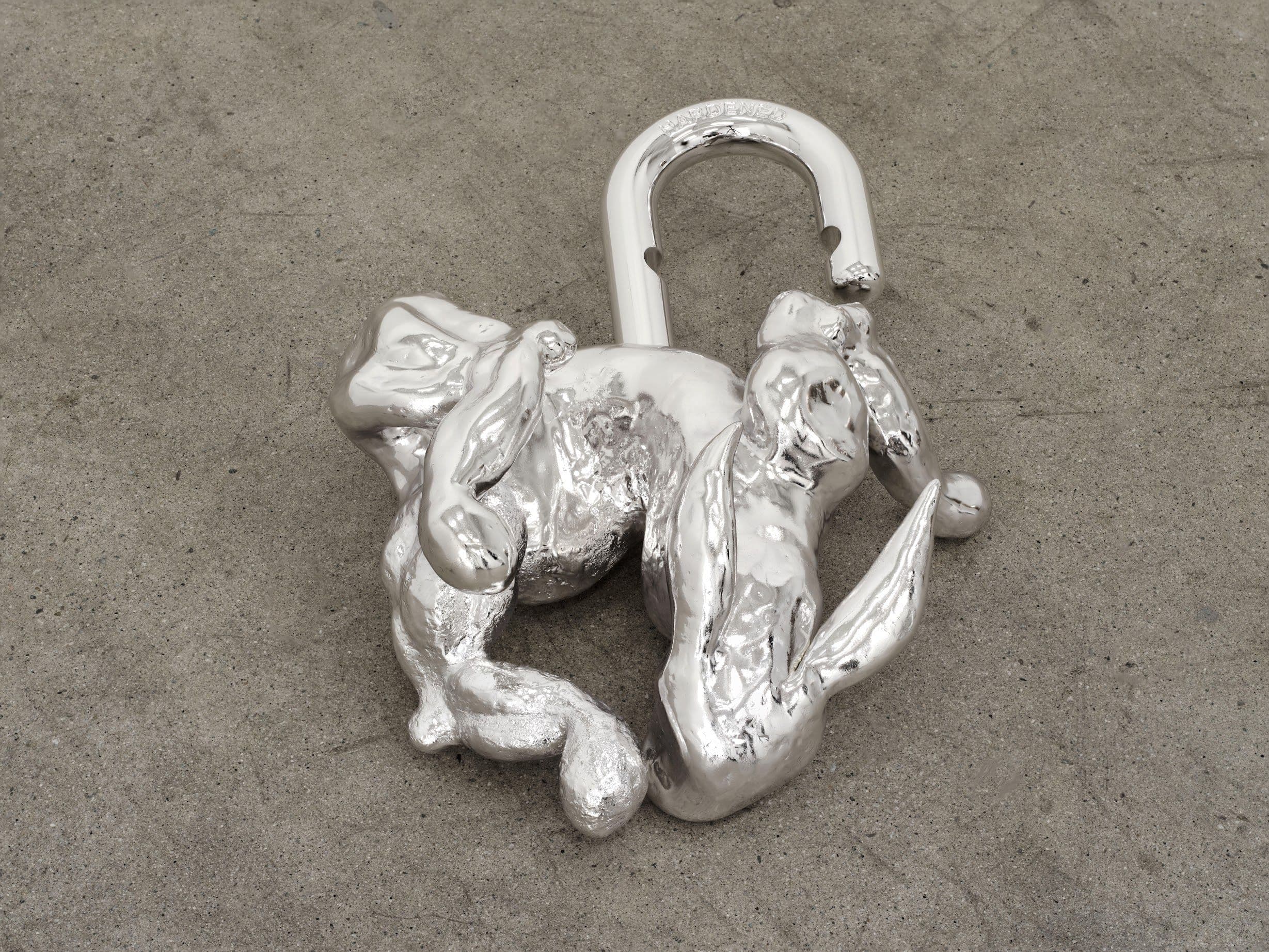
Albion JeuneAmbera Wellmann, Cindy Ji Hye Kim, Fin Simonetti, Ivana Bašić, Rachel Rossin, Shuo Hao, Shuyi Cao Albion Jeune is pleased to present Base Materialism, a group exhibition featuring seven artists: Ambera Wellmann (b. 1982, Lunenberg), Cindy Ji Hye Kim (b. 1990, Incheon), Fin Simonetti (b. 1986, Vancouver), Ivana Bašić (b. 1986, Belgrade), Rachel Rossin (b. 1987, West Palm Beach), Shuyi Cao (b. 1990, Guangzhou), and Shuo Hao (b.1992, Baoding). Deriving its title from George Bataille's philosophical concept, and drawing on Julia Kristeva's Powers of Horror, the exhibition examines the raw aspects of being which resist ontological categorisation and challenge corporeal hierarchies such as anthropocentrism, speciesism, sexism, and racial mattering. The artworks in base materialism explore the unstable, abject, and visceral dimensions of human experience, often foregrounding fetid and carnal subjects to challenge idealised notions of beauty and order. They resist symbolic containment, instead invoking the Real—that which underlies all idealistic thought. Through fragmented bodies and beast-like forms, these works traverse the boundaries between human and animal, mind and matter, organic and cyborg. By embracing what culture seeks to repress—the erotic, death, excess—they enact Bataille’s call to confront the base as foundational, a centenary on from its inception. Throughout the exhibition, strategic interventions in form and space subvert hierarchical taxonomies. Works suspended from above or anchored to the floor create a physical experience of decentring, while a pervasive fleshy palette destabilises boundaries between refined aesthetics and primal materiality, grounding corporeal allusions in base matter. In their diverse approaches, these artists reject sanitised depictions in favour of messy vitality and inevitable decay. Forms hover at the threshold where attraction and repulsion coexist, evoking what Kristeva describes as "one of those violent, dark revolts of being.” The destabilisation of form becomes a radical act: inviting viewers to interrogate our fundamental affliction of being that exists beyond sanguine human idealism and looks toward the posthuman. Ambera Wellmann’s works investigate fear, power, and formlessness through a critical confrontation with the art-historical motif of the Minotaur. Set amidst nocturnal landscapes, Wellmann’s figures obscure and disintegrate in their environments, where darkness functions as both a metaphor for vulnerability, and a limitless queered atmosphere in which the boundaries of the body can disappear. Cindy Ji Hye Kim employs a rich grisaille lexicon in her representations of the body under pressure. Blending diverse influences spanning early animation, construction scaffolding, pests and flora, medieval torture devices, and Korean folk arts, Kim’s depictions of the contorted human form speak to the limits of both body and language. She places special emphasis on the sculptural qualities of her works, utilising translucent silk screens with carved stretcher bars which impose a ghostly silhouette across their compositions. Fin Simonetti interrogates cultural materials through precise carving techniques, focusing on animal motifs that exist in semiotic oversaturation. In her chrome bunny locks, forms collapse distinctions between vulnerability and threat, merging anthropomorphic childhood symbols (Disney’s Fantasia, plush toys) with consumptive displays (Peking duck, rotisserie chickens). By juxtaposing these opposing references, Simonetti highlights the absent animal at their core—an ontological void where living creatures are replaced by representation. At once tender and violent, Ivana Bašić's humanoid sculptures of wax, glass, and steel appear to be peeling themselves from architectural confines. The artist presents bodies in states of metamorphosis, gradually shifting into a disembodied state, and ultimately freeing themselves from their material constraints into ethereal dust. In her practice, Rachel Rossin hints at the hidden infrastructure of our digital age— layered landscapes, UI fragments, and spectral figures that resonate at once as natural and machine-made. Abstracted figures evoke technological pareidolia, prompting viewers to discern familiar patterns and meaning in ambiguous digital-organic hybrids. In this manner, each canvas becomes a declaration of creative autonomy—an adamantly human-made gesture in the face of vast, often incomprehensible, technologies. Shuyi Cao's suspended mobiles merge glass, ceramic, and resin to forge what she terms "paradoxical fossils." Shapeshifting without hierarchy of natural or man-made, such juxtaposition reflects the disrupted orders of matter in the contemporary world. These forms evoke biological specimens in flux – burls, tentacles, embryos, umbilical cords – exploring monstrous intimacy across diverse life forms while collapsing distinctions between organic and synthetic matter. Shuo Hao’s works present bodies in metamorphosis, human and non-human, caught in tumultuous relationships. Between Western and Eastern culture, she confronts the different meanings of symbols, the soft colours of the different mediums (vaporous pastels, oil on wood and canvas) deepen the contrast with the strangeness of the scenes representing animals entangled in each other, or the violence inflicted on the bodies of women coldly represented. Hao’s painting is fully embodied and nourished by this double influence, taking a step aside from the traditional representations of myths in Western iconography.