
Williamsburg, New York
Group Exhibition
I Know You Know
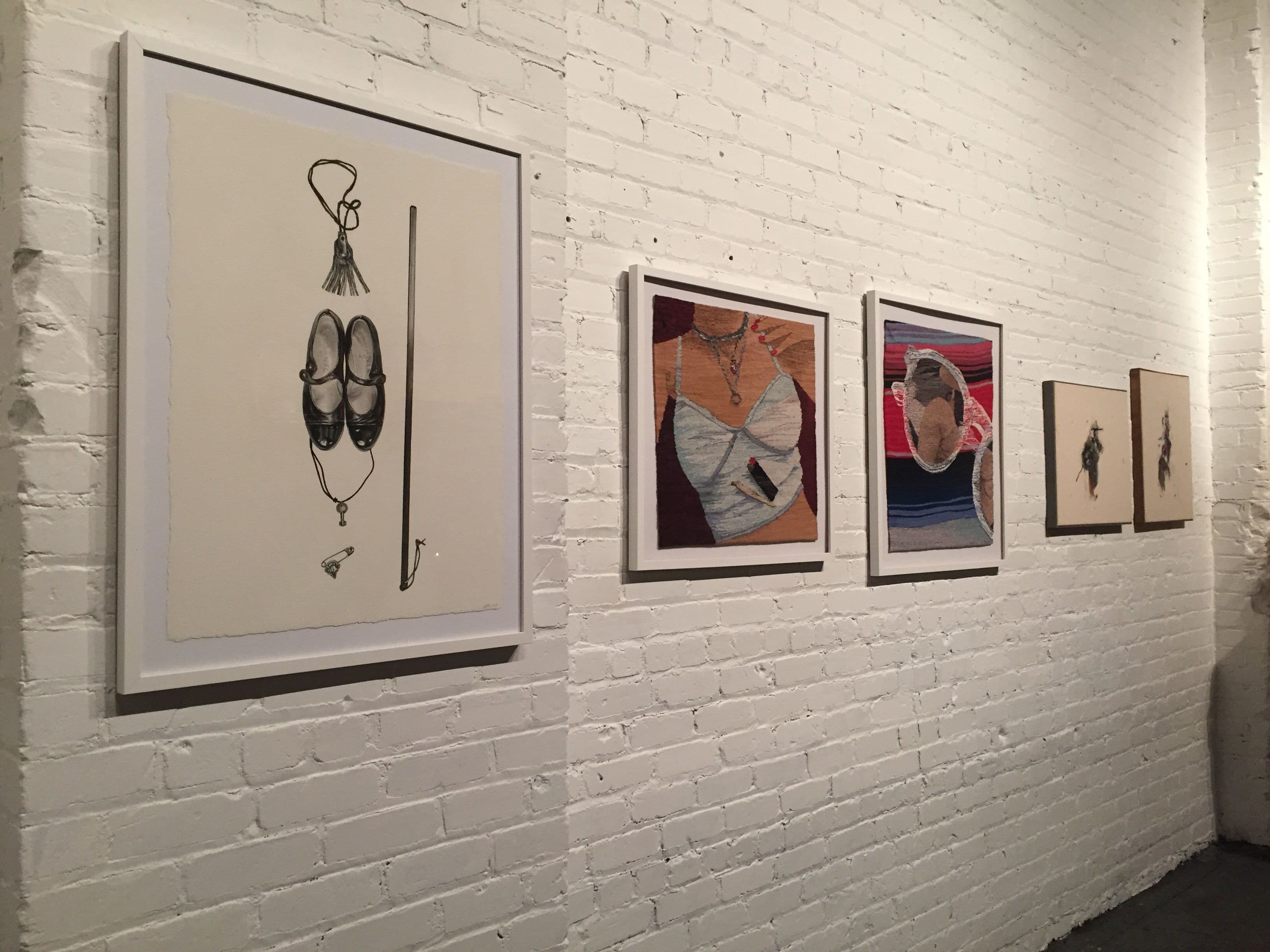
Kinfolk 94Ian Francis Blaise Cepis Tamara Santibañez Erin. M Riley Shie Moreno Curated by Tim Strazza The second annual summer group exhibition at Kinfolk 94, I Know You Know, is focused on the suggestion of identity: by both artist and viewer. In each work exhibited there's a deliberate reference to subjects whose identity is purposefully left ambiguous. This anonymity is accompanied by contextual, cultural, and environmental references to challenge the viewer's idea of the individual. The investigation to determine the character's identity forms a dialogue between the artist and audience based on a shared contemporary understanding of these references. In Encyclopedia of Identity, Ronald L. Jackson writes ”(Identity) value can be determined devoid of context. Visual culture is a concept of art inquiry that includes the social, political, and cultural context of art. Theories that account for subjectivity are challenging notions of identity for both artist and viewer." He continues "Many of these center on the notion of subjectivity as an intersubjective, reciprocal relationship between people, and between people, objects, and environments." Challenging the definition of identity has become ever more present in contemporary art. The idea that "everything's been done" looms over the contemporary artists' creative process. This holds especially true when it comes to making figurative art. To these artists, making only visual suggestions of the individual –as opposed to formal representation– can be a way to connect with an audience on many deeper levels. Subjectivity is offered, yet largely left to the viewer's discretion; therein lies the collective experience. Connection with the audience relies heavily on the success of the reference points themselves. The artist makes stylistic choices based upon their own aesthetic voice, but cannot avoid the aforementioned "visual culture" that contemporary beings (thanks to the internet and modern visual technologies) all share. On the surface, paintings exhibited by Ian Francis and Shie Moreno have glimpses of formal representation; however, remain indiscernible. Figures are rendered and defined to a point, then abstracted. Hints of human characteristics, attributes, and accessories have been reduced to simple colors and shapes. Patterns and structures –sometimes rendered, sometimes not– imply a physical space in which the being(s) exists. In both Blaise Cepis' and Erin M. Riley's works the human figures are prominent, however, the identity is stylistically concealed. There are no abstractions of discerning traits, only omissions. Although the imagery relies heavily on the subject, only shapes and shadows formed by the body's curvature are offered as characterizing human traits. The viewer must decide between applying their own imagination to assign identity, or to accept the human body simply as anonymous form in relation to its environment. Works exhibited by Tamara Santibañez challenge the notion even further, with no formal representation of a figure present whatsoever. Carefully selected, highly suggestive, and finely rendered belongings provide an intimate insight to the personality of where none is present. Noticeable in Riley's tapestries as well, objects accompanying (or acting as) the subject can signify style, attitude, and even sociopolitical implications. When only inanimate objects are offered for characterization, the viewer must determine whether to imagine the sourced individual and their relation to the artist –or– whether to call upon themselves as a point of reference and how they personally relate.
Visit
94 Wythe Ave