
West, London
Thomas Houseago
Death's Sacred Mirror
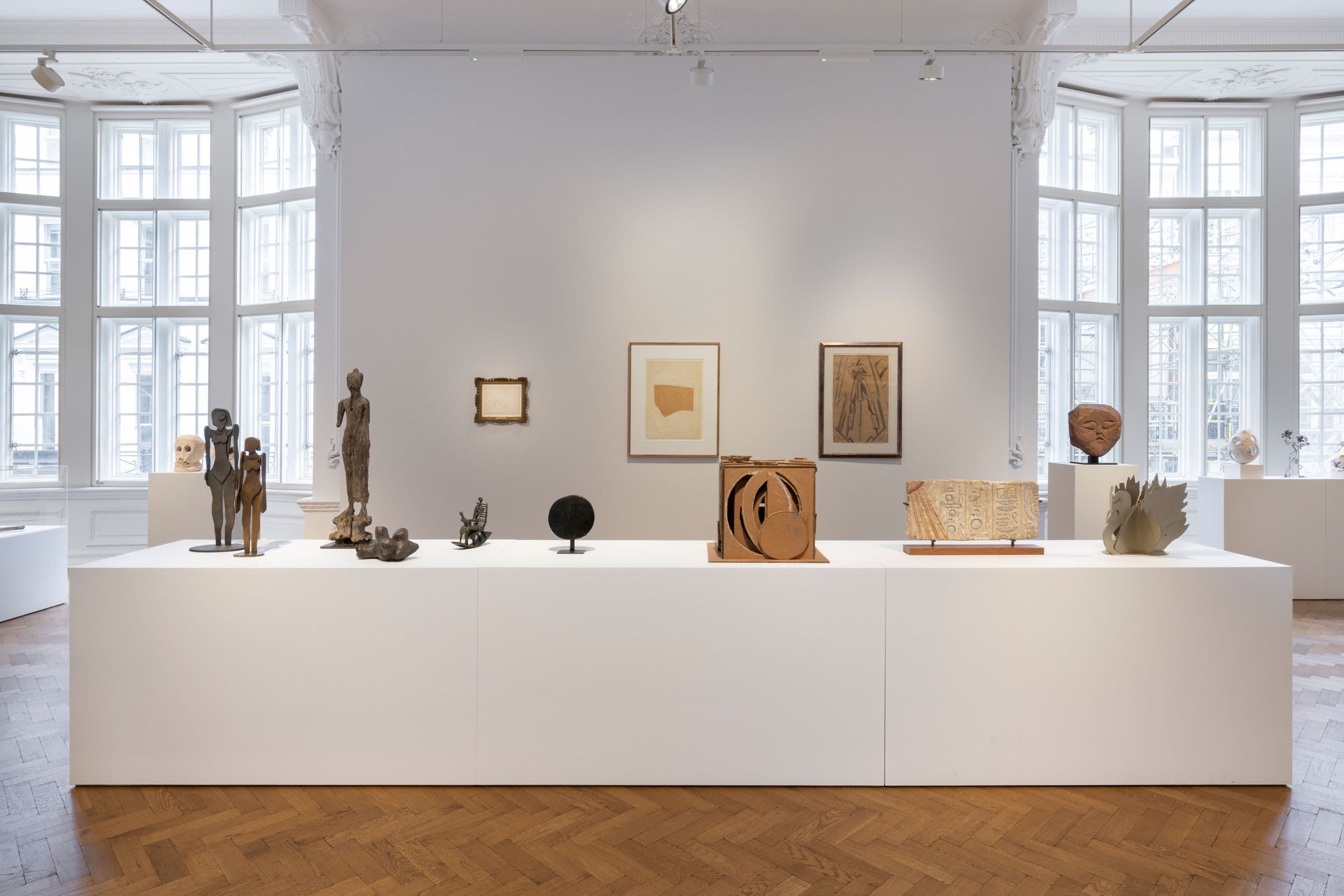
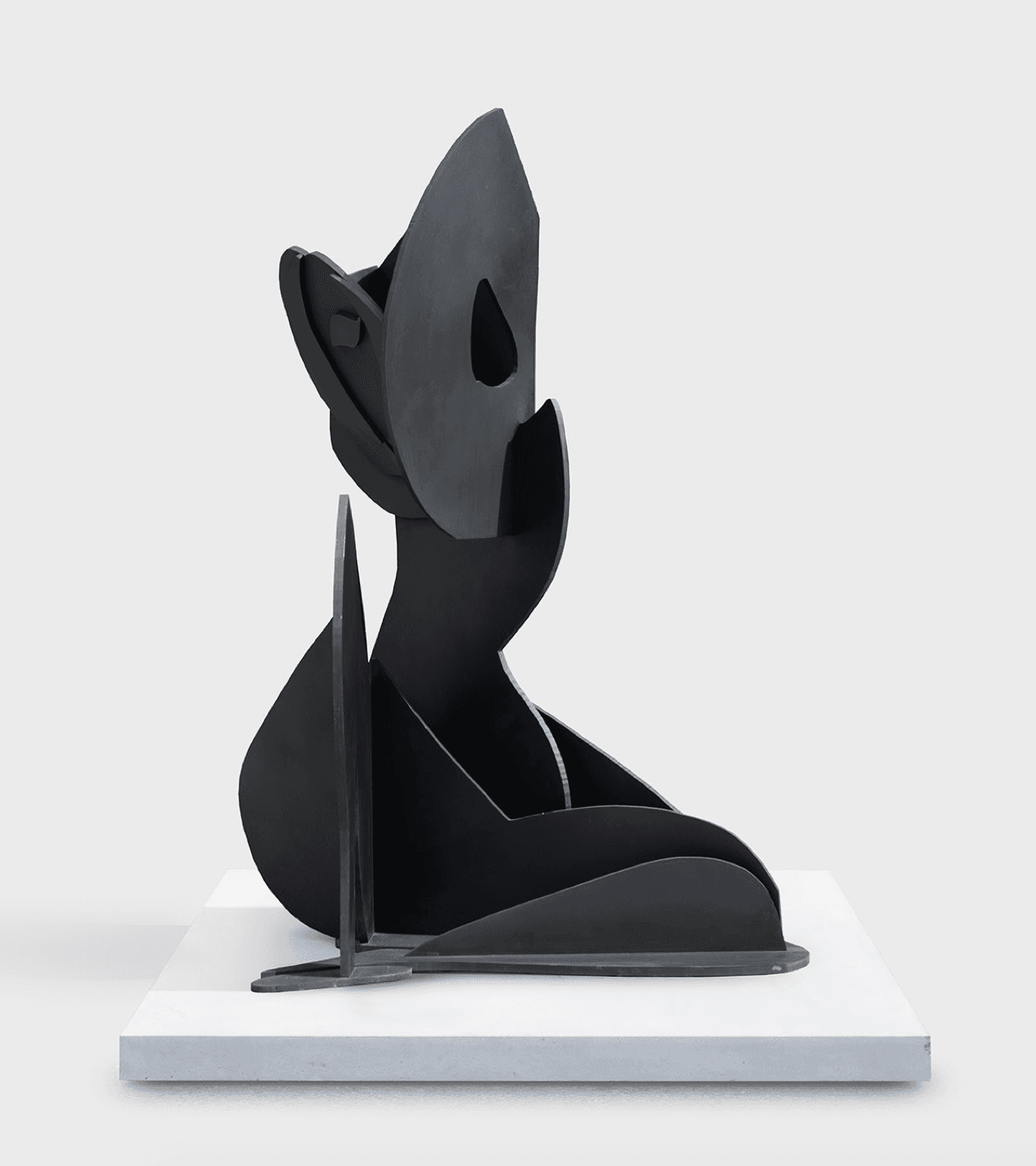
Lévy Gorvy DayanLévy Gorvy Dayan presents new sculptures by Thomas Houseago alongside a selection of works curated by the artist, ranging from ancient Egyptian, Greek, and Aztec artifacts to examples from the oeuvres of Joseph Beuys, Louise Bourgeois, Jacob Epstein, Lucio Fontana, Henri Gaudier-Brzeska, Julia Isídrez, Jacques Lipchitz, Henri Matisse, Marisa Merz, Meret Oppenheim, James ‘Son Ford’ Thomas, and Günther Uecker. Titled after the obsidian mirrors of Aztec culture, the exhibition is conceived by Houseago as a journey through sculptural histories important to his practice, fostering dialogues that span millennia. A new edition of Houseago’s Crystal No. 1 (2026) anchors the exhibition. The sculpture represents the artist’s examination of themes such as beauty, grace, and femininity, complementing his career-long explorations of towering masculine figures. Belonging to the artist’s Constructions—an important series of his mature practice—Crystal No. 1 invokes a contemplative approach to composition, channeling Cubist and Constructivist influences. On the first floor of the gallery, Death’s Sacred Mirror centers on a display curated by Houseago in the spirit of a cabinet of curiosities. Select artifacts, sculptures, and paintings meet across time and space, unveiling unexpected trajectories of form and making. Accompanying these are a new body of intimate works by the artist that depict new and recurring motifs of his practice—including the swan, which appears here for the first time in his sculptural oeuvre. An emblem of serenity, the swan is accompanied by figures of standing and reclining women, appealing to feelings of rest, meditation, and awareness. Also present is the egg, a key symbol within the artist’s lexicon that denotes ideas of rebirth and fertility. Houseago’s sculptures find resonance in artworks and antiquities that, in various ways, engage traditions and modalities of gesture, connection, and worship. Works from the modern and postwar era, including Joseph Beuys’s Bleifrau (1949) and Marisa Merz’s untitled clay heads, among others, demonstrate his attention to the shifts of form, materiality, and meaning during the twentieth century. This seam of recent sculptural history provokes reconsideration of the radically different functions of the artifacts on display. Statuettes from ancient Egypt, Greece, Rome, and Britain, among other locales and cultures, relate to fragmented pasts and purposes, conveying numerous approaches to the human and animal figure—as well as imaging gods, goddesses, and other beings. “Sculpture,” Houseago has said, “is a very brutal commitment. You’re forced to look back and marvel at what was done...” In Death’s Sacred Mirror, the artist invites visitors to think about sculpture in a broad, unlimited way. One of the oldest works in the exhibition is an Egyptian carved face from the lid of a wooden sarcophagus, dating to circa 1295–1069 BCE. Through skilled craftsmanship, the artifact conveys the remarkable power of the sculptural object—an experience at once visual, visceral, and tactile. Considering mythological and ritual traditions alongside modern artists’ experimentations with materiality, Houseago reveals his never-ending search for timeless aspects of the sculptural medium and his ongoing investigations of its legacies and possibilities. Born in 1972 in Leeds, England, Thomas Houseago studied at Jacob Kramer College, Leeds (1991); Central Saint Martins College of Art, London (1994); and De Ateliers, Amsterdam (1996), where he was taught by Marlene Dumas. In 2010, Houseago’s first major museum solo exhibition was organized by the Modern Art Oxford and Ashmolean Museum, Oxford, and he participated in the Whitney Biennial in New York. The Musée d’Art Moderne de la Ville de Paris organized a mid-career retrospective in 2019. Houseago’s work has further been the subject of recent exhibitions and installations at Gemeentemuseum Den Haag, The Netherlands (2014); Le Consortium, Dijon, France (2015); Royal Academy, London (2019); Royal Museums of Fine Arts of Belgium, Brussels (2021); Sara Hildén Museum, Tampere, Finland (2022); Centre Pompidou- Metz, France (2022); Tank, Shanghai (2023); and Rubell Museum, Miami (2025).