

Marais, Paris
Apollinaria Broche
The Unspoken Rules of Secret Play
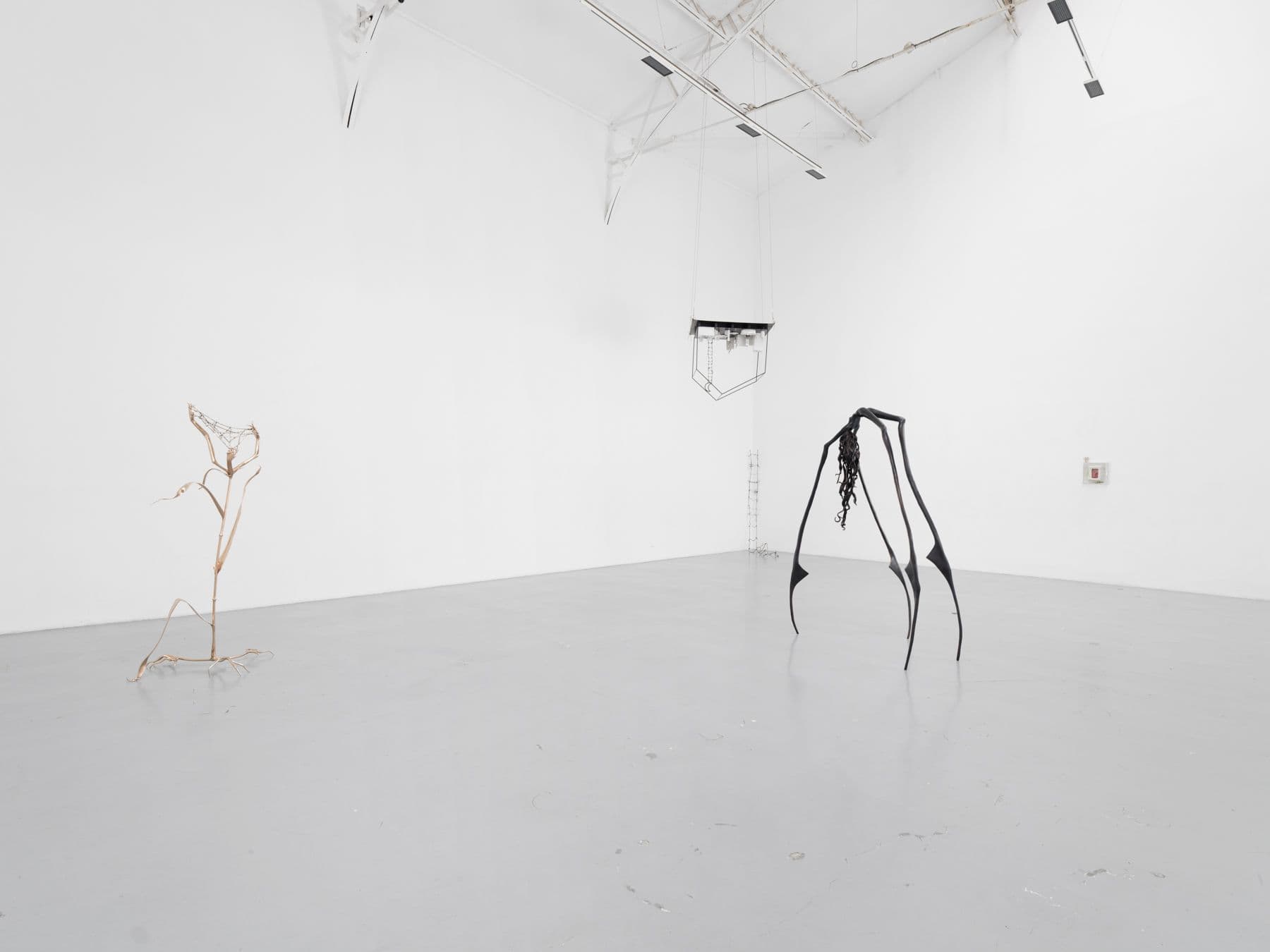
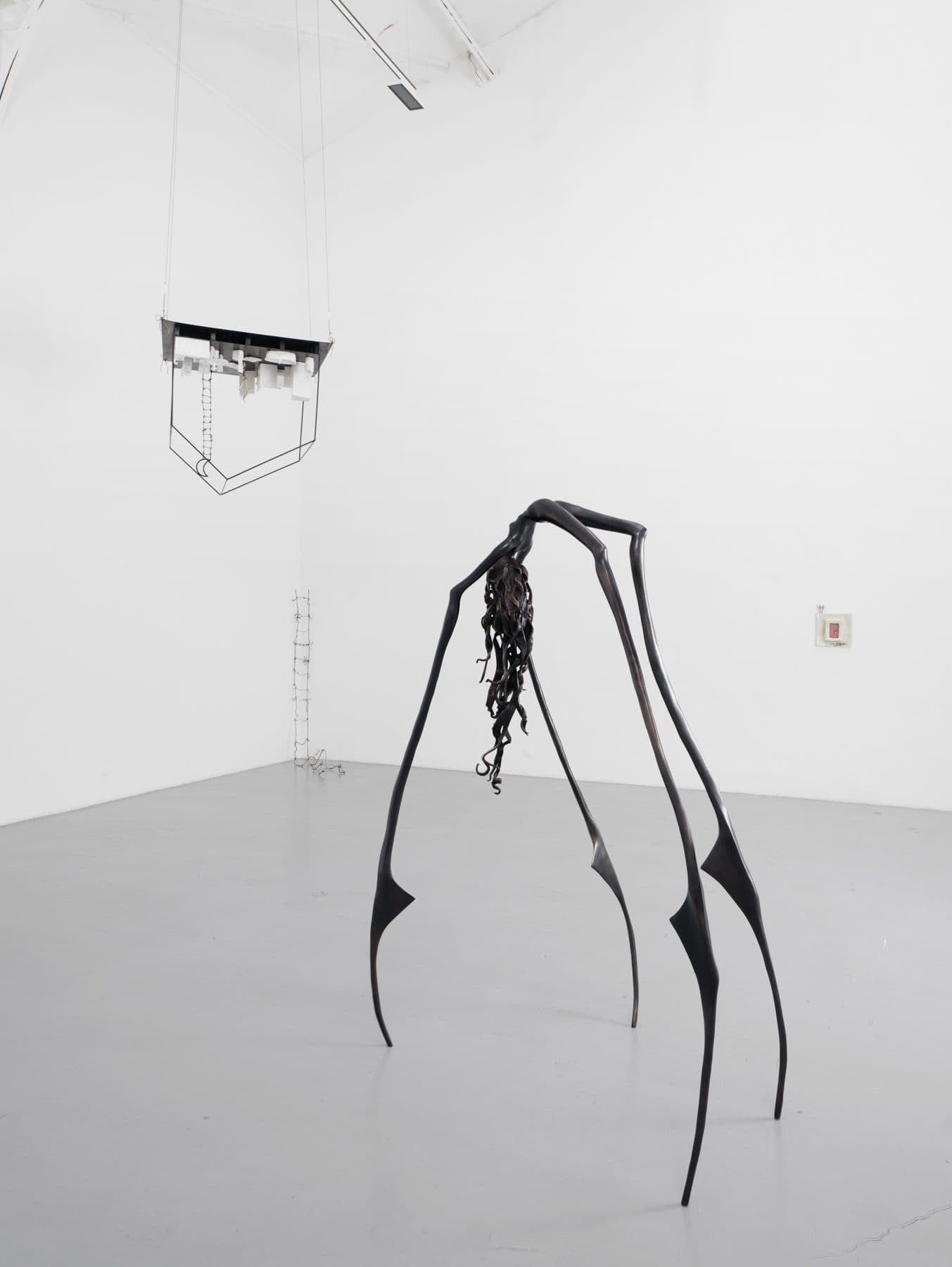
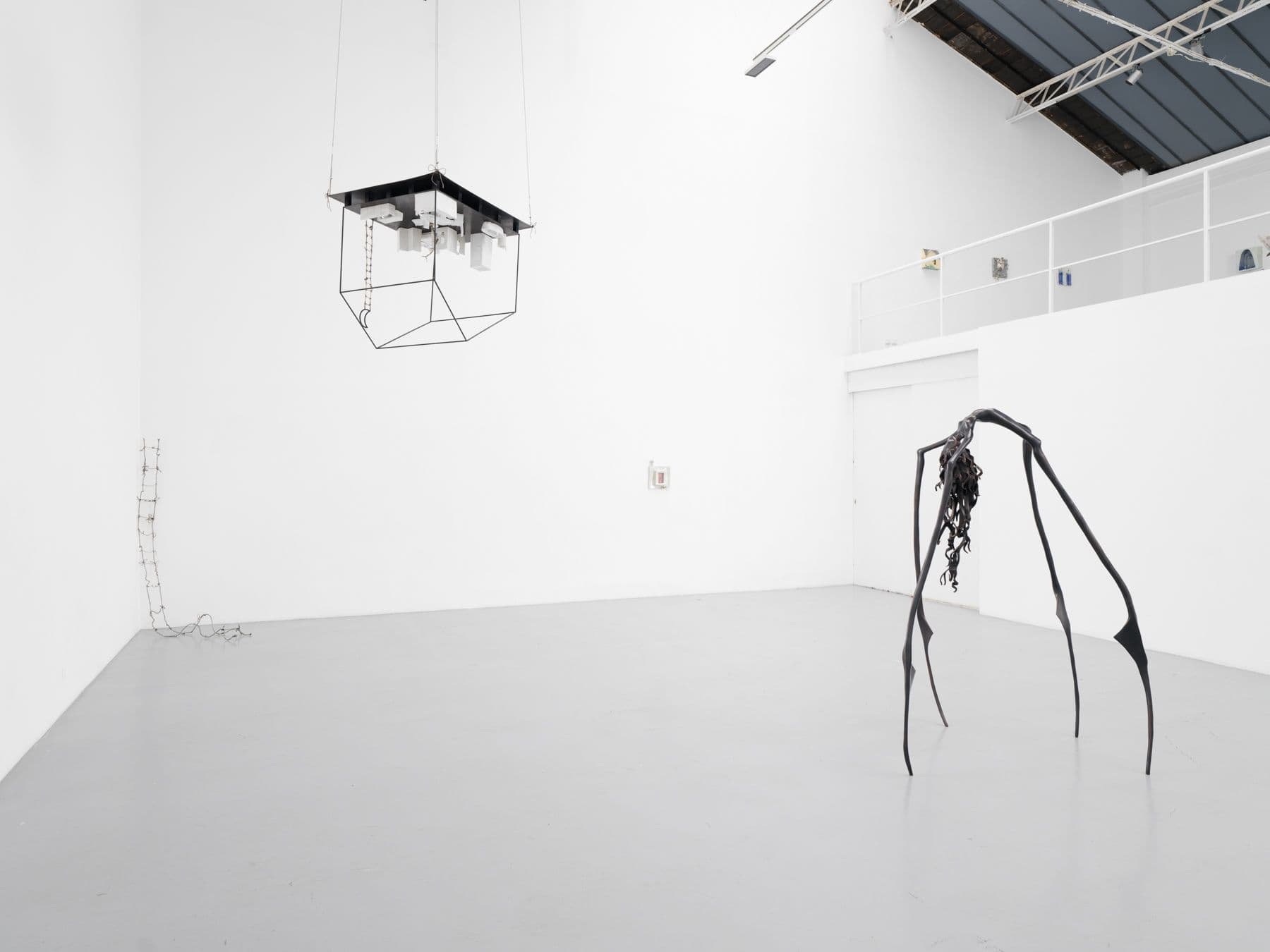
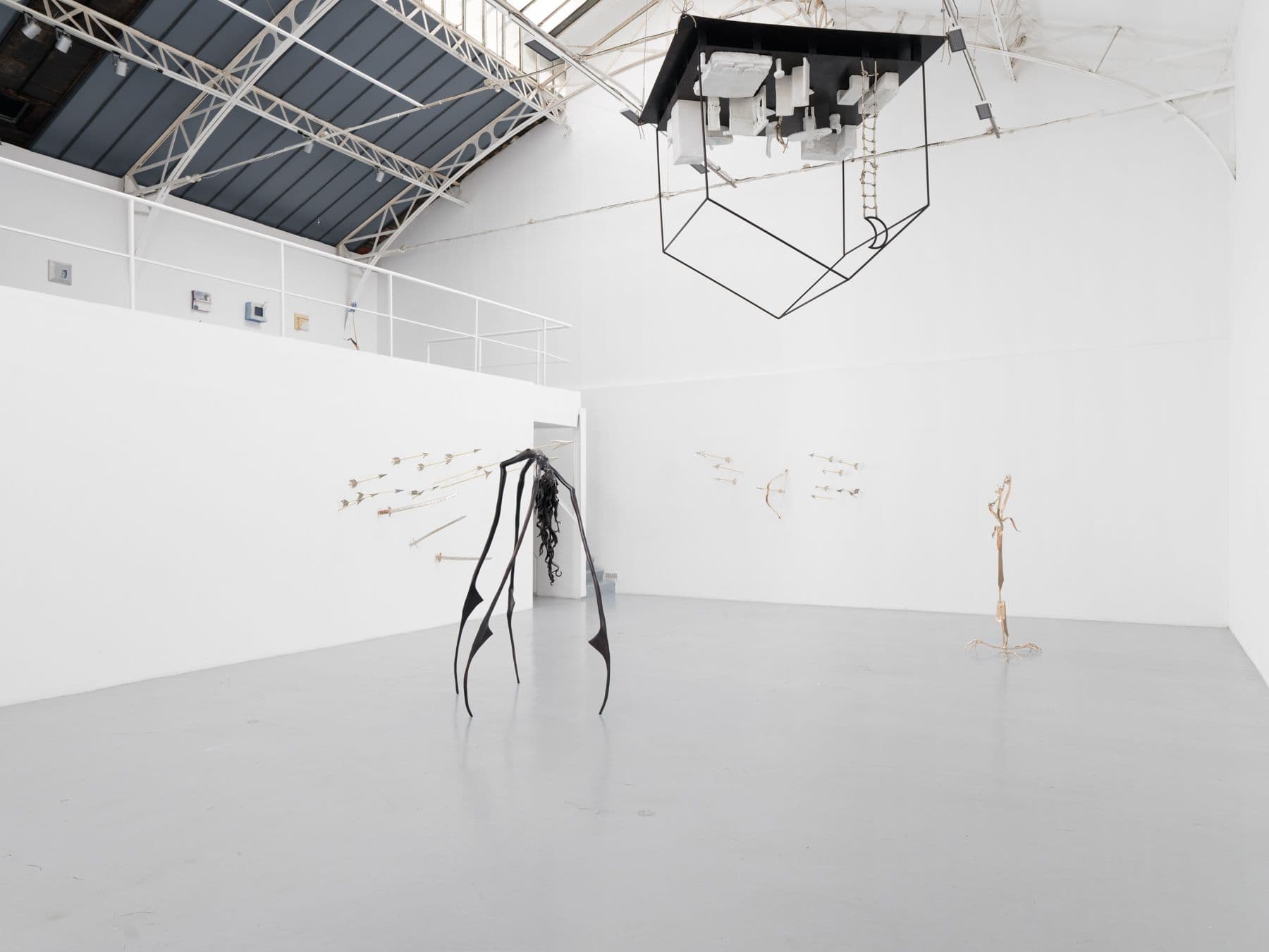
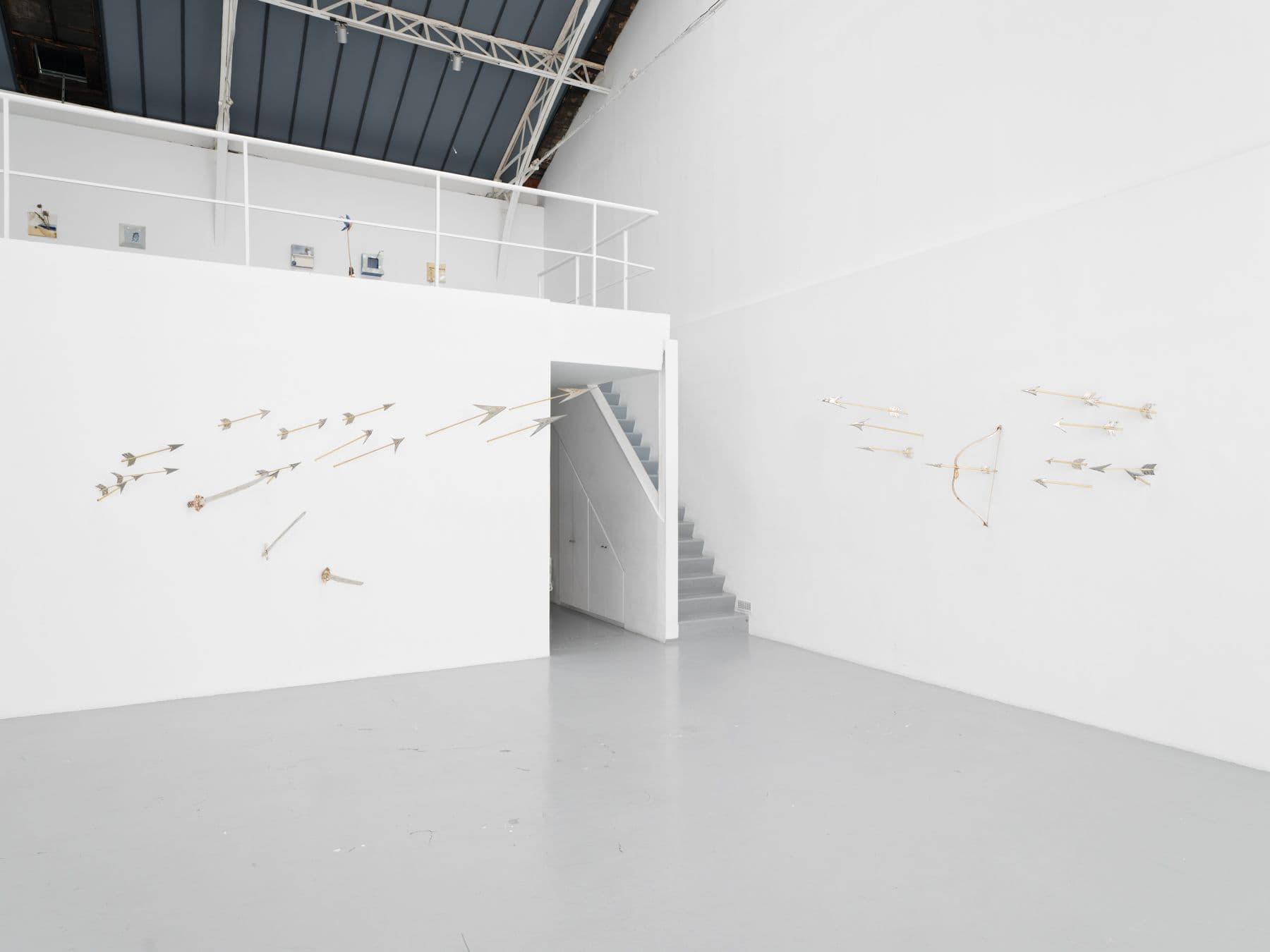
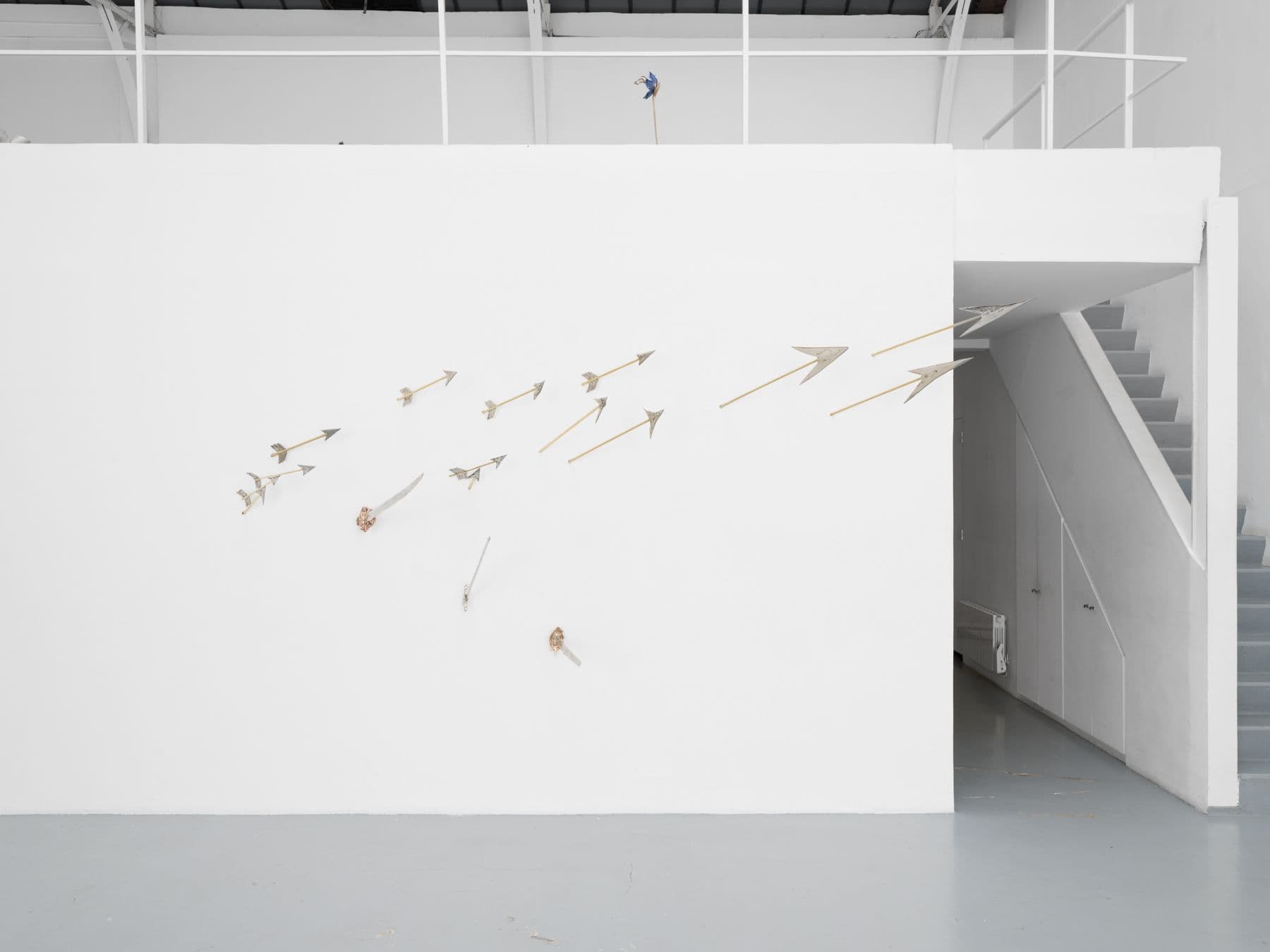
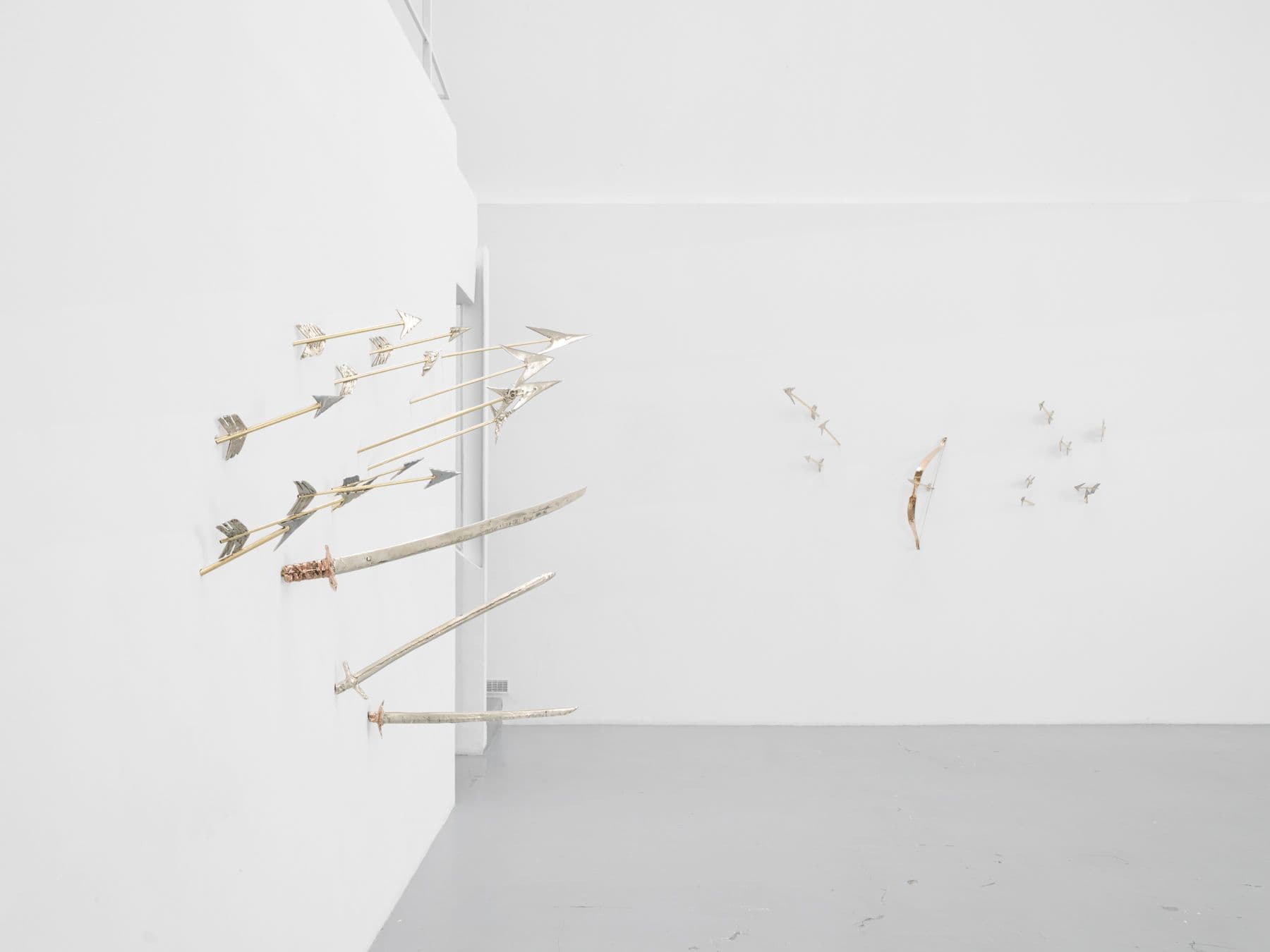
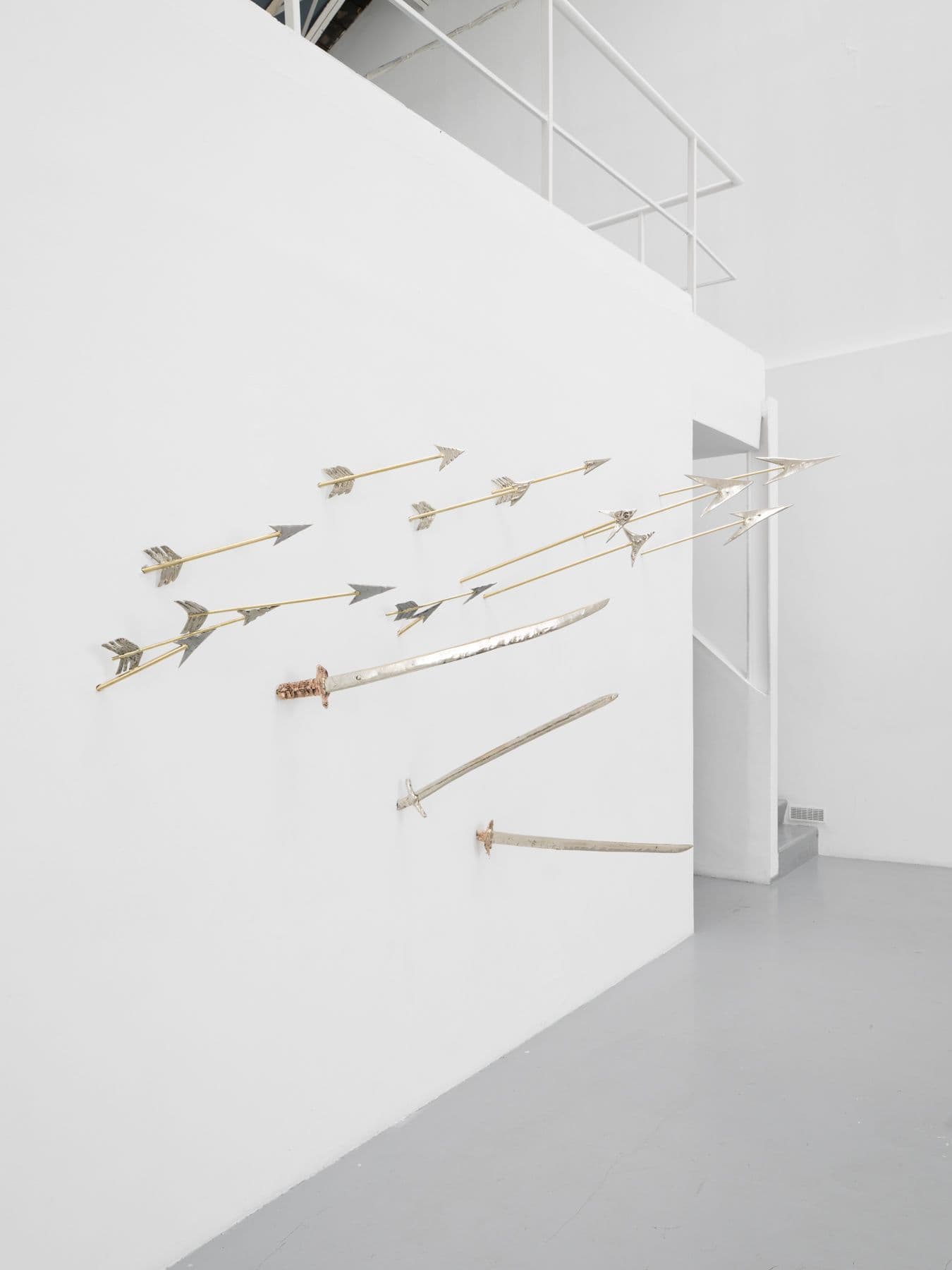
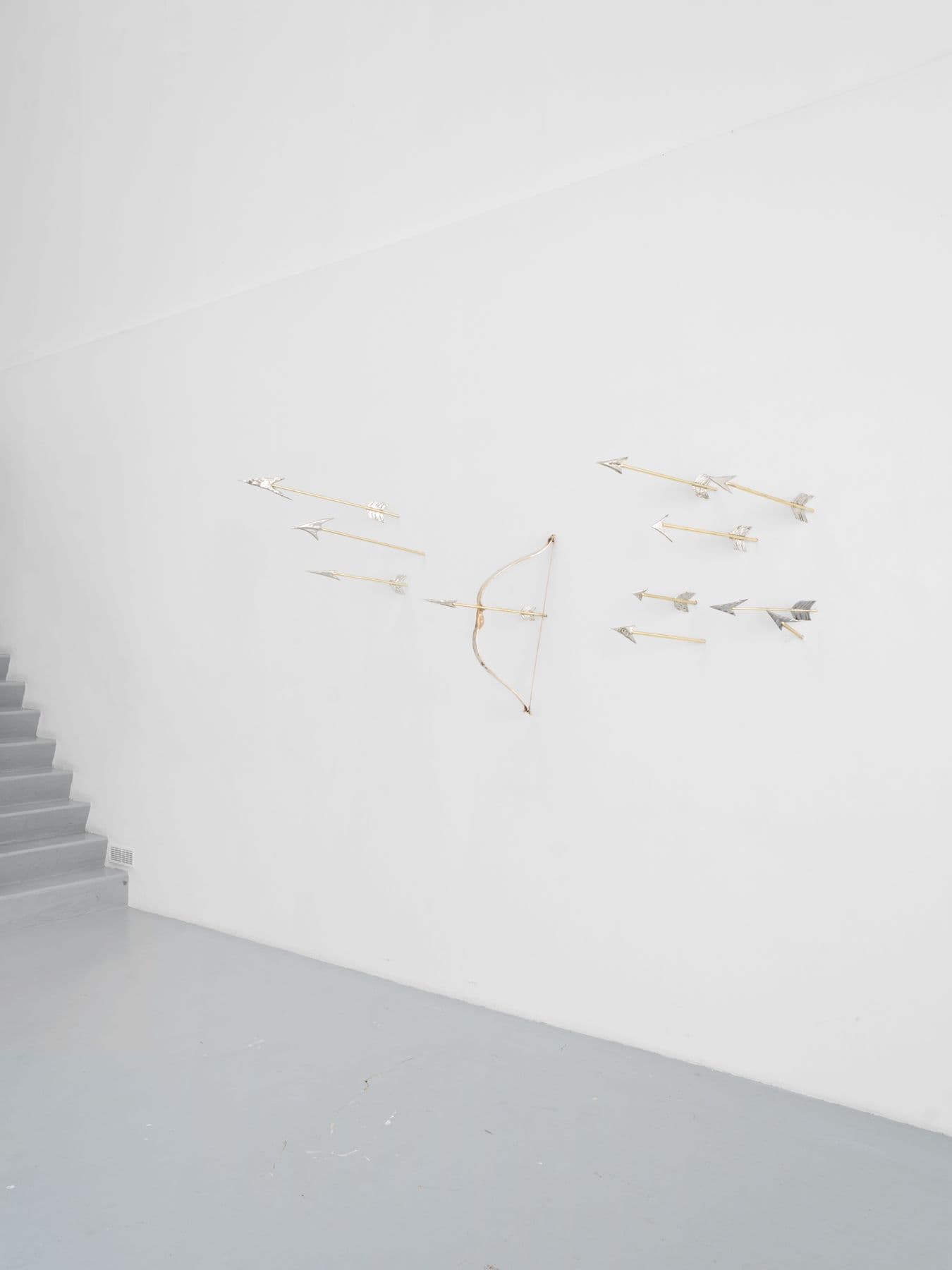
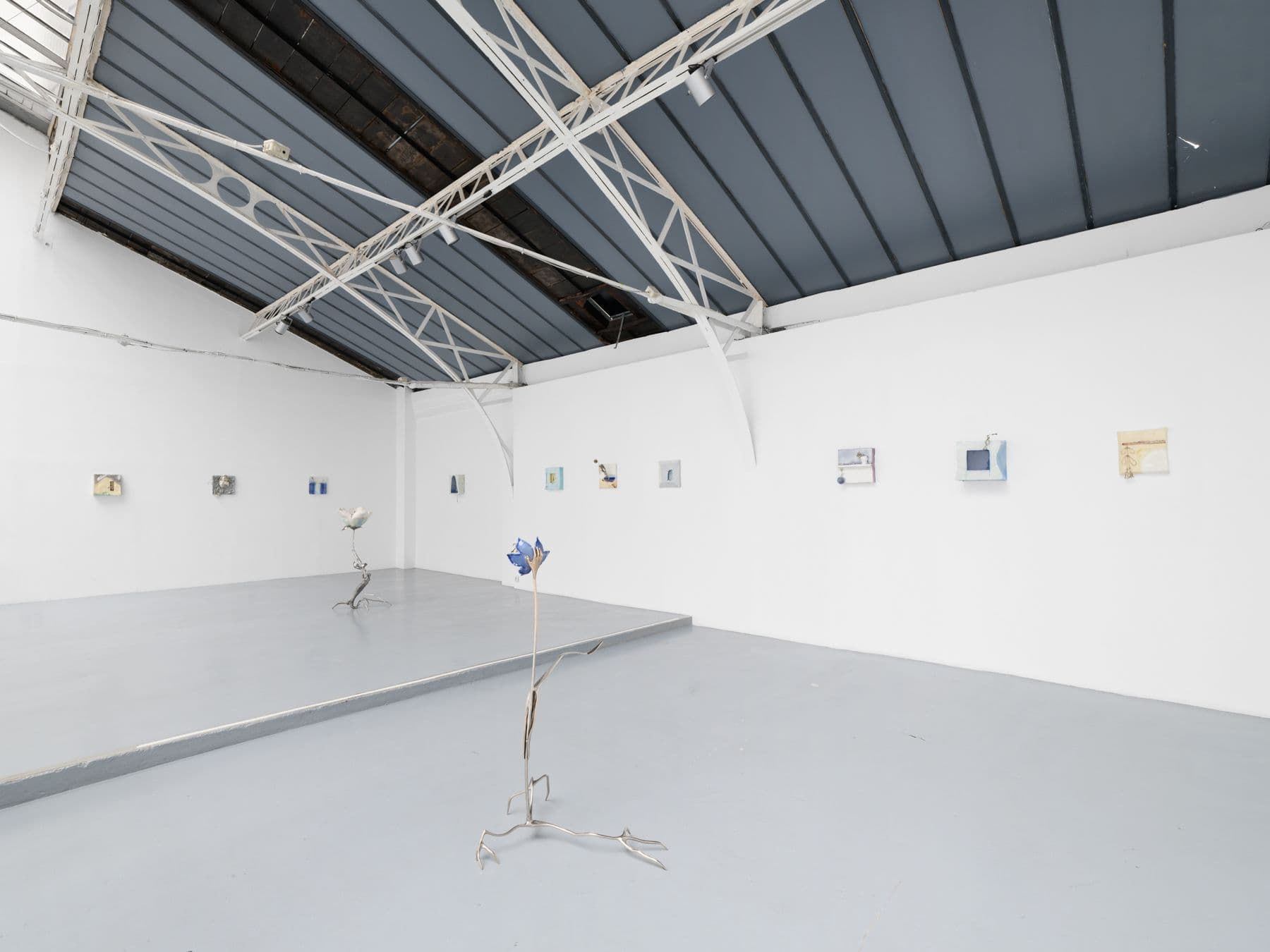
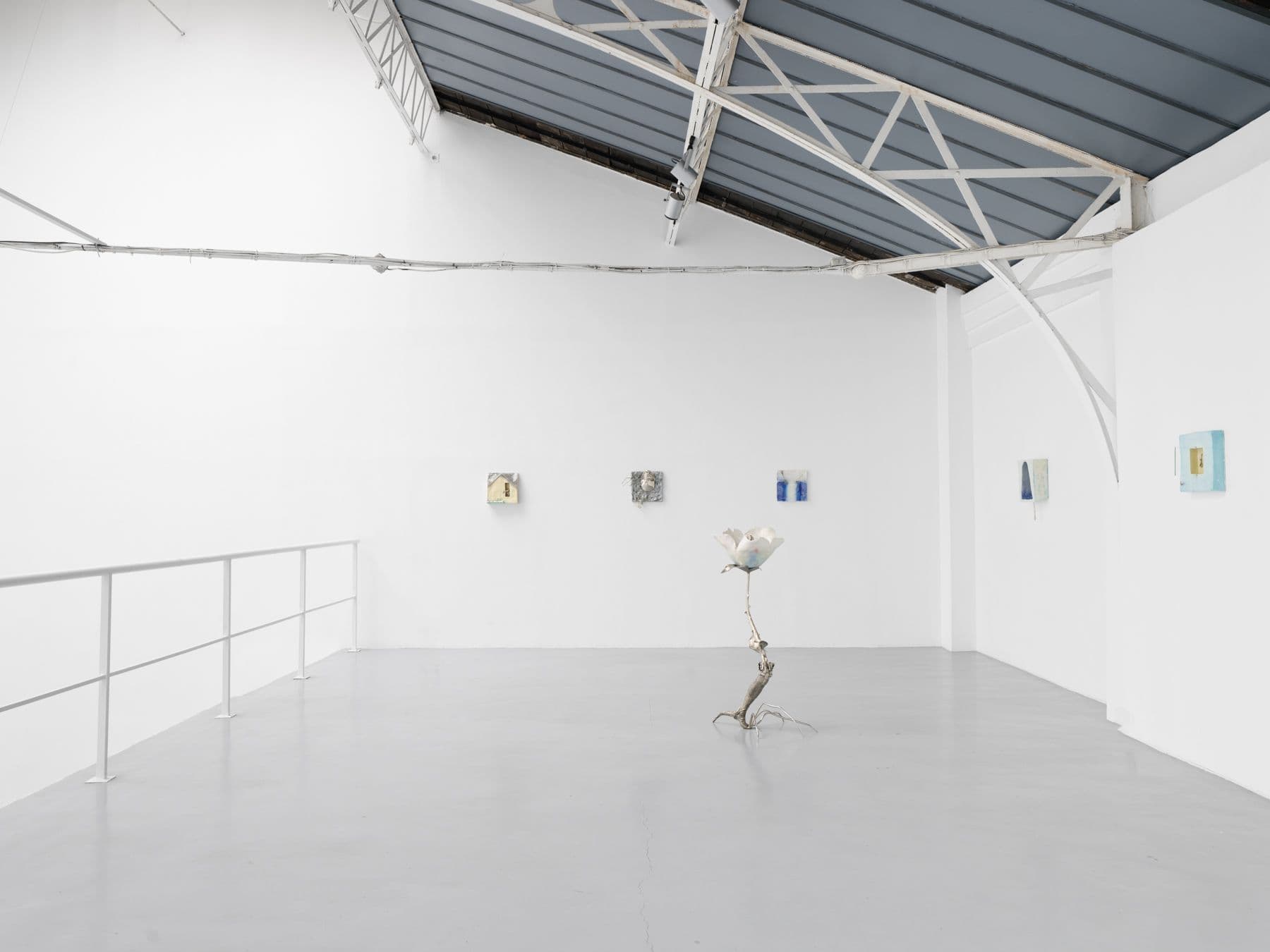
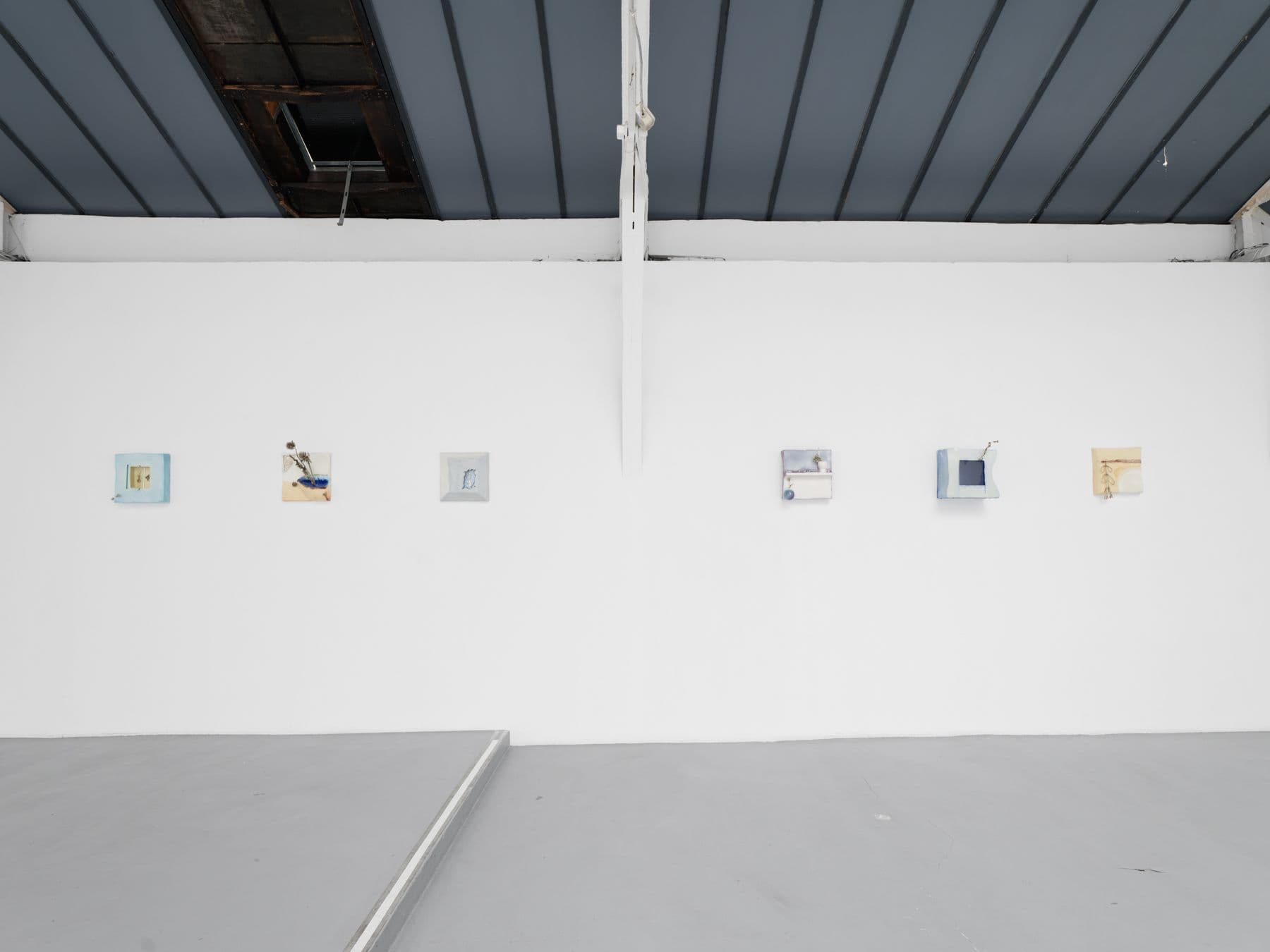
Hussenot[Scroll down for French version / Veuillez trouver ci-dessous la version française] We enter through a portal (‘Five Swords and a Bow’, 2025). Arrows and daggers have rained down on the walls of the corridor. Polished using the lucidare specchio technique (‘mirror of light’), these bronze weapons birthed from a war without warriors, have now half disappeared. As one approaches, scratches can be seen on the metal, bearing witness to a past of muted violence. Pointing outwards, the arrows open a breach into the world of Apollinaria Broche. A dark place, where flowers and shadows grow human souls. On the first floor of Galerie Hussenot, the first two pieces on the initiatory journey transport us into another world. ‘Shadow, Mouvement, Portal' (2025), an upside-down shadow girl, acts as a physical and metaphysical bridge between the real and the unconscious. The black sulfide that covers her creates a play of light that sets her in motion; sculpted in bronze, we think her immutable, but she already escapes us. Her feet become brambles, and the silver nitrate in which she has been immersed gives her a spectral transparency: she has already passed to the other side. The girl acts as a doorway to the house (‘Another Point of Reference’, 2025), still too small to be inhabited. Suspended upside down by fine, precious threads, this point of reference is untouchable and cannot be damaged. It is a goal to be reached, distant, under construction, and fragile. No matter. For in waiting for a room of its own, the shadow has gone ahead of its body and managed a way ‘to find its dimensions, not be impeded’.[1] So, beneath the house's foundations, Apollinaria Broche engraves a prophetic inscription: ‘Home again, I know one day I'll find my home’. And at its heart, she plants a white bronze tree as an omen of things to come. Upstairs, the artist continues to cultivate her garden, from which flowers spring forth with each exhibit. For ‘The Unspoken Rules of Secret Play’, she summons three of them like the three Moirai fates, weaving a reflection on the passing of time, ever so necessary for transformation. The flowers are set against a series of tarot cards, whose omens haunt the exhibition. Eleven cards conceived as bas-reliefs in bronze and ceramics succeed to the ‘hangman’ below. Thought as display cases, the artworks contain keys, threads, spoons, preserved items collected over the years. These works echo Sekretiki, the game of secrets Apollinaria played as a child, in which valuable objects were enclosed under glass and buried underground like space-time capsules. In Sekretiki, as The first flower, ‘Venus’ (2025), its stem satin-smooth like skin, is beginning an anthropomorphic transformation. Balanced on four claws, its fifth strand is a human leg clad in fishnet stockings, a molded witness to Apollinaria’s first search for sensuality. With its wide-spread white ceramic petals, ‘Venus’ testifies to a liberation of the flesh through transfiguration. The second, ‘Moirai and Cat's Cradle’ (2025), whose buds are hands in action, indicate a rediscovered mastery over destiny through the performance of play. Finally, the smaller ‘Primavera’ (2025) seems to combine past and present, foreshadowing with its pale-blue crown, a discreet, gentle spring blooming, the fruit of fantasy, but a fantasy ready at last to leap into the world of reality. Sculpted in white bronze cast around metal stems, the normally motionless flowers vibrate and play out a non-verbal dialogue with each other. An obsessive sculptor, Apollinaria is constantly in contact with matter. She ultimately makes it sensual, imbuing it with the sometimes-unacknowledged desires of her body and her femininity. She achieves this through the precise work of polishing, satin-finishing and waxing, and by bringing balance and movement to the shapes that counter the immutability of bronze. Apollinaria Broche is always at the boundary between solid cold and liquid movement. With her, the works are still-warm bodies, animated, and magical. In limbo, Apollinaria found refuge a few years ago in a foundry, where she has merged with her works and their environment. With them, Apollinaria reshuales the cards of the secret game she's been dealt, inviting us to plunge into the heart of her volcano. Perched with her on sharp stilts, we glimpse it in the distance: time regained. —Justine Daquin Apollinaria Broche (b. in 1995) lives and works in Paris and in Pietrasanta. Throughout her sculpture and installation-based practice, Broche creates places of escape and retreat from the world that blur boundaries between the real and imagined. Incorporating bronze into her newest work—an addition made possible by the artist’s residence for the past year in the centuries-old artist colony in Pietrasanta, Italy— Broche highlights the dualities present throughout her practice: strength and fragility, nightmare and dream, personal and political, fantasy and reality. 1 - Virginia Woolf, A room of One’s Own, 1929 in the exhibition, play and destiny are intimately linked, expressing a desire to control the hazards of life. ***** On entre par un premier portail (‘Five Swords and a Bow’, 2025). Des flèches et des dagues ont plu de part et d’autre de l’entrée. Polies avec la technique du lucidare specchio, ‘miroir de lumière’, ces armes en bronze issues d’une guerre sans guerriers disparaissent à moitié. En s’approchant, on devine des griffes laissées apparentes sur le métal, témoins d’une violence sourde et passée. Pointes tournées vers l’extérieur, les flèches ouvrent une brèche vers le monde d’Apollinaria Broche. Celui, obscur, où les ombres revêtent des âmes et une profondeur humaine. Au rez-de-chaussée de la galerie Hussenot, les deux premières pièces du parcours initiatique nous font basculer dans cet ailleurs. ‘Shadow, Mouvement, Portal’ (2025) est une fille-ombre renversée, un pont physique et métaphysique entre le réel et l’inconscient. Le sulfure noir qui la recouvre crée des jeux de lumière qui la mettent en mouvement ; sculptée en bronze, on la pense inébranlable, mais elle s’apprête déjà à nous échapper. Ses pieds se font ronces et le nitrate d’argent dans lequel elle a été trempée lui donne une transparence spectrale : elle est déjà passée de l’autre côté. La fille agit comme une porte vers la maison (‘Another Point of Reference’, 2025), encore trop petite pour être habitée. Suspendue à l’envers par des fils fins et précieux, ce point de référence est intouchable et ne peut être abîmé. Il est un but à atteindre, lointain, en construction et fragile. Peu importe, car dans l’attente d’une chambre à elle, l’ombre a devancé son corps et a ‘découvert ses propres dimensions et refusé les entraves’.[1] Alors, sous les fondations de la maison, Apollinaria Broche grave une inscription comme une prophétie : ‘Home again, I know one day I’ll find my home’. Et en son cœur, y plante un arbre en bronze blanc comme l’augure d’une floraison à venir. À l’étage, l’artiste continue de cultiver son jardin dont elle fait jaillir les fleurs au fil des expositions. Ici, elle en convoque trois, comme trois Moires semblant tisser une réflexion sur le temps qui passe, celui qu’on sait nécessaire à la transformation. Les fleurs sont mises en regard avec la série des cartes de tarot, dont les présages hantent l’exposition. Ainsi, au ‘pendu’ du premier étage se succèdent onze cartes pensées comme des bas- reliefs en bronze et en céramique, des vitrines où gisent des objets conservés (clés, fils, cuillères), collectés au fil des années. Ces œuvres font écho à Sekretiki, le jeu des secrets auquel jouait enfant Apollinaria, où l’on enfermait des objets de valeur sous verre et sous la terre comme autant de capsules spatio-temporelles. Dans Sekretiki comme dans l’exposition, jeu et destin sont intimement liés et expriment une volonté de contrôle sur le hasard de la vie. La première des fleurs, ‘Vénus’ (2025), a sa tige satinée comme de la peau et entame sa transformation anthropomorphe. Elle est en équilibre sur quatre griffes ; la cinquième est une jambe humaine vêtue d’un bas résille, témoin moulé de la première recherche de sensualité. Avec ses pétales blancs en céramique largement déployés, ‘Vénus’ atteste d’une libération de la chaire par la transfiguration. La seconde, ‘Moirai and Cat’s Cradle’ (2025), dont les bourgeons sont des mains en action, indique une maîtrise retrouvée sur le destin par le jeu. Enfin la troisième, ‘Primavera’ (2025), plus petite, semble combiner passé et présent pour présager avec sa couronne bleu pâle une ré- éclosion printanière discrète et douce, fruit du fantasme mais enfin prête à opérer le passage vers le monde du réel. Sculptées en bronze blanc coulé autour de tiges de métal, les fleurs normalement immobiles vibrent et jouent entre elles un dialogue non verbal. Sculptrice obsessionnelle, Apollinaria est sans relâche au contact de la matière. Elle finit par la rendre sensuelle, lui prêtant les désirs parfois inavoués de son corps et de sa féminité. Elle y parvient par le travail précis des polissages, satinages, cirages et par la mise en équilibre et en mouvement des formes qui viennent soudain contrer l’immuabilité du bronze. Apollinaria Broche se situe toujours à la frontière du froid solide et du mouvement liquide. Avec elle, les œuvres sont des corps encore chauds, animés et magiques. En suspension, Apollinaria a trouvé refuge depuis quelques années dans une fonderie et a fusionné avec ses œuvres et leur environnement. Grâce à elles, Apollinaria rebat les cartes du jeu secret qui lui a été donné et nous invite à plonger au cœur du volcan. Juché.es avec elle sur des échasses acérées, on l’aperçoit alors au loin : le temps retrouvé. —Justine Daquin 1 - Virginia Woolf, Une chambre à soi, 1929