
Collateral, Venice
Mariam Natroshvili & Detu Jincharadze
I Pity the Garden
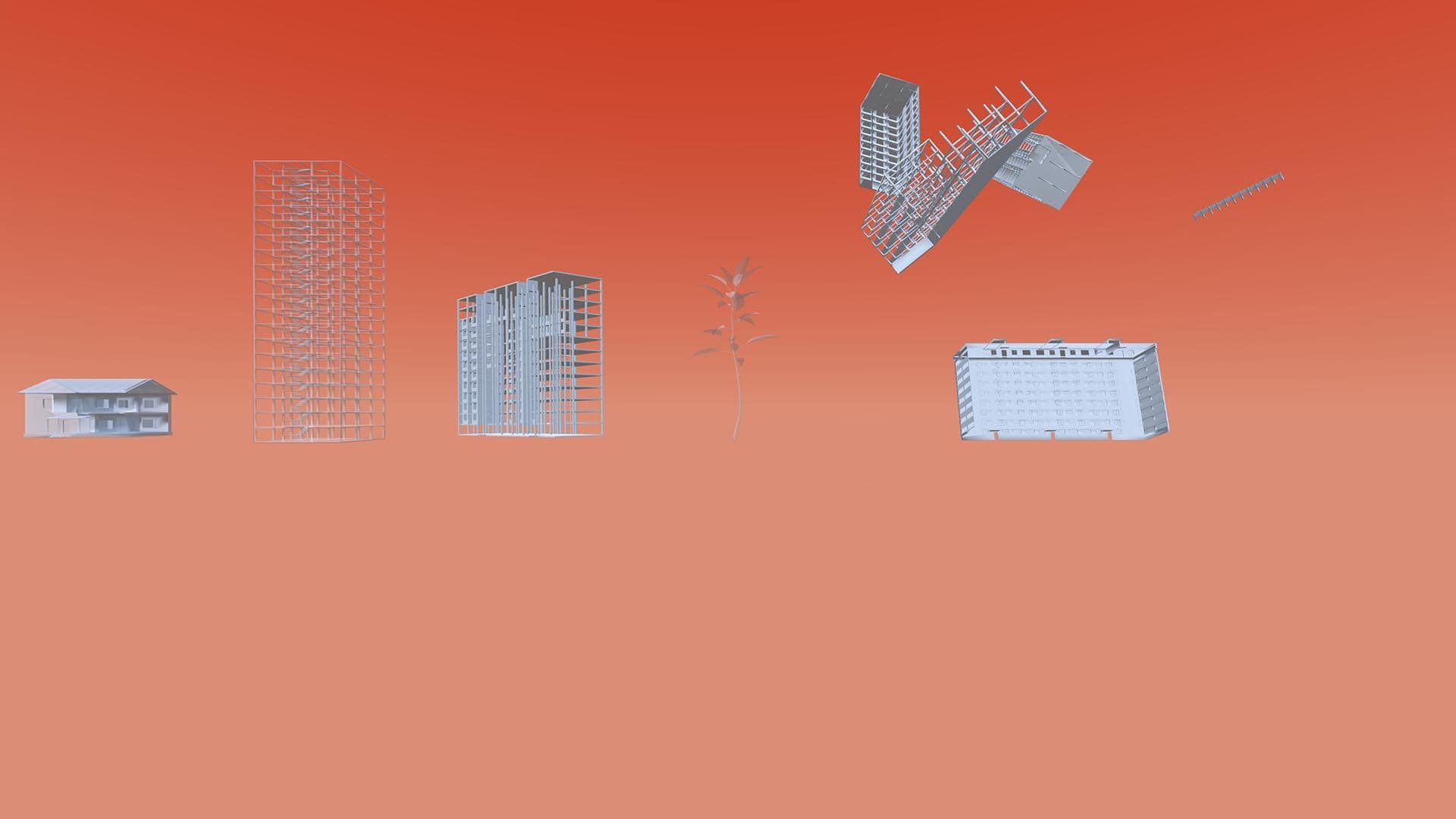
Georgian PavilionI Pity the Garden by Tbilisi-based artist duo Mariam Natroshvili and Detu Jincharadze is an immersive artwork about a premonition of the end. Through large-scale video installation and VR experience, the viewer is led into a realm of magical realism within the Anthropocene Epoch. For Natroshvili and Jincharadze, artists born a few years before the collapse of the Soviet Union, the feeling of the end has always been integral to their experience of everyday life and has existed as a cornerstone of their collective memory. Living within the volatile environment of the Global South means to exist with the constant anticipation of various kinds of endings. This end does not necessarily mean disappearance; it can also embrace the beginning of something different in itself. However, the drama of how events unfold too often resembles a dystopian reality or a horrific fairytale where the metaphorical garden dries out, dies, is set ablaze, and is ultimately rendered empty. I Pity the Garden1 takes the viewer into an immersive environment modeled by the mythopoetic forms of the artist’s narrative. It’s an observation on the signs marking the end: a horizon on fire, an abandoned city, a barking dog chained to a wall made of words, a vacant office cracking, a place where supermarket shelves are taken over by a horde of insects. The central scene of the VR experience is a garden of extinct plants - The Ghosts Garden. This ecological crisis, in real life and represented here in VR, is one of the signs of the end. This virtual garden unites plants that have become extinct as a result of human intervention. The work presents non-linear storytelling of the Anthropocene era garden. The VR Experience is interactive, while the self-generating visual sequence of the video projection is not predefined - the quaked earth has detached from objective reality, it is shaken by human deeds, a puzzle composed of images of real places and fragmented environments. The setting is similar to an abandoned video game where no human is visible. Only traces, irreversible mistakes, and wounds in the earth can be seen. It is a poetic work that employs the technological age’s language of the new surrealism to speak about the end and the beginning. Mariam Natroshvili (b*1987) and Detu Jincharadze (b*1984) are the Tbilisi-based artists working together since 2011. Their practice includes multimedia, interdisciplinary, and curatorial projects. Focusing on themes such as the disappearance and oblivion, they look for the traces of personal or collective memory, stories of people and places faded away or transformed as the results of significant socio-political or ecological events. The key medium of the artists are words, texts, video, VR, and CGI imagery. The first joint projects of Natroshvili and Jincharadze included illegal writing of the elsewhere found words and phrases on abandoned Soviet buildings, often in the form of unanswered questions. The texts acting as titles for disturbed landscapes responded to the post-Soviet present in a poetic language. The language in their artwork is the visual element always related to the place. Like magical formulas, they change the space or surfaces and bring the viewer to their own emotions and associations. Architecture and texts are significant in the duo’s art practice. The stories told through buildings or a city determine the work as the objects for observation on history and memory, symbols of changes. Another important route of the duo’s artistic work is the creation of ghost museums connected to their essential quest for lost information, knowledge, history, and the ways of their storage. The museum projects include The Museum of Superstitions (2013), The News Museum (2014), The Museum of Red Winds a.k.a The Museum of Legends (2015), The Museum of Unidentified Files, and The Museum of Masterpieces (2017). The significant work of the museum series was The Museum of Contemporary Art on Call, (2017), criticizing the absence of the Contemporary Art Museum in Georgia. It featured photos of artifacts created by Georgian artists since the 1980s collected in a special suitcase. With a small payment, anybody could invite the museum to hear the history of Georgian contemporary art told by the artists. At present, in collaboration with the Writers’ House of Georgia and the Soviet Past Research Laboratory, the duo works on The Museum of Repressed Writers. One of the works of the duo titled Tomorrow is a part of permanent public art installations of Tbilisi. Many of their works are kept in private collections in Georgia and abroad. The duo has participated in many international and local exhibitions and art events. 2018 marked the artists moving from the public to the digital space. Currently, AR, VR, and CGI formats are the main working tools for Natroshvili and Jincharadze. During the last three years, they have created interactive virtual exhibitions and museums based on the principle of a video game. The latest works also include short documentaries Dismantled, describing the life of the socially vulnerable individuals living and working in a former vinegar factory in Tbilisi; Status: Homeless, collection of stories told by the people living in extreme poverty; VR Experience the City was Asleep, and it had a Dream showed at the Liminal Reality, IDFA DocLab Competition for Immersive Non-Fiction. In-between Conditions is a Tbilisi-based multimedia art platform founded in 2018 by Giorgi Spanderashvili, Khatia Tchokhonelidze, and Vato Urushadze. The platform combines media art, new technologies, science, and other hybrid forms of contemporary culture and tends to elaborate a complex curatorial approach focused on identifying changing socio-political contexts, developing cultural infrastructure, and generating manifestations for knowledge production. In-between Conditions is a reflection on current transforming times where fast-paced technological development, irreversible process of dissemination of digital information, constant online connection of time and space, media manipulations, “fake news”, alternative or simulated realities, all fundamentally transform perspectives of human perception and representation. Commissioner: Magda Guruli Curators: Vato Urushadze, Khatia Tchokhonelidze, Giorgi Spanderashvili