
Chelsea, New York
Group Exhibition
Data Consciousness: Reframing Blackness in Contemporary Print
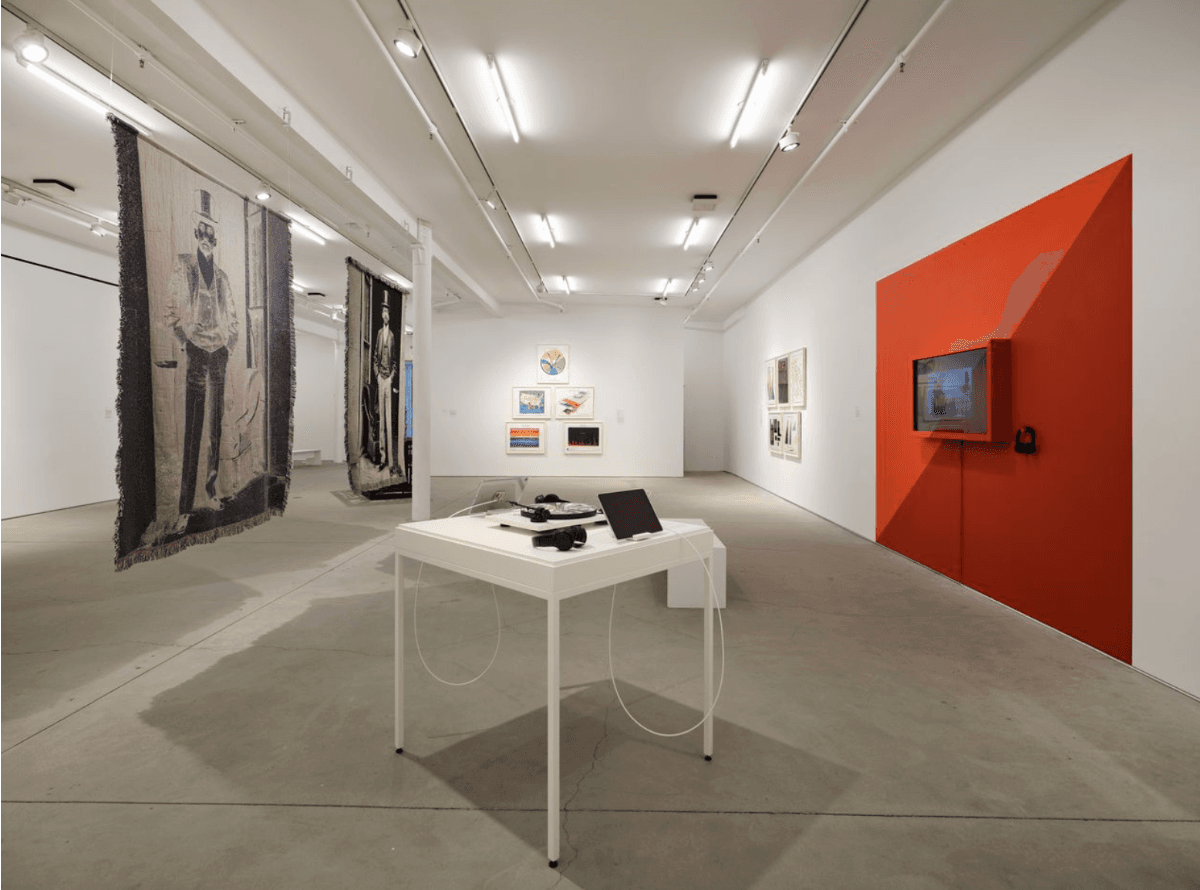
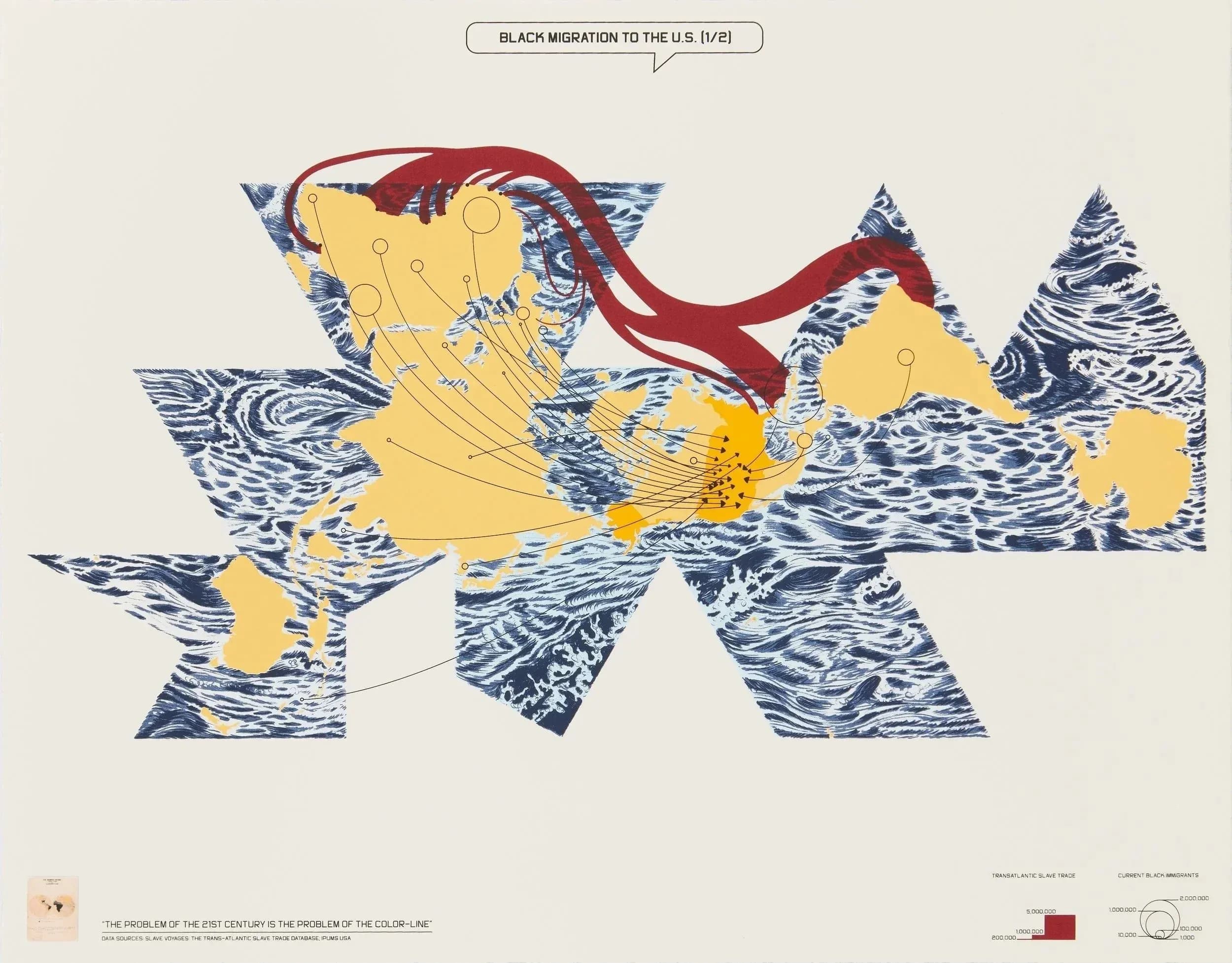
Print Center New YorkTahir Hemphill, Julia Mallory, Silas Munro, Shraddha Ramani, Kameelah Janan Rasheed, William Villalongo Print Center New York is pleased to present our fall 2025 exhibition Data Consciousness: Reframing Blackness in Contemporary Print, which brings together work by Black contemporary artists who explore expanded modes of printmaking to question the complex interplay between race, technology, and representation in our increasingly data-driven world. The exhibition features Tahir Hemphill, Julia Mallory, Silas Munro, Kameelah Janan Rasheed, and William Villalongo and Shraddha Ramani. The exhibition's title references the concept of double consciousness articulated by the sociologist, historian, and activist W.E.B. Du Bois—the sensation and unreconciled striving of looking at and measuring oneself through the eyes of others. The exhibition also draws inspiration from Du Bois (1868–1963), who, at the 1900 Paris Exposition, presented a series of graphs, charts, maps, and photographs that visualized Black life after Reconstruction. Now considered important contributions to American design history and an early form of visual sociology and data science, Du Bois's proto-modernist, hand-drawn infographics have had a profound impact in how we measure racial progress, and are of increasing relevance as the presence of data in daily life grows. The works on view in Data Consciousness—including prints, sculpture, installation, textile, and video—reframe Black contemporary art as a critical site for understanding how digital infrastructures amplify and constrain identity and autonomy. Data Consciousness is conceptually and spatially anchored by an expansive, collaborative research-based print portfolio by artist William Villalongo and urbanist Shraddha Ramani. Their project, Printing Black America: Du Bois's Data Portraits in the 21st Century follows Du Bois's ground-breaking approach to his iconic data visualization illustrations. Villalongo and Ramani's project uses national data on Black life drawn from official records such as the 2020 U.S. Census as well as hyper-local oral testimonies and archives. The resulting portfolio of 30 images is produced in collaboration with six print publishers across the U.S.: Powerhouse Arts, Brooklyn; Graphicstudio, University of South Florida, Tampa; Island Press, Washington University, St. Louis; Highpoint Editions, Minneapolis; Paulson Fontaine Press, Berkeley; and Mullowney Printing Company, Portland, OR. Silas Munro's multimedia work similarly nods to Du Boisian legacies, while exploring the overlooked histories of Black modernism and design, and emphasizing LGBTQ+ and minority perspectives. Kameelah Janan Rasheed's original work, though rooted in text-based minimalism, moves beyond the written form in ways that DuBois transmuted data into art. Building on Du Bois's legacy of fiction writing and data visualization, Tahir Hemphill generates interactive visual histories, community data projects, and contemporary art objects that merge hip hop poetics, writing, photography, 3-D printed sculpture, and literature. Julia Mallory's video work animates Du Bois's original drawings and her own familial heritage through stop-motion collage and narrative storytelling, drawing out speculative lineages and futures. Together, these artworks interrogate the surveillance and commodification of data and the biases embedded in algorithmic technologies, subverting the urgency and ubiquity of data and its relationship to Black social life in twenty-first century America. More urgently, they configure Black creative agency as a tactic of disorderly power, articulating the ways in which Blackness emerges from data, as well as how upending staid systems of measurement and representation can advance more ethical and equitable visions of community and care.