Dates
Nov 15 – Jan 1, 2026
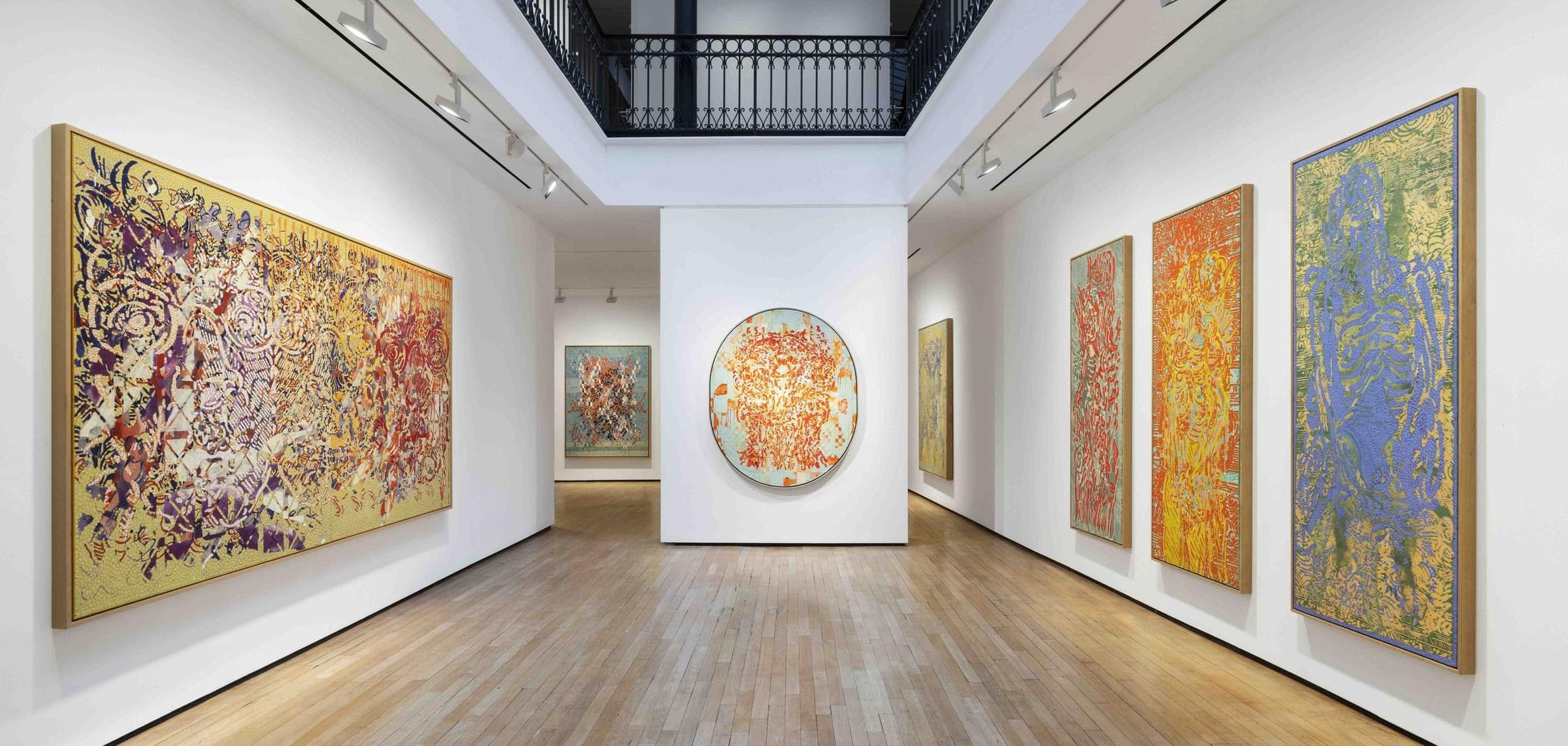
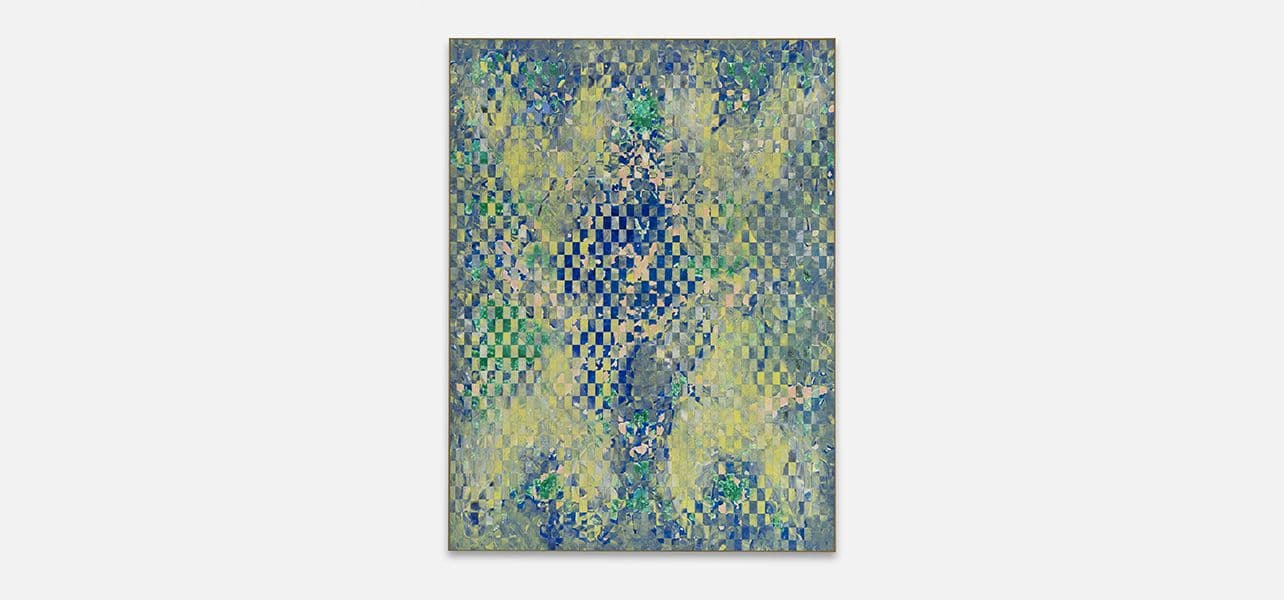
[Scroll down for French version / Veuillez trouver ci-dessous la version française] Nearly twenty major works unfold an oeuvre that can be rediscovered, in the words of Alfred Pacquement, as “possessing a density and depth rarely encountered along the pathways of contemporary art.” From the outset, Rouan was associated with the Supports/Surfaces movement, though he never adhered to it fully. His singular approach led him to deepen the pictorial gesture through collage, and, from 1965 onwards, through the invention of weaving (tressage). In the 1980s, his exploration of new media – photography and film – prompted him to broaden the field of painting, deconstructing traditional pictorial structures in order to reinvent them. The exhibition brings together primarily paintings from the Transis and Recordas series. In the former, executed in wax, forms emerge from within reiterated motifs like vestiges of memory, transforming each work into an apparition, a kind of indelible shroud. In the latter, Rouan meticulously weaves fragments of canvas, producing a surface both literal and symbolic. Colours interlace with intensity; forms recur with stubborn insistence, even as the painted surface persistently unravels. Nothing reveals itself at first glance: the work demands a patient, ever-renewed engagement. Through this interplay of borrowed elements and imprints, François Rouan composes an oeuvre of pronounced palimpsest character – what Daniel Sibony has described as a “magnificent meditation on the texture of existence.” This formal and spiritual rigour situates him among the foremost abstract painters of modernity. François Rouan has recently been entrusted with the creation of new stained-glass windows for the refectory of the Abbey of Fontevraud. Born in 1943 in Montpellier, François Rouan lives and works in Laversine (France). From the beginning of his career in the 1960s, he was associated with the Supports/Surfaces movement without being officially affiliated with it. François Rouan has followed a singular path, deconstructing the traditional structure of the painting to open up new avenues in the field of contemporary painting. Following his research into collages, he produced his first braids in 1965 and from 1980 onwards extended his practice to other mediums, photographic and filmic. ***** Près d’une vingtaine de pièces majeures y déploient une oeuvre que l’on redécouvre, selon les mots d’Alfred Pacquement, comme « d’une densité et d’une profondeur rares, que l’on ne rencontre guère sur les chemins de l’art d’aujourd’hui ». Dès ses débuts, l’artiste fut rapproché du mouvement Supports/Surfaces, sans jamais s’y rattacher pleinement. Sa démarche singulière l’a conduit à approfondir le geste pictural à travers le collage, puis, dès 1965, par l’invention du tressage. Dans les années 1980, l’exploration de mediums nouveaux – photographiques et filmiques – l’amène à élargir le champ de la peinture, déconstruisant les structures traditionnelles du tableau pour mieux les réinventer. L’exposition rassemble principalement des toiles issues des séries Transis et Recordas. Dans les premières, exécutées à la cire, des formes surgissent au coeur de motifs réitérés, telles des traces mémorielles qui transforment chaque oeuvre en apparition, en suaire indélébile. Dans les secondes, Rouan tresse avec minutie des fragments de toile, donnant naissance à une trame à la fois littérale et symbolique. Les couleurs s’y entrecroisent avec intensité, les formes s’y répètent obstinément, malgré la désagrégation opiniâtre de la surface. Rien ne s’offre d’emblée au regard : l’oeuvre requiert une approche patiente, toujours recommencée. Par ce jeu d’emprunts et d’empreintes, François Rouan compose une oeuvre éminemment palimpseste, qui se présente comme un « travail magnifique sur la texture de l’existence » (Daniel Sibony). Cette exigence formelle et spirituelle le place au premier rang des grands abstraits de la modernité. François Rouan s’est vu confier la création des nouveaux vitraux du réfectoire de l’abbaye de Fontevraud.