
Collateral, Venice
Zeng Fanzhi
Near and Far/Now and Then
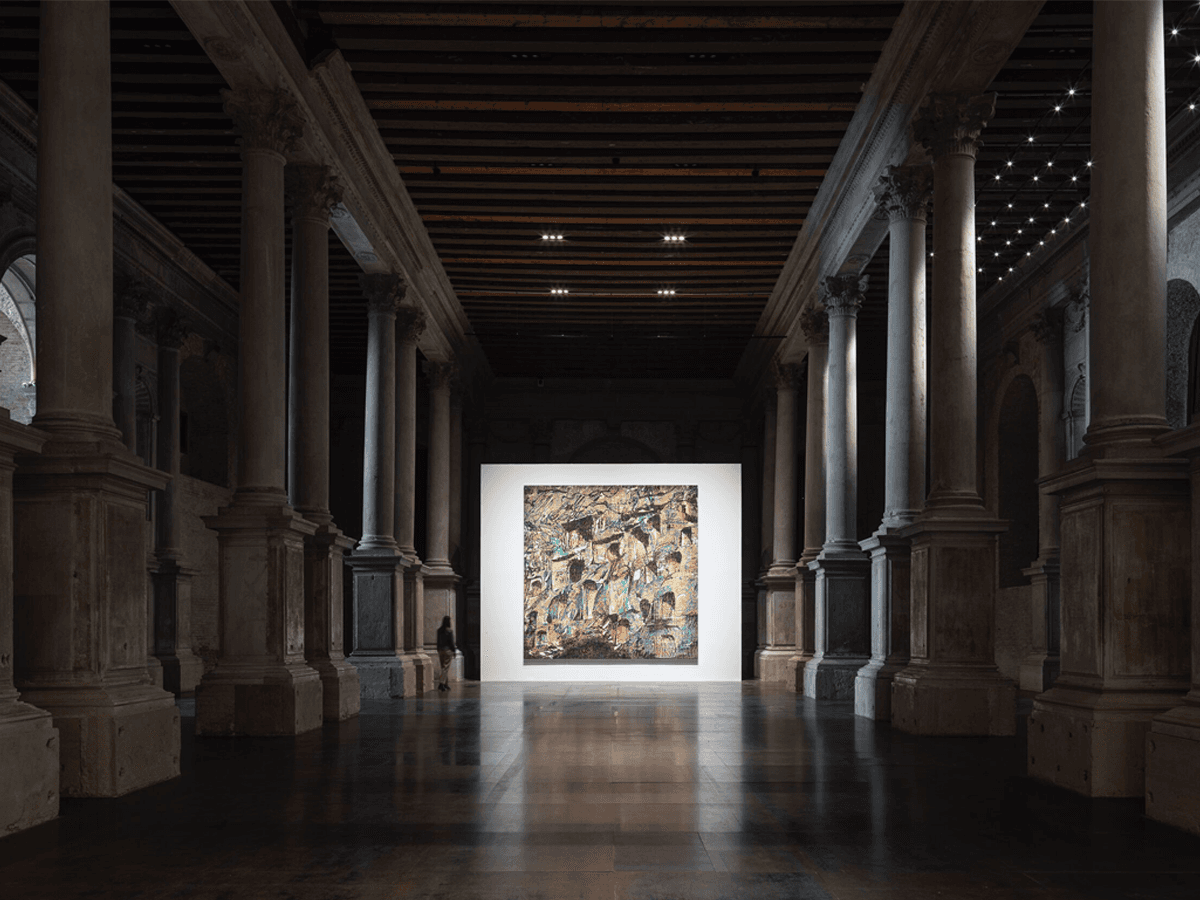
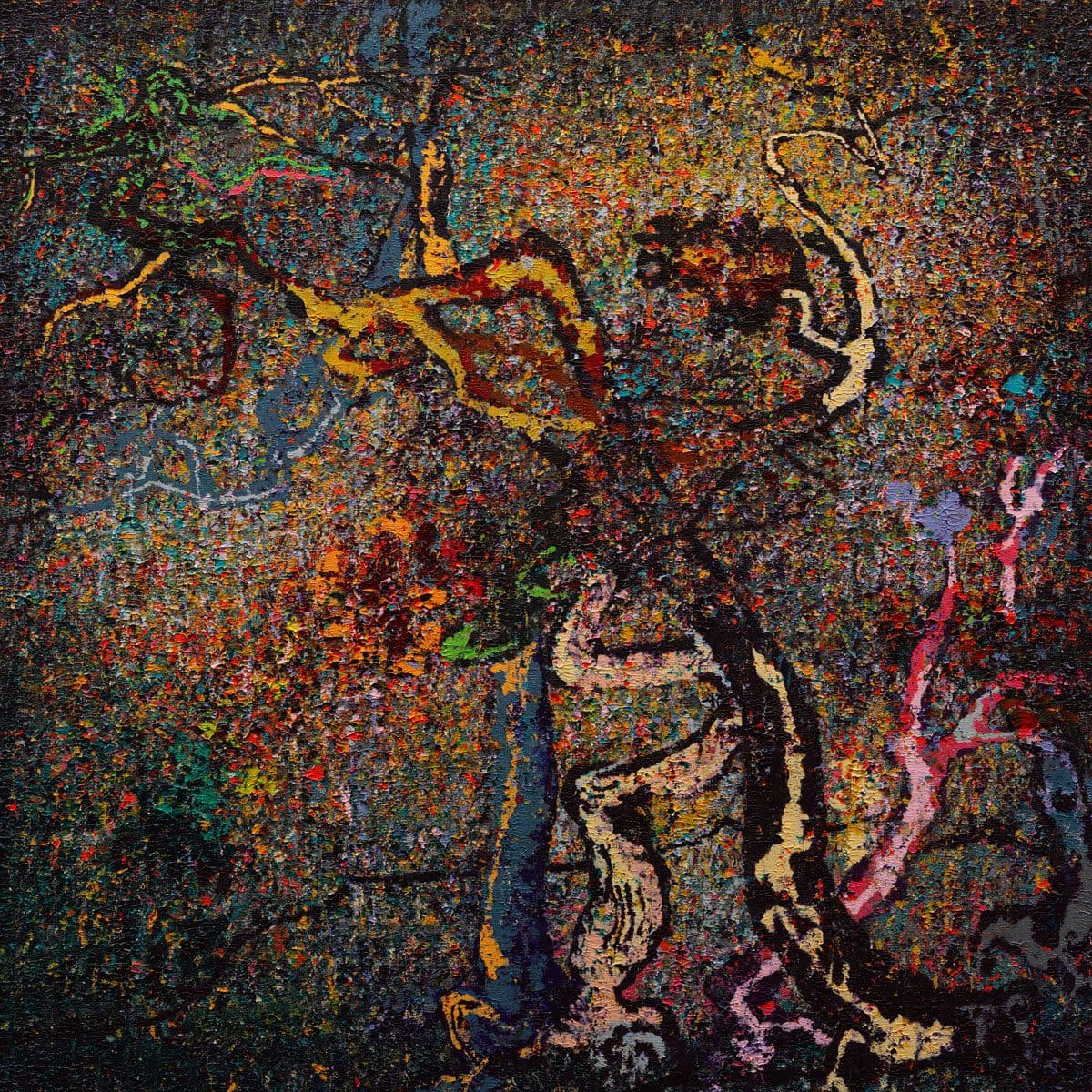
Scuola Grande della MisericordiaThe Los Angeles County Museum of Art (LACMA) is pleased to present Zeng Fanzhi: Near and Far/Now and Then, an exhibition featuring new works by renowned artist Zeng Fanzhi (b. 1964) to be opened concurrently with the 2024 edition of La Biennale di Venezia. With an installation designed by architect Tadao Ando, the exhibition will be mounted in the historic Scuola Grande della Misericordia. Presented in this exhibition are the latest breakthroughs in the artist’s practice. Near and Far/Now and Then will premiere two recent bodies of work by the artist: new abstract paintings and the debut of works on handmade paper rendered in ink, graphite, chalk, and gold dust, among other mineral pigments. The exhibition is co-curated by Michael Govan, LACMA CEO and Wallis Annenberg Director, and Stephen Little, Florence and Harry Sloan Curator of Chinese Art and Department Head, Chinese, Korean, and South and Southeast Asian Art. “Zeng Fanzhi’s work is especially celebrated as a balance of technical mastery and emotion,” said Michael Govan. “Near and Far/Now and Then at the Scuola Grande della Misericordia will shed light on Zeng's ambitious painting practice, and Tadao Ando’s architectural intervention will illuminate the interconnections that Zeng’s new body of work highlights.” “Zeng Fanzhi’s work engages two different types of materials: one thick and topographical, another thin and translucent,” said Stephen Little. “His work also demands two opposing approaches to viewer engagement—one distant, the other profoundly intimate. Taken together with the Asian and European traditions on which it draws, this exhibition will guide viewers to discoveries prompted by tensions that are deftly deployed by the artist.” The exhibition will shed light on Zeng’s ambitious practice of redefining the abstract through exercises in figurative representation and vice versa. The artist’s new oil paintings emerged from his decades of research in color theory, drawing on and challenging Impressionist and Pointillist practices whereby images materialize only through the careful placement of individual marks of color. Here, the layers of brushwork create figurative elements that are readily recognizable from afar but when viewed up close dissolve into the materiality of oil paint. Tonal variations in one color give way to interwoven schemes of colors, often with more than 30 types of bright pigments in one image. The installation will provide an in-depth glimpse into his command of the medium, his wet-on-wet technique, and the emphasis on the sheer materiality of paint that defines his work. In a world now inundated with machine-rendered images, Zeng challenges viewers to recognize the superiority of painting as a time-honored art and craft. The works on handmade paper point to a new direction in Zeng’s work, ambitiously combining Christian, Buddhist, and literati iconography. They recall the apogee of Chinese monochrome ink landscape paintings of the Song (960 to 1279) and Yuan (1260 to 1368) dynasties, while also evoking the ambiguities in the ink landscapes of the late Ming and early Qing dynasty painters Zou Zhilin (1574 to ca.1654), Hongren (1610 to 1663), and Dai Benxiao (1621 to 1691). The subject matter moves fluidly from the crucifix to representations of rocks and old trees—symbols in traditional Chinese culture of strength, resilience, and longevity. As with Zeng’s paintings, these exquisite drawings deliberately defy categorization in their alignment with the great traditions of Asian and European art. Upon entering the ground floor of the Scuola Grande, visitors will be introduced to the classical proportions of the 16th century building, bracketed by two large multi-panel oil paintings, one alluding to Buddhist iconography, the other, Christian. Ascending to the upper floor, visitors will find the space divided into five thematic sections. Ando’s design is a progression of walls with a series of increasingly large apertures, each of which is self-contained yet connected with the others. These openings connect two larger works, one at each end of the space as on the ground floor, but, in this case, the two paintings are not strictly representational, but rather suggest abstractions of light and water. A selection of Zeng’s smaller format oil paintings and works on paper are respectively featured in and around Ando’s temporary walls. Against the backdrop of the Misericordia’s majestic spaces—steeped in history and richly decorated with frescoes—Zeng’s project grounds his audience in the visceral experience of art. Over the years, LACMA has developed a robust program of Chinese art through groundbreaking exhibitions, international partnerships, and key acquisitions. Recently, the museum has strengthened its holdings in Chinese contemporary art. In 2019, LACMA acquired Zeng Fanzhi’s monumental painting Untitled (2018), thanks to the generosity of Dominic and Ellen Ng, and brought in other key acquisitions, including the promised gift of over 300 contemporary Chinese ink paintings by Gérard and Dora Cognié in 2018 and the acquisition of Ai Weiwei’s Zodiac Heads , a gift of the late Budi Tek in 2022. In Los Angeles, LACMA has presented numerous exhibitions of Chinese contemporary art, with highlights including Leg acies of Exchange: Chinese Contemporary Art from the Yuz Foundation (2022); Ai Weiwei: Circle of Animals/Zodiac Heads (2022); Ink Dreams: Selections from the Fondation Ink Collection (2021); and The Allure of Matter: the Material Art of China (2019). Born in Wuhan, China, in 1964, Zeng Fanzhi graduated from the Hubei Institute of Fine Arts in Wuhan in 1991. During his early education, Zeng immersed himself in Western art, philosophy, and the social realist techniques of the 1985 New Wave movement in China. These interests became definitive in shaping his earliest series of paintings, Meat Series and Hospital Triptychs. These early works between 1989 and 1994 set the stage for an intensely personal and expressive painting practice that documents a prolific period of social and economic development in Chinese history. Working in the wake of rapid modernization and urbanization in China, Zeng turned his attention to figures from the industries around him. Inspired by artists such as Francis Bacon, Willem De Kooning, Max Beckmann, these works, known as the Mask and Behind the Mask series, straddle realism and imagination to reveal a valuable autobiographical and introspective reflection on his times and a meticulous attention to technical detail, cumulated into a rich body of portraitures and unique imagery. Over the past two decades, Zeng has reacquainted himself with Classical Chinese painting philosophy, and particularly art from the Northern Wei to Song and Yuan dynasties, from the fourth to 15th centuries. Informed by these new interests, Zeng has moved further into abstraction. Works grouped under Abstract Landscape Series have experimented via four phases of evolution, characterized by highly gestural landscapes that share the same dynamic energy of his portraiture. These canvases are traversed by meticulous and calligraphic lines, blending with and obscuring the legible objects in the background, to investigate the complex tension among nature, wildlife, and humanity. In parallel with his experimentations with “abstract landscape” painting, Zeng continued to forge ahead with a more experimental language in his portraiture studies: the We series comprises distorted faces painted at extremely close range, employing large, circular brushstrokes that create a frenzied and urgent presence. To produce these paintings, Zeng uses his entire body, stretching across the breadth of large-scale canvases to simultaneously apply color with multiple paintbrushes. Born in Osaka in 1941, Tadao Ando is a world-renowned self-taught architect and established Tadao Ando Architect & Associates in 1969. His representative works include Church of the Light, Osaka, Japan, Pulitzer Arts Foundation, St. Louis, MO, and Chichu Art Museum, Naoshima, Japan. He has received numerous awards, including the Architectural Institute of Japan Prize (1979), Japan Art Academy Prize (1993), the Pritzker Architecture Prize (1995), Gold Medal of the American Institute of Architects (2002), Person of Cultural Merit (2003), Gold Medal of Union Internationale des Architectes (2005), John F. Kennedy Center Gold Medal in the Arts (2010), the Order of Cultural Merit (2010), the French Order of Arts and Letters (Commandeur) (2013), the Grande Ufficiale dell'Ordine della Stella d'Italia (2015), the Isamu Noguchi Prize (2016), and Commandeur de la Légion d’Honneur (2021). His work has been the subject of major solo exhibitions at The Museum of Modern Art, New York (1991), Centre Pompidou, Paris (1993, 2018), and Armani / Siros, Milan (2019). He was a visiting professor at Yale, Columbia, and Harvard Universities. Since 1997 he has been a professor at the University of Tokyo and is currently a professor emeritus.
Visit
Cannaregio 3599