
Tribeca, New York
Group Exhibition
Early/Middle/Late
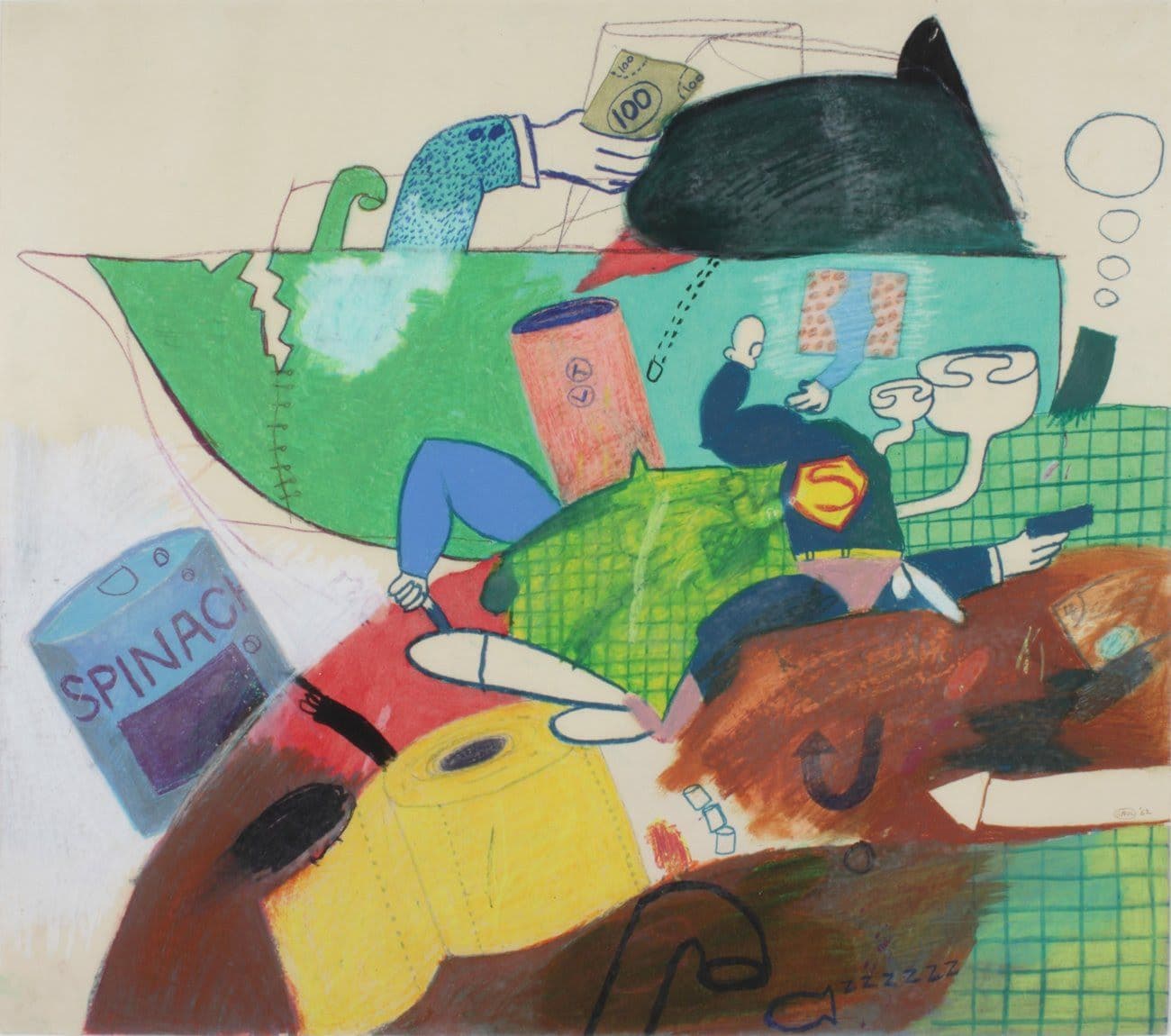
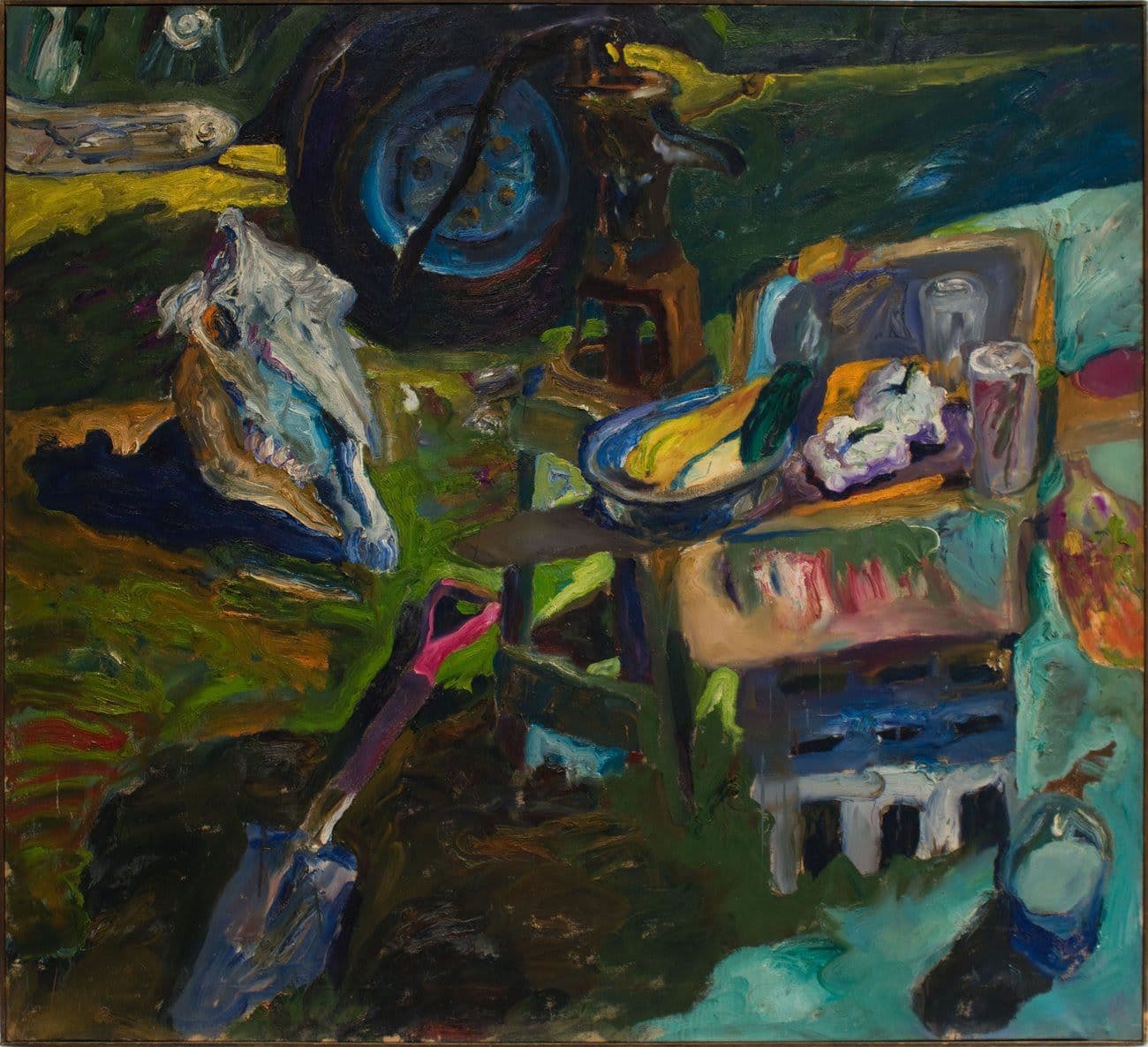
George Adams GalleryRobert Arneson Jack Beal Peter Saul M. Louise Stanley George Adams Gallery is pleased to present Early/Middle/Late, a selection of paintings, drawings and sculptures by Robert Arneson, Jack Beal, Peter Saul, and M. Louise Stanley. The exhibition illustrates each artist's development over the years by highlighting significant changes in their choice of medium, subject, and stylistic approach. In the early 1960s, Robert Arneson (1930-1992) began casting at the foundry at UC Davis where he taught for most of his career. The exhibition includes the Pop Art reference Playgirl, (1964) one of 20 unique cast bronzes Arneson produced from 1963-1965. During the 1970s, however, Arneson's focus becomes more personal when he begins making self-portraits, an example of which, Potter Plate, (1973) is included in the exhibition. While continuing to make self-portraits (now influenced by the cancer that eventually proves fatal), beginning in the early 1980s Arneson is prompted to take on political issues such as nuclear disarmament, the predominant theme in his work during the last ten years of his life. The series includes the complex, large-scale color woodcut, Nuclear War Head (1983) featured in the current exhibition. Jack Beal (1931-2013) studied at the School of the Art Institute of Chicago during the late 1950s before moving to New York. Although rigorously trained in figurative rendering, Beal, like so many artists at the time, is heavily influenced by Abstract Expressionism. The Pump, (1963) a large-scale oil on canvas, illustrates how Beal attempts to mediate between the two styles. As his work develops, however, it becomes more refined, culminating in a series of high-color, hard-edge paintings such as Table #8, (1969) included in the exhibition. Beal soon changes course yet again, dedicating himself to the figure with a greater emphasis on narrative and references to art history, as Daffodils with Corot's "Narni" from 2001 demonstrates. Peter Saul (1934 - ) was already recognized as a progenitor of Pop Art when he was working in France and Italy in the early 1960s. His engagement with cartoon themes and everyday objects is explicit in his drawing, Superman (1962). By the 1970s, however, his work had become overtly figurative (if highly stylized) and politically charged, as his color lithographs Angela Davis Crucifixion (1972) and Typicul Veet Nam Amboosh (1975) attest. In the later stages of his career, however, Saul returned to the cartoon for inspiration as is demonstrated by Bizarro #2 from 1999. M. Louise Stanley, (1942 - ) a resident of the Bay Area since 1965 and the youngest of the four, established her very personal, if jaundiced, view of humanity from the start. Her earliest works from the late 1960s and early 70s show an affinity with the Chicago imagists filtered through the lens of the hippy/drug culture of the Bay Area as demonstrated by her watercolor Telegraph Avenue (1970). By the 1980s, her style was imbued with a wry appreciation for current events, art history, and feminism as exemplified by Just Another Job (1987). Stanley's current work is more self-reflective, highlighting her circumstances as an artist, a woman, as well as life's changes; Good Old Days (2014), an equally ironic and nostalgic scene of a cocktail party framed by a Calder mobile, is included in the exhibition.