
Southside, Hong Kong
Lap-See Lam
Bamboo Palace, Revisited
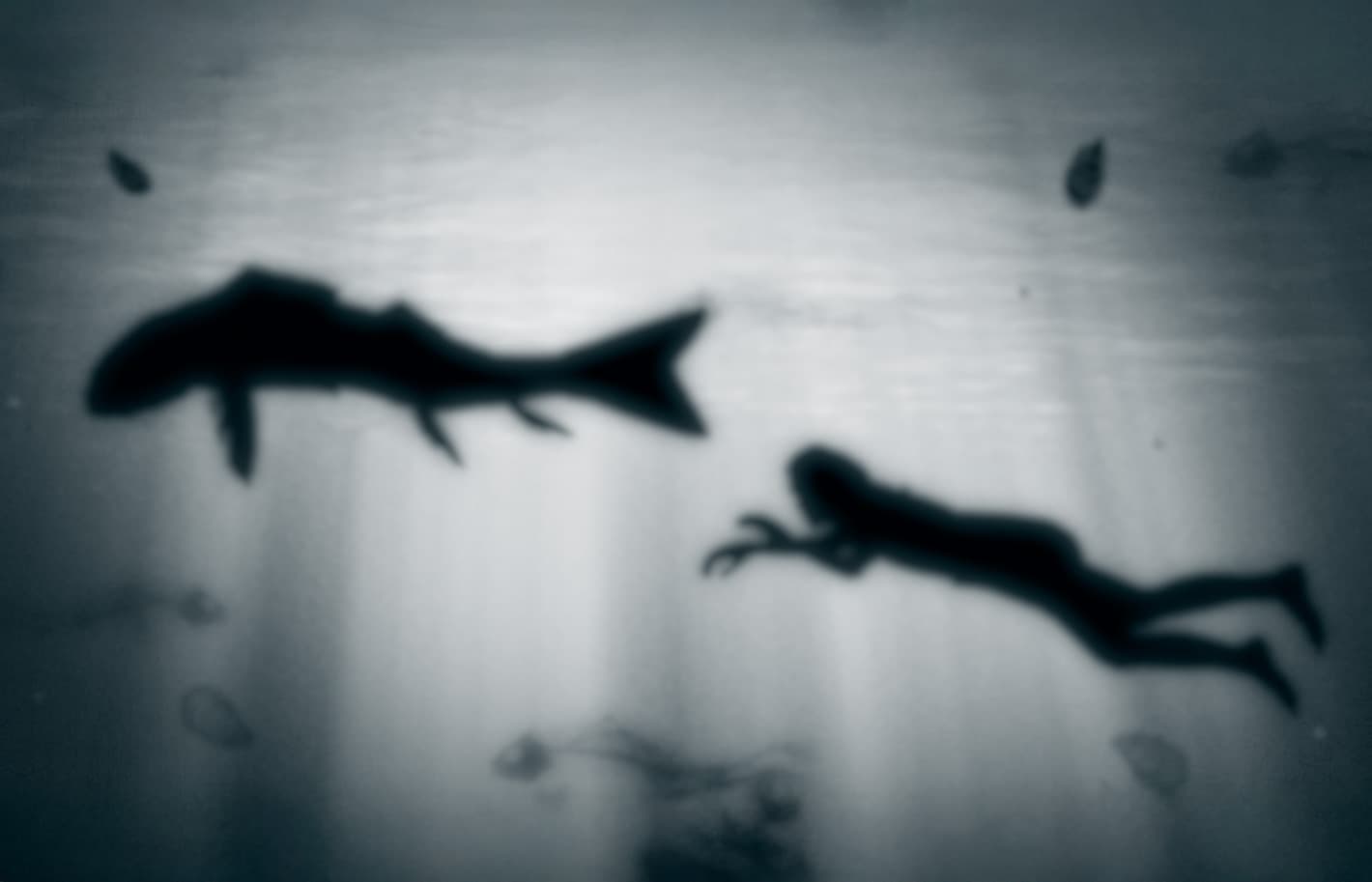
Blindspot GalleryBlindspot Gallery is pleased to debut Lap-See Lam's solo exhibition at the gallery and in Asia, Bamboo Palace, Revisited. The exhibition presents Lam's expansive video installation Floating Sea Palace (2024), alongside her latest glass and neon installations. Lam probes the experience of the Hong Kong Chinese diaspora, migrational movement, generation loss, and the mistranslation of cultural symbols, orientalized through the spectacle of exoticization. Through speculative fiction and mythology, Lam explores the slippery notions of home and belonging, drawing from her personal experiences growing up in a Hong Kong-immigrant family that owned and ran a Chinese restaurant in Stockholm until 2014. Her work further integrates reinterpretations of traditional forms of storytelling, including shadow play and Cantonese opera, and 3D scanning technology. The scans glitch and deform, a quality embodied in the term "generation loss", which for Lam conveys a multifaceted identity, and the mutations of memories and knowledge across generations. The exhibition is anchored on Floating Sea Palace, developed from The Altersea Opera (2024), presented in the Nordic Pavilion in the 60th Venice Biennale in 2024. The work forms part of her Altersea series (2022-2025), the artist's neologism alluding to the alternate vision of the sea, mystical and layered with tales. The libretto narrates an apparition on a ship at sea, carrying the weight of its own hauntology as it sails through space and time, propelled by the currents of memories and stories. It centers on the protagonist Lo Ting, a primordial hybrid human-fish, mythologized as the ancestor of the Hong Kong people. Lo Ting emerges as past and future versions of themselves embarking on a voyage from Dreamers' Quay (2022), with the former longing to return home to "Fragrant Harbor" (the phonetic translation of Hong Kong), and the latter attempting to reorient the course of their shared history and destiny, seeking a way to begin again. The two Lo Tings are no longer perfect reflections of each other in their splintered forms: one is a fish, the other a man. Past Lo Ting, driven by a yearning for the homeland, prays to Mazu and in turn resurrects the Dragon Ship, based off the real abandoned Floating Restaurant Sea Palace docked in Högmarsö Varv (Högmarsö Yard), Sweden, originally commissioned by businessman Johan Wang in the 1990s. The ship had travelled from Shanghai to Gothenburg, a restaurant that later became repurposed as a haunted funhouse in an amusement park in Stockholm, before becoming abandoned. The Dragon Ship is a palimpsest that embodies the mistranslation of cultural symbols and the experience of displacement, unmoored yet never reaching its destination, suspended between land and sea. On its voyage to Fragrant Harbor, it encounters a storm in the North Sea, vanishing into the fathomless abyss. Exhibited alongside the film is Lam's latest body of hand-blown glass sculptures and neon installations, created during her recent artist residency at the International Research Center for Glass and Visual Arts (Cirva) in Marseille. The sculptures meld forms of the bamboo, a totemic cultural and architectural material in Hong Kong and Southern China, synonymous with the temporary traveling bamboo theaters used for Cantonese opera. The motif of the bamboo also resonates personally for the artist, woven into the names of her family restaurants, symbolizing resilience and strength. The glass is cast from bamboos, and blown into their cavities, as visible in Breath, vessel (I) (2026). They form translucent sculptures of fluid shapes and forms, suspended and wall-mounted throughout the exhibition. Some are also cast from ornaments found in the interior and exterior of Sea Palace. A symbol that is speckled across the works is the mandarin orange, sculpted in glass, paying homage to the artist's maternal grandmother who had worked as a fruit hawker on Hong Kong's Wing Lok Street from the 1950s to 1970s, prior to moving to Europe. In Raft, mandarin (I) (2026), the citrus lies on a raft, slowly drifting over water. Light and shadow is a running thread throughout Lam's works, alluding to the elusive qualities of memories. Seated beside the video are two spectral neon figures—a child and an adult—perched on Hong Kong colonial-era wooden library chairs, titled Generation (2026). Illuminating the room, these phantoms become part of the audience, their ghostly presence serving as a metaphor that connects past, present, and future generations. Their skeletal forms are woven from fragments of people captured on the artist's 3D scans of Chinese restaurants in Stockholm, becoming liminal figures unmoored to a fixed identity. The exhibition is in many ways a homecoming for the artist, reflective of her family history and a wider collective diasporic experience. It also resonates with a sense of longing shared across different generations of Hong Kong people. Through the figure of Lo Ting, who embodies an in-betweenness, the exhibition gives form to the displacement and existential quandary experienced by many in the once-colonized city — driving a constant yearning for what lies beyond and an ongoing search for home. Upcoming exhibitions for Lam include solo exhibitions at Henie Onstad Kunstsenter in Oslo in June 2026, the Secession in Vienna in September 2026, and SCAD Museum of Art in Savannah in summer 2026. Floating Sea Palace is the prologue to Tales of the Altersea (2023), to be exhibited in Tai Kwun Contemporary's Stay Connected: Supplying the Globe. Lap-See Lam (b. 1990, Stockholm, Sweden) draws on experiences of the Hong Kong Chinese diaspora, delving into migratory movement, generation loss, speculative fiction, mythology, and the mistranslation of cultural symbols through video installation, sculpture, and performance. Her works blend traditional forms of storytelling with contemporary techniques, integrating 3D scanning technology. The glitches from these scans inform her visual language, conveying information loss that spans across generations. Her works reflect on her family history of migration, capturing the complexities of cultural heritage and the convoluted notion of belonging. Influenced by her upbringing, her research has been focusing on Chinese restaurants in Stockholm, exploring their cultural history and projected Chineseness catered to a certain gaze. Lam was the recipient of The Lise Wilhelmsen Art Award 2025 and represented Sweden at the 60th Venice Biennale in 2024. Her recent solo exhibitions took place at Moderna Museet (Stockholm, 2025 & 2018), PHI Foundation (Montreal, 2025), Hammer Museum (Los Angeles, 2025), The Power Plant (Toronto, 2024) (with Vega Foundation), Studio Voltaire (London, 2024), Buffalo AKG Art Museum (New York, 2023), Swiss Institute (New York, 2023), Portikus (Frankfurt, 2023), and Lidköping Konsthall (2023), among others. Lam currently lives and works in Stockholm, Sweden.