
Mitte, Berlin
Brian O'Doherty
Brian O'Doherty
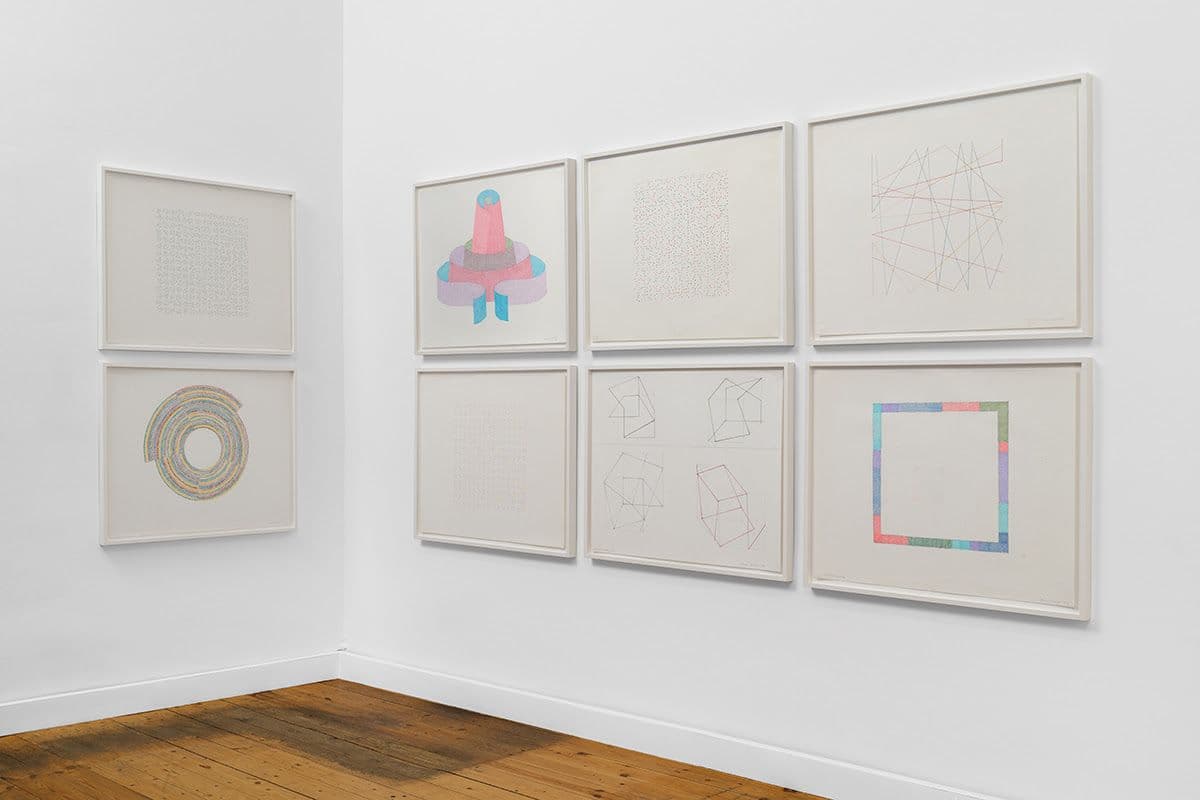
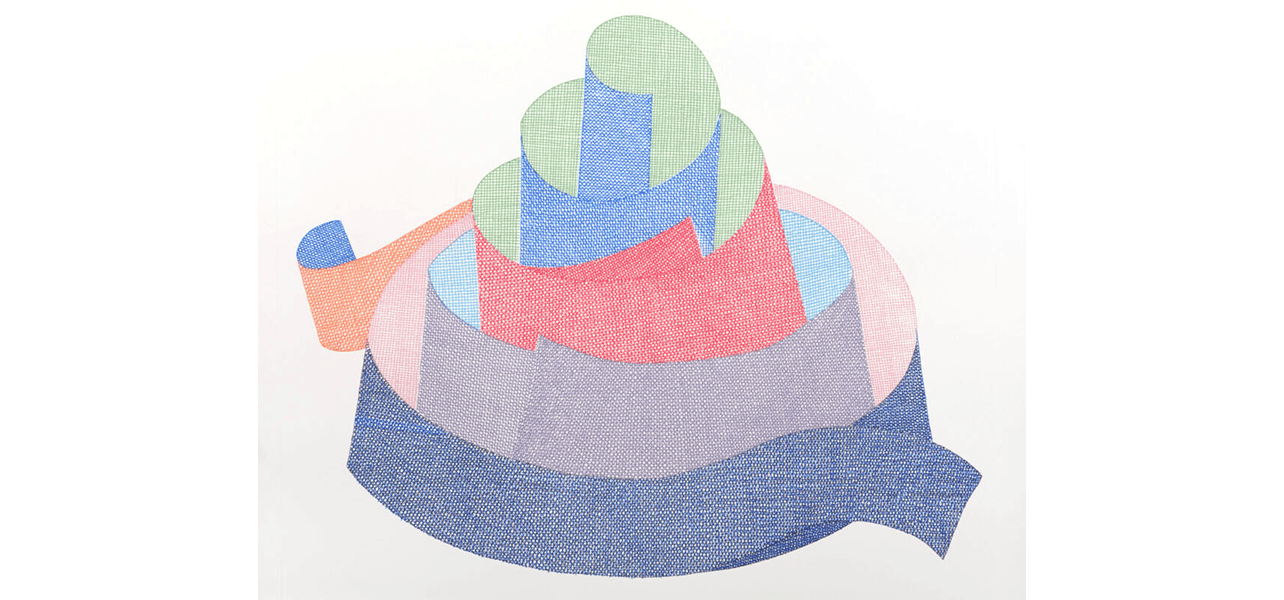
Thomas Fischer[Please scroll down for German version / Für Deutsch bitte scrollen Sie nach unten] What kind of art can emerge if you are a bustling, clever and widely received theorist and critic at the same time? Do these practices amalgamate or is it possible to keep them separate? And if so, how? Does the art emerge to test the theory, or does the theory emerge from the art? Although we can no longer ask Brian O’Doherty these questions, we can try to answer them by looking at his artistic oeuvre. O’Doherty was several things at once: doctor, editor, artist, Irishman, writer, critic, husband, theorist. He saw the challenge of living out manifold roles and reflected upon it. So it was not without reason that he coined four pseudonyms to keep the various fields of work with their different mindsets separate from one another. He left the art criticism in part to Mary Josephson, while Patrick Ireland took over Brian O’Doherty’s artistic practice from 1972 to 2008: the change in name, which took place in a performance of the same title (Name Change) was primarily politically motivated: it was due to the violent events in Northern Ireland, Bloody Sunday. After a period of peace, Patrick Ireland was ceremoniously buried in Dublin: The message here: identity is a construct, but for O’Doherty bound to very personal matters and his Irish homeland. His drawings, paintings, and sculpture, being conceptual, thus draw from the intellectual discourses in which they emerge.[1] And yet they have a strong link to the biography, to the body of the artist. This becomes most clear in The Body and its Discontents, created in 1964: a kind of miniaturized medicine cabinet, with a total of 60 compartments filled with small boxes that are pasted on all four sides with a paper in different shades of pastel and various specialist medical terms. These refer to male and female body parts, to our sensory capacities, but also to illnesses. As bone dry as the work might seem at first with its scientific vocabulary and rigid system of order, it is also playful and humorous. It makes it possible to create a variety of bodies, including bigendered ones, with various infirmities, an individuality using the components of medicine and conceptual art. O’Doherty transforms the “aesthetics of administration” that Benjamin Buchloh so cleverly attributed to conceptual art into an “aesthetics of anatomy.” The small piece Black Glass Labyrinth (1967) is another early work by the artist: the abstract black upon black surfaces and lines are not only reminiscent of the labyrinth in the title, but also recall a playing field or the geometries of Celtic knots. In fact, O’Doherty’s first labyrinth drawing is based on a four-armed St. Brigid’s Cross, an Irish national symbol. Labyrinths, already in myth an emblem for the detours and confusion of life, are a recurring motif in the oeuvre of the artist, in a small flat format as well as in an accessible construction. They also allow for reflection on one of the foundational problems of artistic work: the relationship between surface and form, the transfer from two to three dimensions and vice versa. The untitled drawings from 1974, monochromatic or in several colors, also appear superficially like conceptual exercises in purely formal variations: in a pattern of 15 series in the horizontal and the vertical, brief lines are assembled to create ever never constellations. They recall the paintings from the series Corpse and Mirror that Jasper Johns began in 1974, where crosshatching covers the entire canvas, turning a technique used in drawing to suggest depth into a flat element of design. But while Johns retains the parallelism of crosshatching, O’Doherty’s/ Ireland’s lines seem more like codes. Here, they allude to the signs of so-called Ogham writing found in Ireland, which consist of one to five brief lines, while their number, five, refers to the five identities of the artist. Here, too, there is a strong biographical reference, if not a kind of self-portrait behind the supposedly thematic void of the obsessive-patterned approach, while the supposed rigorous, serial quality of the patterns flickers before the eyes of the beholder. Daniel Buren’s thoughts about the “function of the studio” was published in English in 1979. Here, he describes and criticizes the studio as a site of production, in which works emerge that are intended to be seen somewhere else. Buren characterizes this site as a “predictable cubic space, uniformly lit, neutralized to the extreme,”[2] or in other words, O’Doherty’s words, as the white cube. Buren as well as O’Doherty/Ireland largely refused a painterly practice that created transportable pieces, O’Doherty/Ireland’s preferred site to paint is on the wall, but the Rope Drawings he began creating in 1973, expressly labeled “drawings,” allow a certain mobility by way of their re-installation. The cords are stretched over colorful surfaces that result in geometric compositions and extend out into the exhibition space; seen from a single place (and with just one eye) in the room, these cords become the outlines of the colored surfaces. In this way, the three-dimensional, expansive work becomes something flat. This “ideal” standpoint is oriented toward the body size of O’Doherty’s wife, the art historian Barbara Novak. In this way, personal aspects flow into a conceptual work that explores artistic issues such as the illusory, the inclusion of real space and its reception: in the “The Eye and the Spectator” included in the essay collection “Inside the White Cube”, O’Doherty explains how in light of contemporary sculpture the eye and the spectator separate from one another, since the sculptures demand that we move around them. The Rope Drawings equally demand, to remain in the terminology of his essay, that the eye and the body work jointly.[3] In these works, O’Doherty’s theoretical and artistic practice intersect the most, but they are more than just an illustration of a text, because the strongly physically based perception of the Rope Drawings makes them unlike the reception of an essay or a small work on paper. And in this way, we can learn from these works that any change of standpoint offers a potential of (self) knowledge. —Astrid Mania 1 - How close O’Doherty was to the debates of his period is shown by the double issue of the magazine Aspen he edited in 1967, which included for the first time Roland Barthes’ essay “The Death of the Author” and Susan Sontag’s “The Aesthetics of Silence.” 2 - Daniel Buren, “The Function of the Studio,” trans. Thomas Repensek, October 10 (August 1979), 54. 3 - Brian O’Doherty, “The Eye and the Spectator,” Inside the White Cube: The Ideology of the Gallery Space (Berkeley: University of California Press, 1976), 52. ***** Welche Kunst kann entstehen, wenn man zugleich umtriebige*r, kluge*r und breit rezipierte*r Theoretiker und Kritiker*in ist? Vermengen sich diese Praxen, oder gelingt es, sie voneinander zu trennen? Und wenn ja, wie? Entsteht die Kunst, um die eigene Theorie auf den Prüfstand zu stellen, oder entsteht die Theorie aus der eigenen Kunst? All diese Fragen können wir Brian O’Doherty leider nicht mehr stellen, aber wir können versuchen, sie mit Blick auf sein künstlerisches Œuvre zu beantworten. O’Doherty war, manches zugleich, Arzt, Chefredakteur, bildender Künstler, Ire, Autor, Kritiker*in, Ehemann, Theoretiker. Die Herausforderung, viele, verschiedene Rollen auszuleben, hat er gesehen und reflektiert. Nicht ohne Grund hat er sich insgesamt vier Pseudonyme zugelegt, um die unterschiedlichen Arbeitsfelder mit ihrem unterschiedlichen Mindset voneinander zu trennen: Die Kunstkritik überließ er in Teilen Mary Josephson, während Patrick Ireland von 1972 bis 2008 die künstlerische Praxis von O’Doherty übernahm: Der Namenswechsel, der sich in einer Performance gleichen Titels („Name Change“) vollzog, war aufgrund der gewalttätigen Vorkommnisse in Nordirland, namentlich des „Bloody Sunday“, vor allem politisch motiviert. Nach einer Zeit der Befriedung wurde Patrick Ireland in Dublin feierlich zu Grabe getragen: Identität, so die Botschaft, ist ein Konstrukt, und doch ist sie bei O’Doherty zutiefst an Persönliches – und seine irische Heimat – gebunden. Entsprechend zehren seine Zeichnungen, Malereien und Skulpturen als konzeptuelle von den intellektuellen Diskursen, in deren Umfeld sie entstehen.[1] Und doch haben sie einen starken Bezug zur Biografie, zum Körper – und angesichts der katholischen Herkunft O’Dohertys möchte man sagen, zum Leib des Künstlers. Am offensichtlichsten wird dies bei „The Body and its Discontents“, 1964 entstanden: eine Art miniaturisierter Arzneischrank, in dessen insgesamt 60 Fächern kleine Quader stecken, die auf allen vier Seiten mit einer jeweils anderen Pastellfarbe beklebt sowie medizinischen Fachtermini beschriftet sind. Diese beziehen sich auf männliche wie weibliche Körperteile, auf unsere sensorischen Fähigkeiten, aber auch auf Krankheiten. So knochentrocken die Arbeit mit ihrer wissenschaftlichen Nomenklatur und ihrem rigiden Ordnungssystem zunächst auch wirkt, so verspielt und humorvoll ist sie zugleich. Denn sie erlaubt, eine Vielzahl von, auch zweigeschlechtlichen, Körpern mit verschiedenen Hinfälligkeiten zu erschaffen, eine Individualität aus den Versatzstücken der Medizin wie der Konzeptkunst. O’Doherty macht aus der „Ästhetik der Administration“, wie sie Benjamin Buchloh der Konzeptkunst so klug attestierte, eine „Ästhetik der Anatomie“. Eine frühe Arbeit des Künstlers stellt auch das kleine „Black Glass Labyrinth“ (1967) dar, dessen abstrakte schwarz-schwarze Flächen- und Linienführung nicht nur an den titelgebenden Irrgarten, sondern auch an ein Spielfeld oder die Geometrien keltischer Knoten denken lässt. Tatsächlich beruht O’Dohertys erste Labyrinth-Zeichnung auf dem vierarmigen Kreuz der Brigid, einem irischen Nationalsymbol. Labyrinthe, schon im Mythos Sinnbild für die Irrungen und Wirrungen des Lebens, sind wiederkehrendes Motiv im Œuvre des Künstlers, sowohl im flächigen Kleinformat wie auch als begehbare Konstruktion. Sie erlauben auch eine Reflexion über eines der grundlegenden Probleme künstlerischen Arbeitens: das Verhältnis von Fläche und Form, die Übertragung von zwei in drei Dimensionen und umgekehrt. Die unbetitelten Zeichnungen aus dem Jahr 1974, monochrom oder mehrfarbig, erscheinen ebenfalls vordergründig wie konzeptuelle Fingerübungen in rein formalen Variationen: In einem Raster aus 15 Reihen in der Horizontalen sowie der Vertikalen sind jeweils fünf kurze Striche zu immer neuen Konstellationen zusammengefügt: Sie erinnern an die seit 1972 entstandenen Gemälde der „Corpse and Mirror“-Serie von Jasper Johns, in denen sich Schraffur in kleinen Feldern über die gesamte Leinwand zieht und aus einem zeichnerischen Mittel, das Tiefe suggeriert, ein flächiges Gestaltungselement macht. Doch während Johns die Parallelität beibehält, wirken O’Dohertys/Irelands Striche wie Codierungen. Damit beziehen sie sich auf die in Irland gefundenen Zeichen der sogenannten Ogham-Schrift, die aus ein bis fünf kurzen Strichen besteht, verweisen mit ihrer Zahl aber auch auf die fünf Identitäten des Künstlers. Auch hier erweist sich, dass sich hinter der vermeintlich inhaltlichen Leere des obsessiv-musterbildenden Ansatzes eine starke biografische Referenz, wenn nicht gar eine Art Selbstportrait verbirgt, während das vermeintlich Strenge, Serielle der Rasterung vor den Augen der Betrachter*innen zerflimmert. Im Jahr 1979 erschienen Daniel Burens Gedanken über die „Funktion des Ateliers“ auf Englisch. Darin beschreibt – und kritisiert – er das Atelier als einen Produktionsort, in dem Werke in Hinblick darauf entstehen, dass sie anderswo zu sehen sein werden. Diesen Ort charakterisiert Buren als den „banalen, kubischen, extrem neutralisierten Raum“,[2] mit anderen, mit O’Dohertys Worten, als den White Cube. Beide, Buren wie auch O’Doherty/Ireland, verweigerten sich weitgehend einer malerischen Praxis, die transportable Waren anfertigt. Der bevorzugte Mal-Ort von O’Doherty/Ireland ist die Wand, allerdings erlauben die seit 1973 entstandenen „Rope Drawings“ – die sich ausdrücklich als Zeichnungen verstehen – eine gewisse Mobilität durch Neu-Installation. Über farbige Flächen, die geometrische Kompositionen ergeben, und hinaus in den Ausstellungsraum ziehen und spannen sich Seile, die, von einem einzigen Ort (und mit einem Auge) aus betrachtet, zu den Umrisslinien der farbigen Flächen werden: So verwandelt sich eine dreidimensionale, raumgreifende Arbeit in etwas Planes. Ausgerichtet ist dieser „ideale“ Standpunkt an der Körpergröße von O’Dohertys Ehefrau, der Kunsthistorikerin Barbara Novak. So fließt wiederum Persönliches ein in ein konzeptuelles Werk, das über künstlerische Fragestellungen wie das Illusorische, den Einbezug des realen Raums ebenso nachdenkt wie über seine Rezeption: Im Kapitel „Das Auge und der Betrachter“, das zur Essaysammlung „Inside the White Cube“ gehört, verdeutlicht O’Doherty, wie sich angesichts zeitgenössischer Plastik Auge und Betrachter voneinander trennen – da die Skulpturen verlangen, dass man sich um sie herumbewegt. Die „Rope Drawings“ erfordern ebenfalls, um in der Terminologie des Textes zu bleiben, dass Auge und Körper zusammenarbeiten.[3] In diesen Werken verschränken sich theoretische und künstlerische Praxis O’Dohertys wohl am stärksten, und doch sind sie mehr als verbildlichter Text. Denn gerade die stark körperbasierte Wahrnehmung der „Rope Drawings“ unterscheidet sie von der Rezeption eines Essays oder einer kleinen Papierarbeit. Und so kann man vor diesen Werken erfahren, dass jegliche Veränderung des Standorts auch ein Potenzial zu (Selbst)Erkenntnis bietet. —Astrid Mania 1 - Wie nah O’Doherty an den Debatten seiner Zeit war, belegt u.a. die von ihm 1967 herausgegebene Dop- pelausgabe 5+6 des Magazins Aspen. Hier erschienen erstmalig Roland Barthes’ Essay „Tod des Autors“ wie auch Susan Sontags „The Aesthetics of Silence“. 2 - Daniel Buren: „Funktion des Ateliers“, in: Daniel Buren: Achtung! Texte 1967-1991, hg. von Ger- ti Fietzek und Gudrun Imboden, Dresden, Basel: Verlag der Kunst v1995, S. 152-167, 163. 3 - Brian O’Doherty: Teil 2, „Das Auge und der Betrachter“, in: Ders.: In der weißen Zelle, hg. von Wolfgang Kemp, Berlin: Merve Verlag 1996, S. 34-69, 61.