

Arsenale, Venice
Group Exhibition
Net Making
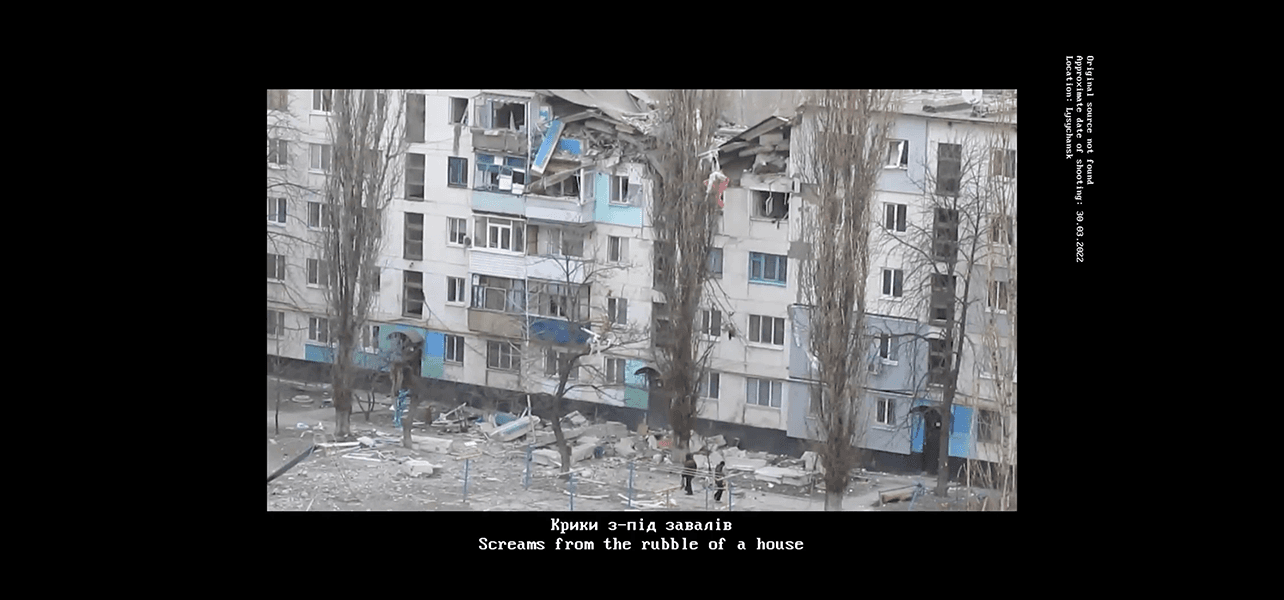
Ukrainian PavilionKatya Buchatska, Andrii Dostliev, Lia Dostlieva, Daniil Revkovskyi, Andrii Rachynskyi, Oleksandr Burlaka The national Ukraine Pavilion presents Net Making at the 60th International Art Exhibition of La Biennale di Venezia - a group exhibition curated by Viktoria Bavykina and Max Gorbatskyi. The title of the exhibition draws from the practice of Ukrainian civilians collectively weaving camouflage nets during the war. This community act is explored as a symbol of collective resistance in the face of conflict. The Ukrainian Pavilion will address the topic of otherness through personal experiences of war, emigration, assimilating into new societies, and the transformation of language under the pressure of violence. The exhibition will feature four presentations by artists Katya Buchatska, Andrii Dostliev and Lia Dostlieva, Daniil Revkovskyi and Andrii Rachynskyi, and Oleksandr Burlaka, as well as the communities with whom the artists have collaborated. During the opening week, Olena Zelenska, the First Lady of Ukraine, discusses in an address the importance of La Biennale di Venezia as an important and global platform for Ukraine, three years into the Russian invasion, providing an opportunity for Ukraine to show contemporary Ukrainian artists and reaffirm voices of the war-torn country. The First Lady visited the collaborators of the project Best Wishes at their workshop in spring 2024 ahead of the opening of the exhibition in Venice. Curators Viktoria Bavykina and Max Gorbatskyi comment in reference to the exhibition title: "Ukrainians are uniting: they take to the streets, volunteer to fight, and gather to weave camouflage nets. Weaving nets is a process that encompasses more than just making a net to help the army. It is a recognition of a joint action that is beneficial for each other and for the country. This is not a top-down decision." The Ukrainian pavilion is framed by the architectural installation Work by Oleksandr Burlaka. Composed of woven linen fabrics made before the 1950s which have been collected at Ukrainian flea markets and online marketplaces. Burlaka’s installation creates a circular, encompassing space for three other presentations in the exhibition: the film Civilians. Invasion by Daniil Revkovskyi and Andrii Rachynskyi, the installation Best Wishes by Katya Buchatska, and the video Comfort Work by Andrii Dostliev and Lia Dostlieva. Daniil Revkovskyi and Andrii Rachynskyi will present the film Civilians. Invasion which tells the story of the first days of the full-scale Russian invasion of Ukraine through the eyes of survivors. The artists assembled the film from the videos they found using open sources and private YouTube channels. Commenting on the film, the artists state: “This film is a horror encyclopedia, capturing the harrowing experiences people endure during a full-scale invasion,”. Valuable for its multi-voiced documentary veracity, Civilians. Invasion reveals the transformative experience of full-scale invasion as a radical break with normality. Katya Buchatska will present Best Wishes, a work she created in collaboration with 15 neurodivergent artists. During the first week of the full-scale invasion, Buchatska attended daily online classes at an inclusive art workshop in Kyiv. “Every day we discussed and painted familiar things that brought us back to a certain routine. Life went on, days passed, birthdays came. We wished each other happy birthday on every occasion, and gradually the language clichés became more and more obtrusive and incongruous, alienated from us,” says the artist. In Best Wishes, Buchatska focuses on aspects of language such as idioms and phrases that neurotypical people use, and their interpretation by neurodivergent people. In Ukraine, phrases such as “it’s bomb-like” mean it is “wonderful” and “heavy artillery” means a “strong argument.” Since the Russian invasion, the problematic use of these platitudes became increasingly noticeable. Some phrases, despite their simplicity, acquired newly sincere meanings. Continuing themes of otherness, Comfort Work by Andrii Dostliev and Lia Dostlieva problematises stereotypical perceptions of Ukrainian refugees abroad in other, European countries. The artists invited professional European actors to play Ukrainian refugees on camera, portraying them as they are seen by the societies of the host countries. Based on interviews with real people who have experienced displacement from Ukraine, the portraits create images of refugees that correspond to the desires of Europeans, based on stereotypes about immigrants. “The main audience of these videos are European viewers who can see images of Ukrainians that are convenient for them [that confirm their stereotypes],” the artists emphasise. Commissioner: Taras Shevchenko, Deputy Minister for European Integration Curators: Viktoria Bavykina and Max Gorbatskyi