

Belleville, Paris
Lou Fauroux
W4tch0ut
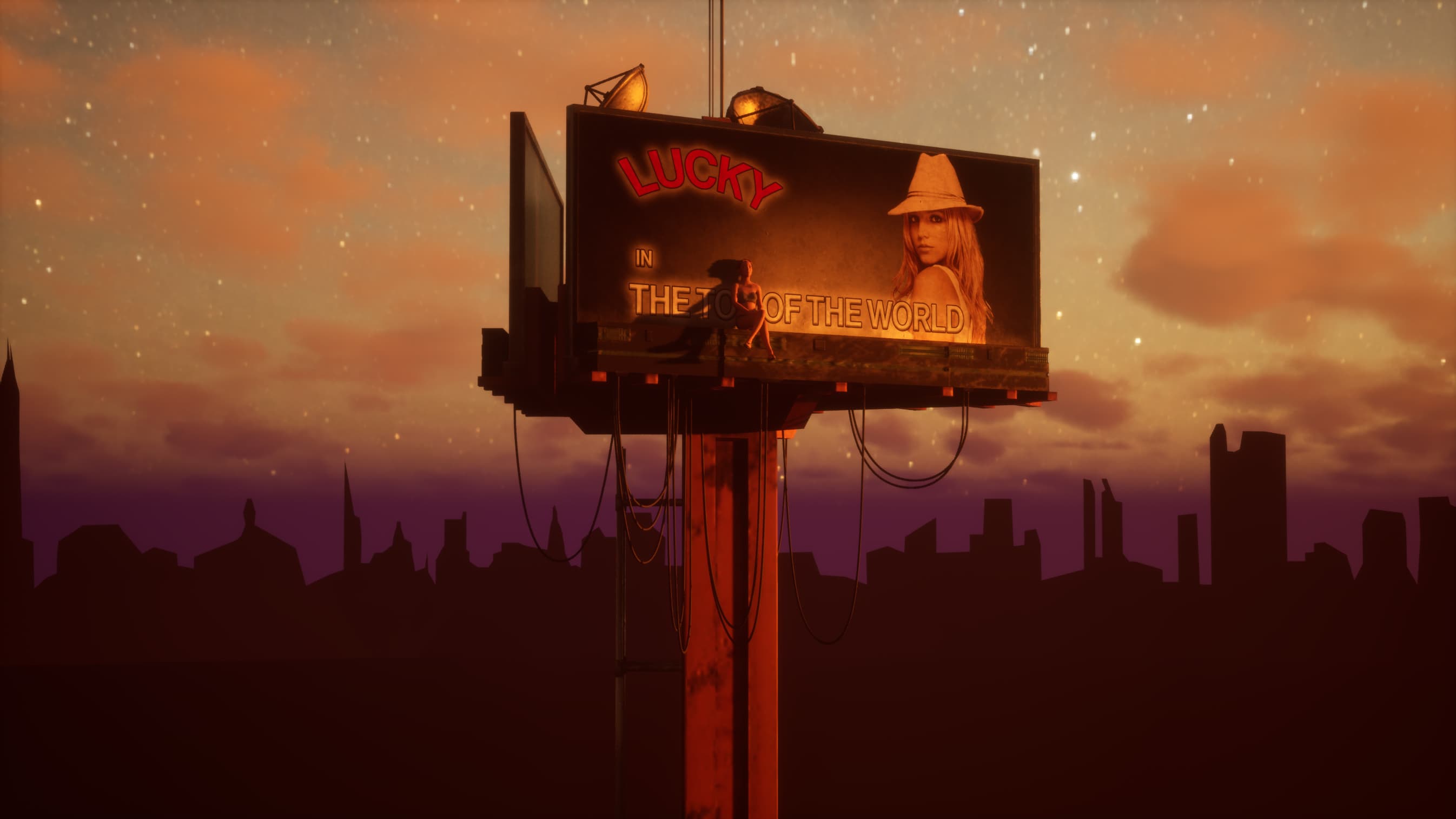
Exo ExoBritney Spears is four years older than I am. She was born on December 2, 1980. She’s a Sagittarius. They’re said to be people who bring light and positivity. I was fifteen when Lucky came out on the album Oops!... I Did It Again. I remember carrying an ambivalent feeling toward Britney. I wanted to imagine her as independent, yet she was under control. She wanted to escape while being the pure product of what was expected of her. As young girls, I didn’t know on what grounds we were allowed to love her. "This is a story about a girl named Lucky Early morning, she wakes up Knock, knock, knock on the door It's time for make-up, perfect smile" And then I understood. Britney was a pop star. Today she is a symbol. To take an interest in her is to take an interest in the position of women in the music and entertainment industries, in images, in power dynamics and influence, in the role of the artist within a system where money and power belong to men. W4tch0ut is the collective story of what we control and what we don’t. By interrogating surveillance systems - physical, symbolic, or online - Lou Fauroux creates poetic and salvific escape routes in her work. W4tch0ut is the first chapter of a saga about Britney Spears. Reality has only one voice; fiction exorcises and rehabilitates. In 2024, Louise Chennevière published the book Britney: “in the video for the song Lucky, we see this young woman, sublime but alone, this young woman who has everything she could dream of except—and she is lying there in a long, beautiful white dress of course, because in her misfortune one must never, even for a moment, forget to seduce.” Lou Fauroux’s fan fiction is also liberating. The same scene inspired by the video is replayed on loop in a multi‑channel video installation. Influencer PJ Horny, already present in episode 2 (K‑Detox) of The Internet Collapse series, plays the role of Britney, asserting a first attempt at reclaiming the narrative, just as the song itself is reinterpreted here by Blood of Aza. The use of 3D animation is also a way for the artist to generate multiple viewpoints on the same story, to enter a tailor‑made world from within. It allows everything to be seen, not only what we are meant to see. "She's so lucky, she's a star But she cry, cry, cries in her lonely heart, thinking If there's nothing missing in my life Then why do these tears come at night?" What is actually missing from our lives? Or rather, what do we convince ourselves might be missing? Capitalism distills lack everywhere: in the desire to possess and to resemble. Here, fiction is collective. It does not sanctify; it disperses narratives of systemic violence into a multitude of voices reclaiming control over their own stories. In an attempt at reversal, it reappropriates the codes and language of surveillance capitalism, which dissects our desires in order to anticipate them. Ultimately, isn’t the artist herself also someone subjected to the market, selling services and objects? Alongside and completing the scenography, T‑shirts and caps bearing Lou Fauroux’s image are for sale. Keychains with the LF logo—between objects and sculptures—can be taken home for 10 euros. We want her to sell dreams. Here, the dream is under control. W4tch0ut is ultimately a prayer : to write stories that try to escape what is predicted for them. —Elisa Rigoulet Through a practice that weaves together video and installation, Lou Fauroux explores how technologies, pop culture, and online narratives shape our imaginaries and our power relations. Presented as the first chapter of a saga devoted to Britney Spears and surveillance, W4tch0ut extends The Internet Collapse series, a group of films anticipating a near future marked by the disappearance of the Internet (Vol.1 The Porn Selector (2024), Vol.2 K-Detox (2025), Vol.3 The Inflencer (PJ) (wip)). Drawing on 3D reconstructions inspired by the music video Lucky, the work stages a mise en abyme in which influencer PJ Horny embodies Britney Spears under the multiplied gaze of surveillance cameras. By replaying and fragmenting images that saturate the media landscape, Lou Fauroux exposes the mechanisms of a patriarchal gaze that is at once omnipresent and faltering. Who is watching whom, and why ? Between fan fiction and critical distance, the work probes contemporary forms of surveillance, desire, and power, using Britney Spears as an entry point into a reflection on the structures of domination at play within the entertainment industry.