
West, London
Simryn Gill
Shelter
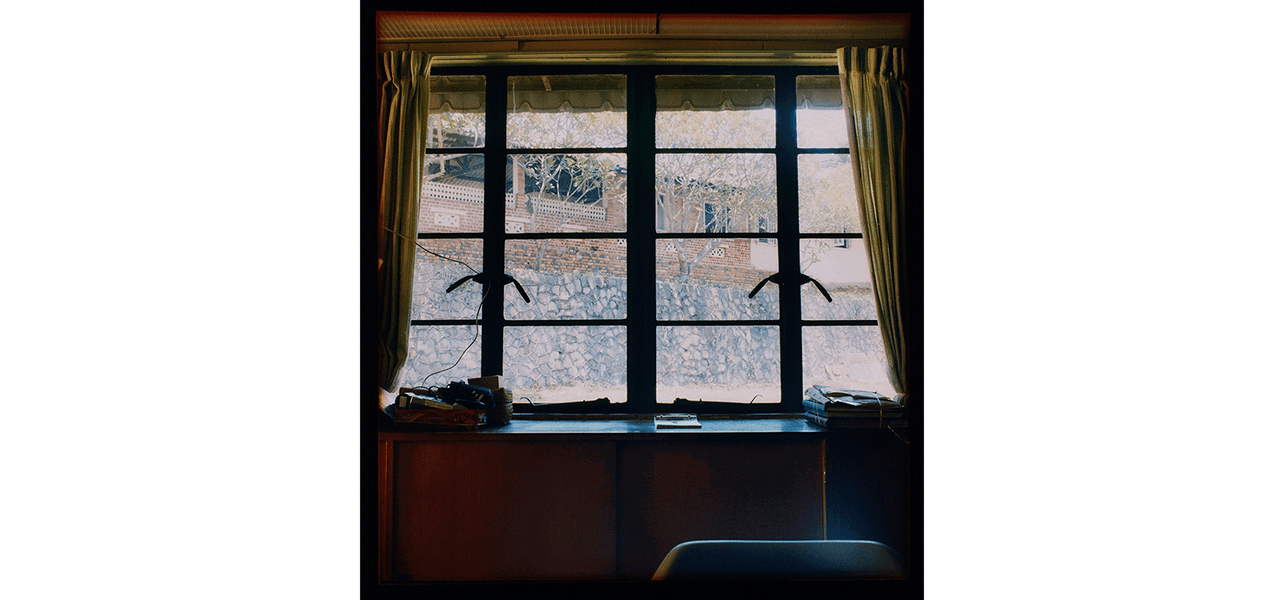
Richard SaltounRichard Saltoun Gallery presents the first solo exhibition by Sydney-based Malaysian artist Simryn Gill (b. 1959). The exhibition, across photography, works on paper and sculpture, features works from the last six years, and is curated by Catherine de Zegher, who also curated Gill’s presentation for the Australian Pavilion at the 2013 Venice Biennale. Shelter highlights the artist’s pivotal role in contemporary ecological discourse, as seen in her recent inclusions in the exhibition Re/sisters at the Barbican Centre, London and and FOMU, Antwerp (2023/24) and the duo exhibition The Sea is a Field at the Singapore Art Museum (2024), and in her published works, Becoming Palm (with Michael Taussig), Sternberg Press (2016), and Shallow (with Charles Lim), Stolon Press (2024) among others. One of Australia’s leading artists, Gill’s practice looks at the experience of movement and migration through capturing fragments of everyday lives, and local microcosms, which are easily overlooked or dismissed as mundane. She describes herself as a "maker and keeper of records," emphasizing her commitment to (dis)order and ephemerality in her systems and categories of visual and material list-making. Through meticulous indexical, manual, and record-making processes, Gill creates unlikely renditions of objects and organic matter picked up from her immediate surroundings. She prints, glues, presses and tears these found materials in a characteristic mode of transformation that brings new meaning to these elements. Exhibition highlights include Gill’s recently printed series of photographs entitled Shelter, taken of the exteriors and interiors of various houses in rural Australia and Malaysia. As de Zegher points out in her curatorial text, the artist’s work “has always been in some way involved with shelter. (...) As an enquiry of our ontological situation, Gill has made pictures of an outside that holds inner worlds, and of an inside that draws you out: Shelter with its frontal views of apparently idyllic rural houses in the outback—often overwhelmed by encroaching tropic vegetation, sometimes in vibrant colours, other times disquieting in the darkening light—and with its shaded interiors of kitchen tables or writing desks.” Additional highlights include Gill’s distinctive ink rubbings on paper; the series Thistles and Friends (2024) and Naga Doodles (2017). As de Zegher poignantly writes, these works propose an “alternative approach of the relation between nature and society. Armed with camera, enlarger, ink and paper, Gill’s is indeed a reflective practice: in tracing the matter of thistles, considered as invasive plants in Australia and cursed by many, she asks pointedly, ‘how did they get here’? Of course, the seeds may probably have been in the wool of sheep imported from Scotland by settlers. In the end, we are responsible for what we do, and have done, to the land, to the planet.” In Naga Doodles, Gill transfers the intricacies of snakeskin patterns onto paper from roadkill snakes collected in the vicinity of her home in Malaysia. She inks and flattens the carcasses, covering them with paper to capture their detailed impressions before burying the snakes in her garden. The series title draws from Sanskrit and Malay references to revered serpent deities in Hindu and Buddhist traditions. These serpentine forms and textures challenge traditional perceptions of drawing and printmaking, emphasizing spontaneity and the primal sense of touch over visual precision. The exhibition also features new pieces from Gill’s ongoing necklace works entitled Pearls (1999 -). These delicate garlands of beads are composed from pages of books and explore the significance of the quotidian to the shaping of human history, and the entanglement of humans and non-humans. “Undone from their shells, from their book covers, Gill patiently turns the pages of great literature into paper beads that are threaded into elegant necklaces, not as iconoclasm but as the shared stuff of the commonplace. This group contains Problems of Life by Leon Trotsky, I Swear I Saw This by Michael Taussig, Stigmata by Helene Cixous, Regret by Janet Landman, and The Word for World is Forest by Ursula K. Le Guin”, writes de Zegher.