
Museums, Basel
Suzanne Lacy
By Your Own Hand
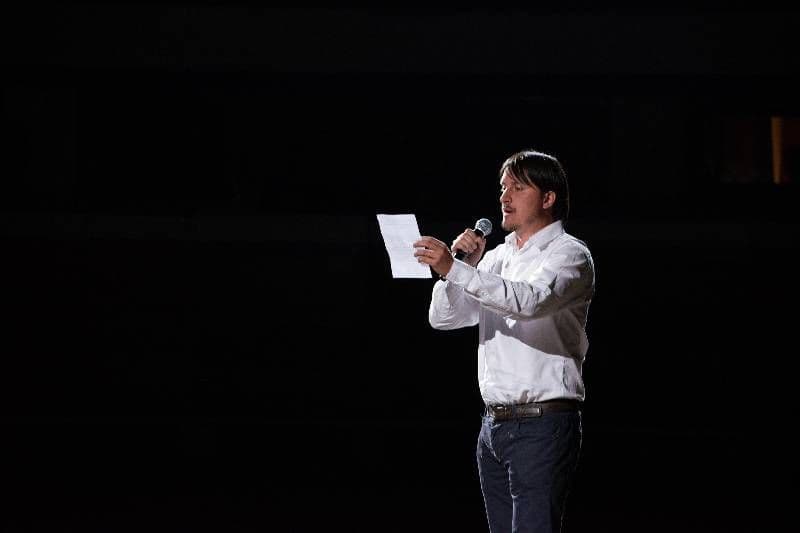
Museum TinguelyTickets available at tinyurl.com/y82xp7a6 Violence and death do not affect everyone the same way. Depending on gender, but also on wealth and race, people are impacted to very different degrees. Although gender-based violence is commonplace and widespread, it is only in recent years that more attention has been paid to it by politicians and society more broadly. This is the theme of Suzanne Lacy's video installation De tu puño y letra (By Your Own Hand) (2014 to 2015/2019). Based in Los Angeles, Lacy is a pioneer of feminist and activist performance art. With her participatory Social Practice, often realized in cooperation with local communities, she campaigns against social injustices and for marginalized groups. Since the early 1970s, she has been focusing attention on rape, giving a public voice to individuals who identify as women, and naming the patriarchal roots of this violence. In the video installation De tu puño y letra (By Your Own Hand) (2014 to 15/2019), people who identify as men appear in succession and read excerpts from letters in a factual tone. The letters contain shocking reports of brutal gender-based and domestic violence that elicit a deep sense of trepidation. The reports range from sexual assault to group rapes and femicide. The film material was shot in Quito, Ecuador, at an arena for bullfights, a male-connoted space that is traditionally characterized by violence and dominance. The circular arrangement of the projections transports the exhibition visitors to the arena, directly confronting them with the words and gazes of the participants. The life-size images make the physical and emotional challenge of the performance tangible. The conscious decision to have people who identify as men read the statements of victims who identify as women emphasizes the role of patriarchy as a structural basis for the violence. At the same time, the discrepancy between the male voices and the female experiences becomes a central element that encourages viewers to consider and reflect on gender, power, and credibility. The projection ends with a key message that raises the perspective from an individual to a social level: "It's necessary not to be afraid, I told myself, necessary to write in order to heal, share the pain with others." Lacy's video installation is based on her participatory and dialogic performance from 2015. The artist was invited to develop a performance that allowed the letters collected within the scope of the Cartas de Mujeres campaign (2011-12) to receive public attention and acknowledgment. Organized by the city of Quito, the Centro de Arte Contemporaneo de Quito, UN Women, and the Deutsche Gesellschaft fur internationale Zusammenarbeit (GIZ) in Ecuador, it was a project dedicated to fighting violence against women. The performance, an event with five acts and around four hundred people who identify as men, took place in Quito on November 25, 2015, the International Day for the Elimination of Violence Against Women. It was preceded by workshops with men and boys on gender-based violence and the social construct of masculinity. Suzanne Lacy's participative works show the transformative power of art and its potential to initiate social debates. As one of the leading voices of the feminist art movement of the 1970s, Lacy developed social practice, a new model that combined art and social action. In the early 1970s, at an extraordinarily early stage, Lacy addressed sexualized violence in her artwork. In 1972 she organized Ablutions (with Judy Chicago, Sandra Orgel, and Aviva Rahmani), a performance that is one of the first artworks to address rape from the perspective of people who identify as women. Of special note is Three Weeks in May, a three-week performance that revolves around reported rapes in Los Angeles. With these early works, Lacy and her colleagues were pioneers, both artistically and socially, in making gender-based violence a matter of public discussion from a decidedly female perspective. In her works, the victims were given a voice and the patriarchal social causes of this violence were named. The exhibition at the Museum Tinguely highlights the global relevance and topicality of the subject. A particular accent is provided by juxtaposing the video installation with Mengele-Dance of Death (1986) by Jean Tinguely (1925-1991). In this dark, kinetic installation consisting of burned machine parts and animal bones, Tinguely characterized violence and death from a historical and personal perspective. While the late medieval tradition conveys the transitoriness of all people and the equality of all—from king to beggar—in death, it is clear today that people are impacted quite differently by this according to their status in society—but also depending on their affluence and race. Domestic and sexualized violence is widespread and occurs every day. Niki de Saint Phalle (1930-2002), the second wife of Tinguely and the benefactor who donated the museum's collection, was also a victim. In 1994 she revealed in her book Mon secret (My Secret) that she had been abused by her father at the age of eleven. In her works, she implicates patriarchal structures and reveals the role of violence and abuse of power. Latin American feminists are now pioneers in the fight against gender-based violence and femicide. In contrast, the topic has only begun to receive attention in European and Swiss politics and society in the past few years. The accompanying program focuses on the local situation in Switzerland and invites visitors to participate in the dialogue through lectures, conversations, and a participatory writing project. To this end, the Museum Tinguely is cooperating with the victim support organization Opferhilfe beider Basel, the Literaturhaus Basel, the University of Basel, the Bern Academy of the Arts (HKB), and the Q.U.I.C.H.E. Collective. Within the scope of the exhibition, the Museum Tinguely also presents the performance The hand, the rock, your shoulder, and my mouth (2022) by Tyra Wigg. In contrast to touch that is expressed as violence, touch as care and therapeutic practice are the focus of the performance. A literal counterweight is created through the handling of a large rock and the careful and healing treatment of the body and trauma. Curator: Dr. Sandra Beate Reimann. The exhibition is accompanied by a publication (approx. 50 pages) with a scholarly article and interview, published by Verlag fur moderne Kunst. Suzanne Lacy (b. 1945) is a pioneer of feminist and activist performance art as well as New Genre Public Art and Social Practice. In her work, she addresses issues such as sexualized violence, age discrimination, poverty, imprisonment, and immigration. Bringing people together is always the key aim, and her works are often created in collaboration with local groups. Her practice includes choreography and dialogic performances, sociological research, organizing workshops, collective organization, cartography and mapping, video production and installation, and mass-media interventions. Lacy’s roots are in the early performance art of Allan Kaprow and Judy Chicago’s feminist art practice in California. Major retrospectives of Lacy’s work were held at the San Francisco Museum of Modern Art and Yerba Buena Center for the Arts in San Francisco (Suzanne Lacy: We Are Here, 2019) and at the Queens Museum (Suzanne Lacy: The Medium Is Not the Only Message, 2022). The artist has implemented comprehensive social and political artist interventions in London, Brooklyn, Medellín, Los Angeles, Madrid, and most recently in Manchester. In 2025 she will participate in the Sharjah Biennial 16 with several works. Lacy is a professor at the Roski School of Art and Design at the University of Southern California and a resident artist at 18th Street Arts Center, Santa Monica, California.