Chinatown, New York
Group Exhibition
Tend
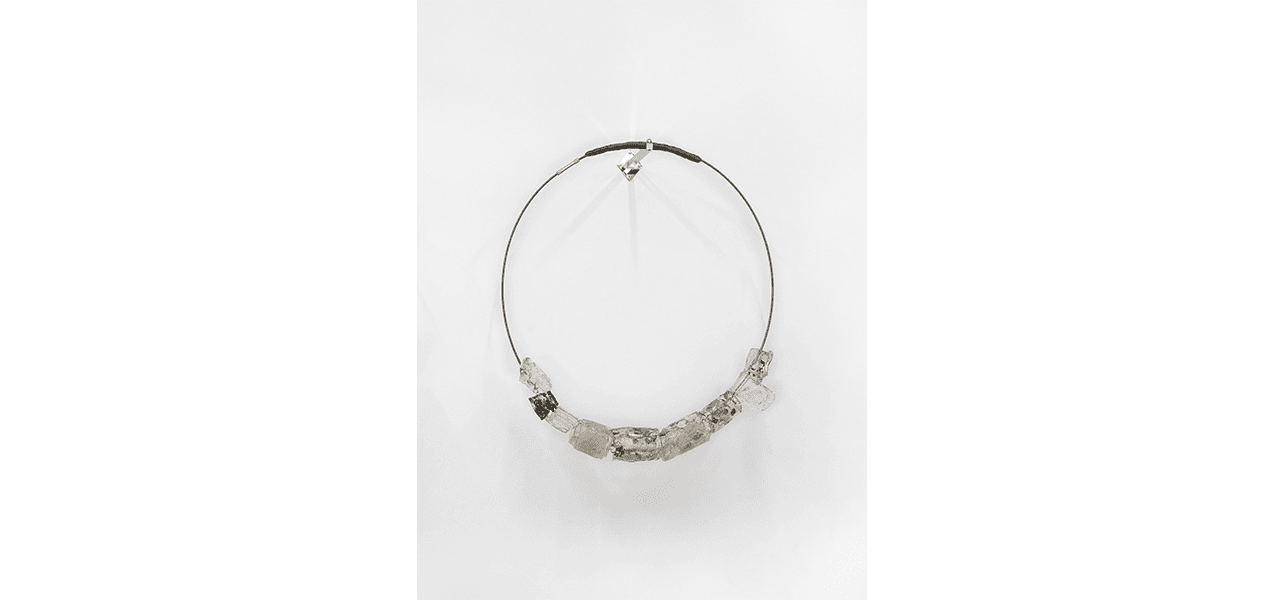
Parent CompanyNora Chellew, Beck Haberstroh, Carly Mandel, Sara Murphy, Funto Omojola, Mierle Laderman Ukeles Parent Company is pleased to present the inaugural show in our new location in the basement of 154 East Broadway. The exhibition is about care, or the lack of care, shown towards our bodies. It is about the love and violence that is inflicted on our bodies and about the time spent enacting care and bodily labor. Inserting bodily care into an art context is a well-worn gesture by Mierle Laderman Ukeles. Ukeles’ career radically explores excluded labor practices within art spaces. Ukeles performed numerous public acts that made visible the typically unseen maintenance jobs within the museum and the world more broadly. She calls attention to and elevates the systems of maintenance that underlie our society. On view here is a single print from One Year’s Work Time. This piece was installed in 1984 at the Ronald Feldman Gallery and included 1,169 screen prints in 53 colors. The image is a representation of a Department of Sanitation time clock altered to show one 8-hour work shift, superimposed on real sanitation work schedules. This gesture makes visible the true time commitment needed to keep our city clean. Time is also evident in Nora Chellew's Pocono Palace 02 and i want to be evil works. Chellew captured Pocono Palace 02 while visiting Cove Haven’s Pocono Palace just before it closed in May 2024. Her work from this visit investigates the power and efficacy of kitsch as it guides intimate experience. She focuses on the pools and tubs in these rooms that are vessels incomplete without bodies, and stages incomplete without voyeurs. Pocono Palace 02 is part of a Portal Series of four prints that capture and double bathing and resting architecture in mirrored surfaces. The poem i want to be evil is an evolving work similarly revolving around bathing and bodily experience. The footnotes of the work, which do not change, can be a part of or separate from the main text, at the reader’s discretion. The main text, originally developed in 2017, has been reworked as recently as 2023. Sara Murphy’s drawings also acknowledge the formations that hold and constrain a body. Contained Spot and Contained Spot 2 were made using oil pastels during early COVID lockdowns. Here her legs are held in by the points of the frame or become the frame itself. The worked surface also feels like a recording of her time spent touching the paper and tracing her limbs. Her body is a frame that alludes to larger frames (gender, race, class, ability, etc.), that define our bodies. In a similar vein as Murphy, the subjects in Funto Omojola’s photographs are almost painfully contained. In mother of the priest i come to beg i the subject's head is tucked under their shirt. The resulting image alludes to a decapitated form, lying prone in a field. Informed by both Yoruba understandings of illness as well as violent, colonial medical conceptions of disease, Omojola considers what is left after a marked body has been despoiled or wounded. Carly Mandel’s Glass Medical ID also illustrates the weight of medical frameworks. Mandel translates the form of a medical ID bracelet into a larger, more abstract ring of glass beads. Instead of a concrete medical diagnosis, the glass beads allude to more nuance and complexity. Medical ID bracelets serve to mark a body as ill or in danger but here the bracelet shifts towards a form of adornment. When the viewer encounters the bracelet the scale engages their whole body instead of just holding tightly to their wrist. Holding tight to the body, beck haberstroh began this series of prints by casting their friends’ faces in plaster. The plaster casts were then vacuum-formed, and, after breaking under the heat and pressure, were rearranged to form new faces. haberstroh then recaptures the plastic masks in the darkroom as photograms. For haberstroh this process becomes an analogy to what happens to images of our faces when they are stored in databases, copied, and recombined to train artificial intelligence algorithms. But unlike the non-human gaze of an AI program, haberstroh traces, casts, and immortalizes the faces of friends with care and personal knowledge. Through these photographic transformations, their likenesses are shared but also tenderly obscured. Taken together the works in this exhibition ask us to consider the profound significance of care, its absence, and the impact it has on our corporeal selves. The artists confront the myriad of ways in which care manifests, from touch to diligent maintenance to simple acknowledgment. Their work considers the often-overlooked labor of care work – the unseen hands that tend to our bodies and the time spent performing that care.