
Chinatown, New York
Maximilian Schubert
Dissolves
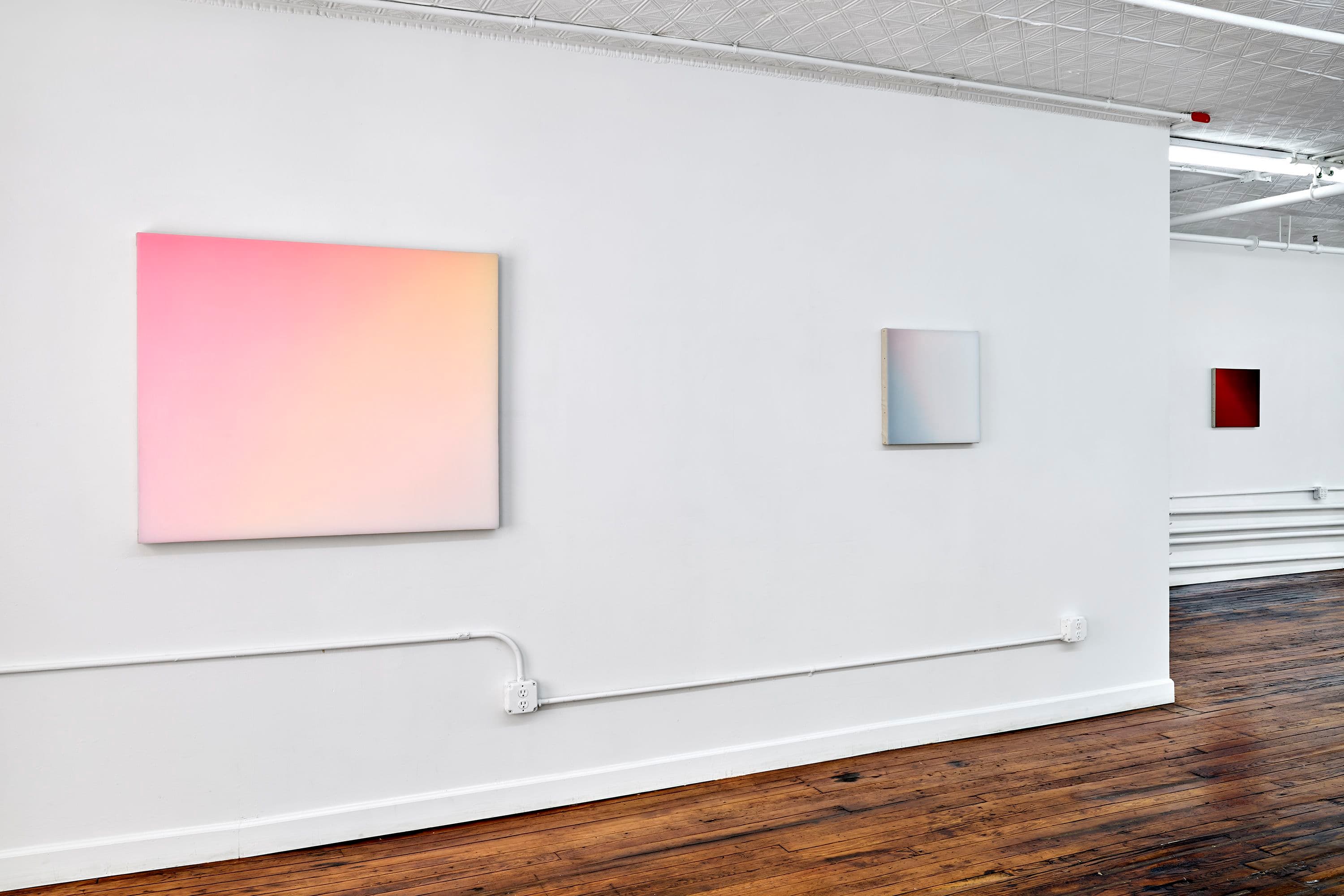
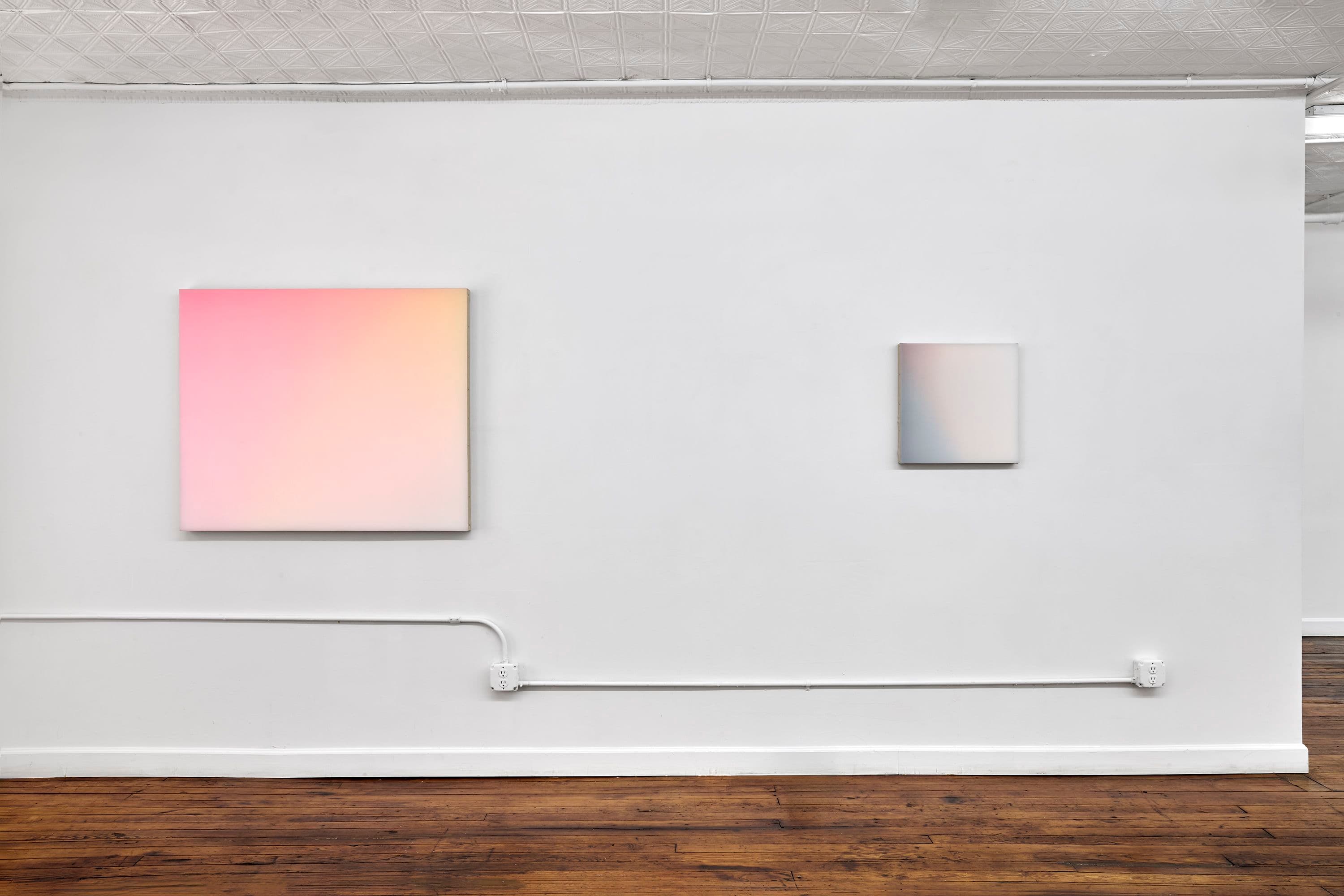
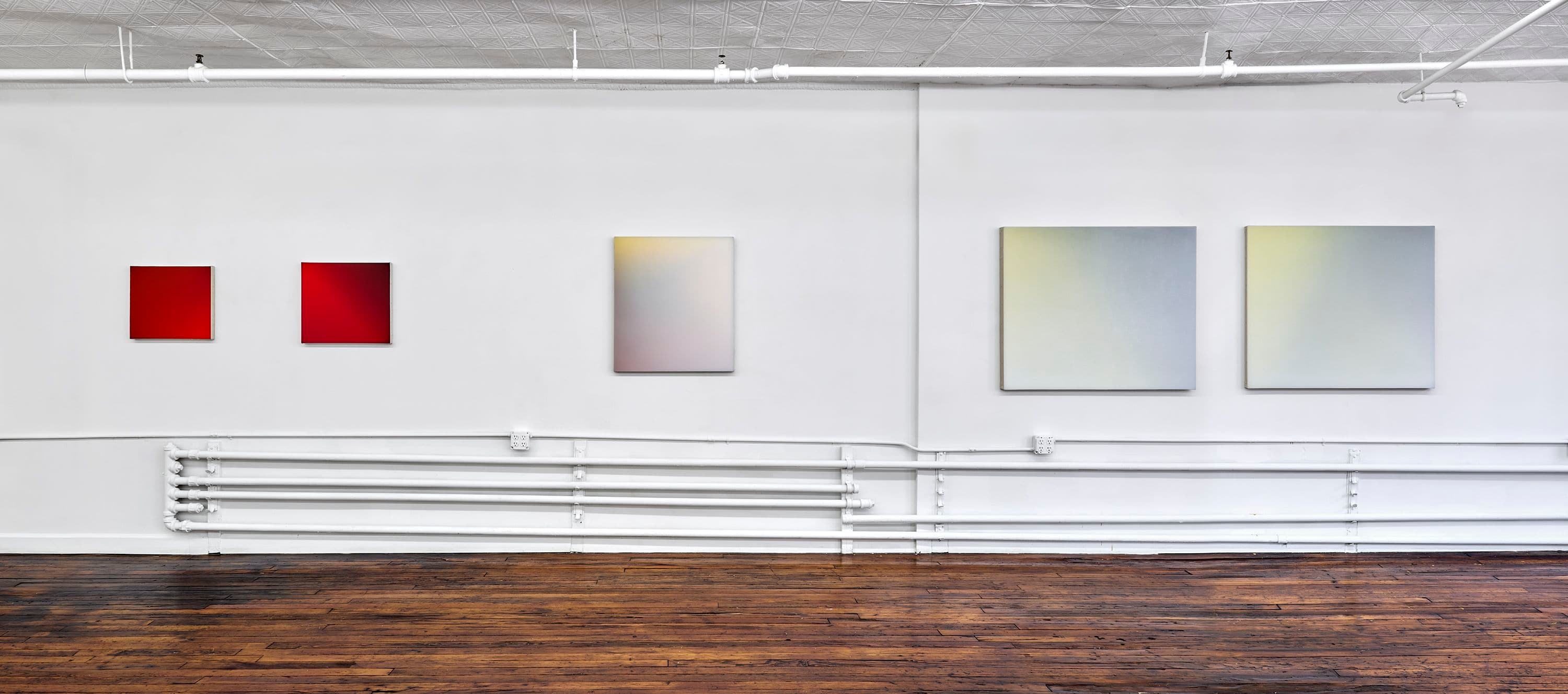
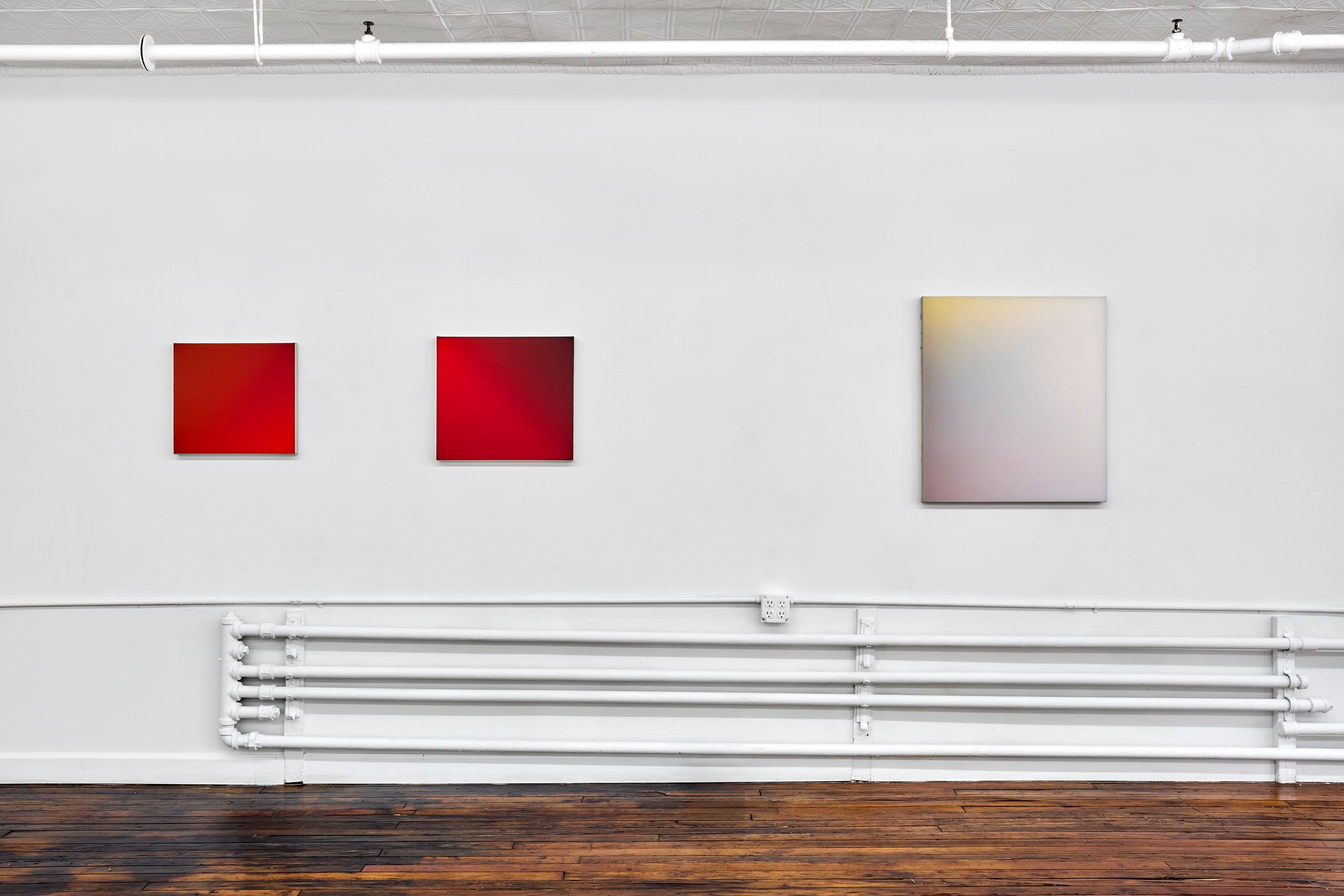
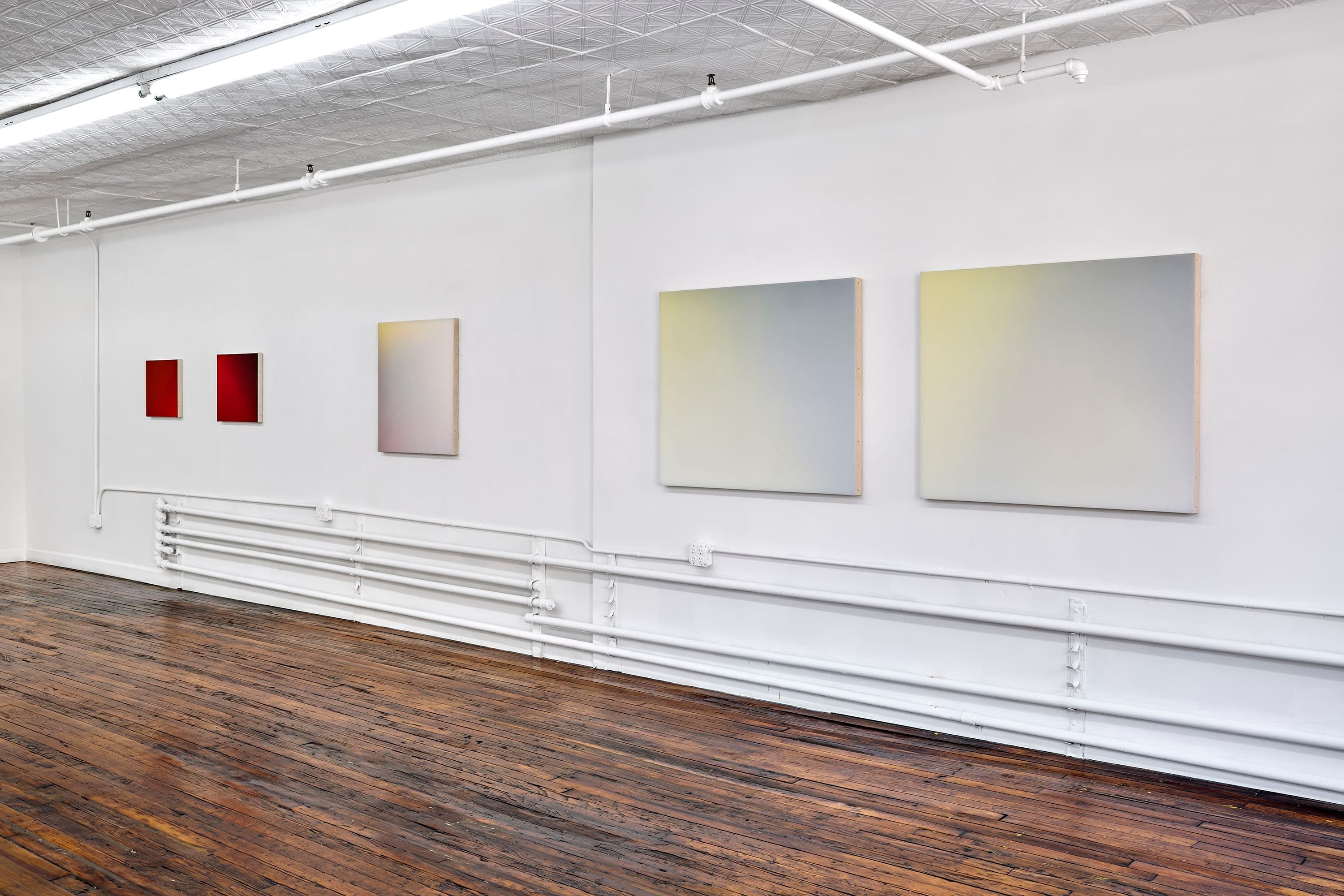
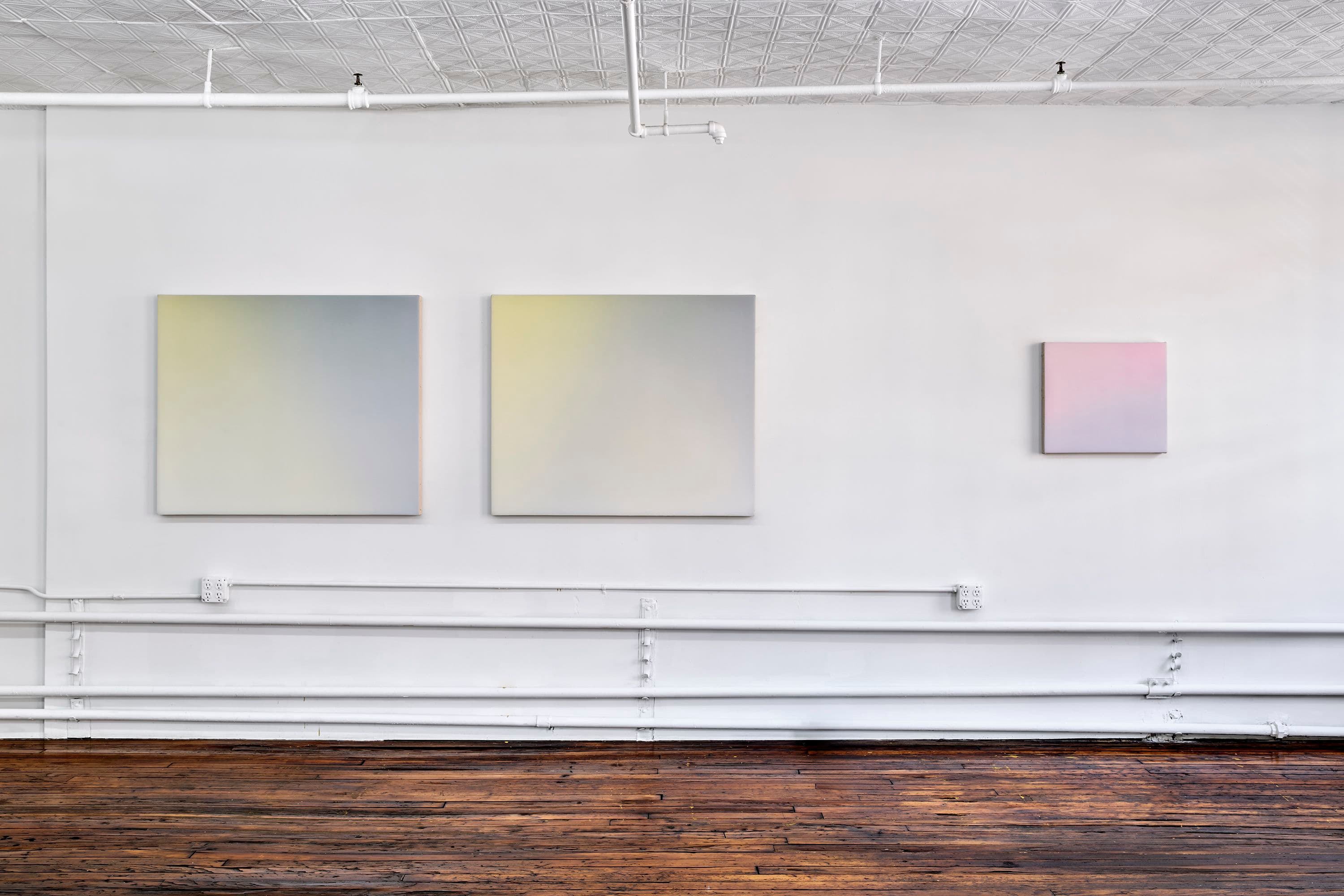
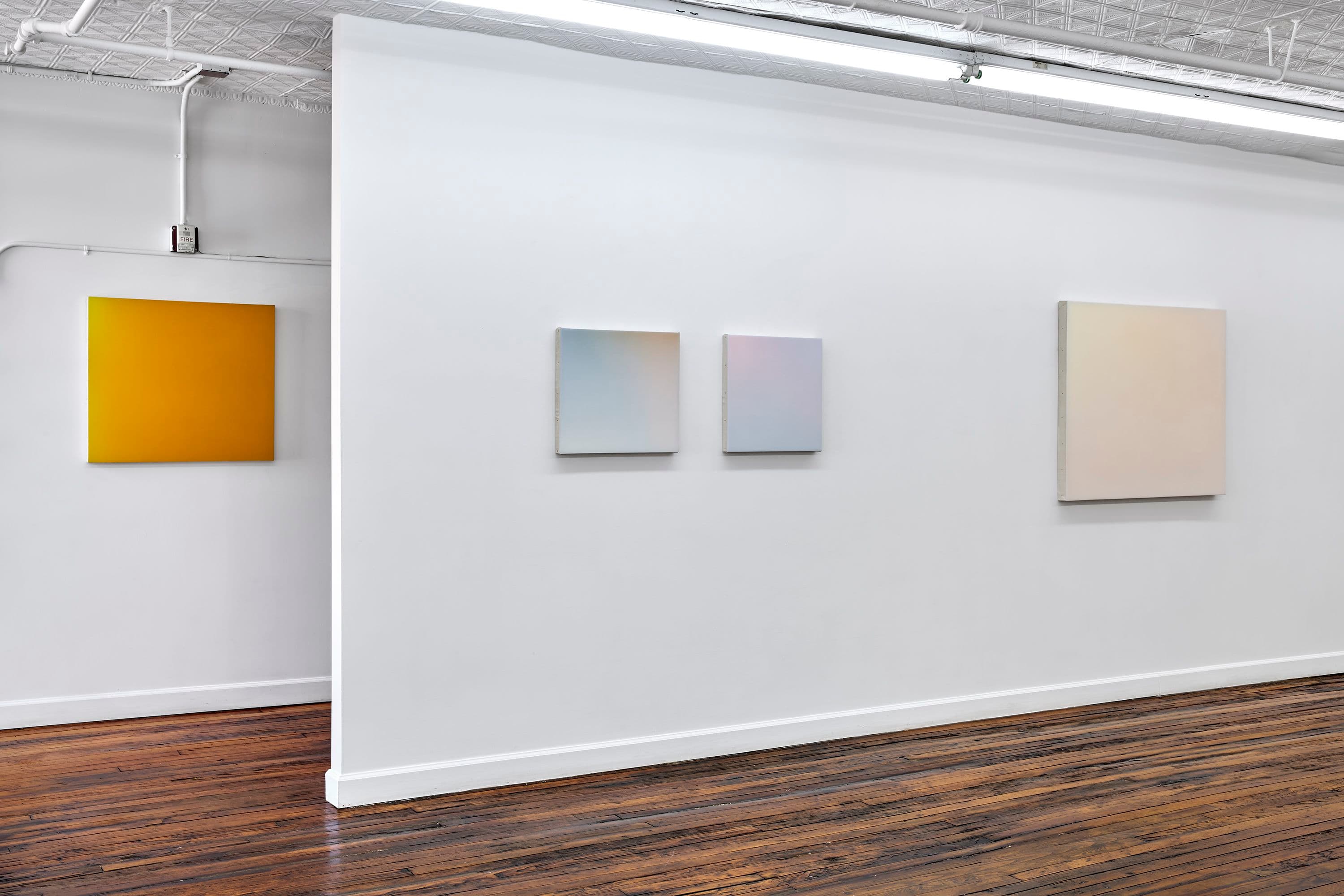
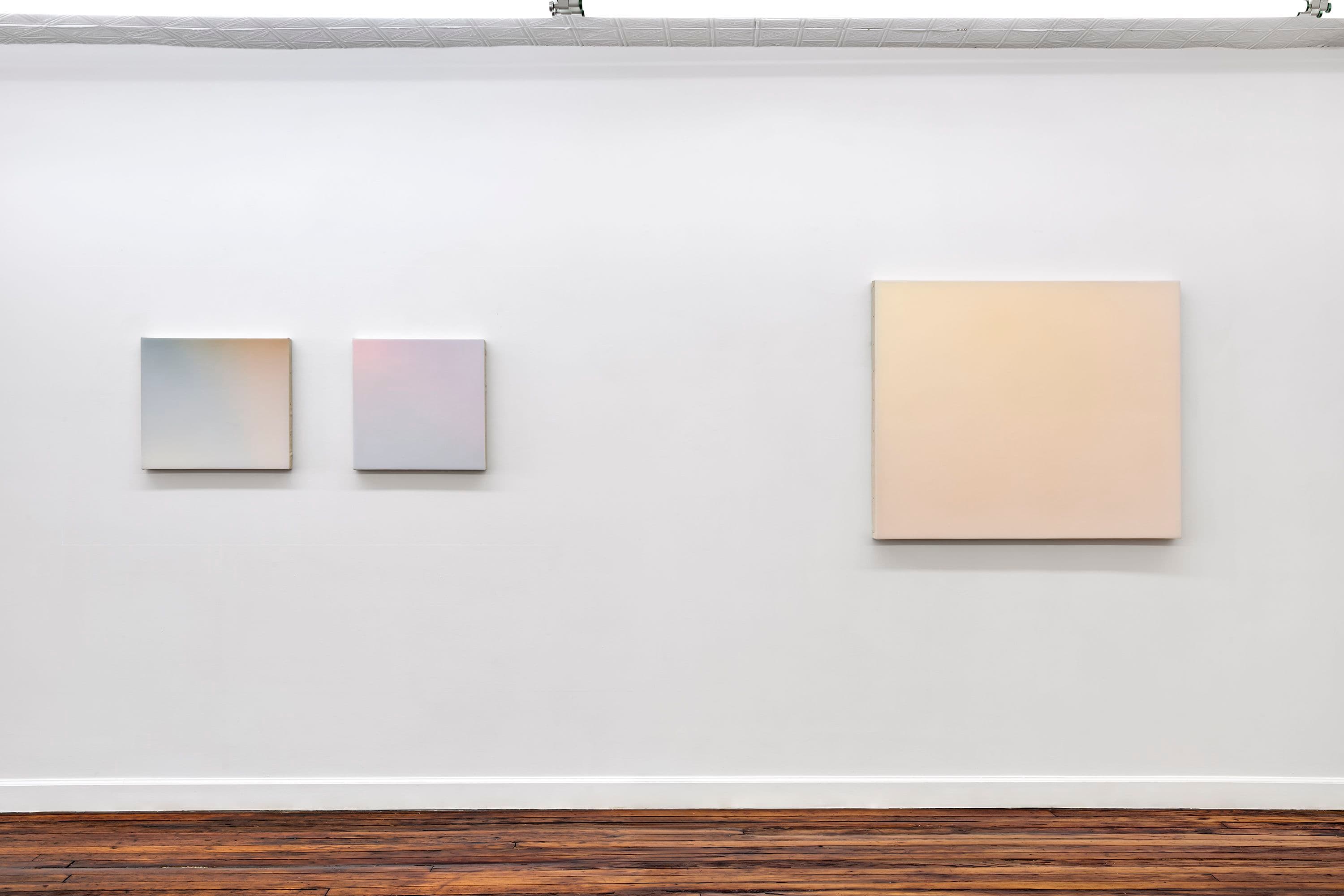
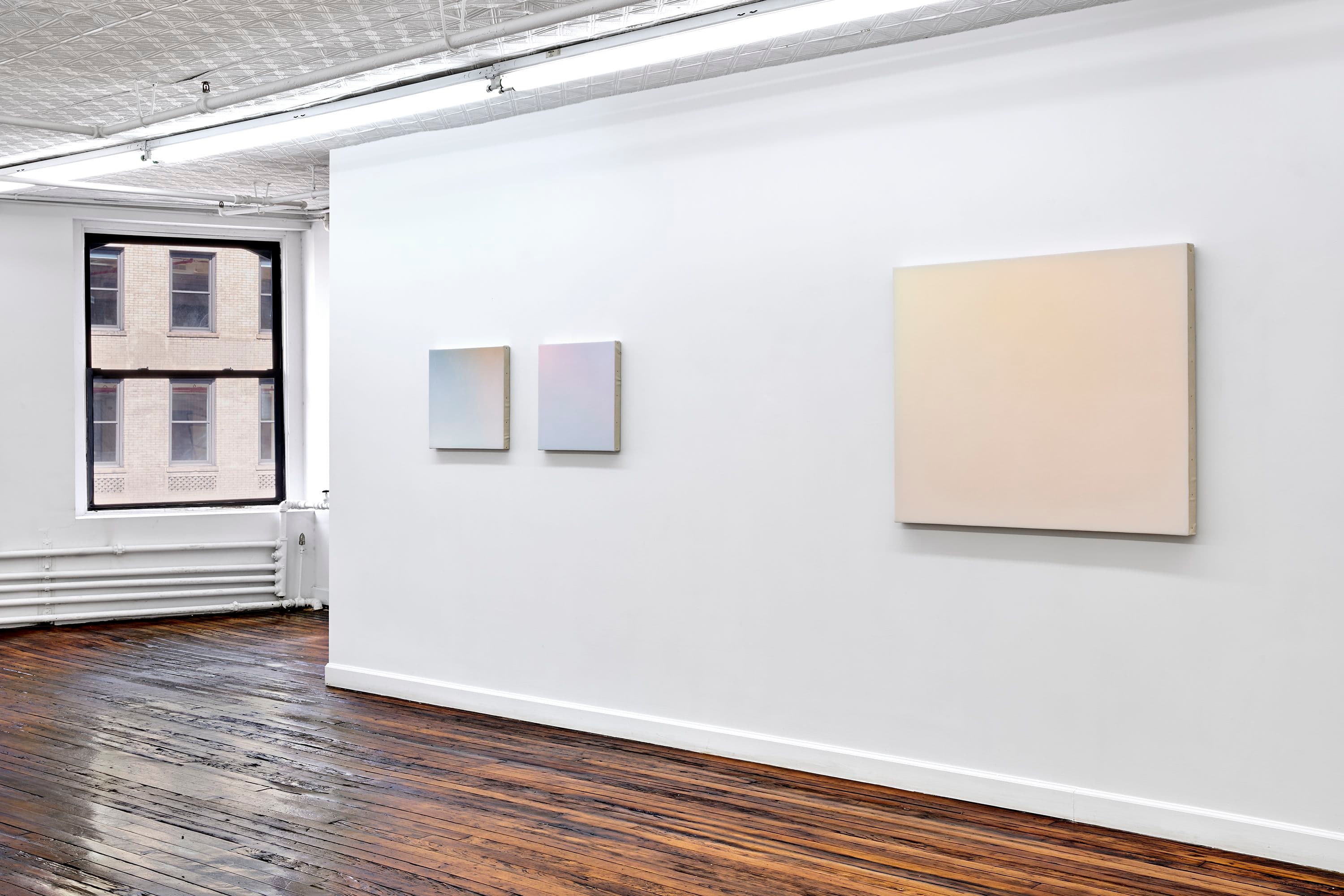
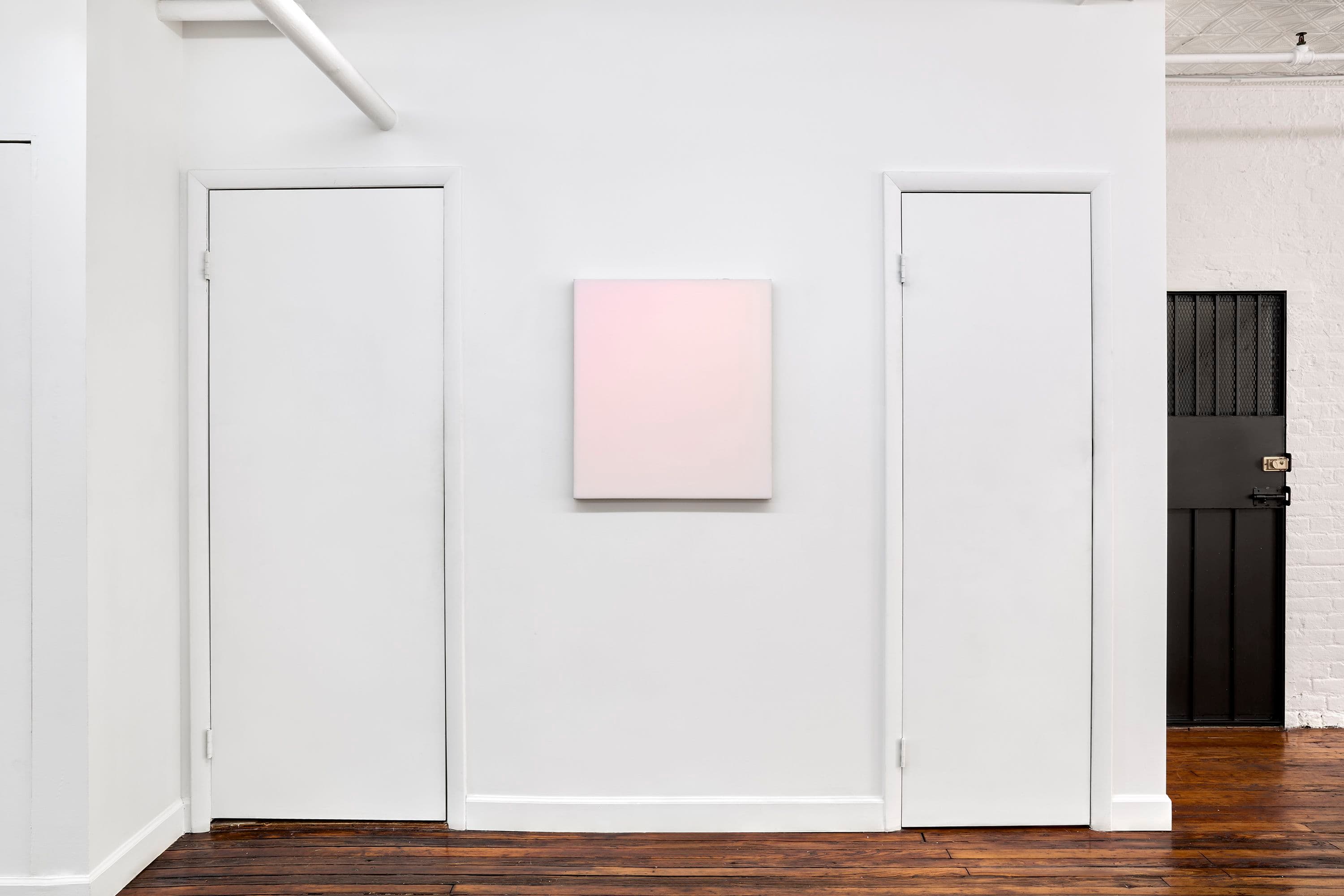
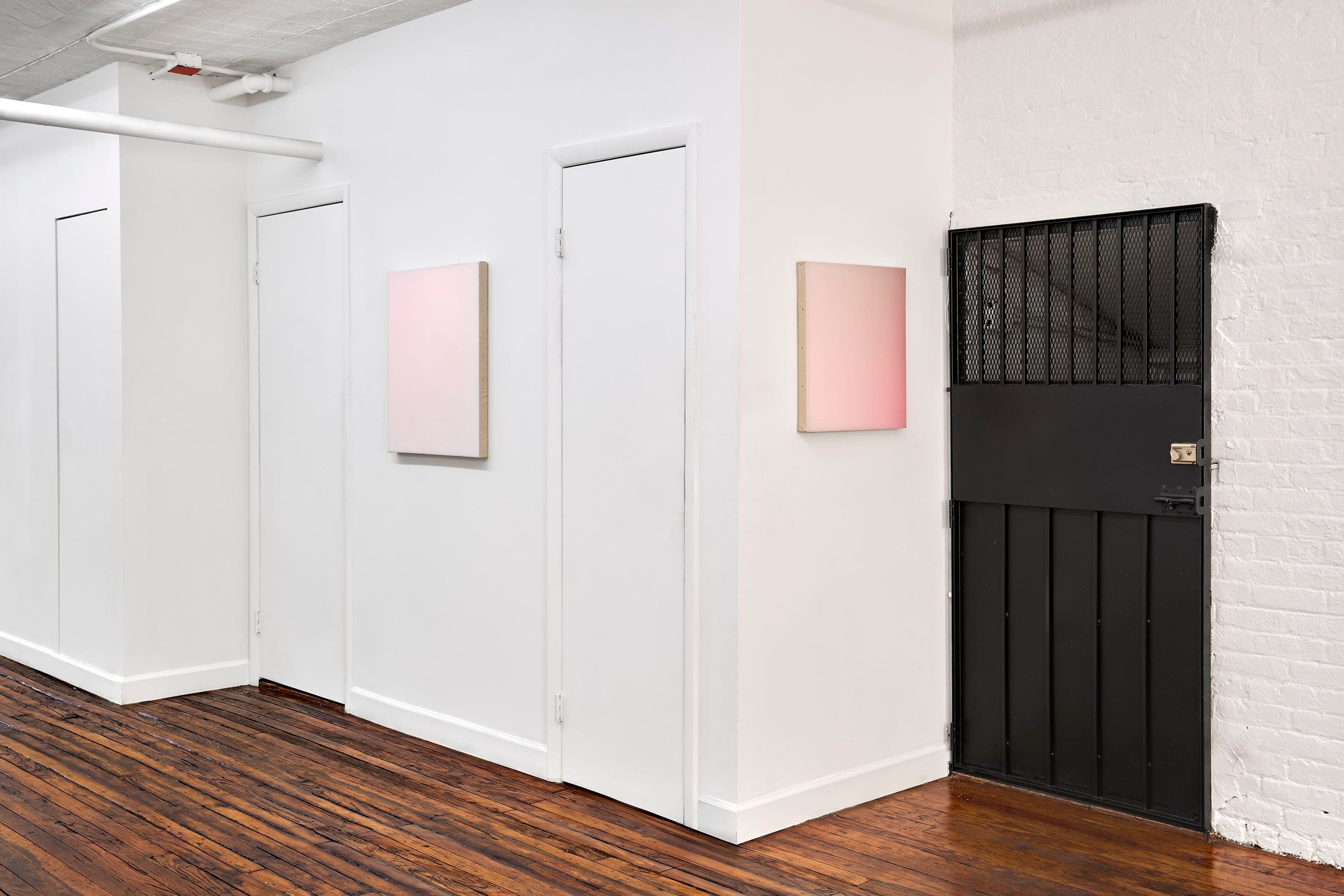
Off ParadiseOff Paradise is pleased to present Dissolves, Maximilian Schubert’s third solo exhibition with the gallery. We call upon a fog as a means of rendering dislocation. As form dissipates, we lose visual cues and withdraw into the more immediate senses. Moving forward into mist, moisture weighs heavy on our skin, and our regular gait feels like a careening dash. Light is refracted into beams and halos, broken into diffuse energy, and suspended in travel. We meet our surroundings in arcs of suspense and solace, unsure what lies beyond arm’s reach. Maximilian Schubert’s Dissolves engages this collapse of perspective, drawing from the disorientation we feel as we transcend our bodies and melt into our environments. Just as one struggles to pinpoint the moment they enter and exit a fog, we meet the works in moments of transition, materializing spaces on the threshold of apprehension. Comprising layer upon layer of translucent, pigmented resin, Schubert’s luminous “canvases” allow the eye to probe beyond the works’ gauzy surfaces. Movement supersedes direction—we fall into the trompe l’oeil canvases, surrendered to our own momentum. Each “painting” leads us to an indeterminate place, with location differentiated by temperature, mood, and radiance. Some enamel veils glow like ice, concealing muted swaths of pink and vermillion. Like the sun’s warmth dampened by a breeze, they taunt us with abated intensity. Others revel in muted tones, eclipsing morning greys with dour shadows. A handful of works abandon the foggy palette and build brilliant reds and oranges on dark foundations, their floes swirling atop cool, hardened bases. Even in their relative extremity, these, too, imagine environments. Rejecting moderation, they heighten the dissonance between fixedness and ephemerality, offering agonizing journeys from discord to stability. By positioning infinite, cavernous weight as the solid core beneath blazing swells, Schubert amplifies the liberatory experience of his lighter works. Just as we might be crushed under the weight of his infernos, we may vanish into the ethereality of his atmospheres. Refusing to stand for our world, these scenes occupy the space of recollection. In representing the process rather than the result of dissolution, the canvases flourish in indeterminacy. As they capture and diffuse light in new and unforeseen ways, they offer their viewer new perspectives, drawing them further into their iridescence. —Theo Belci Maximilian Schubert (b. 1983, Rockford, Illinois) received his BFA from The School of the Art Institute of Chicago in 2007. Schubert’s work often straddles the boundaries between painting and sculpture. The luminous “canvases” that make Untitled (Dissolve), (2025– ), his newest series, are cast urethane resin objects—hybrids of painting and sculpture that refuse to cohere into one or the other. Employing the old master technique of glazing where thin layers of paint impart color, depth and luminosity to a surface, Schubert creates works composed entirely of layer upon layer of poured, translucent polyurethane. Schubert has exhibited in the US and abroad, including three solo exhibitions at Off Paradise, New York, Doubles in 2020, Nocturnes in 2023, and Dissolves in 2025; And Now, Dallas; Lisson Gallery, London; the Power Station, Dallas, Texas; Bjorn/Gundorf, Aarhus, Denmark; Van Doren Waxter, New York; Kinman, London; Eli Ping/Frances Perkins, New York; Stephane Simoens, Knokke, Belgium; Bureau, New York; The Warehouse, Dallas; Chart, New York, and CCA, Andratx, Mallorca. Schubert’s work is in private and corporate collections in the U.S. and Europe, including the JPMorgan Chase Art Collection. Schubert lives and works in Brooklyn, New York, and is represented by Off Paradise, New York. Off Paradise is a gallery located on Walker Street founded by Natacha Polaert in the fall of 2019. The name evokes the old neighborhood of Five Points, at the center of which was a small, triangular park, full of hopes and grime, called Paradise Square. It also invokes Paradise Alley, the artists’ and poets’ colony on the then-godforsaken corner of Avenue A and East 11th Street that is referenced in Jack Kerouac’s novel The Subterraneans. Off Paradise is a fictional place, right off Paradise, adjacent to it, but not exactly it.