
Museums, Basel
Angelica Mesiti
Reverb
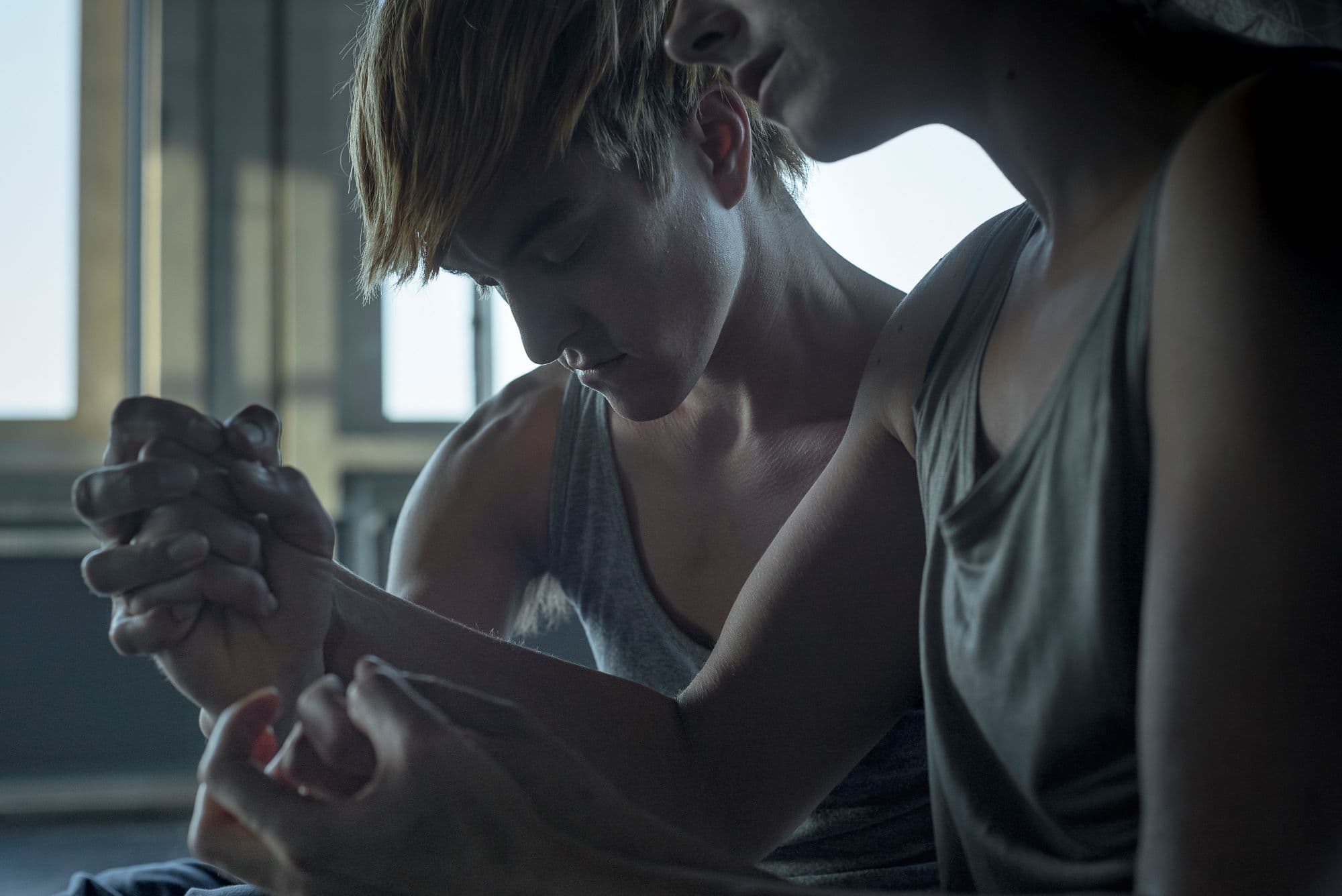
Museum TinguelyTickets available at tinyurl.com/th6zeard In an era shaped by digital media, Reverb draws attention to alternative forms of human communication. The exhibition brings together five video works by the Australian, Paris based artist Angelica Mesiti who combines different disciplines in poetic ways. The works illustrate the enchantment of the everyday and show how cultural traditions, rituals, music and sounds shape identity and foster community. Angelica Mesiti (b. 1976) works at the interface of performance, sound and video. Her film works and spatial installations offer an experience of performative practices: sound, movement and gesture function as forms of nonverbal communication, generating resonances between people, places and cultural practices. In this way, the exhibition title refers not only to acoustic reverberation, but also to the way ideas and information travel across space and time, continuing to echo and exert influence. In her most recent work, the 7-channel video installation The Rites of When (2024), Mesiti rethinks social rituals, taking as her point of departure old customs that follow nature and the cycle of the seasons. Such customs are often closely linked with knowledge of the stars and the movements of sun and moon that once informed the calendars of both agricultural activities and spiritual practices. The work is divided into two acts dedicated to the winter and summer solstices, using a combination of choreographies, vocal choirs, collective forms of physical sound production and electronic sounds to inquire into the future role of rituals. In view of the ecological uncertainty caused by climate change and human impacts on the environment, and the societal shift that is causing more and more people to live in cities and stay indoors, The Rites of When takes a sensory approach to explore new ways to connect. A Hundred Years (2020) is a quiet meditation on the traces left by war on both landscapes and memory. On the battlefields of the Somme in France, the film follows the rhythm of the seasons - from winter to spring, summer and autumn. A century after World War I, nature has reclaimed the land, but craters, trenches and a single surviving tree remain as silent witnesses. The scene centres on a musician walking in endless circles while playing a requiem for the fallen on a tin whistle. This traditional Irish flute, once carried by soldiers, lends the work a particular intimacy. Free of heroism or nationalism, Mesiti draws attention to the ecological consequences of warfare, to the persistence of cultural memory, and to the possibility of renewal over time. Sidereal (2024) shows a performance by two dancers, slowly revolving around one another. Between gravity and weightlessness, their choreography recalls the movement of celestial bodies or satellites, their interaction sometimes a struggle, sometimes harmonious - a reflection on interpersonal relationships as well as cosmic forces. The work refers to sidereal time, an astronomical timescale based on the earth's rotation in relation to stars rather than the sun. A crepuscular background, shifting in colour like the changing light of day, plus a minimal sound composition, create a sensory space between Earth and outer space. The three-part video installation Relay League (2017) is based on the final message sent in Morse code by the French Navy in 1997, marking its transition to digital communications. In the first video, a percussionist translates the sequence of dots and dashes into a drum piece. This then forms the basis for a choreography with a single dancer in the second part. In the third video, a dancer conveys the sequence of moves to her visually impaired partner by touch and guided gestures. In this way, the work develops a poetic reflection on the ways communications are changing and stresses the importance of direct physical contact in an era when machine codes are being constantly developed and renewed. Prepared Piano for Movers (Haussmann) (2012) shows two movers in Paris carrying a grand piano up six flights of stairs. The soundtrack is a chance-based composition - inspired by John Cage,the piano was prepared with objects placed inside that create unpredictable percussive sounds with every movement. Converging with the men's laborious efforts, this produces a musical score that reveals the grace of everyday events. The exhibition is curated by Tabea Panizzi. Angelica Mesiti (b. 1976) is of Australian origin and currently lives and works in Paris. Her multi-channel sound, performance and video installations have been internationally recognised through major exhibitions and significant commissions. In 2019, she represented Australia at the 58th Venice Biennale with the three-channel video installation ASSEMBLY, exploring notions of plurality and non-linguistic communication that have become the hallmark of her work. In 2024 she presented The Rites of When, a major commission for the TANK at the Art Gallery of New South Wales. Mesiti's work has been shown in solo exhibitions at the Palais de Tokyo, Paris; Art Sonje Centre, Seoul; Talbot Rice Gallery, Edinburgh; Musee d'Art Contemporain de Montreal; The National Gallery of Australia; Arter, Istanbul; Arnolfini Contemporary Art Centre, Bristol; The Banff Centre, Canada; Basis, Frankfurt; and Auckland Art Gallery Toi o Tāmaki, amongst others. In addition to Venice, Mesiti has participated in biennales including Singapore (2026), Boras (2021), Busan (2020), Adelaide (2018), Sydney (2014), Istanbul (2013), Sharjah (2013), Kochi-Muziris (2012), and the Aichi (2013) and Auckland (2013) triennials. She has participated in numerous group exhibitions and screenings at institutions worldwide including The Highline, New York; The Barbican Centre; The Tate Modern; Centre Pompidou, Paris; Nam June Paik Art Centre; MAXXI, Rome; MONA, Hobart; the MEP, Paris; Videobrasil, Sao Paulo; Haus der Kulturen der Welt, Berlin; ARoS Kunstmuseum; Tokyo Photographic Museum; Kadist Centre, Paris and San Francisco. Angelica Mesiti has been a studio professor at the École des Beaux-Arts de Paris since 2019.