
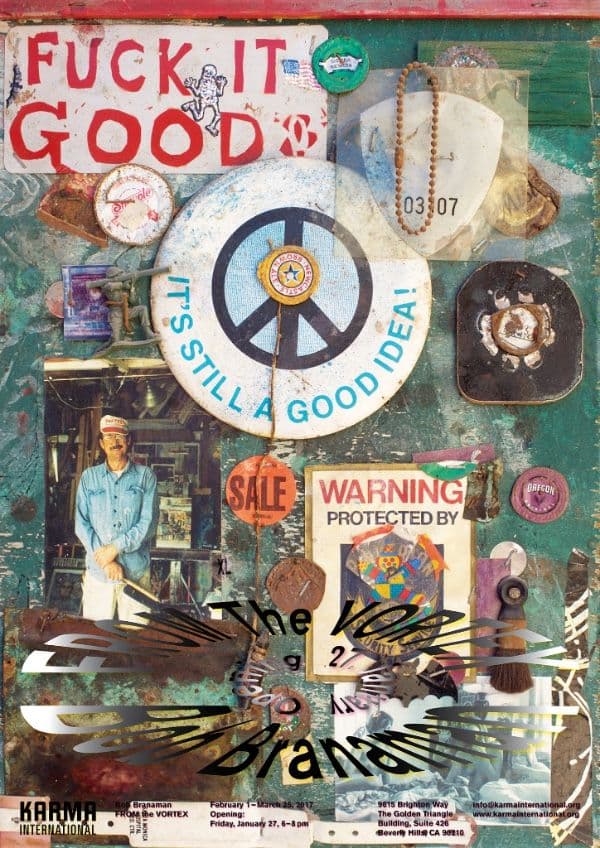
Weho, Los Angeles
Bob Branaman
From The Vortex
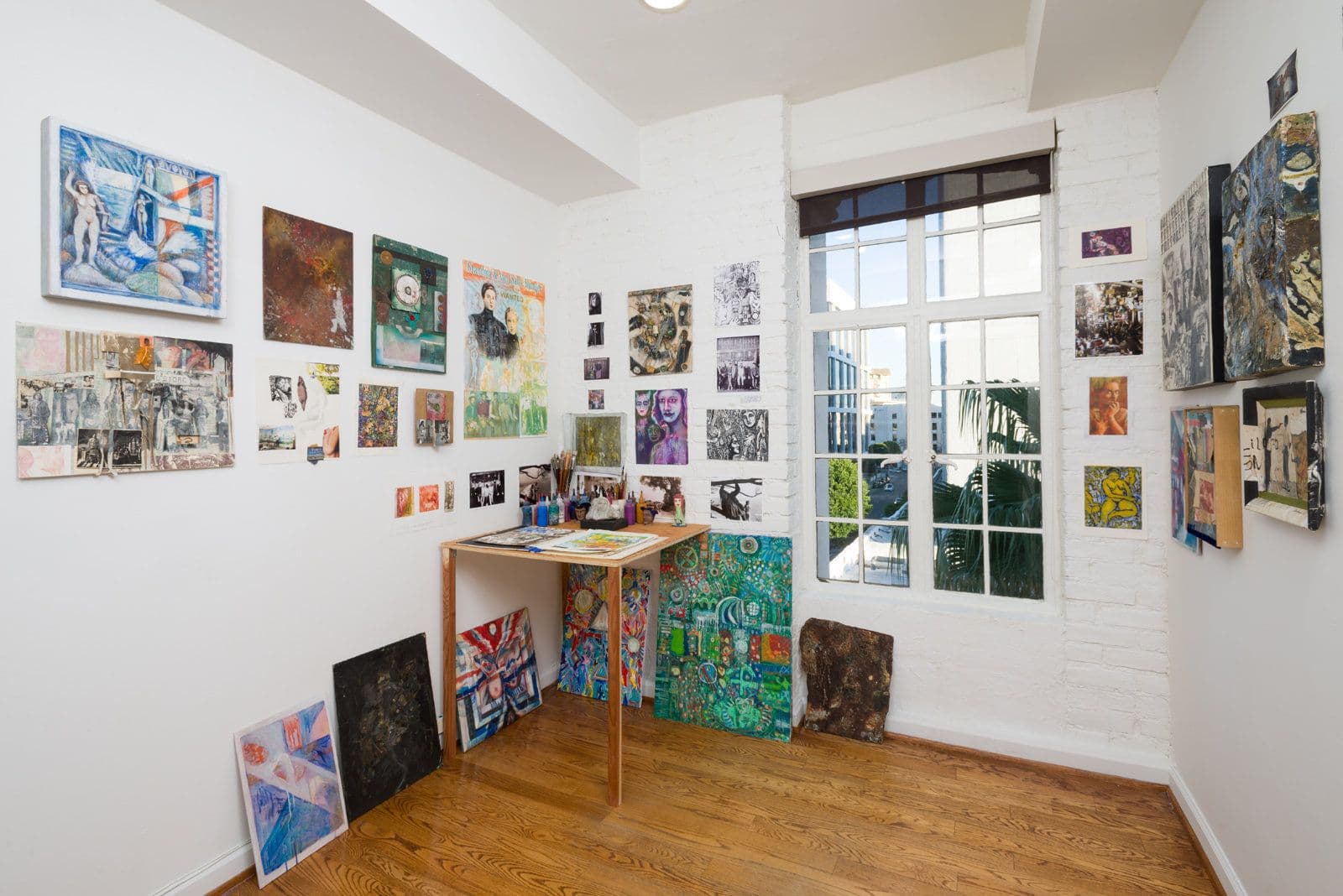
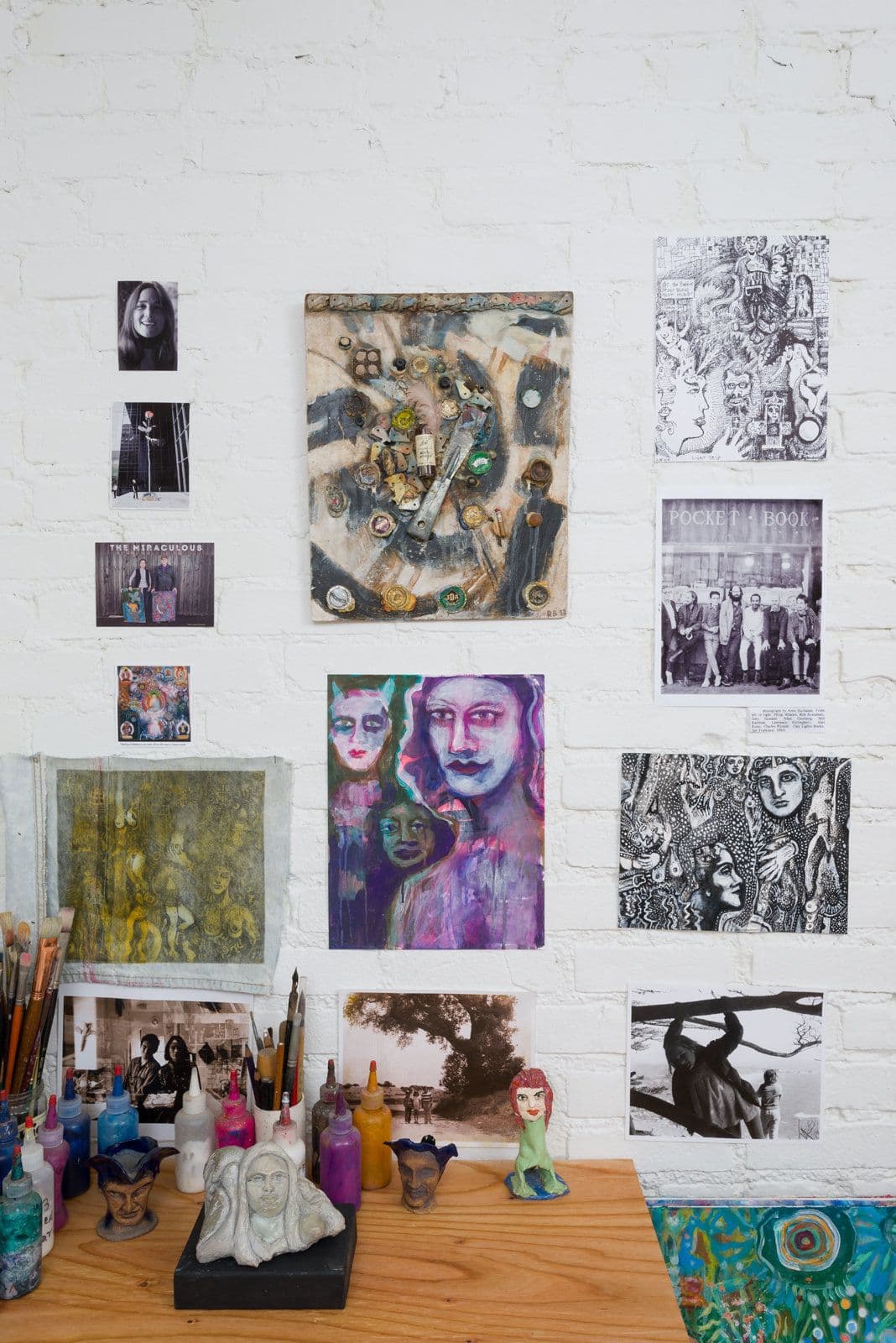
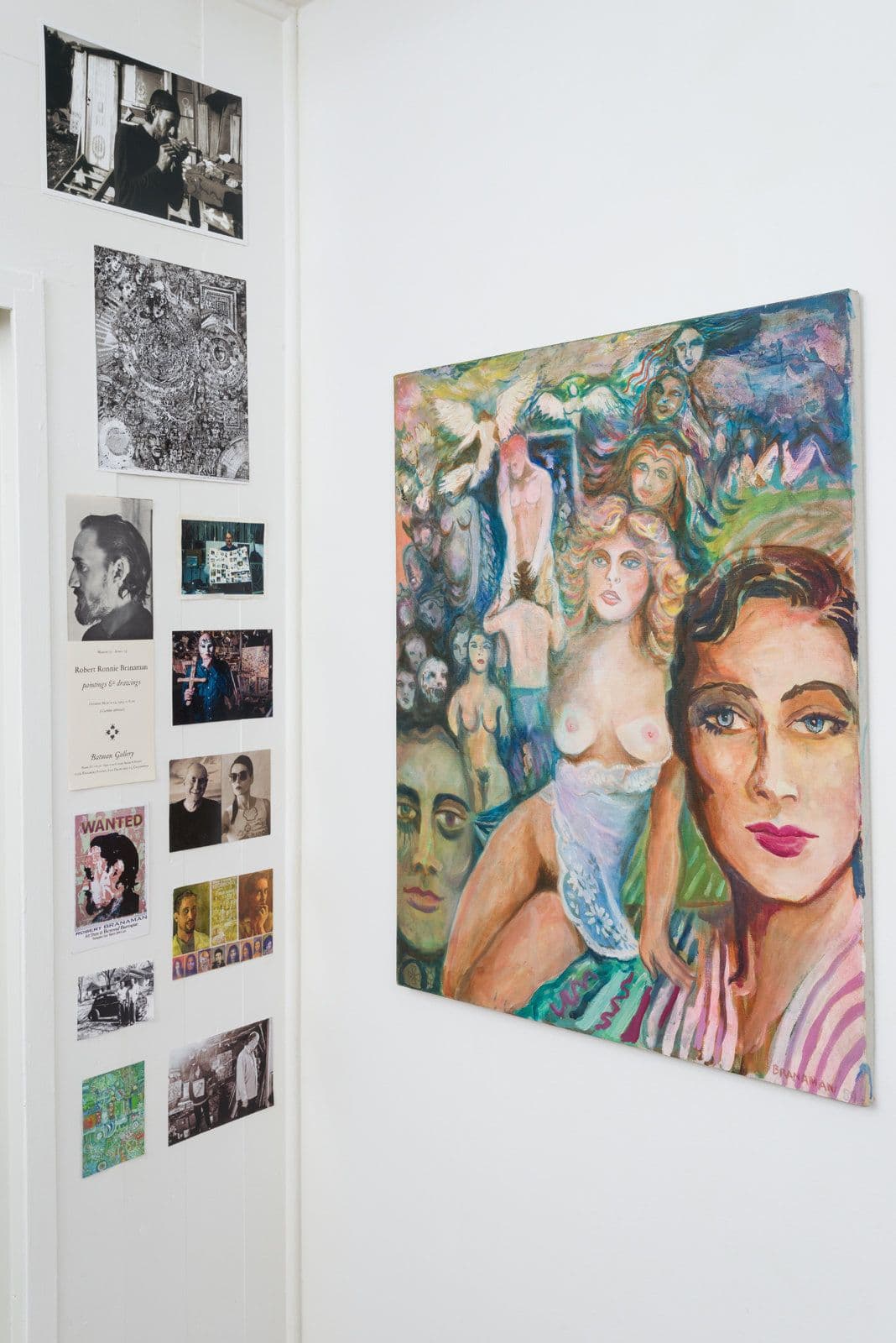
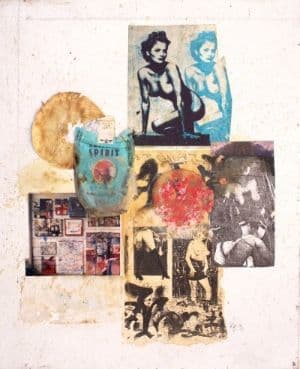
Karma InternationalKarma International Los Angeles is pleased to announce the gallery’s first solo exhibition with Robert R. “Bob” Branaman. Beat Generation poet, painter, and filmmaker Bob Branaman began his career shortly after moving to San Francisco in 1959, joining fellow Wichita, Kansas transplants Michael McClure, Bruce Conner, and Charles Plymell. Branaman and other San Francisco artists of the late 1950s and early 1960s aligned in an exceptional convergence of creative, avant-garde bohemians, poets, artists and writers liberated by new experiences in thought, sexuality, and cultural expression. At Auerhahn Press, founded by Dave Haselwood, Branaman met Alan Ginsberg, and created silkscreen cover illustrations for local poets including Philp Whalen, John Wieners and Philip Lamantia. Branaman also created band posters for the San Francisco Oracle, and for the band he played with, The Gladstones, who played on the same bill in 1966 with Janis Joplin and Big Brother and the Holding Company. As a precursor to the underground Zap Comix movement of the late 1960s, Branaman created the comic “Robert Ronnie Branaman,” printed in 1963 by Charles Plymell, which was later destroyed in the thousands for its alleged obscenity. Branaman was deeply influenced by his studies in Tibetan meditation, spending time with the Dalai Lama and a month at Esalen in Big Sur with Batman Gallery founders Billy and Joan Jahrmarkt. Commenting on Branaman’s 1964 show at the Batman Gallery, Dean Wallace, of the San Francisco Chronicle, said, “Take a mad genius with brush and canvas, place him in the mythical not-yet world of William Blake, multiply him by a hundred, and you get some idea of the paintings and drawings of Robert Branaman.” Drawing from his Beat contemporaries and forays into psychedelic and spiritual transcendence, Branaman’s work combines the literary and surreal with snippetsof ’50s and ’60s pop-culture ephemera in collaged tableaux that juxtapose the mythical with the explicit and the everyday with the far reaches of cosmological oneness. The exhibition presents works by Branaman spanning from the 1960’s to the 1980’s. This collection of paintings offers a glimpse into the vivid tableau of Branaman’s universe and provides insight into his unique perspective in a time period of great change in sexual liberation, revolutionary activism, experimentation, and spiritual exploration. Branaman’s paintings extend beyond the typical canvas and frame format. Often created out offound objects pieced and layered together, these assemblages and collages are carefully layered collections of memorabilia and ephemera that take on new significance in their careful juxtapositions. Anatomical drawings and Xeroxed pinups weave their way through much of Branaman’s collages and often share space with profanities, historical photographs, found drawings, cut paper, crayon, and smears of paint. Nods to art history share space with mug shots, newspaper clippings, and photos of family members who ran with the infamous outlaw Jesse James. In Branaman’s woodblock drawings, carved figures and scenes reveal a world of intricate characters and mythologized narratives of backseat make-out sessions and the re-occurring “Momma Daddie” symbol of two-sided kissing faces. Asart historian and clinical psychologist Eleanor Wygold writes, “The realms of experience open to the theoretical physicist, the depth psychiatrist, the mystic-religious thinker, are also available to the painter and through him to us. Only a few geniuses like Branaman know these realms. Only a few artists have the talent and courage to reveal through the soul what others are more willing to reveal through the head.” In Branaman’s world there are no boundaries or rules. His work is sexually vibrant, often naughty, and provides a unique insight into the revolutionary world of the Big Sur scene and the San Francisco Beats. Robert Branaman was born in 1933 in Wichita, Kansas. He attended Belmont Art Institute, Wichita; Wichita University (Wichita State); University of Guadalajara, Mexico; Columbia University, New York; Sherman Oaks Film School, California; and attended and was a teaching assistant at Santa Monica College for over 15 years. His work has been exhibited in solo and group exhibitions including Batman Gallery, San Francisco; Drawing Room Gallery, Santa Monica; Beyond Baroque, Venice, California; The Wichita Art Museum; Fort Worth Museum, Texas; MOCA Pacific Design Center, Los Angeles; and the Museum of Modern Art, New York. His work is held in the permanent collections of the Museum of Modern Art, New York; Wichita State University (Michael Kelly Special Collections), Oakland Museum of California; Anthology Film Archives, New York; San Francisco Art Institute; Berkeley Film Archives at UC Berkeley; and the Museum of Fine Arts Boston in conjunction with Harvard University.