
Germain, Paris
Robert Cumming & David Horvitz
L.A. Gastronomical
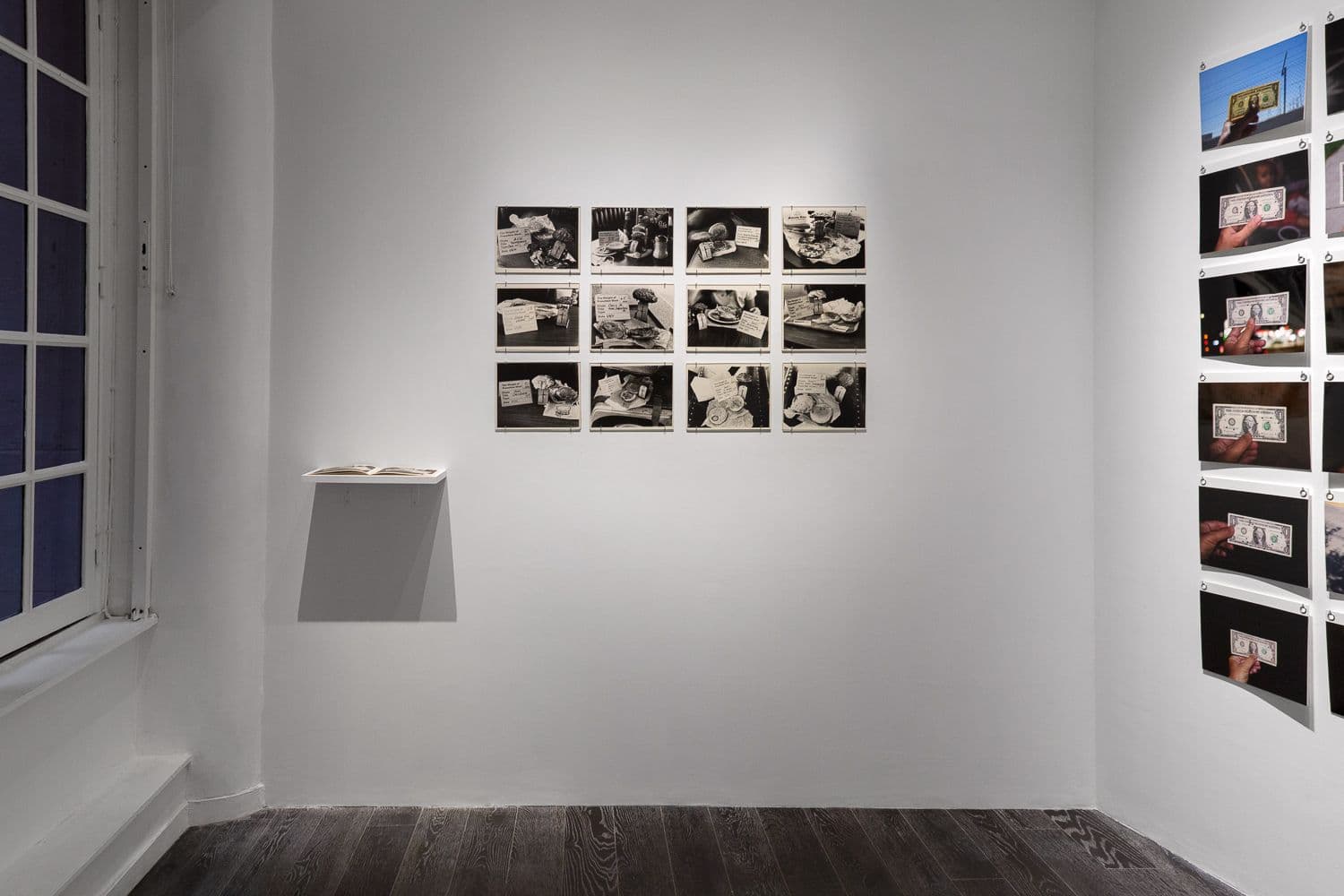
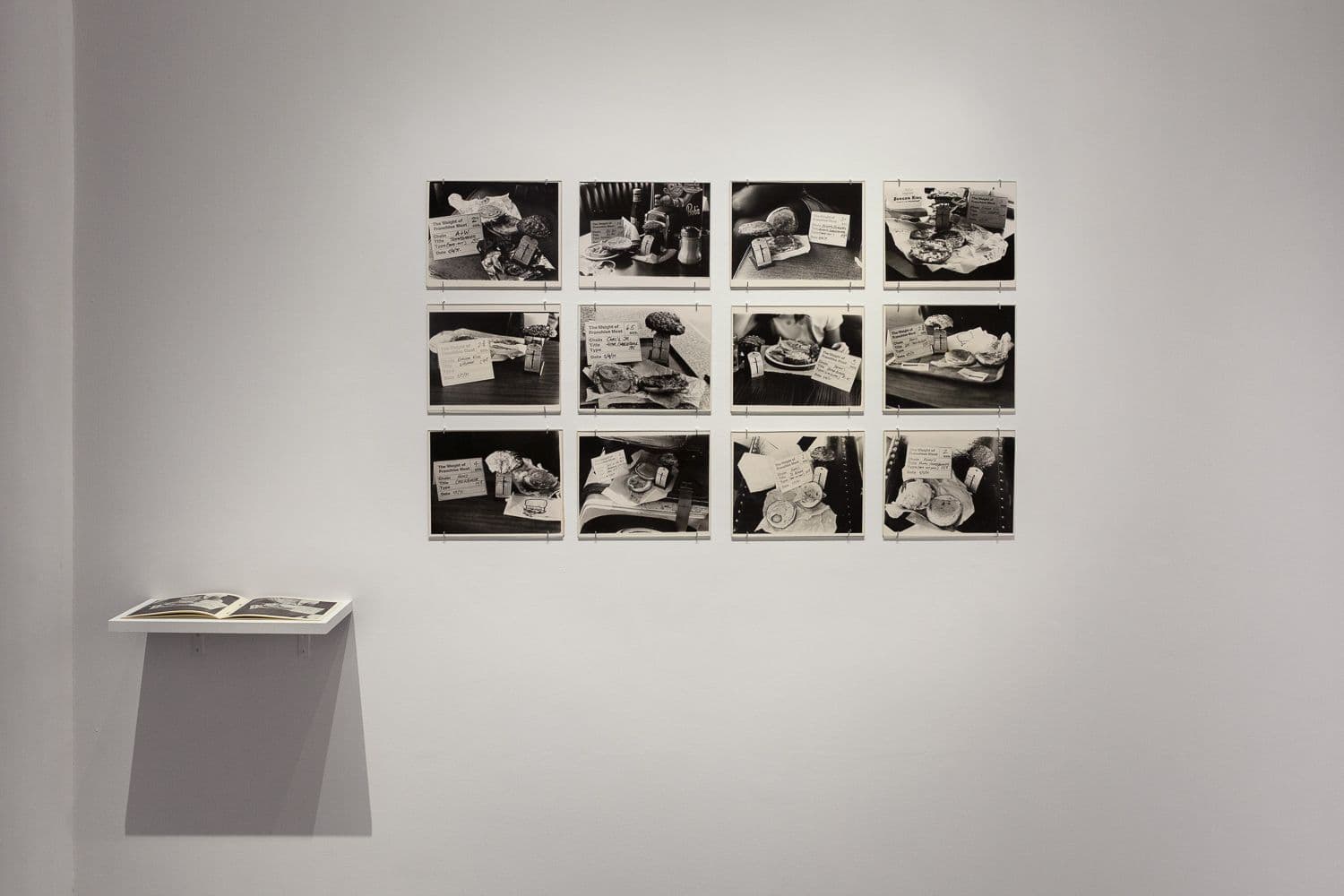
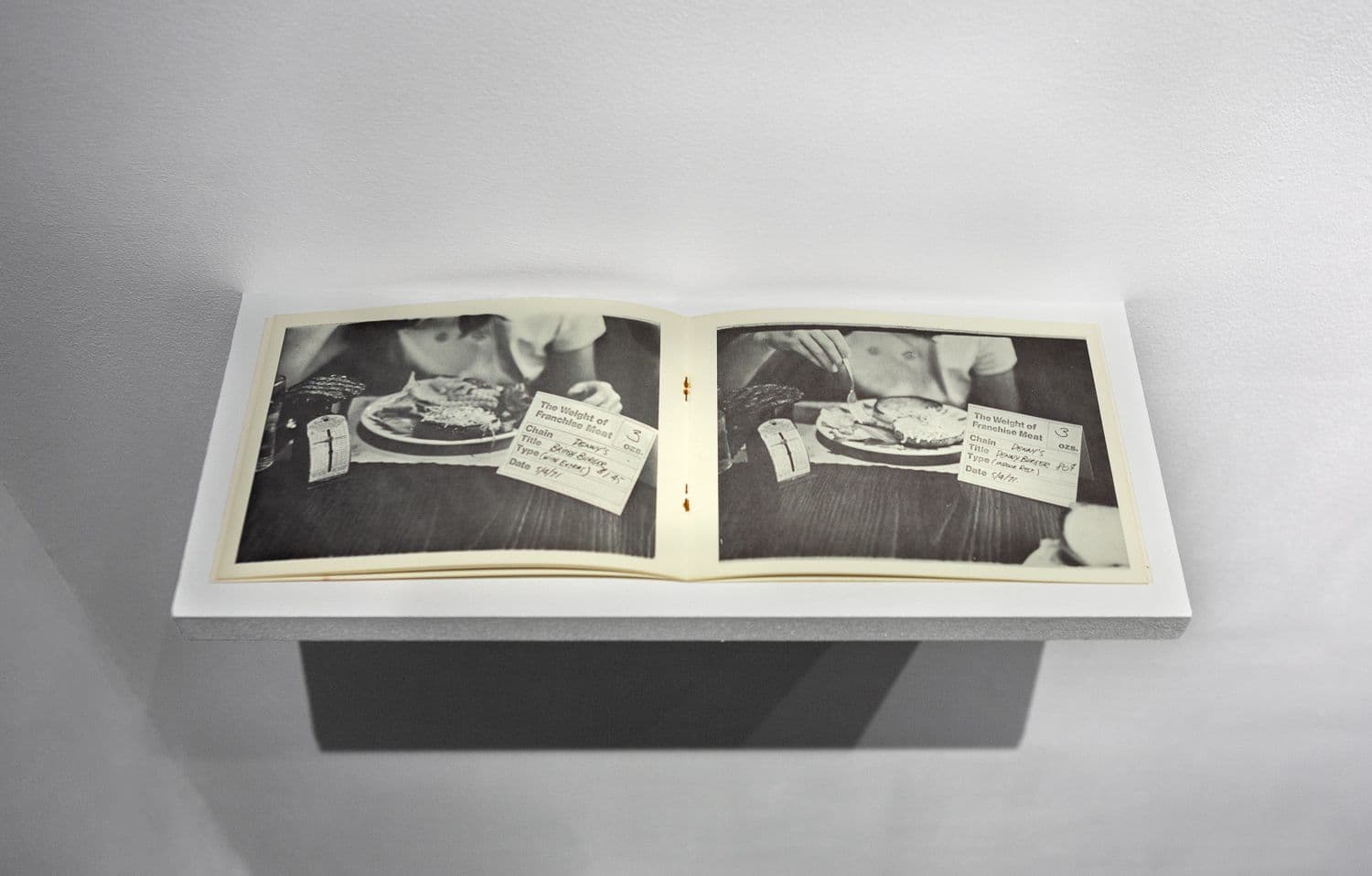
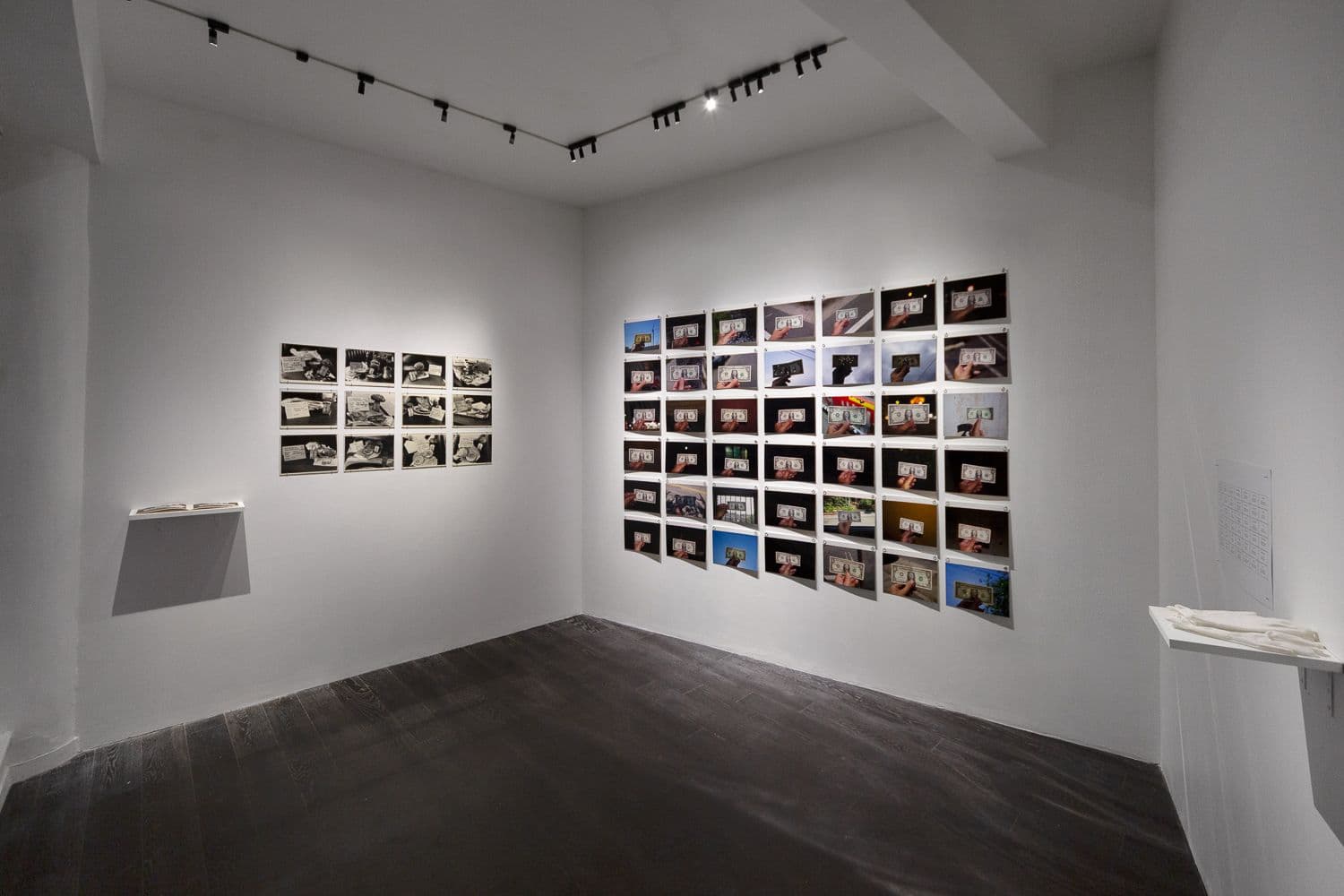
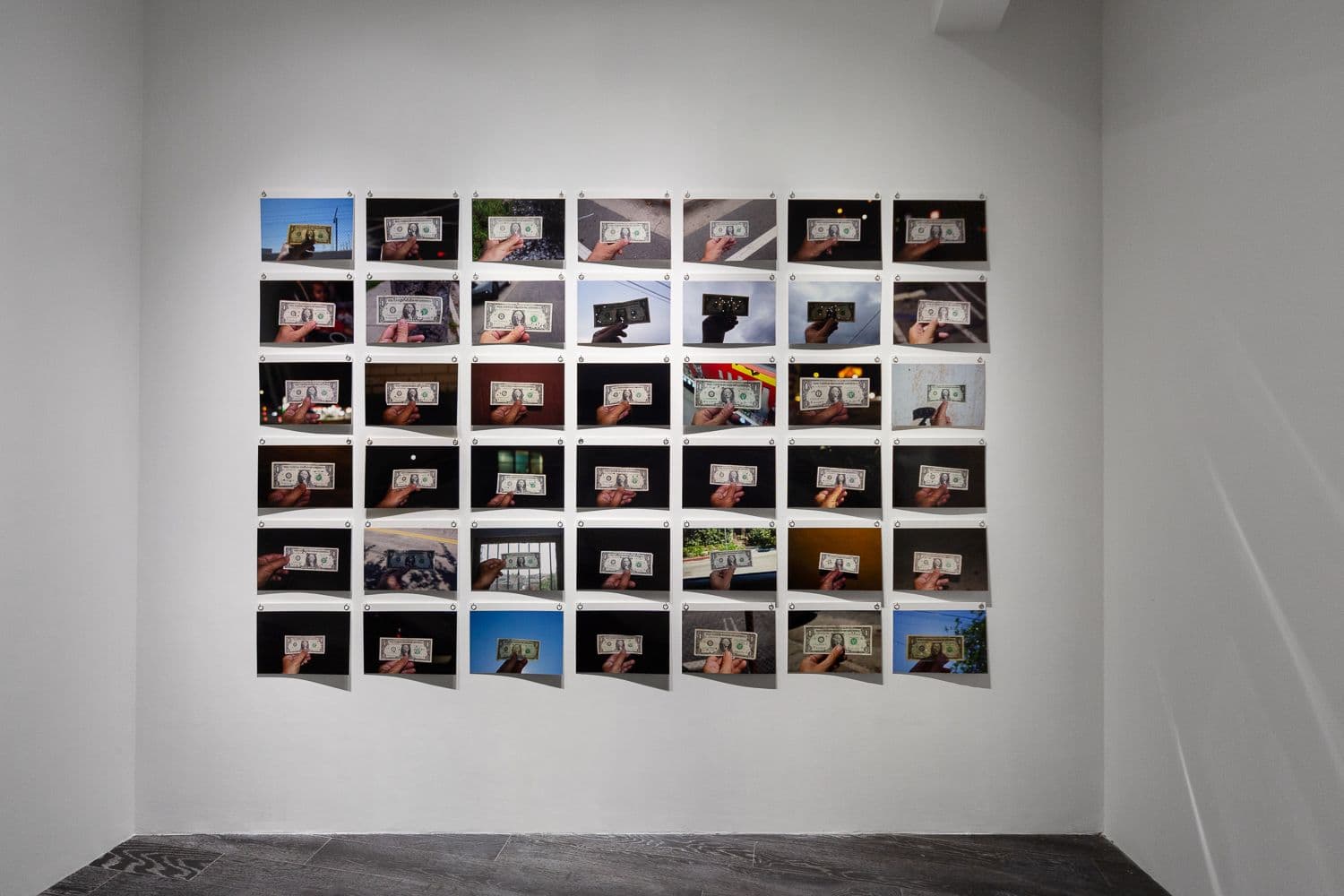
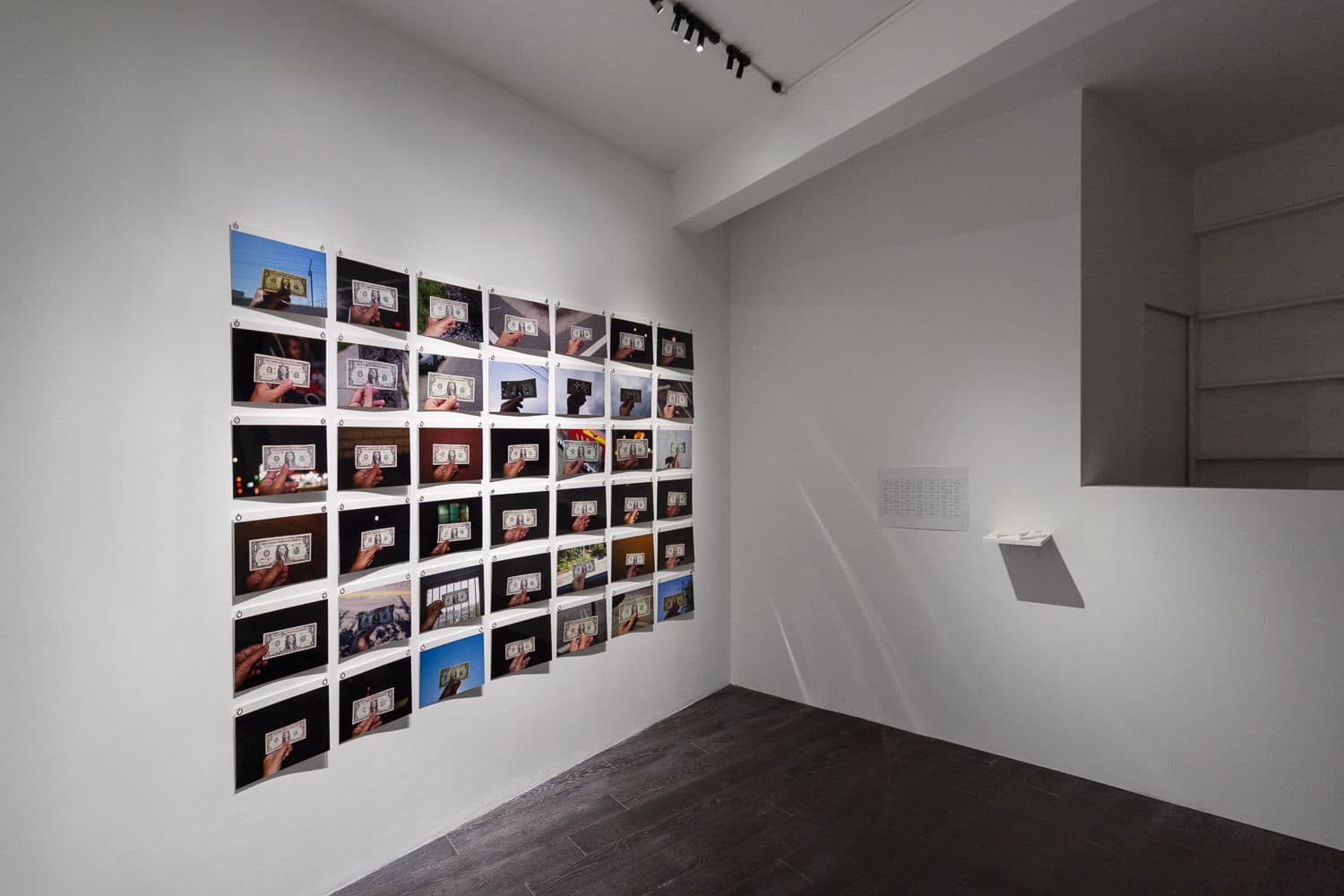
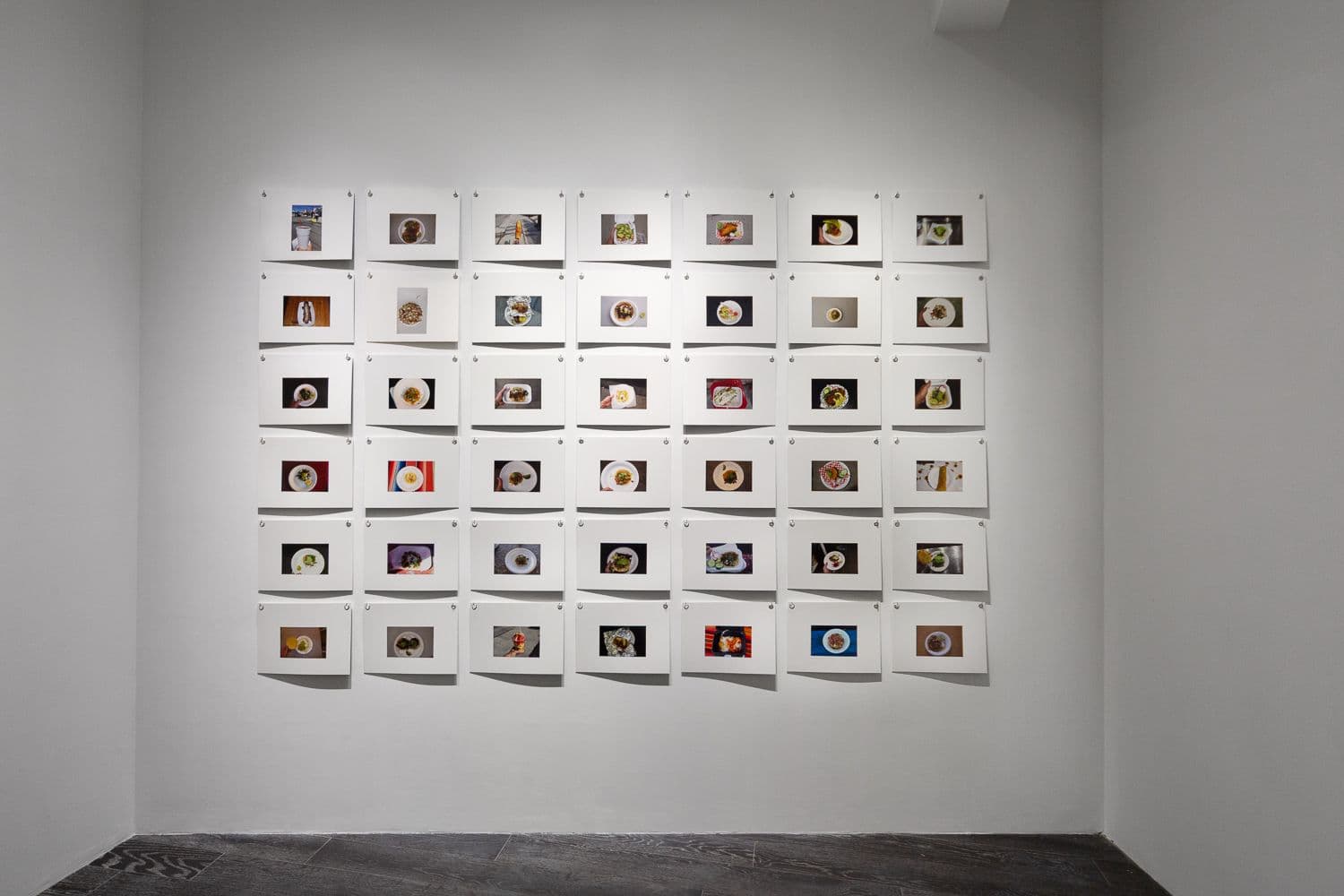
Jean-Kenta Gauthier | Odéon[Scroll down for French version / Veuillez trouver ci-dessous la version française] “...sixteen hamburgers in two days. I got this incredible case of dysentery.” —Robert Cumming, 2016 “I drove through the streets of LA, […] stopping at street food vendors. […] At each location I used one of the constellation dollars.” —David Horvitz, 2023 Jean-Kenta Gauthier is pleased to present L.A. Gastronomical, an exhibition of conceptual art created in Los Angeles, where Robert Cumming’s fast food meets David Horvitz’s street food, and where constellations enter circulation. Born on the East Coast of the United States, Robert Cumming (1943–2021) moved to the West Coast in 1970. “I was really thrilled about a lot of things about California,” he recalled in a 1978 interview with critic James Alinder. That same year, Cumming was already considering leaving California and returning East, which he would do two years later, having had his fill of the illusions offered by the region, its consumer society, and its film industry. He continued: “The hamburger was one of the things I wanted to spot-light.” On May 4 and 5, 1971, he set out to create a typology of hamburger patties from fast food restaurants in Los Angeles. Titled The Weight of Franchise Meat, these sixteen photographs made up his second self-published artist’s book of the year, released in an edition of 500, and now among the rarest of his publications. In each photograph, two recurring elements appear: a small pre-printed card bearing the project title and fields to be filled in (weight, name of fast food chain, hamburger name — which Cumming considered the “title” —, type of order with price, and date), and a postage scale, a nod to Cumming’s mail art practice from the 1960s before moving to California. In a 1994 letter to Frédéric Paul, then director of FRAC Limousin, Cumming wrote: “I saw the entire mail system as a working class exhibition; from the people at the post office to the people who sorted mail to the postman who delivered the work and finally the recipient.” A social concern for art not far removed from this study of low-cost dining, which takes the form of a consumer investigation. Cumming quickly became a key figure in the Californian conceptual art scene, gaining rapid success and joining a circle of close artist peers including AA Bronson, Robert Heinecken, Edward Ruscha, and William Wegman, under the mentorship of Douglas Huebler, a pioneer of conceptual art who had introduced Cumming to conceptual photography in 1969. That same year, Cumming participated in the landmark Art By Telephone exhibition at the Museum of Contemporary Art in Chicago. In 1971, alongside artists such as Michael Asher, Vija Celmins, Mary Corse, Jack Goldstein, Alan McCollum, Allen Ruppersberg, and William Wegman, he was selected for the group show 24 Young Los Angeles Artists, curated by Jane Livingstone and Maurice Tuchman at LACMA. There, he presented The Weight of Franchise Meat: the sixteen black-and-white photographs that comprise the book were mounted on board and adhered directly to the wall. However, Cumming regarded the project lightly, believing it to be slapdash compared to his other photographic works, which often required weeks or months of preparation. In 1978, he told Alinder: “Franchise Meat was the result of acting prematurely on a very obvious idea. […] It’s too Californian and a little too easy. I did it right after I arrived in Los Angeles.” And again in 2016 to critic David Campany: “The Weight of Franchise Meat, I really hate it. I went too fast with a bad idea.” And yet, the project bears all the marks of Cumming’s characteristic absurd rigor. It acts as a neutral inventory of everyday banality in American society — evoking Twentysix Gasoline Stations (1963) by Edward Ruscha — and its somewhat improvised nature highlights a playfulness that is appreciated in certain strands of Californian conceptual art. “There was something about European conceptualism that seemed a little too dry for its own good. Maybe the was something about sunshine that kept people humorous!” noted Campany in the aforementioned interview. Cumming laughed: “The sunshine is supposed to melt your brains.” The Weight of Franchise Meat remained shelved for a long time: too Californian for an artist who would ultimately leave the West Coast (though he returned in 2015, this time to the desert, where he stayed until his death in 2021). It is not surprising that Cumming ended up setting aside his early Los Angeles projects, created when he was still — too? — under the spell of California and its mythos. The entire series was miraculously rediscovered in an archive box in early 2025. The twelve photographs presented in L.A. Gastronomical are precisely those exhibited at LACMA in 1971. Displayed on the wall just as in their original presentation, they attest to a time when, half a century ago, some artists in California took humor seriously. That same year, another Californian artist — with whom Cumming would later exchange works — had his students copy the line: “I will not make any more boring art.” David Horvitz, Constellatory Insertions Into Angelic Orbits (2023) Half a century later, David Horvitz, an artist born in Los Angeles in 1981, carries this spirit forward. In the meantime, the city has expanded beyond measure. “In the City of Angels, the stars are hidden out of view above a blanket of light pollution,” writes Horvitz, who has previously produced works addressing the issue of urban light pollution — for example, his phrase “Give Us Back Our Stars” (2021), displayed as prints or tapestry. In Paris, he pursued this quest by turning off public streetlights to recreate a constellation through absence (Eridanus, 2017, shown at Galerie Allen, collection of the City of Paris Contemporary Art Fund). Created in 2023, Constellatory Insertions Into Angelic Orbits is a two-part work. Recognized by the International Astronomical Union (founded in Paris in 1919), eighty-eight constellations populate the starry sky that eludes us in major cities; among them, forty-two represent animals: the dolphin (Delphinus), the swan (Cygnus), the lion (Leo), the fox (Vulpecula), the crane (Grus)... “Hidden somewhere in a cosmological landscape, in forests of light no longer visible, these animals are hiding,” writes Horvitz. “I hole punched these animal shapes one-by-one into forty-two one-dollar bills. They are small drawings that become visible when held to a light source.” This intervention on currency forms the first stage. In 1970, under Brazil’s military dictatorship, Cildo Meireles (born 1948 in Rio de Janeiro) created his Insertions into Ideological Circuits by stamping banknotes with subversive messages and releasing them into circulation. Constellatory Insertions Into Angelic Orbits draws its title from Meireles’ historical project, while situating it within the context of the City of Angels. Horvitz’s work enters its second stage through circulation. “I drove through the streets of LA, sometimes at night and sometimes in the day, stopping at street food vendors. They were mostly taco trucks and taco stands. […] At each location I used one of the constellation dollars and purchased something. I wanted to put the dollars into circulation to be passed from hand to hand.” In the gallery, the photographs of the food purchased are displayed on the reverse of each bill’s photograph — like constellations buried in an overlit night. As part of a project that is both performative and participatory, visitors are invited to gently turn over the works. The surprise of discovering the proof of the bill’s journey mirrors the moment when someone attentively lifts such a bill to the sky to check its authenticity and discovers, in negative, a constellation — by day or by night. “In the city of Angels, where are the stars?” L.A. Gastronomical With a clear sense of humor and fifty years apart, Robert Cumming and David Horvitz insert Los Angeles’ cuisine into their conceptual practices, documented through photography. Gastronomy is often measured by stars, and photography — an art of attention — teaches us to find astronomy within gastronomy. ***** "seize hamburgers en deux jours. J'ai eu une incroyable crise de dysenterie." —Robert Cumming, 2016) "J'ai parcouru les rues de Los Angeles, m'arrêtant chez des vendeurs de street food. À chaque arrêt, j'utilisais l'un des dollars constellés." —David Horvitz, 2023 Jean-Kenta Gauthier est heureux de présenter L.A. Gastronomical, une exposition d'art conceptuel créé à Los Angeles, où la fast-food de Robert Cumming rencontre la street food de David Horvitz, et où les constellations se glissent dans la circulation. Robert Cumming, The Weight of Franchise Meat (1971) Né sur la côte Est des États-Unis, Robert Cumming (1943-2021) s'installe sur la côte Ouest en 1970. « J'étais vraiment enthousiasmé par beaucoup de choses en Californie », se rappelle-t-il dans un entretien avec le critique James Alinder en 1978. Cette année-là, Robert Cumming songe à quitter la Californie et retourner à l'Est, ce qu'il fera deux années plus tard, ayant été rassasié par toutes les illusions qu'offre la région, sa société de consommation, son industrie cinématographique. Il poursuit: « Le hamburger était l'une des choses que je voulais mettre en lumière. » Les 4 et 5 mai 1971, il entreprend donc de réaliser une typologie des steaks hachés dans les hamburgers des fast-foods de Los Angeles. Intitulé The Weight of Franchise Meat (Le poids de la viande des fast-foods franchisés), ces seize photographies composent le second livre d'artiste auto-publié dans l'année à 500 exemplaires et aujourd'hui parmi les publications les plus rares de l'artiste. Sur chaque photographie apparaissent deux mêmes éléments: un petit carton pré-imprimé arborant le titre du projet et des champs à remplir (poids, nom du fast-food, nom du hamburger ? que Cumming considère comme « titre » ?, type de consommation auquel est adjoint le prix, et la date) ainsi qu'un pèse-lettre qui rappelle par ailleurs le goût pour le mail art que Cumming a largement pratiqué dans les années 1960 avant de rejoindre la Californie. Dans une lettre adressée en 1994 à Frédéric Paul, alors directeur du FRAC Limousin, Cumming écrit: « Je voyais tout le système postal comme une exposition de la classe ouvrière : des personnes au bureau de poste à celles qui triaient le courrier, jusqu'au facteur qui livrait l'œuvre, et enfin le destinataire. » Une préoccupation sociale de l'art pas si éloignée de cette étude de la restauration bon marché qui prend des airs d'enquête de consommation. Robert Cumming devient rapidement une figure marquante de la scène de l'art conceptuel californien, connaissant un succès rapide et intégrant un cercle d'artistes proches comprenant notamment AA Bronson, Robert Heinecken, Edward Ruscha et William Wegman, sous le mentorat de Douglas Huebler, pionnier de l'art conceptuel qui en 1969 initiait Robert Cumming à la photographie conceptuelle. Cette même année, Cumming participe à l'exposition importante Art By Telephone au Museum of Contemporary Art de Chicago. En 1971, à l'instar de Michael Asher, Vija Celmins, Mary Corse, Jack Goldstein, Allan McCollum, Allen Ruppersberg ou encore William Wegman, il est sélectionné pour l'exposition collective 24 Young Los Angeles Artists organisée par Jane Livingstone et Maurice Tuchman au LACMA. Il y présente The Weight of Franchise Meat: les seize photographies noir et blanc qui composent le livre sont montées sur carton et collées à même le mur. Robert Cumming a cependant peu considéré ce projet qu'il pensait bâclé au regard de ses autres productions photographiques qui nécessitaient des semaines voire des mois de gestation. À James Alinder en 1978: « Franchise Meat est le fruit d'une réaction trop rapide à partir d'une idée très évidente [...]. C'est trop californien et un peu trop facile. Je l'ai fait juste après mon arrivée à Los Angeles ». Ou encore en 2016 au critique David Campany: « The Weight of Franchise Meat, je déteste vraiment. Je suis allé trop vite avec une mauvaise idée. ». Et pourtant, le projet retient toutes les qualités d'une rigueur de l'absurde caractéristique de l'art de Robert Cumming. Il constitue comme un inventaire neutre du quotidien banal de la société américaine — on pense au Twentysix Gasoline Stations (1963) d'Edward Ruscha — et sa dimension quelque peu improvisée souligne une légèreté qu'on apprécie d'un certain art conceptuel californien. « Il y avait quelque chose dans le conceptualisme des Européens qui semblait toujours un peu trop sec, au point de presque le desservir. C'est peut-être le soleil qui aidait les gens à garder le sens de l'humour ! », remarque David Campany dans l'entretien pré-cité. Cumming rit: « Le soleil est censé faire fondre votre cerveau ». The Weight of Franchise Meat a donc longtemps été remisé: trop californien, pour un artiste qui finira par quitter la côte Ouest (il y est pourtant retourné en 2015, cette fois-là dans le désert, jusqu'à la fin de ses jours en 2021). Il n'est pas surprenant que Robert Cumming ait fini par mettre de côté ses projets réalisés à son arrivé à Los Angeles alors qu'il était encore — trop ? — sous le charme de la Californie et son imaginaire. Le tout dans une boîte d'archive redécouverte par miracle début 2025. Les douze photographies présentées dans l'exposition L.A. Gastronomical sont donc précisément les tirages exposés au LACMA en 1971. Montrés à même le mur comme dans leur dispositif originel, ils témoignent de ce qu'il y a un demi-siècle, certains artistes en Californie prenaient l'humour au sérieux. Cette même année, un autre artiste californien, avec qui Robert Cumming échangera à travers diverses œuvres, instruisait ses étudiants en leur faisant copier: « I will not make any more boring art. » David Horvitz, Constellatory Insertions Into Angelic Orbits (2023) Un demi-siècle plus tard, David Horvitz, artiste né à Los Angeles en 1981, perpétue cet esprit. Entretemps, la ville s'est étendue à perte de vue. « Dans la Cité des Anges, les étoiles sont cachées à la vue, dissimulées sous une couverture de pollution lumineuse », écrit Horvitz qui a déjà produit des œuvres à propos de la pollution lumineuse des grandes villes, à l'instar de sa phrase « Give Us Back Our Stars » (Rendez-nous nos étoiles) reproduite sur papier ou sous forme de tapisserie (2021). À Paris, il entreprenait cette quête en éteignant des lampadaires publics pour recréer en creux une constellation (Eridanus, 2017, montré à la Galerie Allen, collection du Fonds d'art contemporain de la ville de Paris). Réalisé en 2023, Constellatory Insertions Into Angelic Orbits est une œuvre en deux temps. Reconnues par l'Union astronomique internationale fondée à Paris en 1919, quatre-vingt-huit constellations habitent le ciel étoilé qui nous échappe dans les grandes villes; parmi elles, quarante-deux animaux: le dauphin (Delphinus), le cygne (Cygnus), le lion (Leo), le renard (Vulpecula) ou encore la grue (Grus). « Cachés quelque part dans un paysage cosmologique, dans des forêts de lumière désormais invisibles, ces animaux se dissimulent », écrit Horvitz. « J'ai perforé ces formes animales, une par une, dans quarante-deux billets d'un dollar. Ce sont de petits dessins qui deviennent visibles lorsqu'on les tient face à une source lumineuse ». Cette intervention sur la monnaie constitue la première étape. En 1970, sous la dictature militaire au Brésil, Cildo Meireles (né en 1948 à Rio de Janeiro) réalisait pour son projet Insertions into Ideological Circuits (Insertions dans les circuits idéologiques) des billets de banque marqués de messages qu'il diffusait dans la société en les mettant en circulation. Constellatory Insertions Into Angelic Orbits (Insertions constellaires dans les orbites angéliques) tire son titre du projet historique de Cildo Meireles, en précisant le contexte de la Cité des Anges. L'œuvre de David Horvitz est ainsi réalisée dans ce second temps par la mise en circulation des billets. « J'ai parcouru les rues de Los Angeles, parfois de nuit, parfois de jour, m'arrêtant chez des vendeurs de street food — surtout des camions et des stands de tacos. [...] À chaque arrêt, j'utilisais l'un des dollars constellés pour acheter quelque chose. Je voulais les mettre en circulation, pour qu?ils passent de main en main. » Dans la galerie, les images de la nourriture achetée se tapissent au dos de chaque photographie du billet correspondant, comme les constellations se tapissent au fond d'une nuit trop éclairée. À l'instar d'un projet à la fois performatif et participatif, les visiteurs sont invités à délicatement retourner les œuvres. La surprise de découvrir alors la preuve de la circulation du billet fait écho à celle que connaît peut-être celui ou celle qui, attentif, lève au ciel cet étrange billet pour en vérifier l'authenticité et découvre en négatif une constellation, de jour comme de nuit. « Dans la Cité des Anges, où sont les étoiles? » L.A. Gastronomical Avec un humour certain et à cinq décennies d'intervalle, Robert Cumming et David Horvitz insèrent la cuisine de Los Angeles dans leurs pratiques conceptuelles qu'ils document à l?aide de la photographie. La gastronomie se mesure souvent à l'aune d'étoiles, et la photographie est un art de l'attention qui entraîne à déceler l' « astronomie » dans la « gastronomie ».