
SoHo, New York
Group Exhibition
Interspecies: New Scenarios of Symbiotic Coexistence
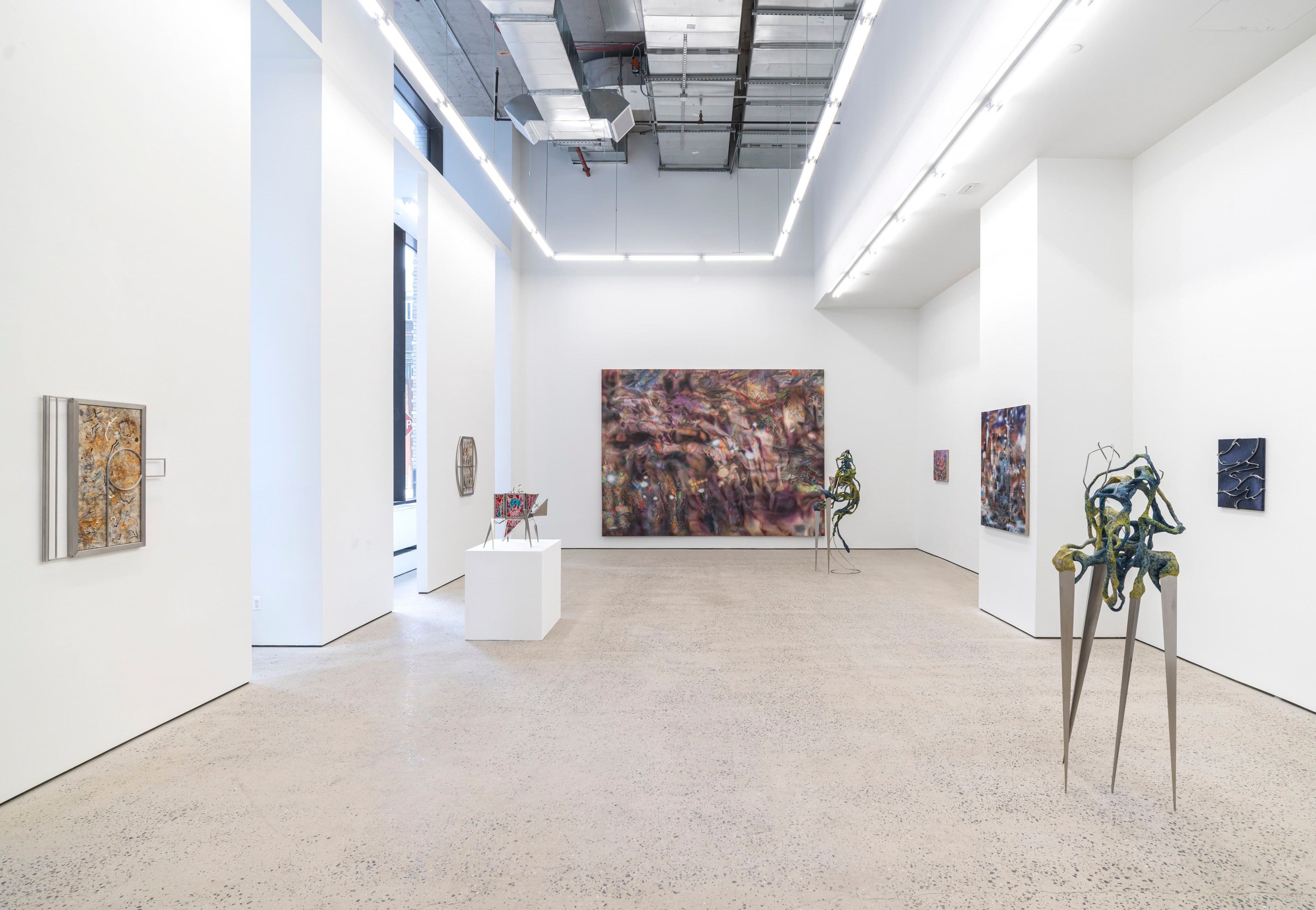
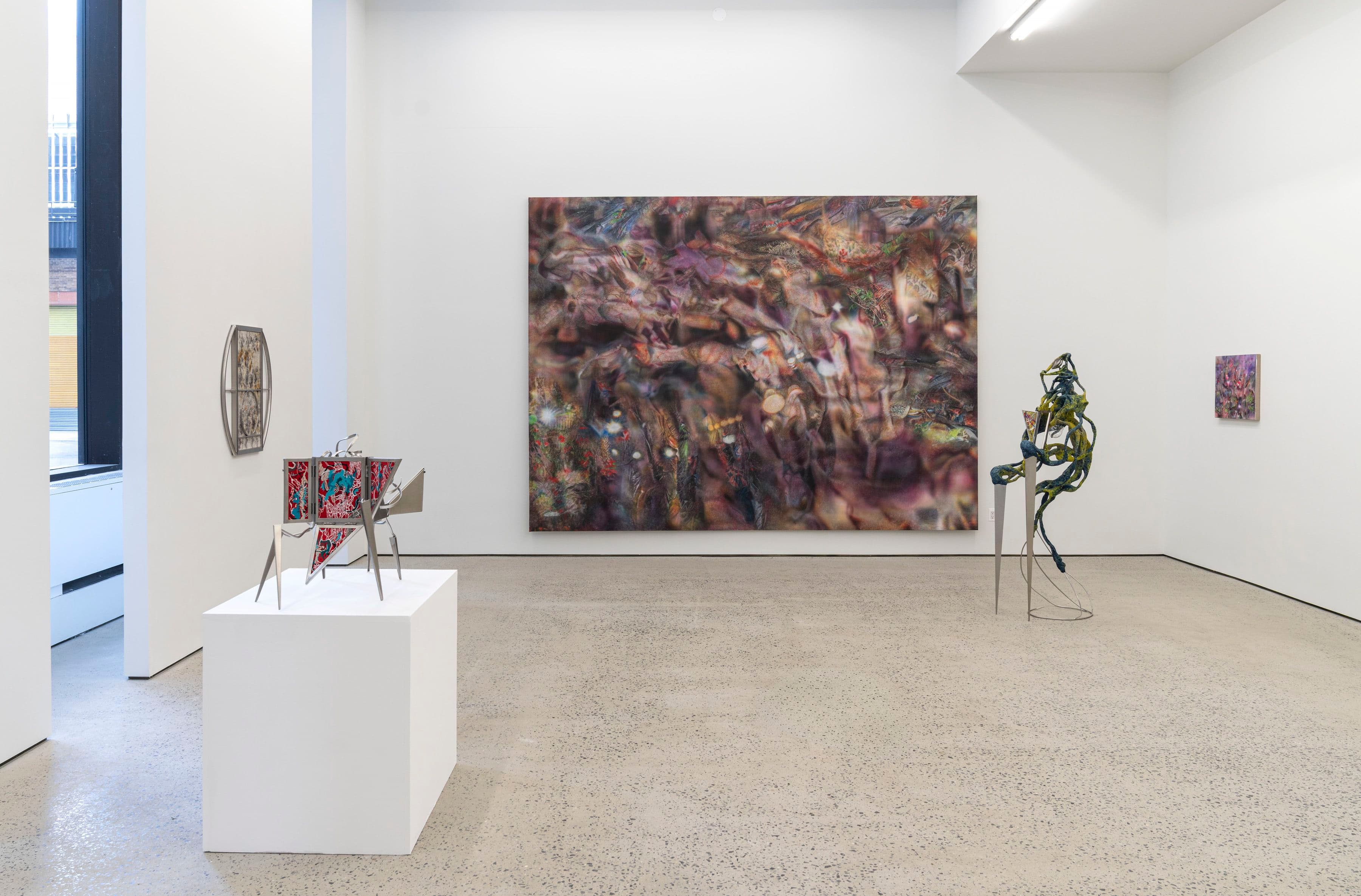
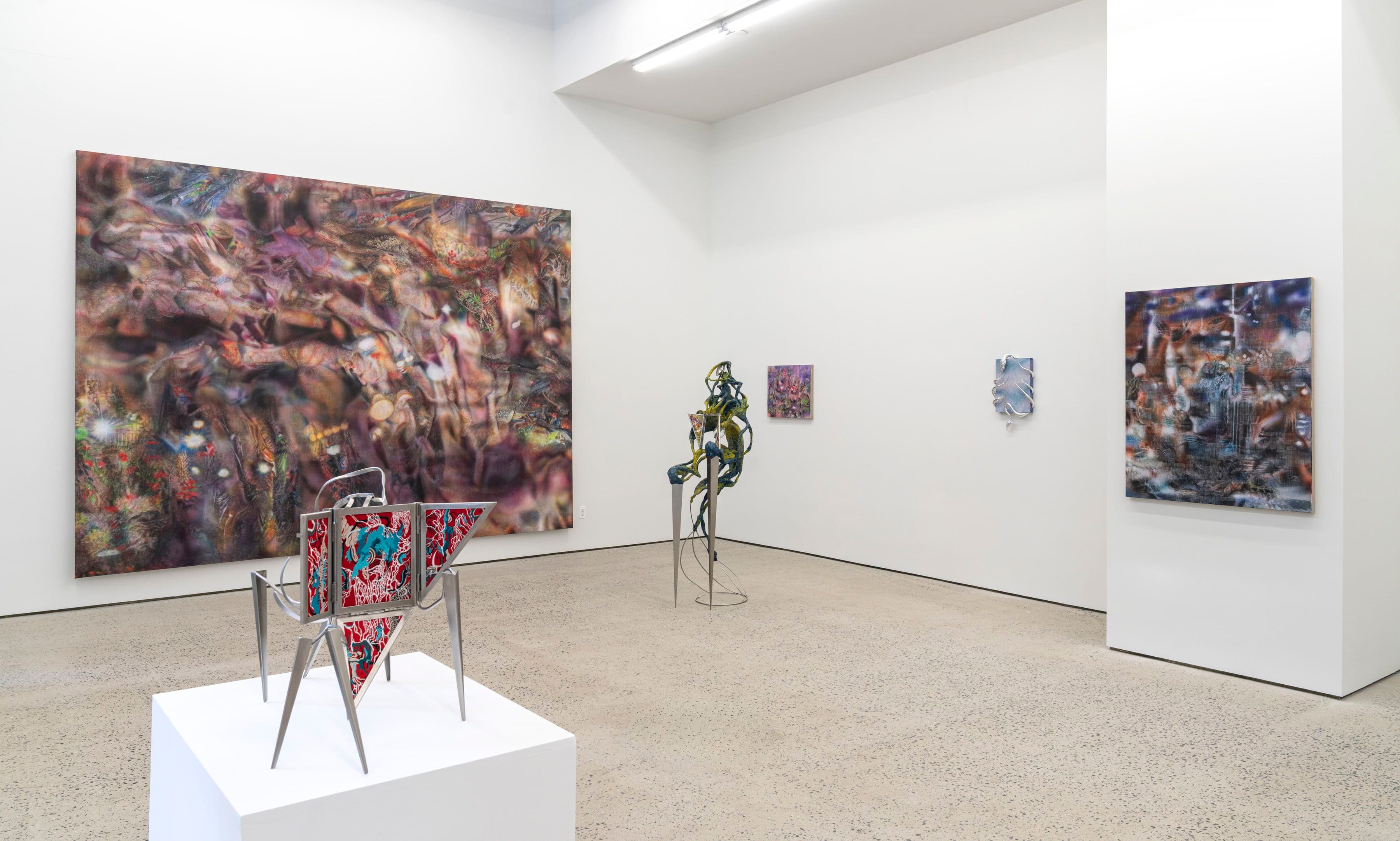
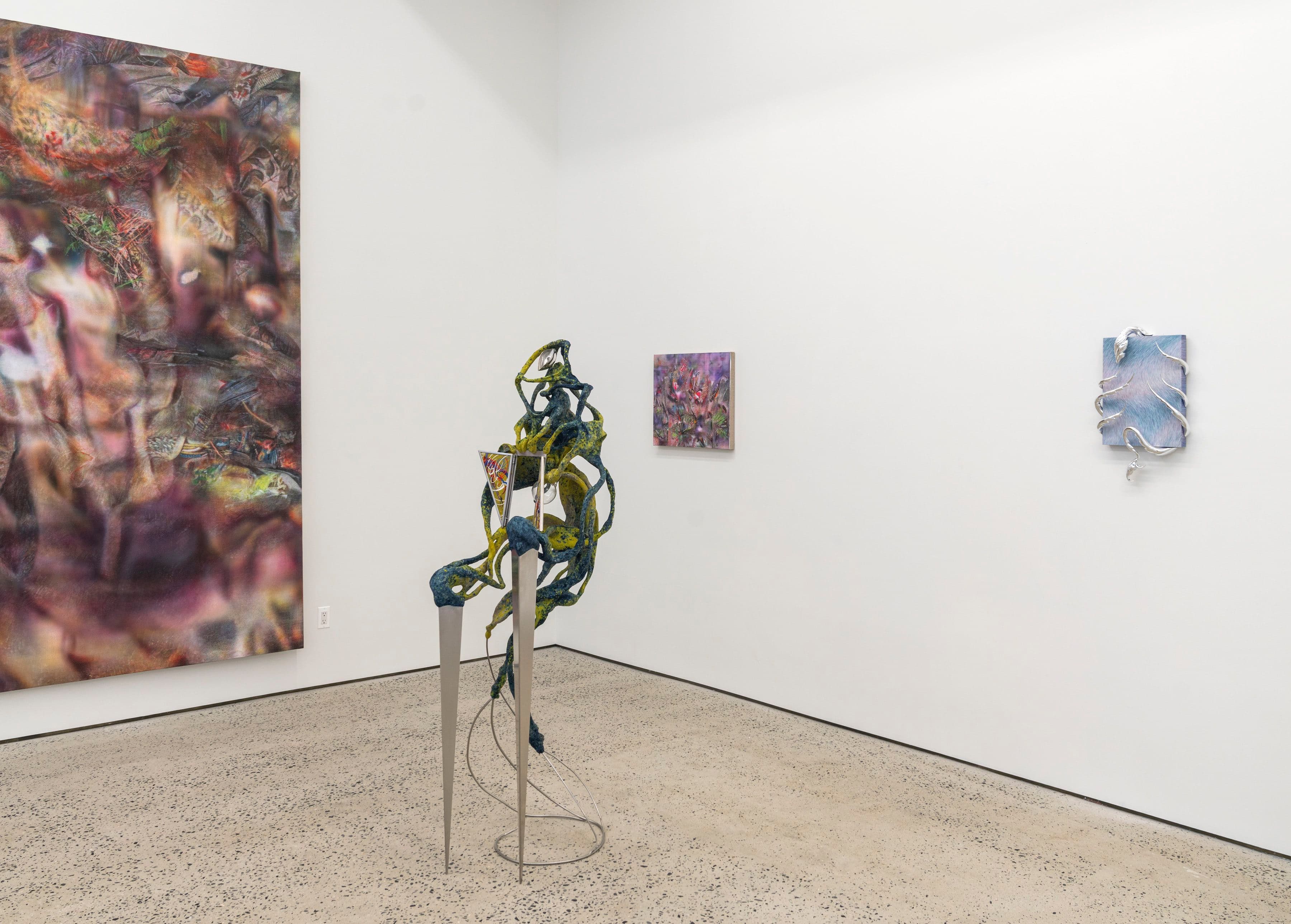
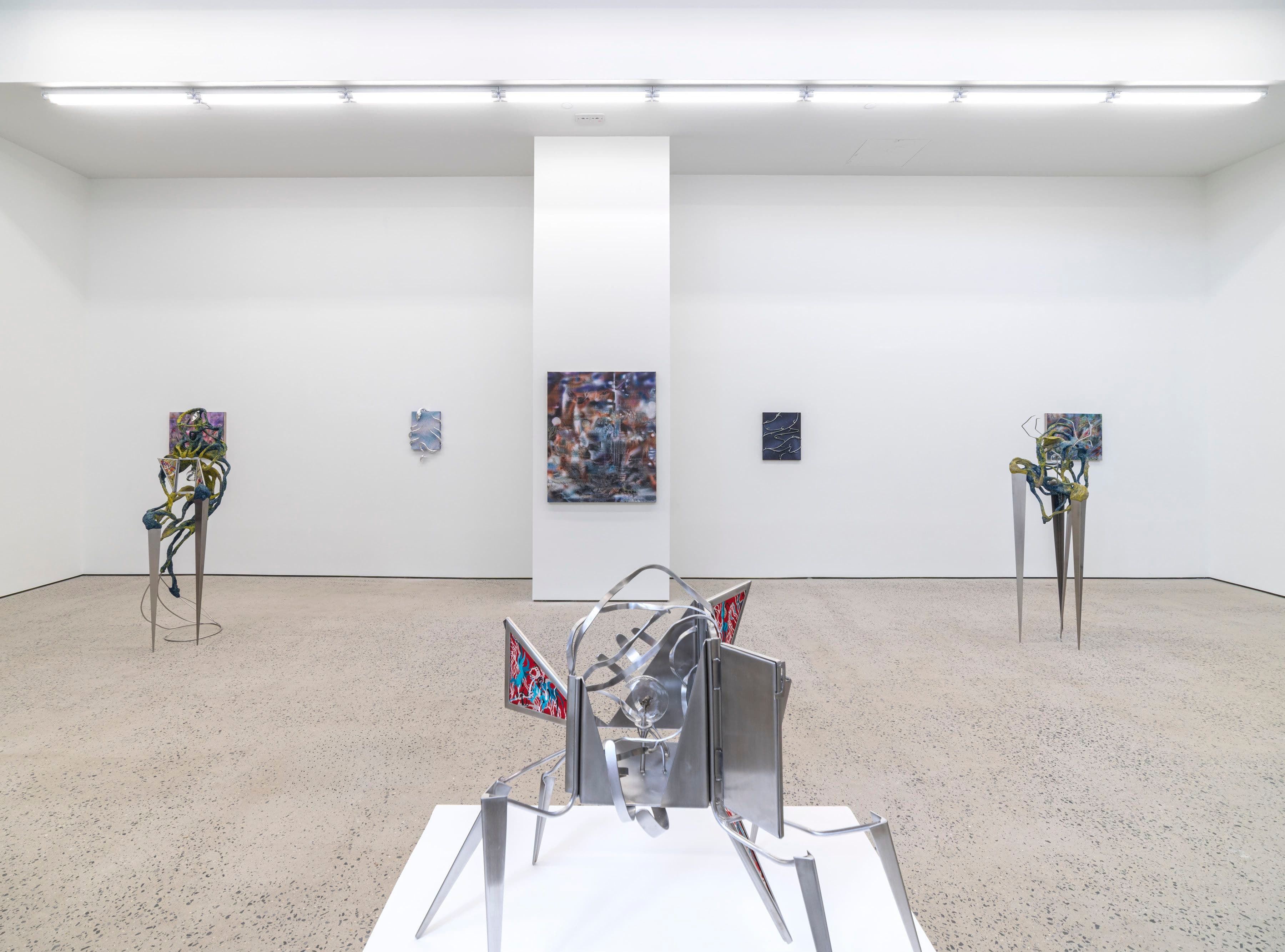
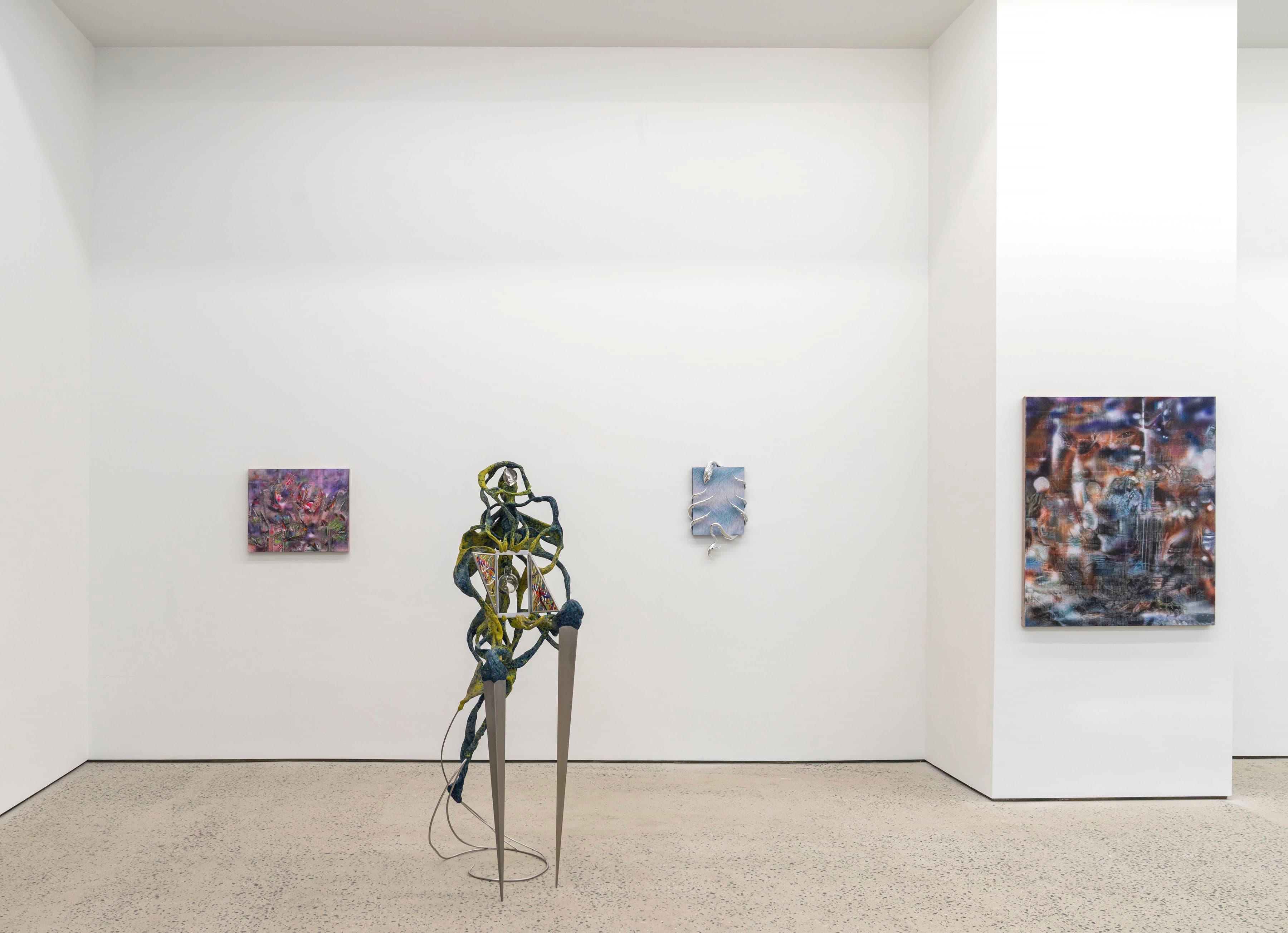
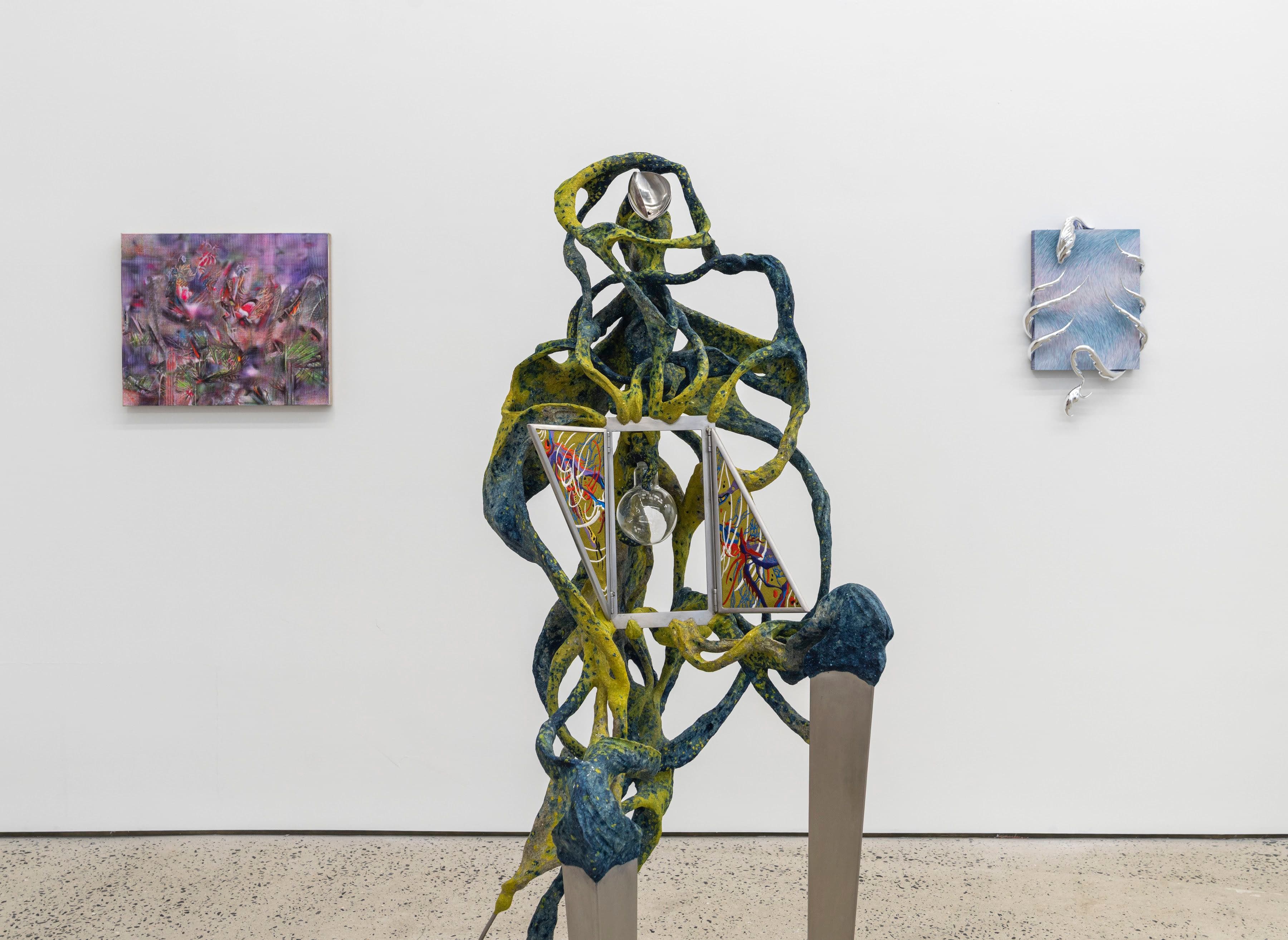
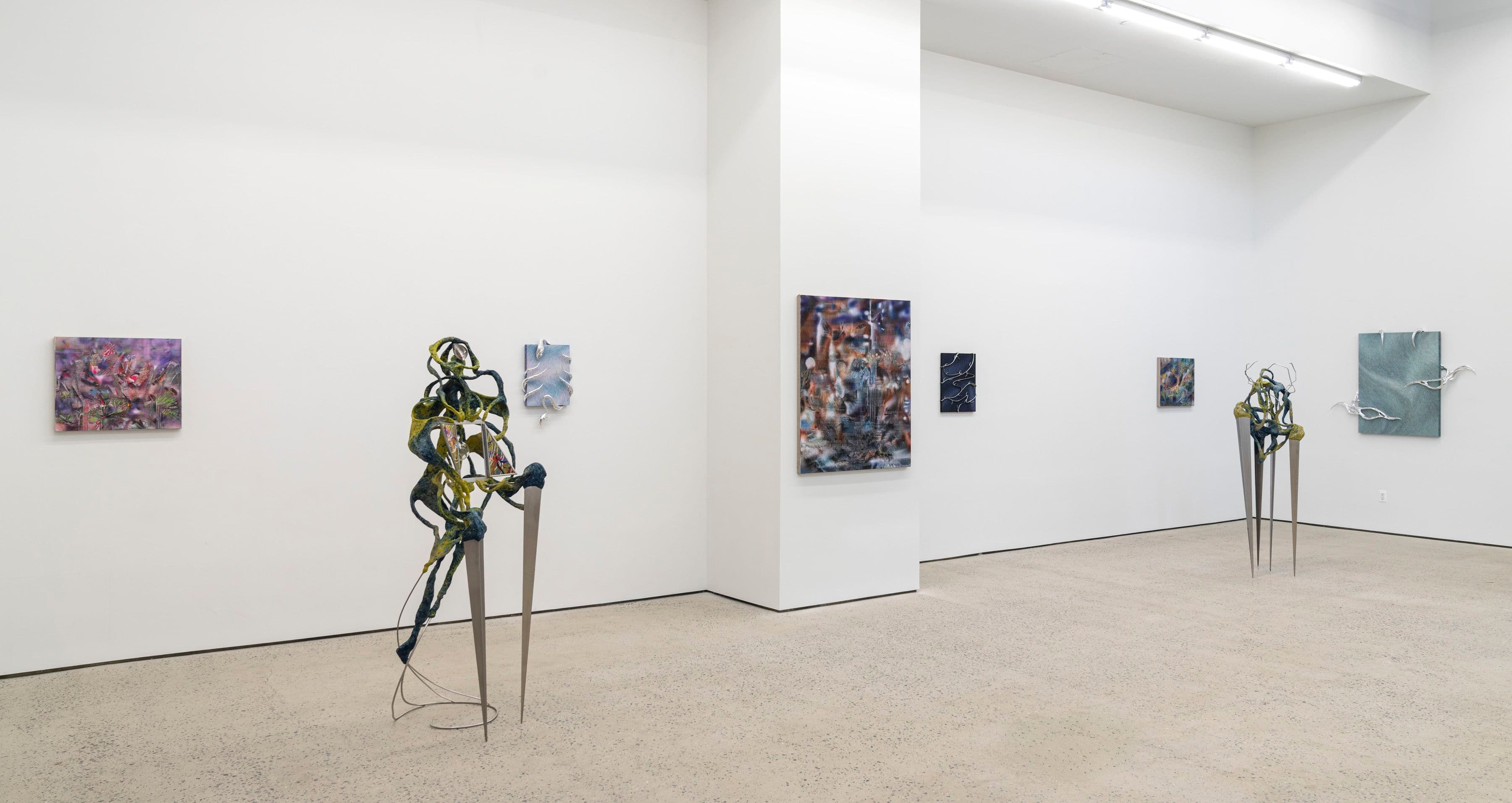
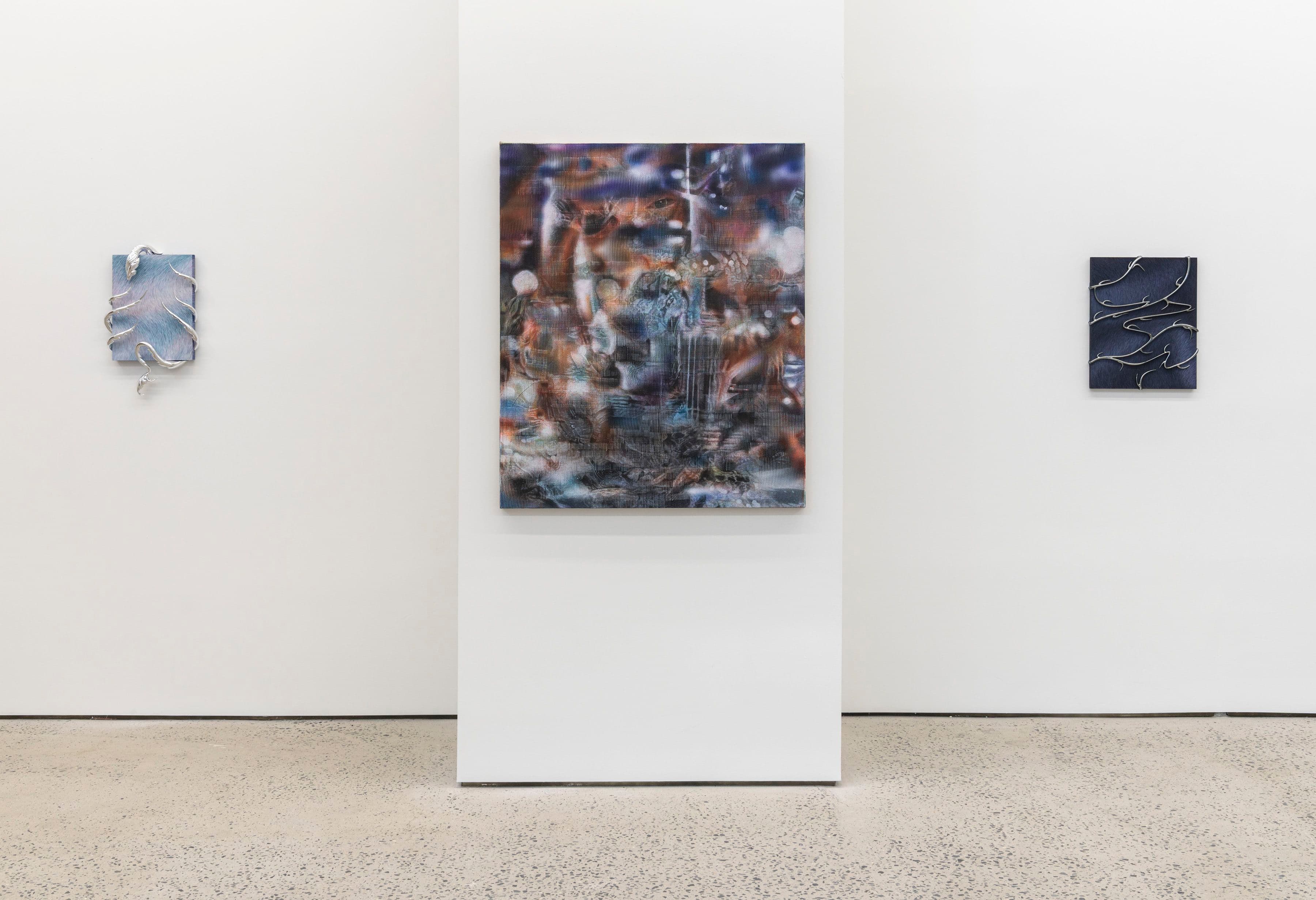
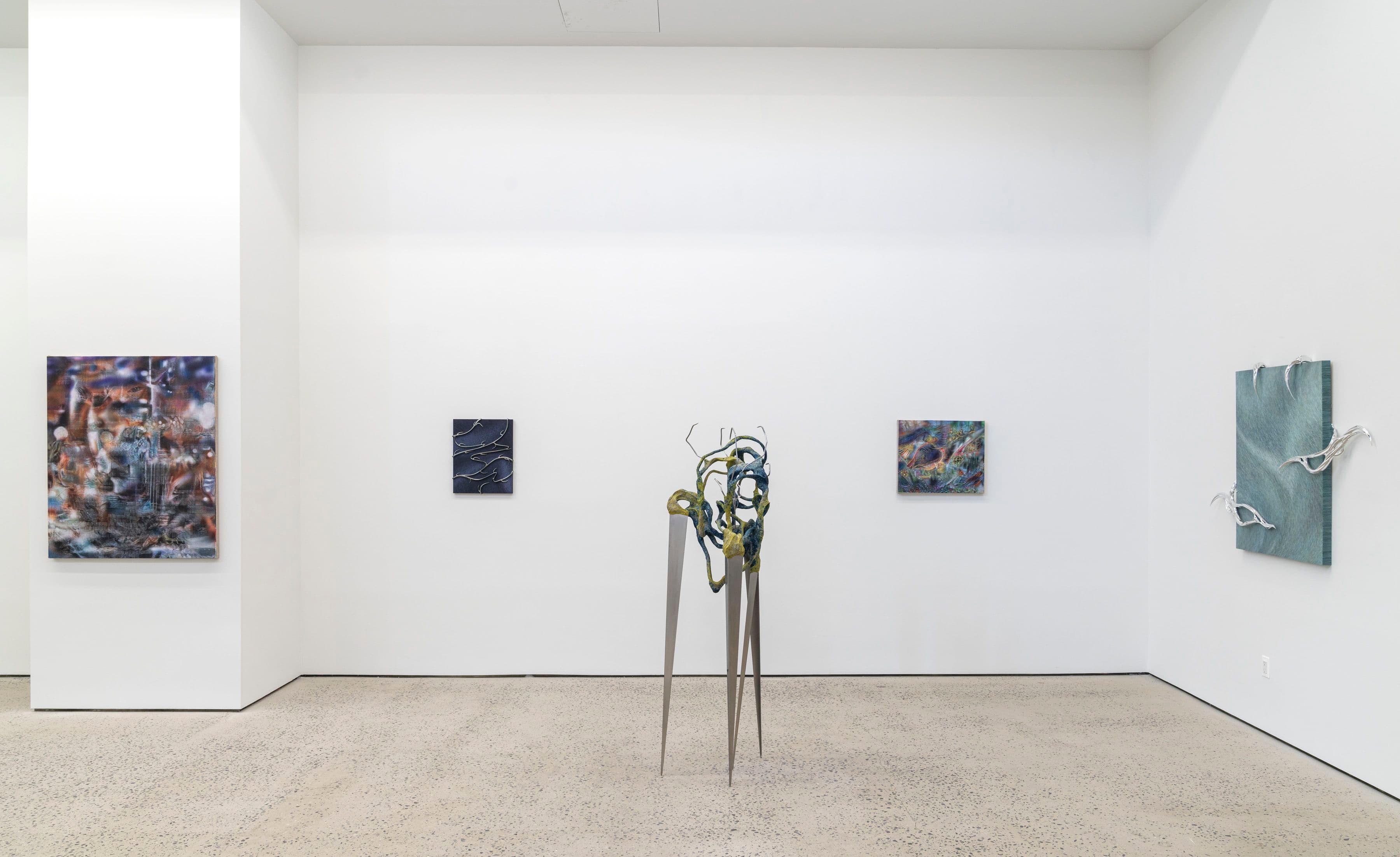
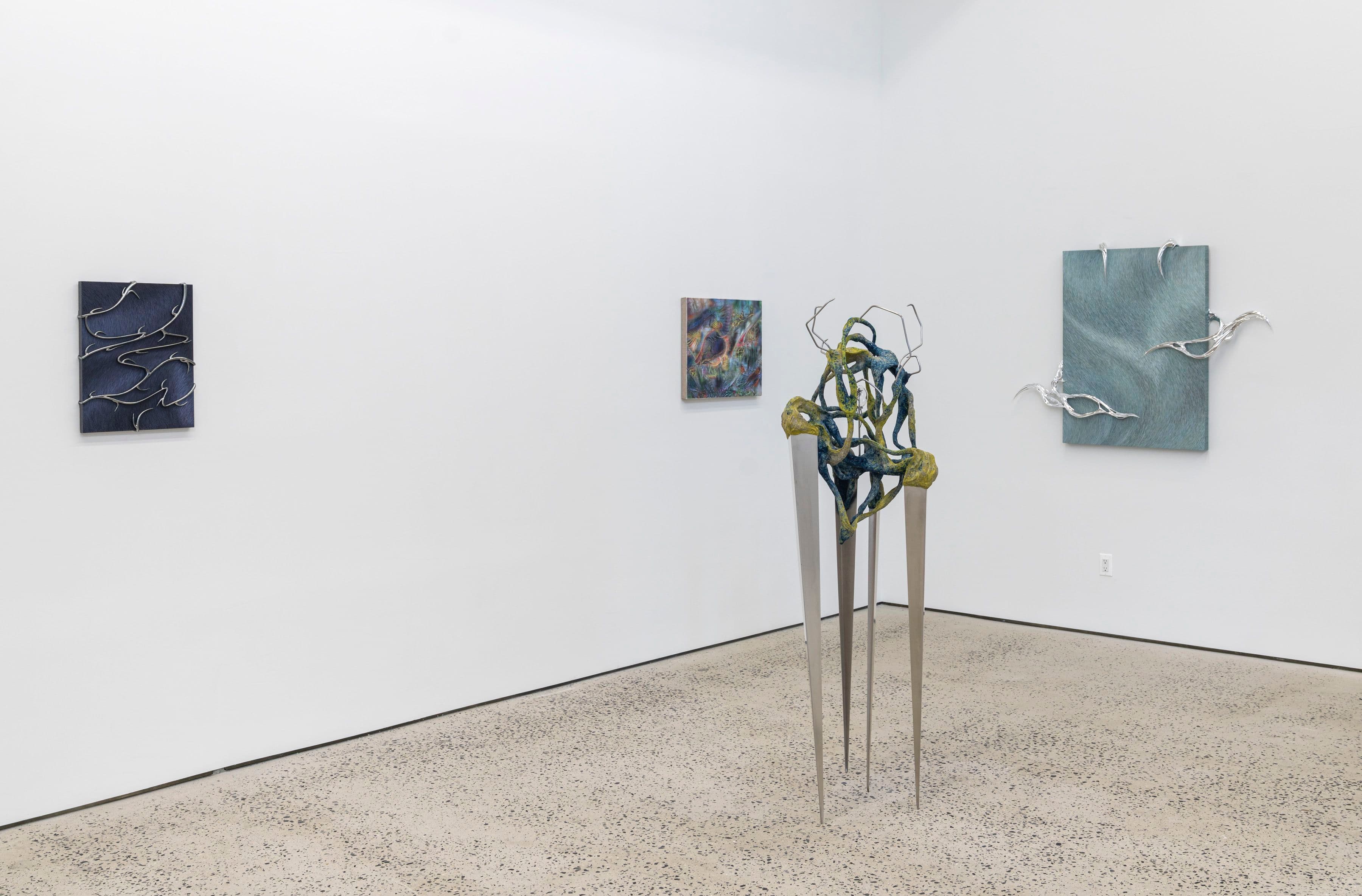
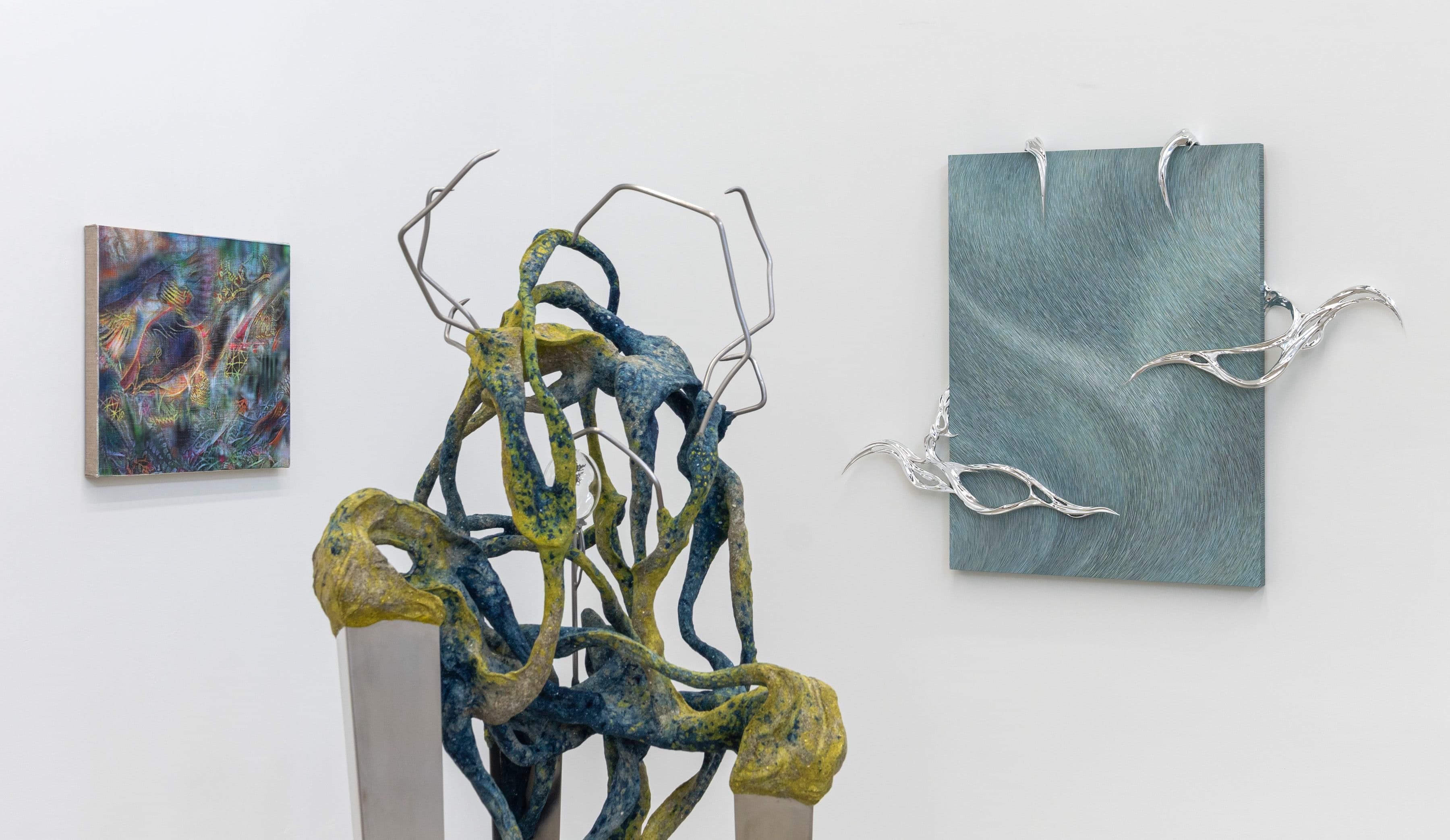
Swivel GalleryCamilla Alberti Anastasia Komar Bai Yiyi Swivel Gallery is pleased to present, Interspecies: New Scenarios Of Symbiotic Coexistence, a three-person show featuring Camilla Alberti, Anastasia Komar, Bai Yiyi and curated by Elisa Carollo. The works in the show exist in a fluid limbo, where transformative metamorphosis between organic and artificial is still a potential state. Blurring the lines between the known and the yet unknown, the works in the exhibition both test and already envision a different interconnectedness and symbiosis of different entities in a continuous intertwining between human and non-human. Hybridity becomes a paradigm for rethinking our constitution as humans, as embedded parts in a broader ecosystem of vital interconnections, both on an organic and technological level. We are creatures inhabited by microorganisms, and the endless technological extensions of our bodies today implement and modify our functions and the possibilities of interacting with the external world. By blending advanced science and technology with ancestral knowledge and imagination, the artists in the show force a relevant reflection and reconsideration of bodies, industrial relics, and all relationships with the non-human through their contemporary mythopoetic practice. If the role of art is not to provide answers but just prompt relevant questions, an unleashed experimentation between knowledge and materials allows those artists to formulate hypotheses and test them, at least on the philosophical and ontological hypothetical level, by materializing those in aesthetical presences. Moving in between the realms of laboratory-oriented research and imagination, with this bio function, the artists envision alternative scenarios of coexistence and engineer new symbiosis. In her laboratory-oriented and craftsmanship-centered practice, Italian artist Camilla Alberti tests alternative coexistence scenarios between other species and elements of the Anthropocene. Those mechanized armatures are inhabited by lichens, whose biological life is encapsulated and can be integrated into the man-made artifice in Camilla. At the same time, the artist’s specific attention to materials and processes, which we can see from her welding and embroideries, eventually celebrates and highlights the power of human creative craftsmanship over its tendency for destruction. Collaborating with nature in creating her work, the artist engages with natural and chemical processes, visualizing a hybridization of bodies already in place while exploring possible transformations in our current relationship with the world. This hybridization between biological and technological entities and systems is central to Anastasia Komar’s work. Operating at the intersection between developmental biology, artificial intelligence, bioengineering, synthetic morphology, and cognitive science, Komar’s seductive canvases already embody complex scientific studies and data, providing with immediacy a strong visual metaphor of this fluid intercorporeality, penetrability and symbiotic relations between living and artificial entities, which science already allows. While a delicate accumulation of brushstrokes translates to the perpetual and restless movement of all particles, parasites of metallic and glass polymer creatures are creeping into the surface as mutating species develop in this continuous flow of adaptation and evolution, creation and destruction. Merging artificial and biological with this body of work, Komar has found, in those hybrid canvases, a form of art able to translate an idea of interdependence and interconnectedness between entities. Shanghai-based artist Bai Yiyi similarly visualizes on his canvas this notion of simultaneity and interconnectivity between beings as part of a broader network and ecosystem of essential relations. Initially focused on the experiences and relations between humans and machines, Bai Yiyi's paintings have now extended to an exploration of a more universal interconnection between humans and all beings as part of a mysterious cosmic order. Embracing the traditional notion of “Dao,” and the idea of a collective consciousness governing all life processes, Yiyi’s seemingly abstract and densely symbolic paintings visualize this multifaceted fluid impenetrability of all things, envisioning alternative synthetic and symbiotic existential dimensions that could allow mutual survival and energetic health preservation. Fluttering and drifting into a fluid flow, Bai Yiyi creates revelatory visual embodiments of a reality made of minuscule essences, which connect, converge, and dissolve into one another. Ultimately, the exhibition aims to challenge the anthropocentric paradigm and all traditional hierarchical scales established by traditional science, prompting viewers to reconsider the relationships with the non-human world as part of a broader information and relational system in continuous evolution. Resisting any apocalyptic post-human scenario, those works try to reintegrate the human presence within a border order of natural circles and ecological systems while envisioning possible developments of this symbiotic intercorporeality needed for mutual survival. The notion of interspecies embodied by those works ominously and visionarily visualizes this essential simultaneity and interconnectivity between beings as part of a broader network and ecosystem of vital relations and interdependencies. Bai Yiyi (b. 1992, lives and works in Shanghai) is a Chinese artist graduated in multimedia at the Raffles School of Design, Donghua University, China. His work has been shown in Beijing at the 798 Art Center, the Cheng Contemporary Art Center. "Stay in Character" at PACT was his first-ever solo show. Bai Yiyi's work mainly focuses on the concept of "hybridization". "hybridization" refers to accidental factors, or the mixing of species under human intervention, or the cross-cultural colonization in the development of human modern society. In his work, he extends "hybridization" to the possibility of symbiosis between natural and artificial beings. Bai lived on a farm through childhood, thus developed a keen interest in the environment and animals. Later, his multimedia work experience has led to the habit of observing data and image streams. Since 2016, he has begun to collect a large number of images from different sources, including natural landscapes in the environment and image streams captured on the Internet. Camilla Alberti (b. 1994, Milan, Italy) Lives and works in Milan. She focuses on researching and creating alternative scenarios of coexistence and collaboration between species, challenging the anthropocentric paradigm of experience and relationship with the world. In her research, she has collaborated with researchers and scientists, initiating studies on connective and interactive methods in plants, parasitic relationships between insects and fungi (e.g., Cordyceps), and symbiotic processes within lichens. She has participated in international research residencies, including LaWayaka Current in the Atacama Desert, Chile (2023), where she studied weaving techniques in relation to shamanic practices and Andean cosmogony, and the Residency MMCA Changdong at the National Museum of Modern and Contemporary Art in Seoul, where she deepened her study of shamanic practices related to the transformation of matter within Korean Mudang traditions. Her work was recently exhibited at: National Museum Of Modern and Contemporary Art MMCA (2024) South Korea; Central Pavilion of the Malta Biennale (2024), Malta; GIAF23 in Gangneung, South Korea (2023); Italian Pavilion, 14th Gwangju Biennale, South Korea (2023); Akademie Graz (2023); Palazzo Vecchio and Museo Novecento (2022); Palazzo Strozzi (2021) in Italy; Archaeological Museum Schloss Eggenberg, Austria (2021). Art collections: North Gyeonggi Children Museum (GGC), Seoul; Hyundai MOKA Museum, Seoul; Museo Novecento, Florence; Farnesina Collection, Rome; Scarzella Collection, Milan; Nctm per l’Arte, Milan; Museo della Permanente, Milan; Corneliani Collection, Milan. Anastasia Komar (b. 1986) Anastasia Komar’s practice is informed by her research into the intersection of art and contemporary bioengineering, seeking to elucidate aspects of our reality that increasingly affect the human experience but elude comprehension. Referencing science, theology, and history, Komar combines acrylic painting executed in a wide gamut of short, vivid, and luminescent brushstrokes with advanced polymer sculptures that echo forms at once biomolecular, mythological, and mammalian. Komar received an MA in Architecture and Environmental Design from the Moscow Institute of Architecture. Solo exhibitions include Hosts at Management, New York; ex-vivo at Bank, Shanghai; and von Neumann’s Dream at Shulamit Nazarian, Los Angeles. Group exhibitions include Weirding Worlds at Podium, Hong Kong; Fever Dream at Swivel Gallery, New York; Holding at Kristen Lorello & Van Doren Waxter, New York; Poetics of Falsification at Harper’s, East Hampton; America Runs at Dunkunsthalle, New York; Contemporary Practices at the gallery of the School of Visual Arts, New York; Over the Structures at the CICA Museum, South Korea, and has executed several site-specific projects in New York and California.