
Charlottenburg, Berlin
Irina Zatulovskaya
Shadow of the Future
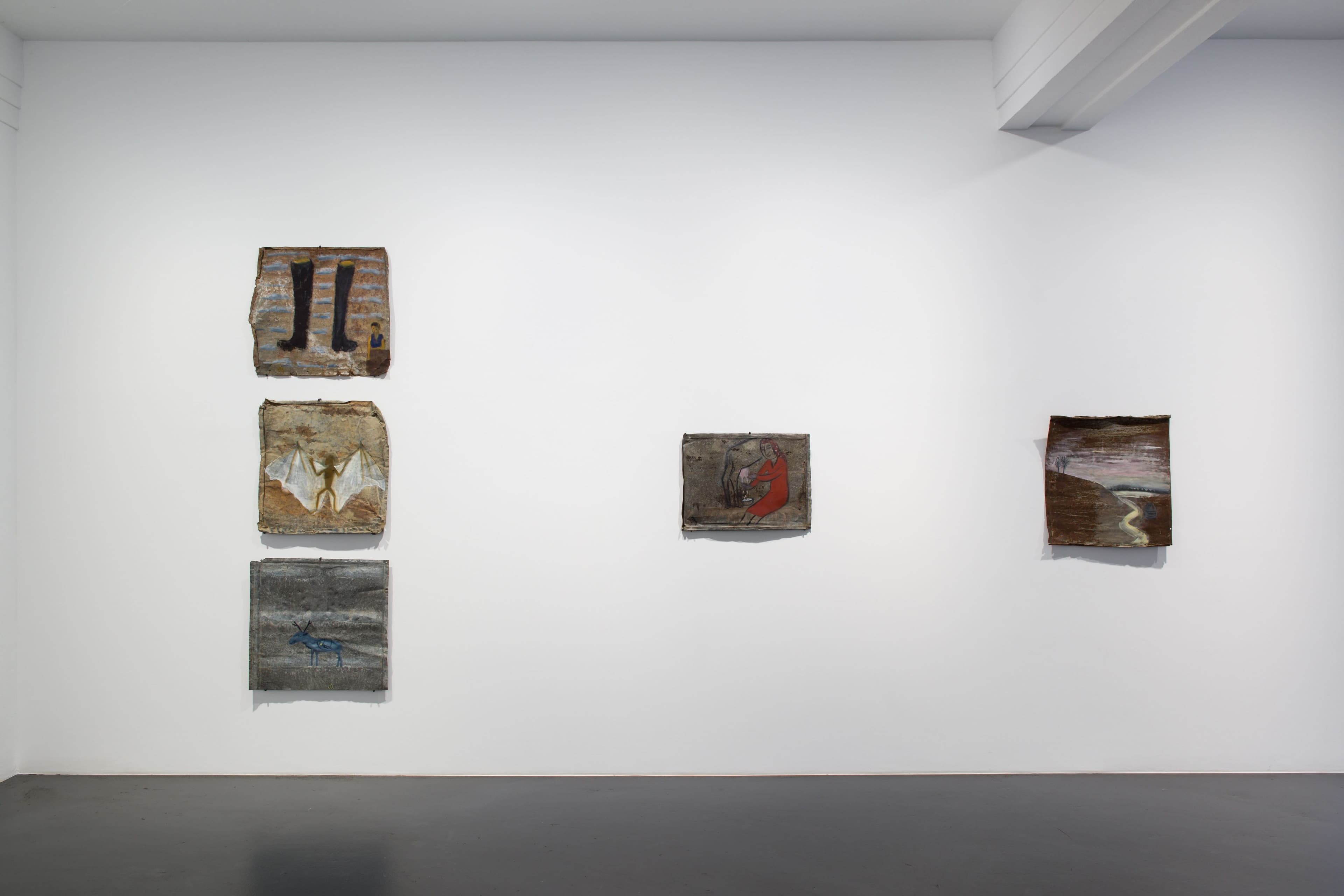
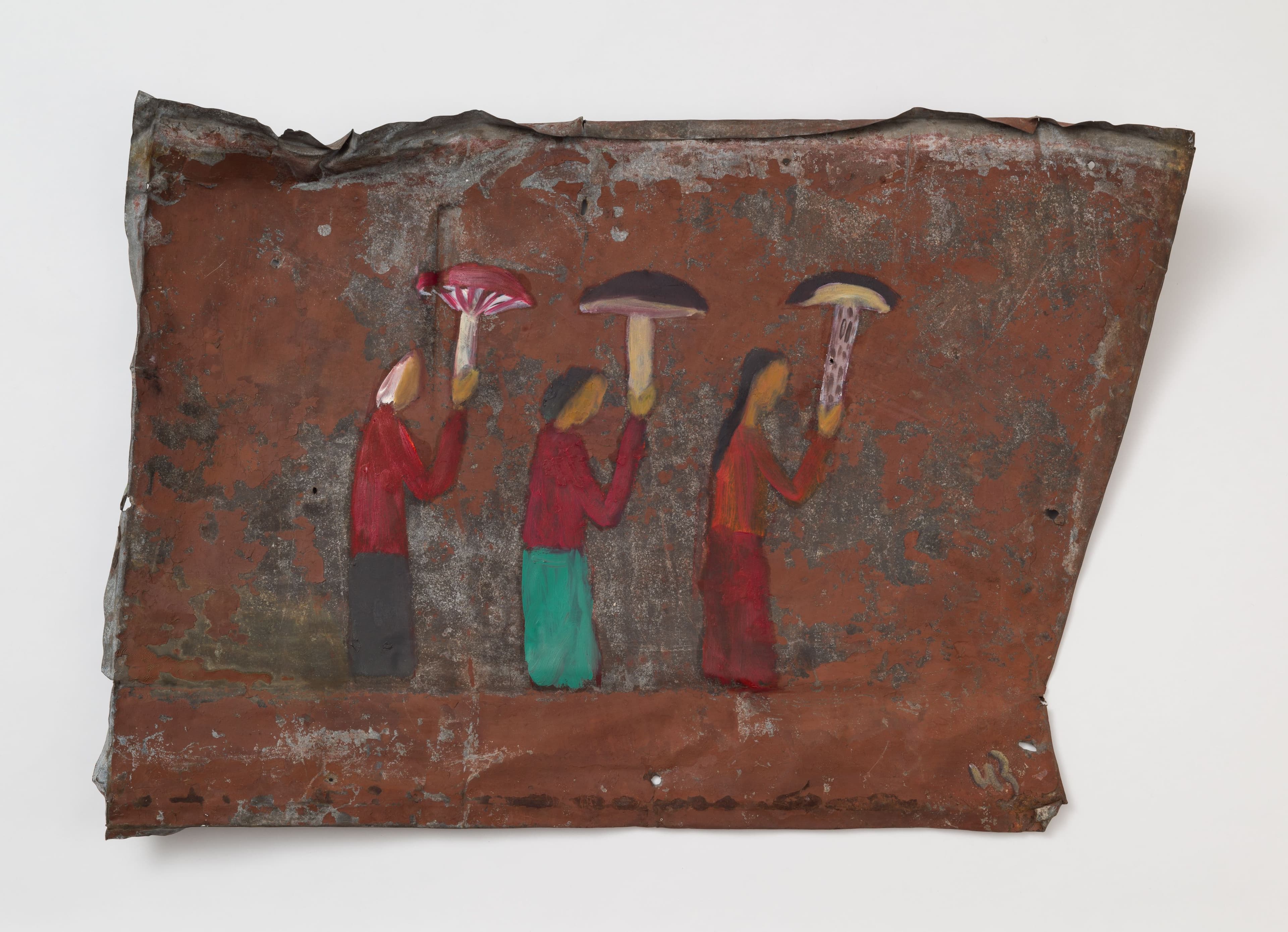
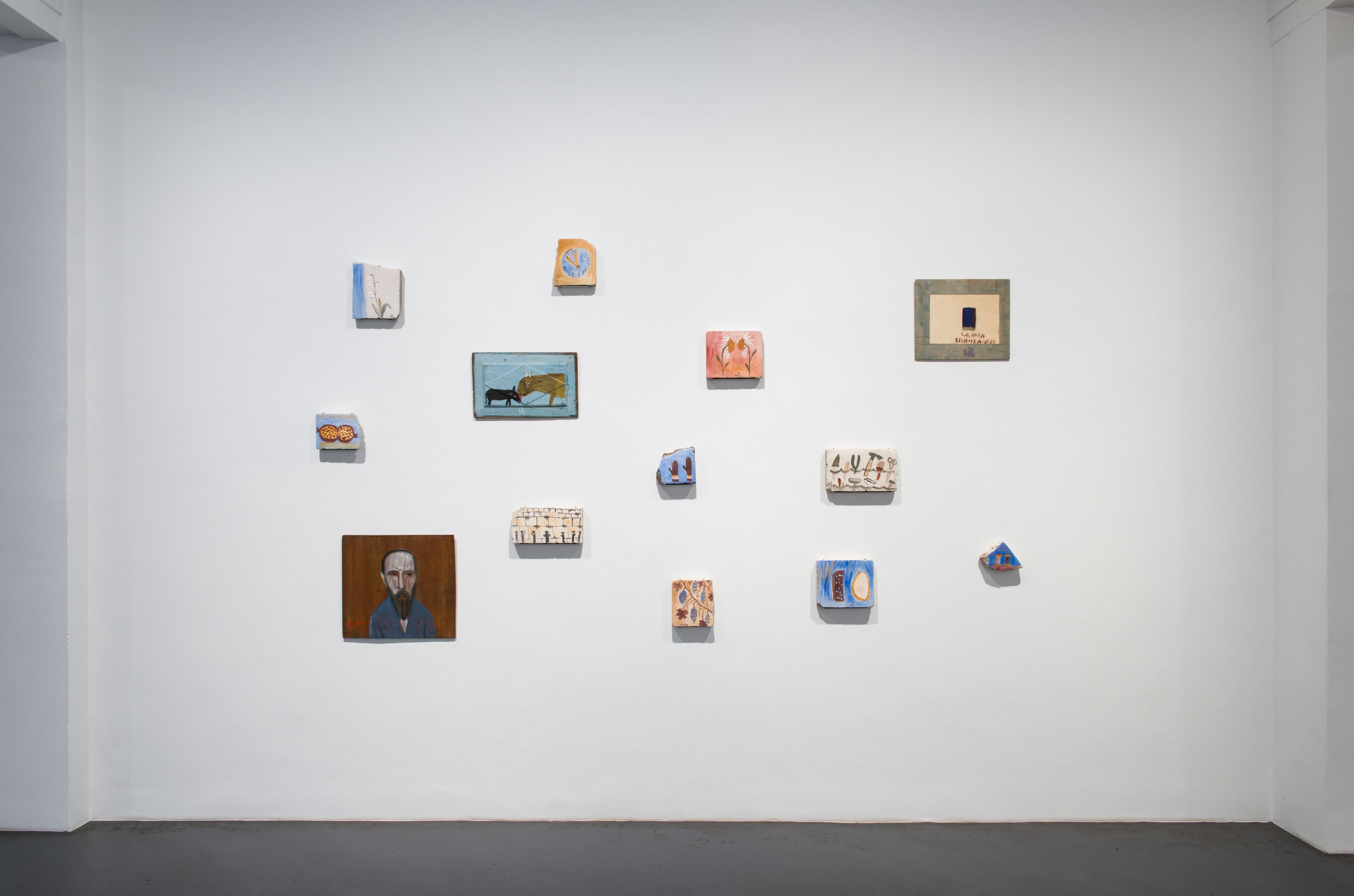
DiehlIrina Zatulovskaya (b. 1954) emerged into Moscow’s exhibition scene during the years of perestroika, when censorship weakened and nonconformist artistic practices became more visible. Rejecting the traditional canvas, she turned to rough found materials shaped by time and use; such as sheets of roofing iron, fragments of wood, rusted household utensils, limestone or fabrics. Her preference for solid materials emerged in the late 1980s and is linked to an early fascination with fresco painting. Even when working on a small scale, her art retains monumental sensibility. Biblical subjects as well as scenes of peasant and village life form main cycles that frequently merge, suggesting a worldview in which everyday existence is permeated by sacred meaning. Zatulovskaya is also a poet, and literature plays a central role in her work. She has created extensive portrait series of artist, thinkers and writers — from Socrates and Plato to Fyodor Dostoevsky. Despite the apparent lightness and simplicity of her imagery, Zatulovskaya’s art is deeply rooted in the visual memory of world culture, from ancient painting to the twentieth-century avant-garde. Her work is often described as arte povera. However, this label is not quite accurate. Unlike the Italian movement, which employed poor materials to dismantle painting in favor of conceptual installations and performances, Zatulovskaya never abandoned painting itself. The found objects act as pictorial supports, carrying images that arise in close dialogue with the material’s texture, shape, and history. Therefore, in Zatulovskaya’s practice, material often determines the image. Rust, cracks, and chipped surfaces are integral to the motif. Antique shards invite antique imagery; wooden panels recall icon painting both in form and surface. It often feels as if the image already existed within the object and merely needed to be revealed. This corresponds to her understanding of realism not in an ideological sense, but in a philosophical one: the physical reality of the support must correspond to the truth of the image.