
Charlottenburg, Berlin
Edi Rama
Chrysalizing
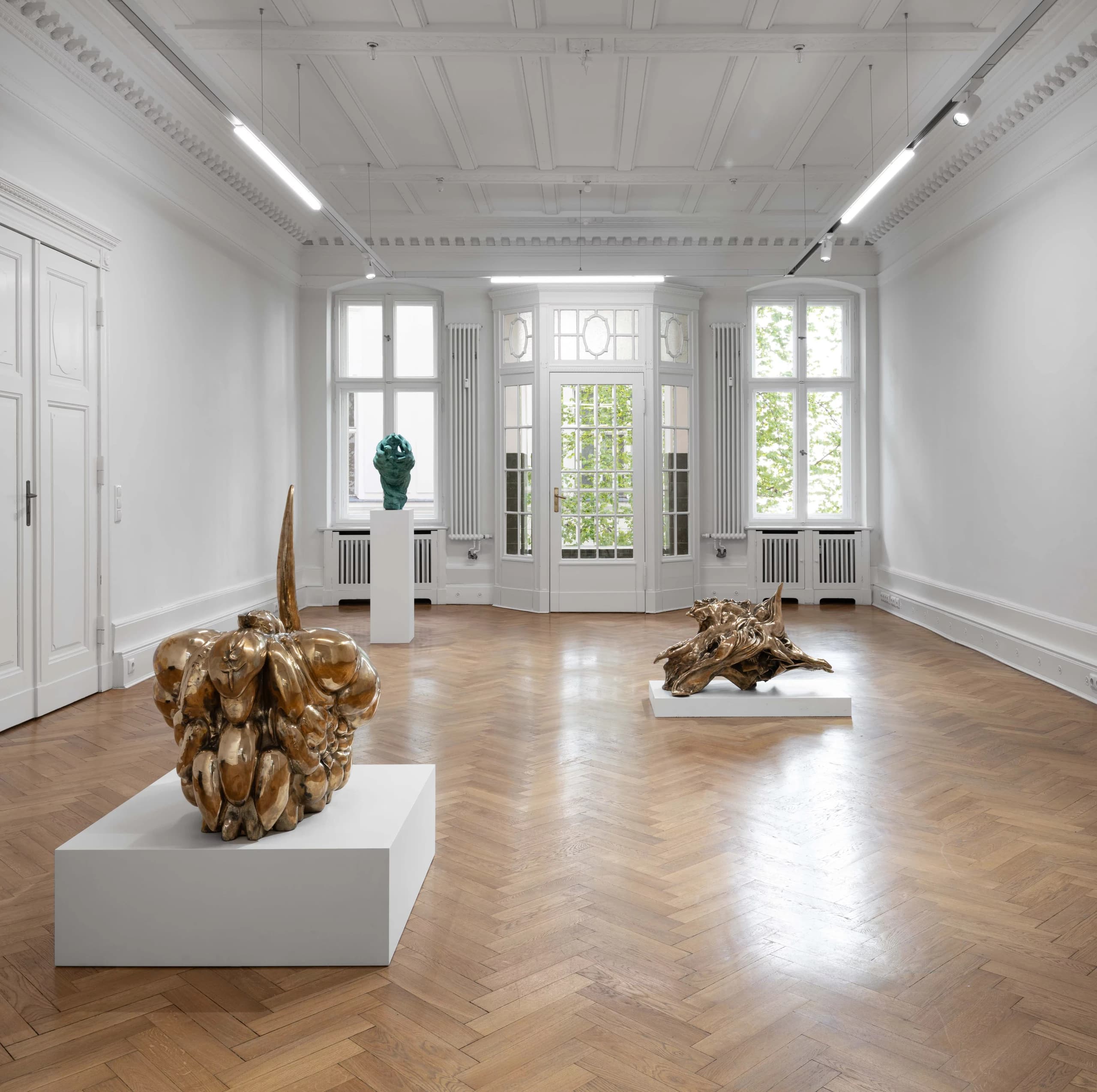
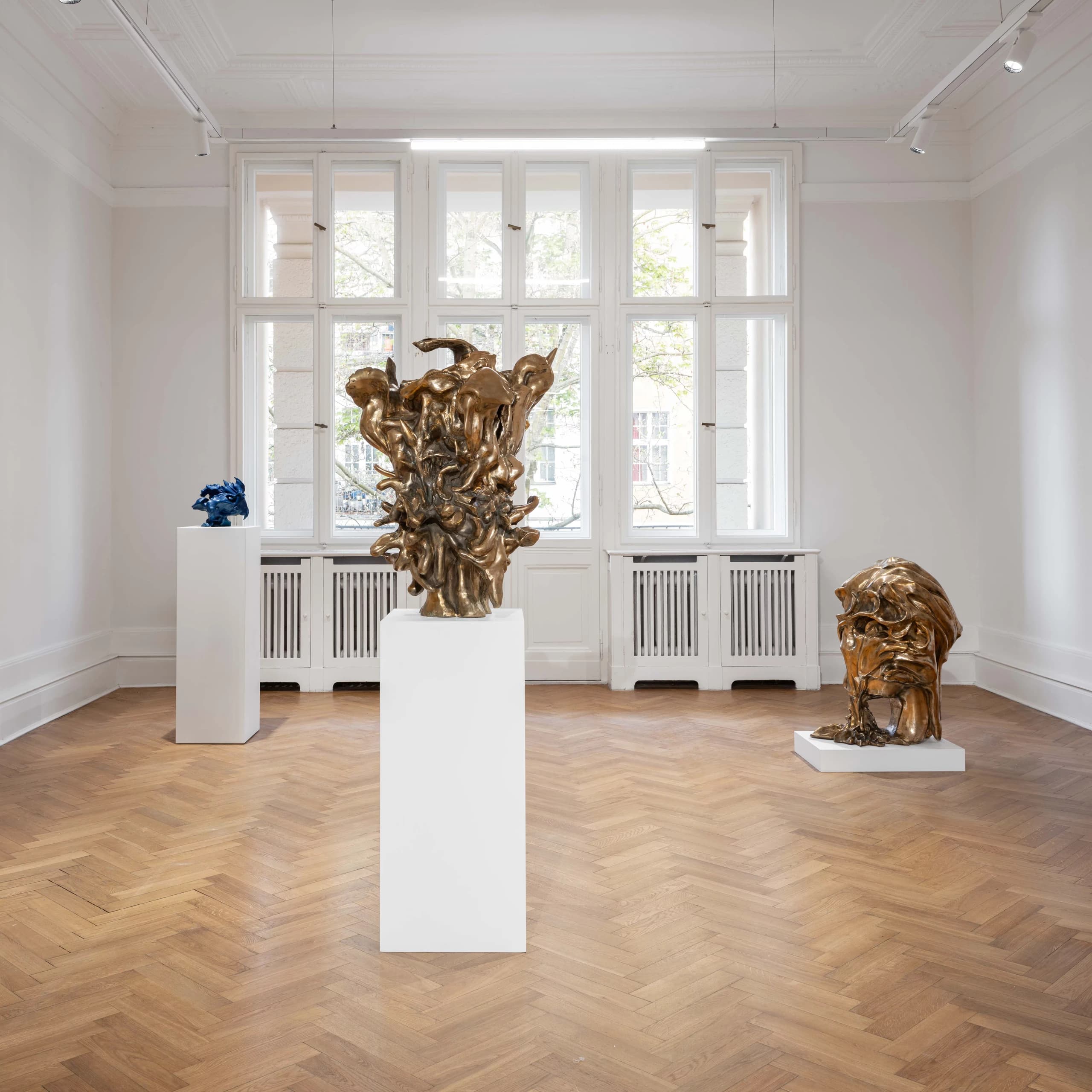
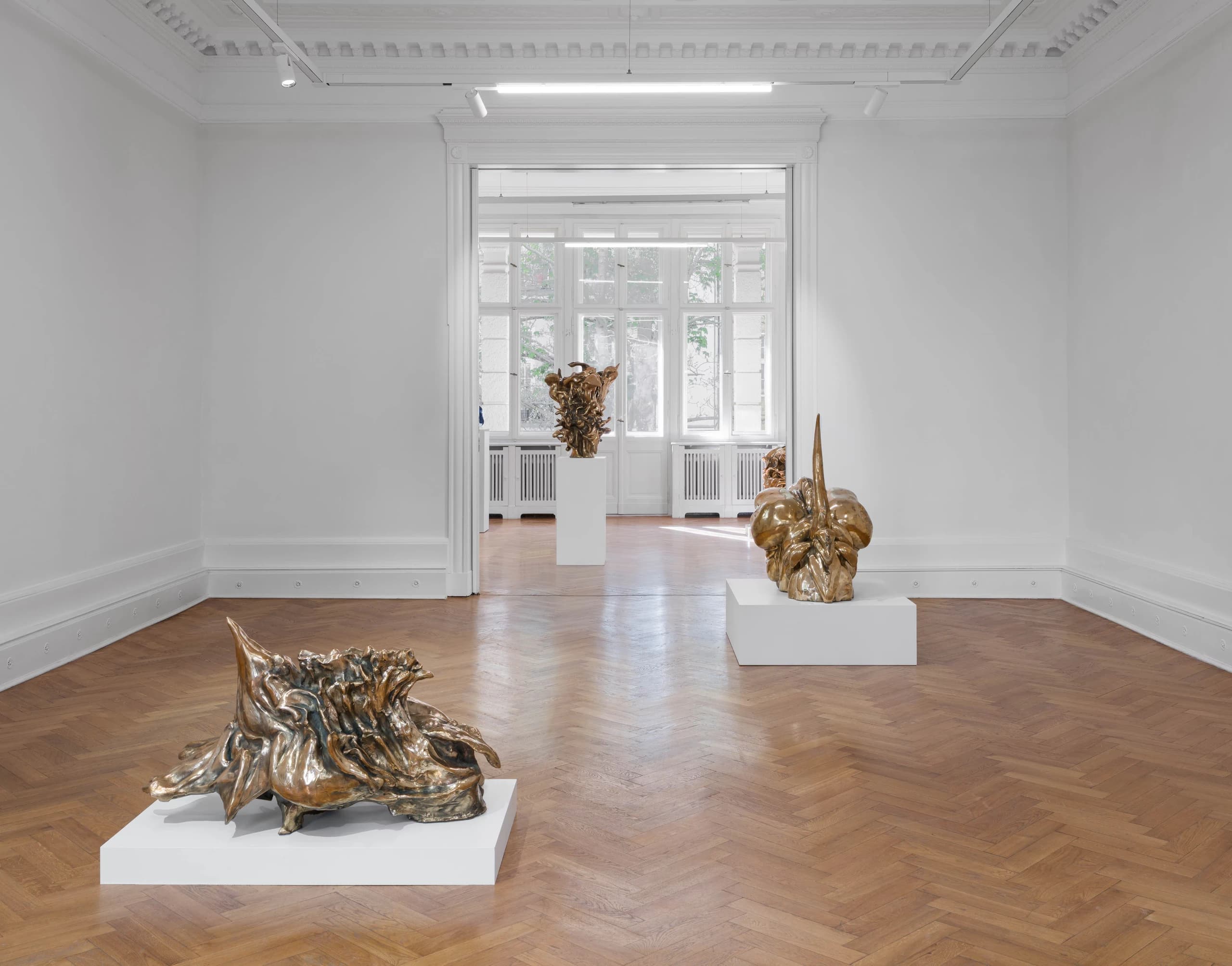
SociétéSociété is pleased to present Chrysalizing, Edi Rama's first solo exhibition with the gallery, presenting a new body of bronze sculptures. The exhibition's title conjures a suspended, generative moment of transformation in which one form has not yet become another. This sense of movement and metamorphosis resonates across Rama's practice: in the intuitive passage from drawing to sculpture, in the organic, biomorphic forms his new sculptural works assume, and in the broader arc of a life lived at the threshold between artistic and political identity. Trained as a painter at the Academy of Fine Arts in Tirana, where he subsequently taught as a professor, Rama has pursued an artistic practice in parallel with a political career spanning nearly three decades—first as Minister of Culture, then as Mayor of Tirana from 2000 to 2011, and as Prime Minister since 2013. These two spheres of activity have always informed each other: as mayor, Rama transformed Tirana's crumbling communist-era buildings through an ambitious program of colorful geometric facades, demonstrating at the scale of a city that the aesthetic and the political could be one and the same act. It was through this process that his drawing practice first emerged: printing the facades on A4 sheets, he began experimenting with felt tip markers to determine which colors the buildings would be painted—a process that eventually evolved into the vivid stream-of-consciousness drawings made as Prime Minister during meetings at the Kryeministria, Albania's seat of government. These mindscapes act as a springboard for experimentation: biomorphic blots and amorphous shapes evolve into compositions that resist fixed reference or narrative. Rama's drawings belong to a lineage of mark-making in which the suspension of conscious control is understood not as absence of mind but as access to a different order of thinking. For Chrysalizing, Rama presents a series of new bronze sculptures. Spanning the first floor of the gallery extending outdoors into the garden, forms on pedestals and low plinths surge, swell, swirl, and multiply. While earlier ceramic works evoked tactile accumulations of ribbony architectural forms, his new sculptures come closer to primordial forms in states of mutation: vegetal, fantastical, creaturely, they seem to belong to no known taxonomy—as if surfacing from some deeper stratum of the subconscious. Rama created these works by translating his drawings into 3D-printed forms, which he subsequently modeled by hand before being cast in bronze. The sculptures extend the intuitive logic of automatism into new territory—and into a new set of contradictions. Rendered in a material historically bound to commemoration and the official consecration of power, they carry the residue of unguarded, automatic mark-making into a form associated with permanence and public authority. The process of translation—from drawn line to three-dimensional digital model, then back through the artist's hands in the modeling stage before the final casting—mirrors the broader movement of Rama's practice: between the private and the public, the instantaneous and the enduring, the intuitive and the monumental. What began as a mark made in the margins of political life arrives, through this chain of transformations, as an object that stakes a claim in the world. Measuring over two meters, a mushroom-like form can be viewed in the garden from the window of the exhibition. Undulating forms on the sculpture's base push upward to splinter into a proliferation of organic growths. The branching, generative structure of Rama's first outdoor sculpture evokes networks of interrelation and emergent connection, extending the traces of private invention into shared spatial experience. Edi Rama (b. 1964) lives and works in Tirana. Recent solo exhibitions include Edi Rama at Marian Goodman Gallery, Paris (2024); Improvisations, Zappeion, Athens (2023); Welcome, Nuno Centeno, Porto (2023); Edi Rama at Alfonso Artiaco, Naples (2020); and Work, which traveled from Kunsthalle Rostock, Germany (2018) to Carlier Gebauer, Berlin (2019); and the Nevada Museum of Art, Reno (2019). Earlier presentations of his work include the New Museum, New York (2016); the Venice Biennale (2017, 2003); Tophane-i Amire Culture and Art Center, Istanbul (2015); Musée D'art Contemporain de Montréal (2011); Centre Pompidou, Paris (2010); Haus der Kunst, Munich (2004); and the São Paulo Biennial (1994).