
Charlottenburg, Berlin
Group Exhibition
Risse Im Eis: Aus der Sammlung Lambsdorff
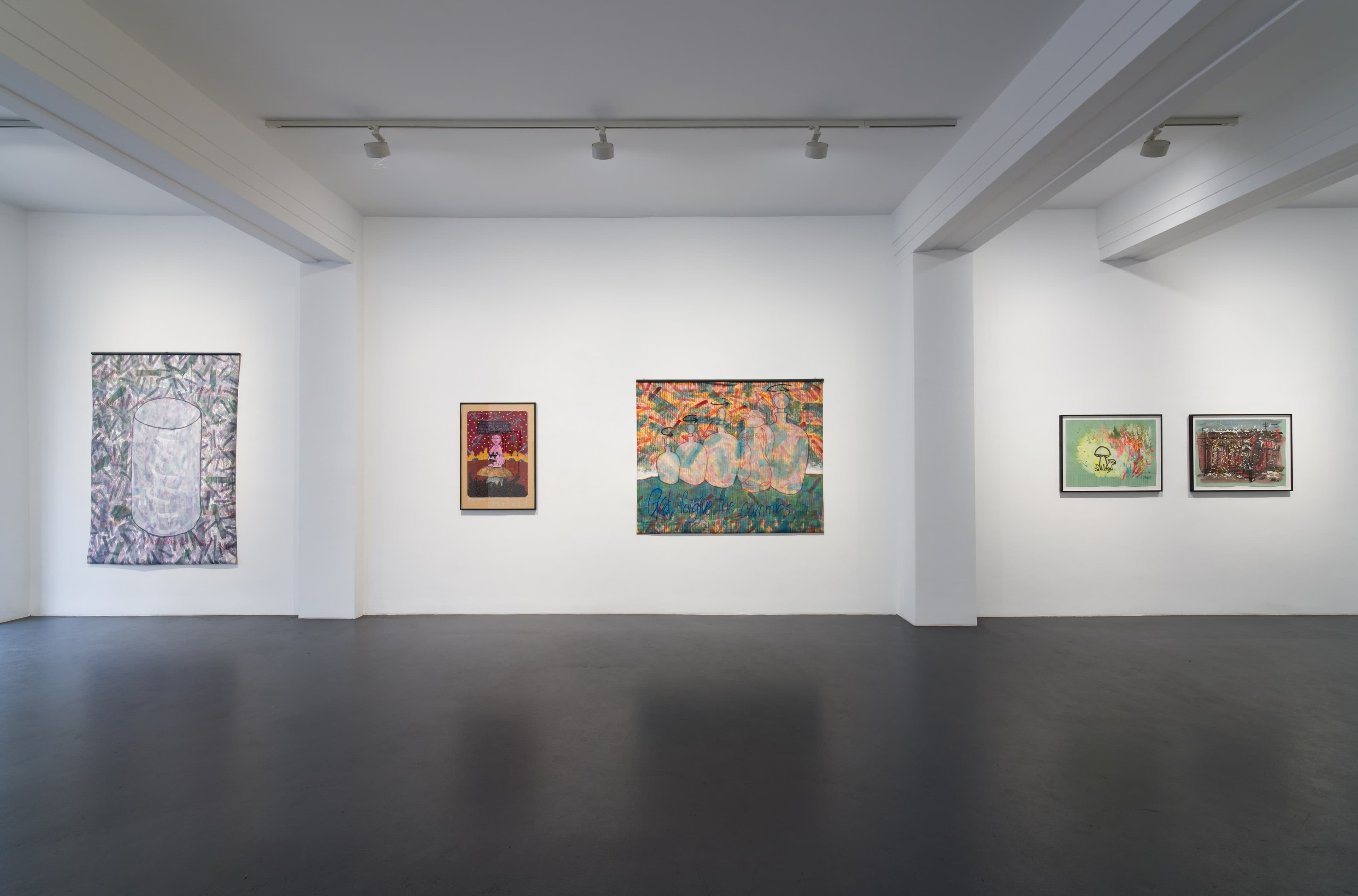
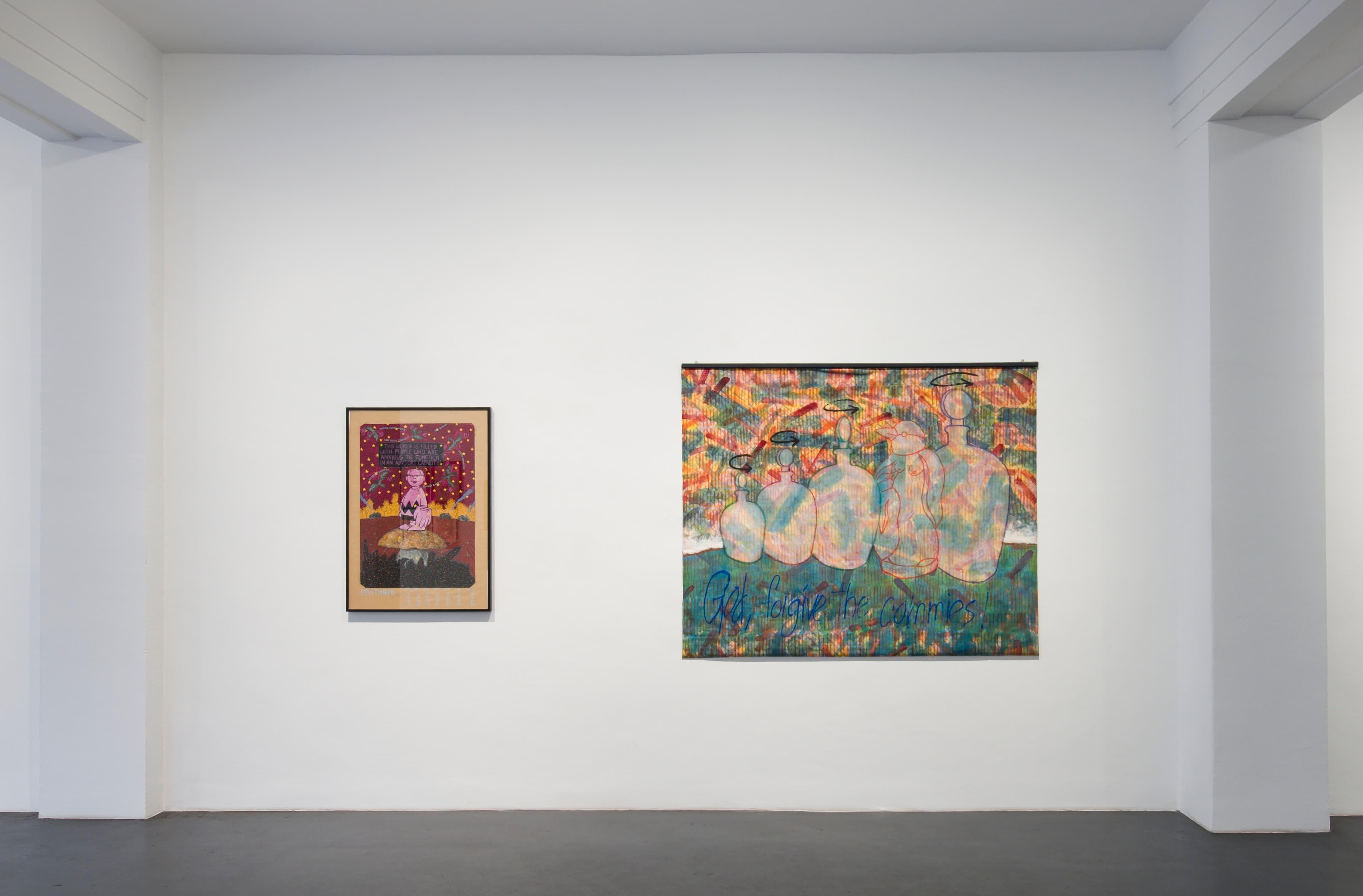
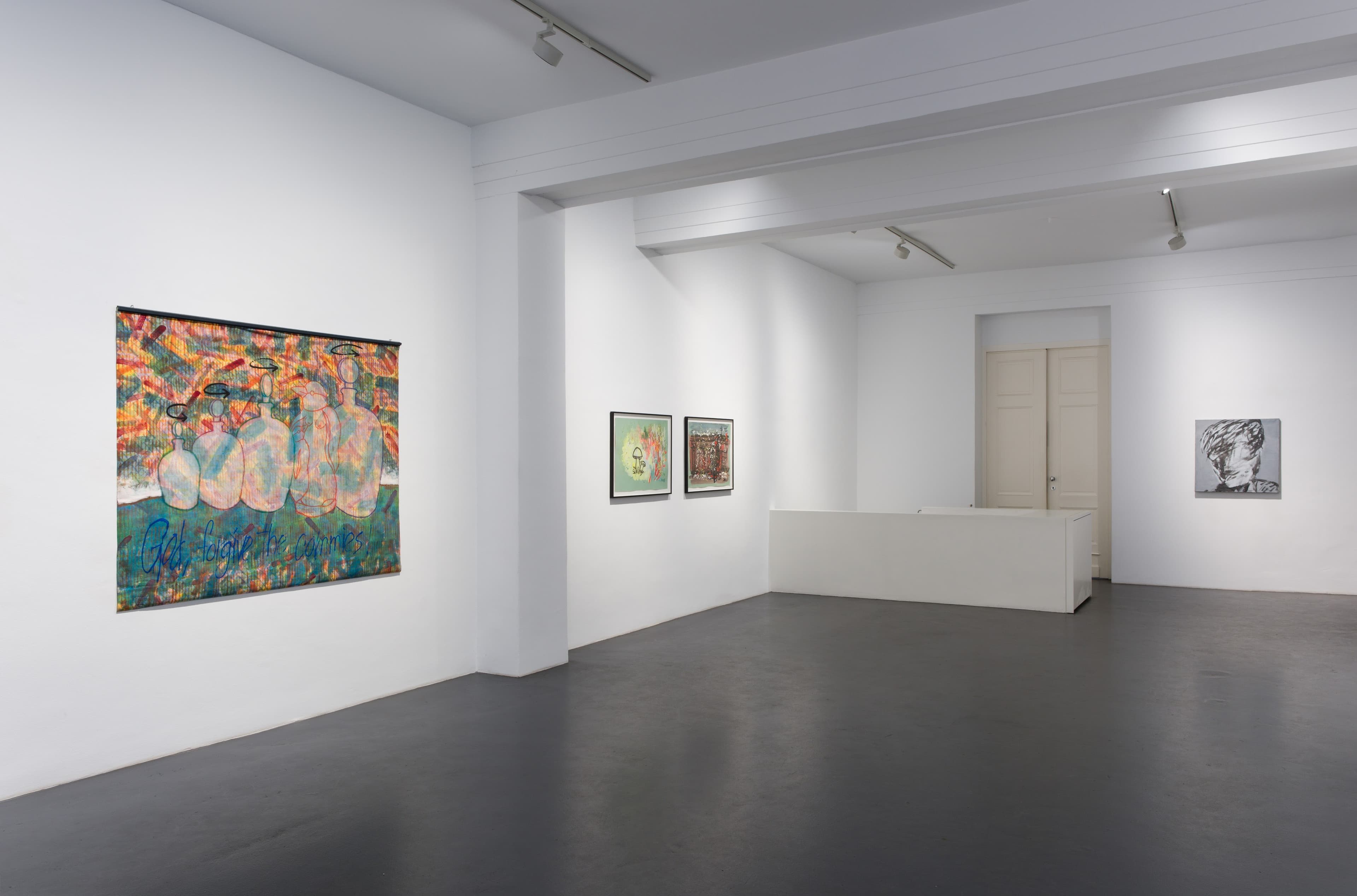
DiehlNikita Alexeev, Sven Gundlach, Eduard Steinberg, Wladimir Jakowlew, Anatoli Slepyshew, Andrei Roiter The Galerie Volker Diehl presents for the first time to a broad audience works from the Lambsdorff Collection, assembled in the 1980s in the USSR. This extensive collection—authentically referred to in internal circles as "Kollektsija"—includes the most important names of unofficial art from the late Soviet era. The exhibition features works by Nikita Alexeev, Sven Gundlach, Eduard Steinberg, Wladimir Jakowlew, Anatoli Slepyshew, and Andrei Roiter. All these artists sought their own artistic voice in very different ways under the conditions of censorship, silence, and international isolation. Countess and Count Lambsdorff noticed them long before their works found their way into the most significant museums and art history textbooks. Despite its rather small scope, this exhibition is a significant event as the collection is valuable for both art history and history in general. "It preserves an imprint of its time—of realities, experiments, emotions, and also humor," according to curator E. Kiseleva-Afflerbach. "This imprint is as much connected with the discovery of the exotic as with the recognition of the familiar in the radically other." The exhibition gathers works created between 1979 and 1989—a time of great hopes, searching for new orientations, and for a common language with the international public. Artists of different movements and generations are shown. "What ultimately unites these artists, perhaps, is only one thing: the renunciation of the dogmas of socialist realism and the search for alternative forms of artistic expression," says the curator. Under the conditions of ideological control and repression, nonconformism became a form of existence outside the system—with its own critical distance, specific humor, and an incessant dynamic of searching for something new. Nikita Alexeev (1953–2021) was a member of the group "Collective Actions," co-founder of the Mani Archive and founder of the first independent art space "Aptart." He explored the gap between signifier and signified under the influence of Ludwig Wittgenstein, freely combining Western conceptualism, pop art, absurdism, Russian prison aesthetics, and mass culture. His works, created on Soviet oilcloth tablecloths, move at the intersection of visual art and poetry. Exhibitions supported by the Nikita Alexeev Foundation are currently on view in Moscow (XL Gallery) and Paris (Iragui Gallery). Sven Gundlach (1959–2020) co-founded the conceptual artist group "Muchomor" and was a member of the ensemble "Srednerusskaya Vosvyshennost" ("Central Russian Plateau"). His practice was based on language as an analytical tool of reality, using parody and irony to deconstruct Soviet clichés, intentionally blurring the boundaries between performance, painting, and text—including projects with Aptart and "Collective Actions." Following numerous international exhibitions, he unexpectedly withdrew from art in the 1990s; his works are in the Tretyakov Gallery, Museum Ludwig Cologne, and Zimmerli Art Museum. Eduard Steinberg (1937–2012) developed a distinctive geometric abstraction from the mid-1960s. A member of the "Sretensky Boulevard" group in the 1970s and participant in the famous Bulldozer Exhibition, he worked with the Parisian Galerie Claude Bernard from 1988; his work is imbued with the desire to rethink form as a spiritual system, with earth and sky, light and darkness, life and death becoming the fundamental "materials" of his art. His works can be found today in the collections of the State Tretyakov Gallery, the State Russian Museum, the Pushkin Museum of Fine Arts, and the Albertina in Vienna. Wladimir Jakowlew (1934–1998), a self-taught artist, worked as a courier and retoucher at the "Iskusstvo" publishing house before turning to unofficial art. The nearly blind artist, who spent much of his life in psychiatric institutions, holds a unique position among Russian nonconformists: his works radiate an elusive harmony of the world that escapes ordinary sight—he made his international debut in 1970 at the Gmurzynska Gallery in Cologne, followed by exhibitions in Lugano, Bochum, Venice, and many other cities. His works are held today in numerous Russian and international museum collections. Anatolij Slepyschew (1932–2016) is associated with lyrical expressionism: he depicts Swedish people, windswept expanses, and endless skies, where his levitating peasant figures lose their physical weight and hover between earthly experience and transcendence. From 1990 to 1996, he lived and worked in Paris with about 30 solo exhibitions. His works are held in the collections of the State Tretyakov Gallery, the State Russian Museum, the Pushkin Museum of Fine Arts, the Ludwig Museum, the Zimmerli Museum, etc. Andrei Roiter (b. 1960 in Moscow) studied at the Moscow Architectural Institute and was one of the founders of the artist squat "Kindergarten" in 1985; he is one of the few Perestroika artists to have successfully established a career in the West. A conceptual artist, he works in painting, graphics, photography, object art, and installation—focusing on the practice of collecting images and artifacts on his travels, a kind of metaphysical tourism through a world of image and symbol worlds. Since 1990, his solo exhibitions have been held in many countries, including the Netherlands, Germany, the USA, and Japan; his works are in the Tretyakov Gallery, the Centre Pompidou, the Lenbachhaus, the Stedelijk Museum, the SFMoMA, and numerous private collections; since 1990, he has lived in Amsterdam, commuting between his studios in Amsterdam and New York.