
Hollywood, Los Angeles
Group Exhibition
Afterimage
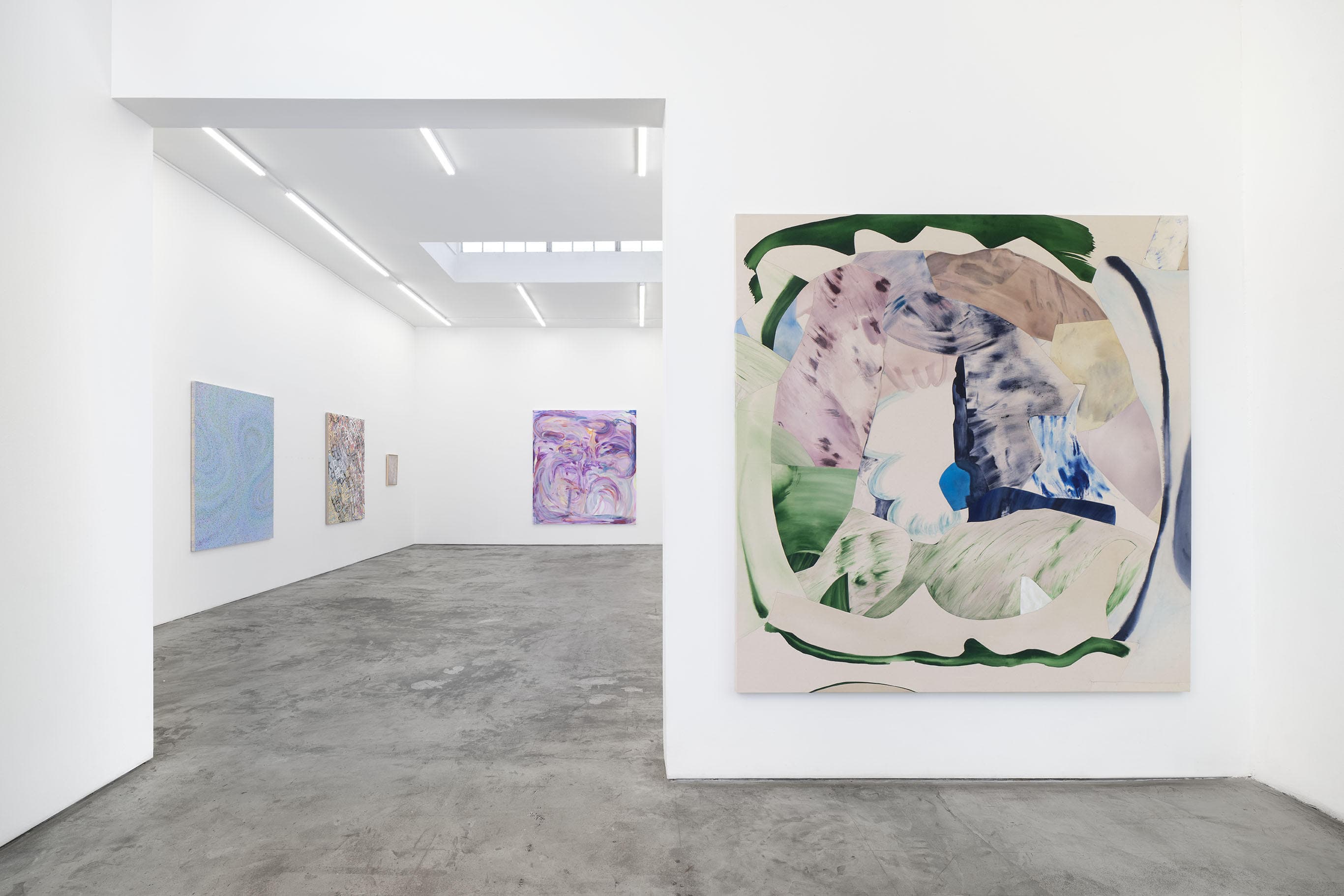
Megan MulrooneyGrace Bromley, Nathan Dilworth, Anthony Gefland, Julia Jo, Sol Kordich, Tommy May, Alexandra McGowan, Gena Milanesi, Gwen O’Neil, Claire Oswalt, Jana Schröder, Mindy Shapero, Maria Szakats, Demetrius Wilson, Kemar Keanu Wynter Curated by Tommy May Megan Mulrooney is pleased to present Afterimage, a group exhibition curated by Tommy May. An afterimage is more than a memory or dream; it is a stark sensation that remains after the stimulus that produced it, like a bright, flashing light, has ceased. In the exhibition, abstraction is explored as a similar lingering presence in perception, reflecting our shared connection to both the natural world and our internal emotional landscapes. The exhibition brings together a range of contemporary artists whose practices span the spectrum of lyrical and gestural abstraction, intricate structural compositions, and softly rendered, ethereal forms. The genesis of this exploration traces back to one of May's childhood memories in the woods of West Virginia. On a research campus known as "the Cove," a teacher led a class into the darkness, flashlights off, allowing his students' eyes to adjust until the world under the stars became vivid and strange. The subsequent act of switching flashlights on, then off again revealed how quickly adapted vision is lost, yet how the memory of that light remains. That experience of vision appearing, disappearing, and lingering serves as the exhibition's foundational metaphor. Painting, at its most potent, acts as a catalyst: the image remains with the viewer long after they have turned away. Abstraction offers a unique form of transportation, carrying the viewer to a place of their own creation - a realm without gravity, spatial awareness, or rigid boundaries. In this space, the experience is dictated purely by color and form. We see this in the expansive, atmospheric depth of Sol Kordich’s The Cloud of the Unknowing and the rhythmic, pointillist vibration of Gwen O’Neil’s Stardust. Simultaneously, the exhibition examines the territory where abstraction touches reality, or where reality moves through abstraction. Julia Jo’s Fate serves as a focal point for this tension, where two figures locked in a kiss are nearly overtaken by the swirl of the medium, almost dissolving into pure abstraction. This dialogue between the felt world and the seen world continues in the sewn compositions of Claire Oswalt and the mohair embroidery of Maria Szakats, whose Generic drape translates the tactile fluidity of fabric into a permanent, structured impression. The natural world, an endless source of abstraction, informs the organic movements found in the work of Tommy May and Nathan Dilworth while the structured, almost cellular complexity of Mindy Shapero’s silver-leafed canvases suggests a hidden internal architecture. Whether through wafts of paint recalling wafts of cooked food in the work of Kemar Wynter or the delicate, translucent scintillations of Alexandra McGowan, the works in Afterimage suggest that our understanding of the abstract is inextricably linked to our perception of the world around us. Ultimately, Afterimage posits that color, surface, and composition do not end at a canvas's edges. Across the artists' varied approaches, abstraction emerges as an experience that persists well beyond the primary moment of encounter. Like the flash of a light in a dark forest, their works leave an impression that continues to pulse in the viewer’s mind.