

Germain, Paris
Marion Mailaender
Mi Casa es Tu Casa
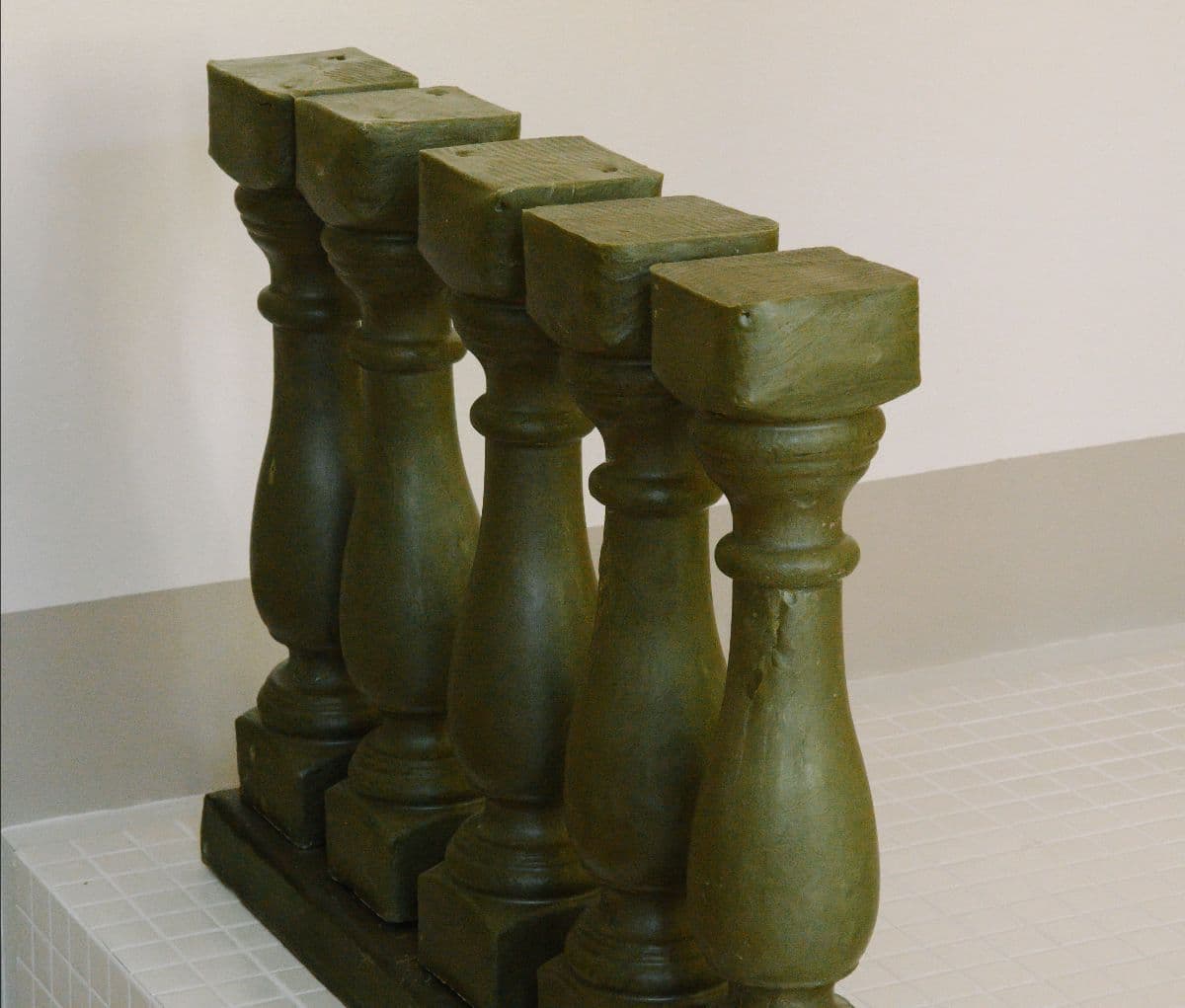
Georges-Philippe et Nathalie ValloisCome in, come in. Welcome to Marion Mailaender’s home. Or, more precisely, welcome among her furniture, which she made in between commissions for a hotel or an apartment. An interior designer based in Marseille, the former student of the École Boulle has developed, alongside her design projects, a practice as a designer, which led her to present her work at Villa Noailles last summer – there, she showed an apartment décor made entirely of experimental objects. These are the same objects you’ll find here, alongside a selection of works by artists from Galerie GP & N Vallois. You’ll soon notice: the designer enjoys engaging in dialogue with Art history – some of its great names are even her neighbors. This is reflected in the fantastical doorbell of her building, which indicates that among her neighbors are Carl Andre, Andrée Putman, Agnès b... but also Valérie Lemercier, Francis Cabrel, and Beyoncé. Ring the bell, and you’ll find that someone answers. With songs, movie excerpts, and sound recordings. This doorbell sets the tone for Marion Mailaender’s relationship with domestic space – playful, humorous, ironic, full of references, both scholarly and popular. Look at the entrance: a rug imitates a real estate ad, using the classic linguistic quirks of real estate agents and suggesting a typically southern French apartment. You begin to dream, and then, already, the designer projects you into the works that you could do to make it feel like home, with her Architectures to Take Away lamps, which borrow their materials from the aesthetic of an ongoing construction site. The object thus forever retains an unfinished (infinite) aspect, as if there were still something left to do, as if the house remained in perpetual motion. Life is not absent from these objects, far from it. The screen testifies to this, with its mirrors reflecting the surroundings and its resin embedded with fragments of life, jewelry, photographs, and a pair of sunglasses. Marion made it with her husband, Thomas Mailaender. She knows it well, from designing ultra-photogenic interiors for her clients: beyond everything we can plan, anticipate, and perfect in every detail, there is always life. That family piece of furniture we carry with us, whose weight is mostly sentimental, those subtle signs of bad taste that we can find so precious, like a poster of a singer in a teenager’s room. Her Pimp My Gio seating thus takes the shape of a chair by the infinitely respected Italian architect and designer Gio Ponti (1891–1979), and challenges it with the image of a boys band singer – 2Be3. "To martyr the icons," she says. And it’s not just a gesture of humor but also a resistance to established tastes, which paralyze interiors and intimidate personal preferences. She uses the same approach with Delisle sconces, which she aligns and repaints to create a gradient of colors and evoke a sunset. The south, again, always, obsessively, filled with desire. It’s also that piece of Marseille soapstone balustrade she made in partnership with the artisans of Fer à Cheval. In doing this, the designer asserts that all materials are possible. Especially if they already exist and are reused, like these chouchousthat form the base of a stool, or this windshield turned into a mirror. Here, one senses a love for life, the life that shapes things and always reappears. —Maïlys Celeux-Lanval