
Charlottenburg, Berlin
Uwe Lausen
Ohne Risiko ist aas Leben Langweilig
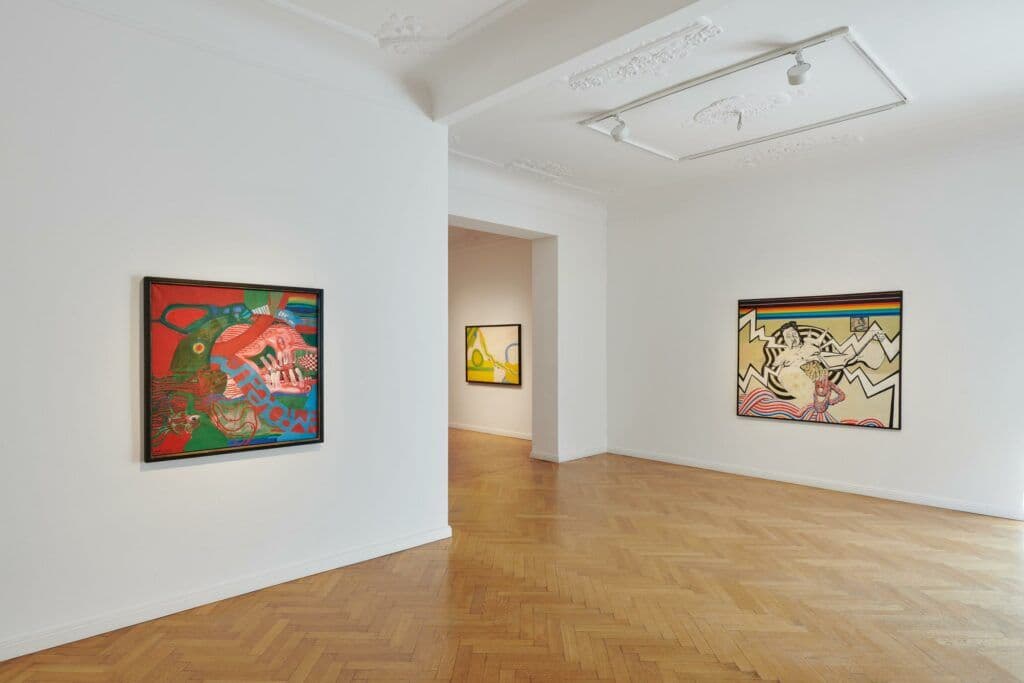
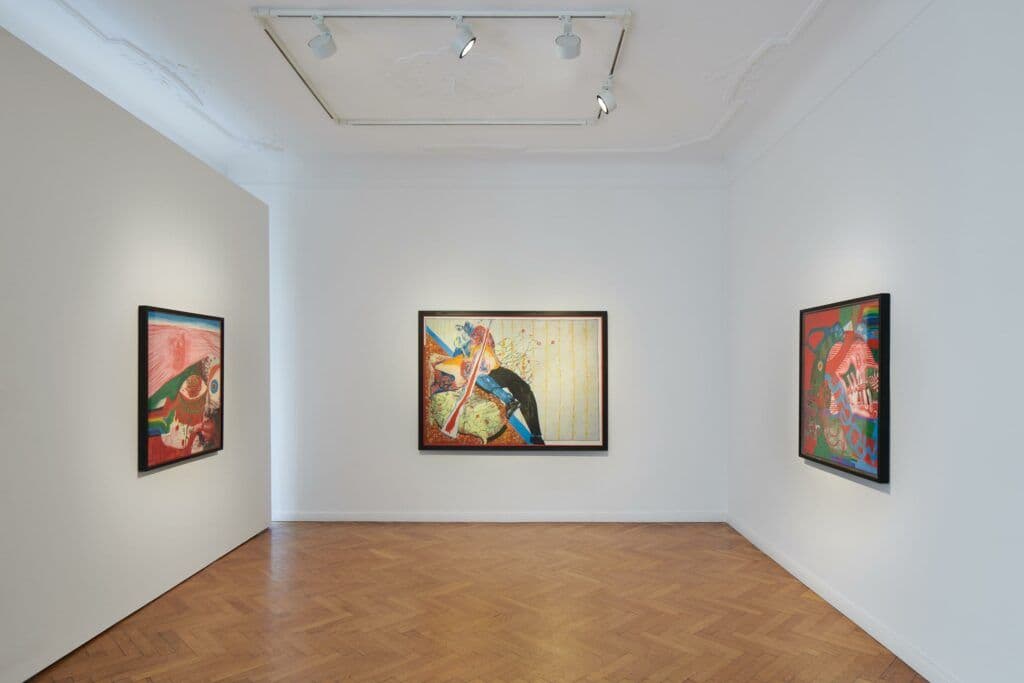
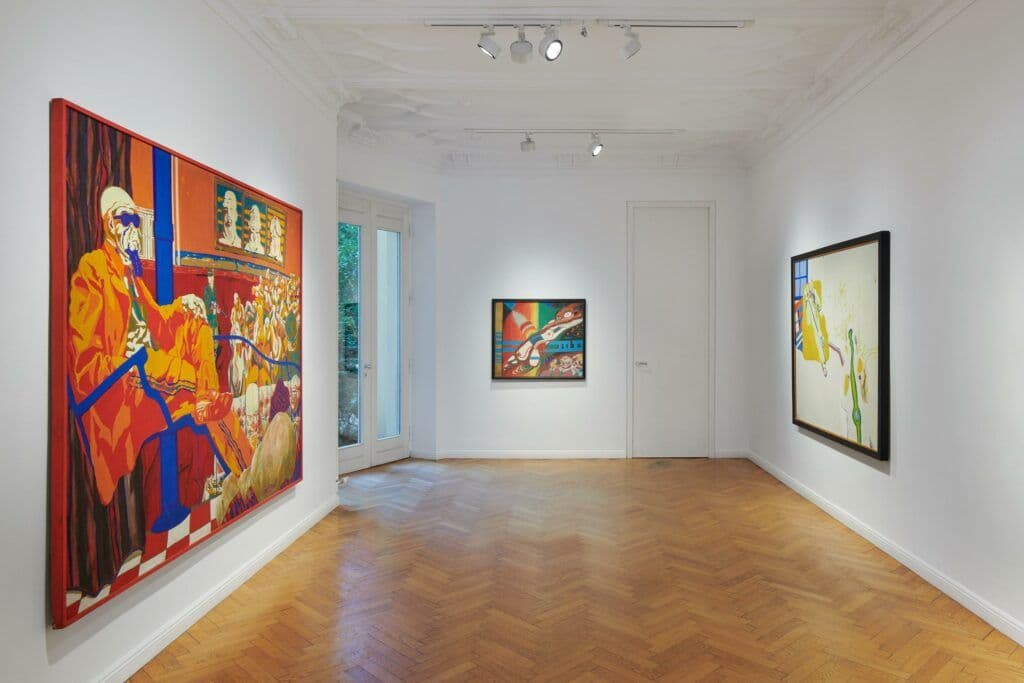
Michael Haas[Please scroll down for German version / Für Deutsch bitte scrollen Sie nach unten] Parallel to Abstract Realism and Minimalism, Pop Art developed in the USA and Great Britain, becoming the dominant art movement in the 1960s and also spilling over into Germany. It found its motifs in the world of consumerism, brand culture and the mass media. Six decades later, we take a look back - and dedicate our exhibition to one particular representative: Uwe Lausen (1941-1970), whose work is one of the strongest positions of figurative painting of the 1960s in Germany and brings with it a radical variant of Pop Art. On the target: the bourgeois spit and the German culture of repression. Uwe Lausen already showed musical and artistic talent as a child, but his youth was also characterised by desperate, aggressive criticism of social constraints in a post-war Germany dominated by authoritarian structures, which caused him to rebel against his environment even at school. After only reluctantly beginning his philosophy studies in tranquil Tübingen, he moved to Munich and enrolled in law, which he quickly abandoned in favour of literary projects. Very soon afterwards, his interest shifted again when his unbridled actionism and his ‘loudness’ within the Munich scene brought him into contact with the SPUR group of artists (Lothar Fischer, Heimrad Prem, Helmut Sturm and HP Zimmer) and the Situationist International (S.I.) - a Europe-wide avant-garde movement whose member Asger Jorn (1914-1973) served as a starting point and inspiration for the beginner Lausen's first expressively colourful paintings. The 19-year-old began painting in HP Zimmer's (1936-1992) studio. He progressed rapidly in his artistic development and distanced himself from the role models of his fellow artists. As early as 1963, he emancipated himself from his debut work with a new pictorial language: increasingly narrative, moving towards surreal body interpretations, which were deformed in comic-like dramaturgy in later works. In his last phase of work from 1968/69, the body is completely dehumanised; it is now, with radical consistency, material itself. In the first half of his oeuvre in particular, Lausen experimented with various materials and with the application on the picture plane; in just nine years of work, the self-taught artist went through the most diverse stylistic concepts of 1960s Western art history. ‘Development is more important to me than condition, transformation more important than stability’, he wrote in his diary. ***** Parallel zum Abstrakten Realismus und dem Minimalismus entwickelt sich in den USA und Großbritannien die Pop Art, die in den 1960er Jahren zur dominierenden Kunstrichtung wird und auch in Deutschland Vertreter hat. Ihre Motive finden sie in der Welt des Konsums, der Markenkultur und der Massenmedien. 60 Jahre später werfen wir einen Blick zurück – und widmen unsere Ausstellung einem besonderen Künstler: Uwe Lausen (1941-1970), dessen Werk zu den stärksten Positionen figurativer Malerei der 1960er Jahre in Deutschland zählt und eine radikale Variante der Pop Art mit sich bringt. Auf der Zielscheibe: Der bürgerliche Spieß und die deutsche Verdrängungskultur. Im Rahmen der Berlin Art Week 2024 eröffnen wir unsere Ausstellung Ohne Risiko ist das Leben langweilig mit einer Auswahl an Gemälden und Papierarbeiten von Uwe Lausen. Wir freuen uns sehr, die Kunsthistorikerin und Kuratorin Dr. Selima Niggl aus München für ihren Vortrag „Zentrum der Reaktion: Heide Stolz und Uwe Lausen. Ein Künstlerpaar der 1960er Jahre“ bei uns zu begrüßen.