

Downtown, Los Angeles
Group Exhibition
Aqux
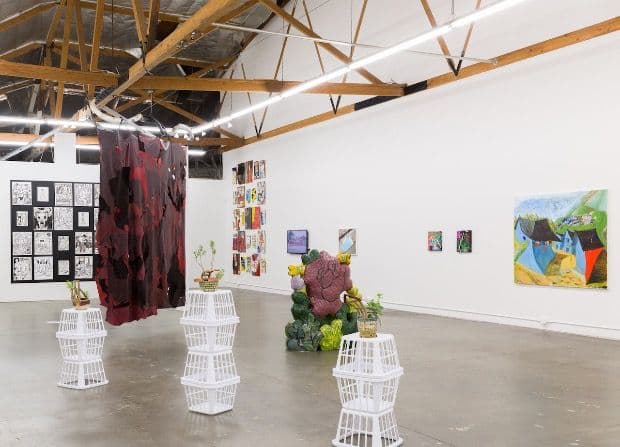
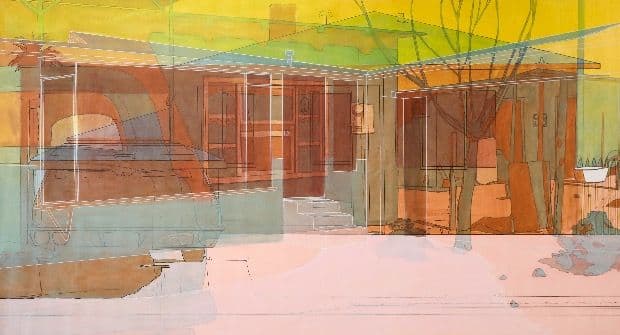
The Mistake RoomMarcel Alcalá, Tiffany Alfonseca, Susan Aparicio, Felipe Baeza, Chris Cortez, Gloria Galvez, James F. Garcia, Jay Lynn Gomez, MA Guevara, Elizabeth Ibarra, Anabel Juárez, Mark McKnight, Star Montana, Jaime Muñoz, Esteban Ramón Pérez, Edgar Ramirez, Lily Ramirez, Fay Ray, José Guadalupe Sánchez III, Eduardo Sarabia, Claudia V. Solórzano, Ken Taylor, Raelis Vasquez Aqux brings together the work of 23 Latinx artists to re-imagine our understanding of home and the ways it shapes our sense of personhood. Home in this exhibition is not thought of as physical locale but rather as a moment forged from all the spaces we inhabit in the now. Home is our position in the world; how we navigate between our pasts and futures. As the spaces and situations we exist in evolve, we do too—suggesting that our sense of self, our identity, is always situational rather than fixed. As an idea, home has long been associated with belonging, stability, and permanence, but the works in this exhibition challenge those preconceptions in order to speak to the difficult truths faced by people whose subjecthood is constantly adapting—by choice or necessity—to their circumstances. Collectively these works provide a counter visual language to historical representations of home—a language rooted in contradictions that echo the nuanced and varying relationships Latinx people have to their Latin American heritage. Organized around five thematic axes—home as city; home as land; home as self; home as labor; and home as intimacy, Aqux launches an exhibition series that will seek to provide frameworks of engagement for practices that are largely characterized by their discomforting fluidity. The title of the exhibition, Aqux, means here and/or now, and embraces the use of the “x” that is at the center of charged debates about the words used to identify one of the largest growing demographics in America. This acceptance of an unsettled term is an anchor for the many projects we will realize over the next two years—a program grounded in the belief that an overall taxonomizing category of Latinx art is an impossibility and that our efforts, in understanding the Latinx experience, should instead be guided by the differences that shape us.