

Mitte, Berlin
Group Exhibition
Obsession
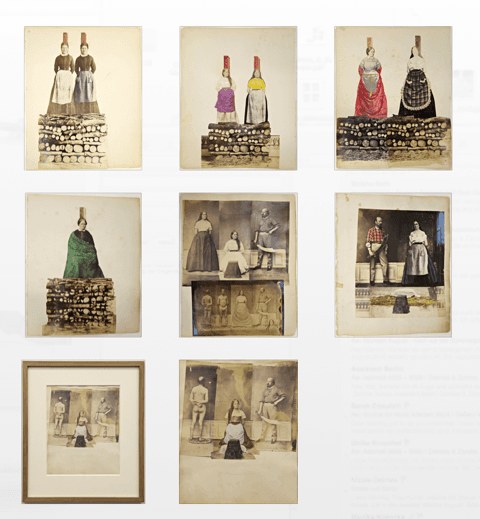
Delmes & Zander[Please scroll down for German version / Für Deutsch bitte scrollen Sie nach unten] In the early 1990s, an album of approximately 50 double-page photo collages was discovered in France. Based upon the photographic techniques employed and from the fashion of clothes and hairstyles depicted, the album most probably dates from around 1860 -1870. One of the photographs shows the newspaper La Lyonnaise, suggesting that the works may have originated in Lyon. The album has been disassembled over the years and the works dispersed, some are now included in various private and museum collections, including that of the Musée d’Orsay. The author of the so-called Obsession-album is unknown and remains anonymous up to the present time. An excerpt of the album was published in 1993, together with works by Hanne Darboven. With the development of photography on paper, the first manipulations of photographic images occurred through the cutting of negatives and through the effects resulting from double exposure and overexposure (for example in spirit photography) as well as the technique of collage. Since the end of the 1850s, various materials have been combined with the photographic print (for instance cut paper, water coloring, pieces of fabric or lace) and were the preference of upper class Victorian ladies, often with playful and imaginative elements as decorations in family and friendship albums. Although quite different in subject, examples of these common techniques can also be found in the Obsession-album: photo collages of women at the stake as well as before or after decapitation gave vent to their author’s phantasies, barely concealing a deep-seated sexualized undercurrent in the work. The album is clearly to be understood as a private project. The technical virtuosity of the work suggests the hand of a professional commercial photographer with access to photographic equipment and a darkroom as well as contacts with female models which he brought to bear in this unusual work without them realizing precisely how their portraits would finally appear. In this respect, the so-called Obsession-album is at the same time unconventional and exceptional. Individual sheets of the album bring to mind tableaux vivants denoting a clear influence of the theater in their composition. With repetitive citations of artworks and classical poses they testify to a manifest degree of artistic knowledge: depictions of martyrs and decapitations in paintings may have served the author of these collages as models in content and form like Paul Delaroche’s at the time already famous paintings The Decapitation of Lady Jane Grey (1833) or Herodias with the Head of John the Baptist (1843). The incident of the so-called “Murderer of Maids” may have inspired the photographer’s imagination: Between 1855 and 1861, Martin Dumollard had murdered numerous young women near Lyon with the supposed assistance of his wife. At the time, the incident became a media phenomenon inspiring the collective imagination of the public far beyond the borders of France. ***** Anfang der 1990er Jahre wurde ein Album mit ungefähr 50 doppelseitigen Fotocollagen in Frankreich gefunden. Aufgrund der fotografischen Technik, der Kleidung und der Frisuren der dargestellten Personen wird das Album auf circa 1860-1870 datiert. Auf einer der Fotografien ist die Zeitung „La Lyonnaise“ zu sehen, was vermuten lässt, dass die Arbeiten aus Lyon stammen. Das Album wurde bereits vor vielen Jahren aufgelöst und einige der Arbeiten befinden sich heute in verschiedenen Privat- und Museumssammlungen wie z. B. der Sammlung des Musée d'Orsay. Der Verfasser des sogenannten Obsession-Albums ist bis dato anonym geblieben. Ein Auszug aus dem Album wurde 1993 zusammen mit den Arbeiten von Hanne Darboven veröffentlicht. Mit der Entwicklung der Fotografie auf Papier zeigen sich auch die ersten Manipulationen des Bildes, wie etwa durch die Beschneidung des Negativs, die Doppelbelichtung und Überbelichtung (z.B. in der Geisterfotografie), sowie durch die Technik der Collage. Ab Ende der 1850er werden hier verschiedenste Materialen mit dem Fotoabzug kombiniert (z.B. beschnittenes Papier, Aquarell, Stoffstücke oder Spitze) und gerne von den Damen der viktorianischen Oberschicht, oft mit spielerischen und fantastischen Elementen, in der Verzierung und Gestaltung von Familien- und Freundschaftsalben verwendet. Diese gängige Techniken lassen sich auch im Album Obsession wiederfinden. Allerdings ist dieses vom Sujet her deutlich anders geprägt: die Fotocollagen von Frauen auf dem Scheiterhaufen oder vor- bzw. nach der Enthauptung geben den Gewaltfantasien ihres Autors freien Lauf und können einen sexualisierter Unterton in den Arbeiten kaum verbergen. Das Album ist ganz deutlich als privates Projekt zu verstehen. Die technische Virtuosität der Arbeiten lässt die Hand eines erprobten (kommerziellen) Fotografen vermuten, der sowohl Zugang hatte zu Kameravorrichtungen und einem Aufnahmestudio, wie auch Kontakt zu weiblichen Modellen pflegen konnte, die er sich in dieser außergewöhnlichen Arbeit zu eigen macht ohne, dass diese ahnen können was mit ihren Portraits genau geschehen wird. Das sogenannte Obsession-Album ist dieser Hinsicht einzigartig und eigenwillig zugleich. Einzelne Blätter des Albums ähneln „Tableaus Vivants“ und sind in ihrer Komposition stark vom Theater beeinflusst. Sie zeugen darüber hinaus in ihrem wiederholten Zitieren von Kunstwerken und klassischen Posen von eindeutigen bildnerisch-künstlerischen Kenntnissen: Märtyrer- sowie auch Enthauptungsdarstellungen aus der Malerei dienen dem Autor der Collagen deutlich als Vorbild. So erkennt man inhaltliche wie auch formelle Parallelen mit Gemälden von Paul Delaroche, wie etwa sein schon damals berühmtes Bild von Lady Janes Grays Enthauptung (1833) oder seine Darstellung der Herodias mit dem Kopf Johannes des Täufers (1843). Aber auch der Fall des sogenannten „Hausmädchenmörders von Montiuel“ mag die Fantasie des Fotografen erregt haben: Martin Dumollard hatte zwischen 1855 und 1861 in der Nähe von Lyon zahlreiche junge Frauen ermordet, wobei ihm seine Ehefrau behilflich gewesen sein soll. Der Fall wurde damals zum Medienphänomen und regte die kollektive Fantasie der Öffentlichkeit über die Grenzen Frankreichs hinaus an.