
Washington Heights, New York
Diane Simpson
Formal Wear
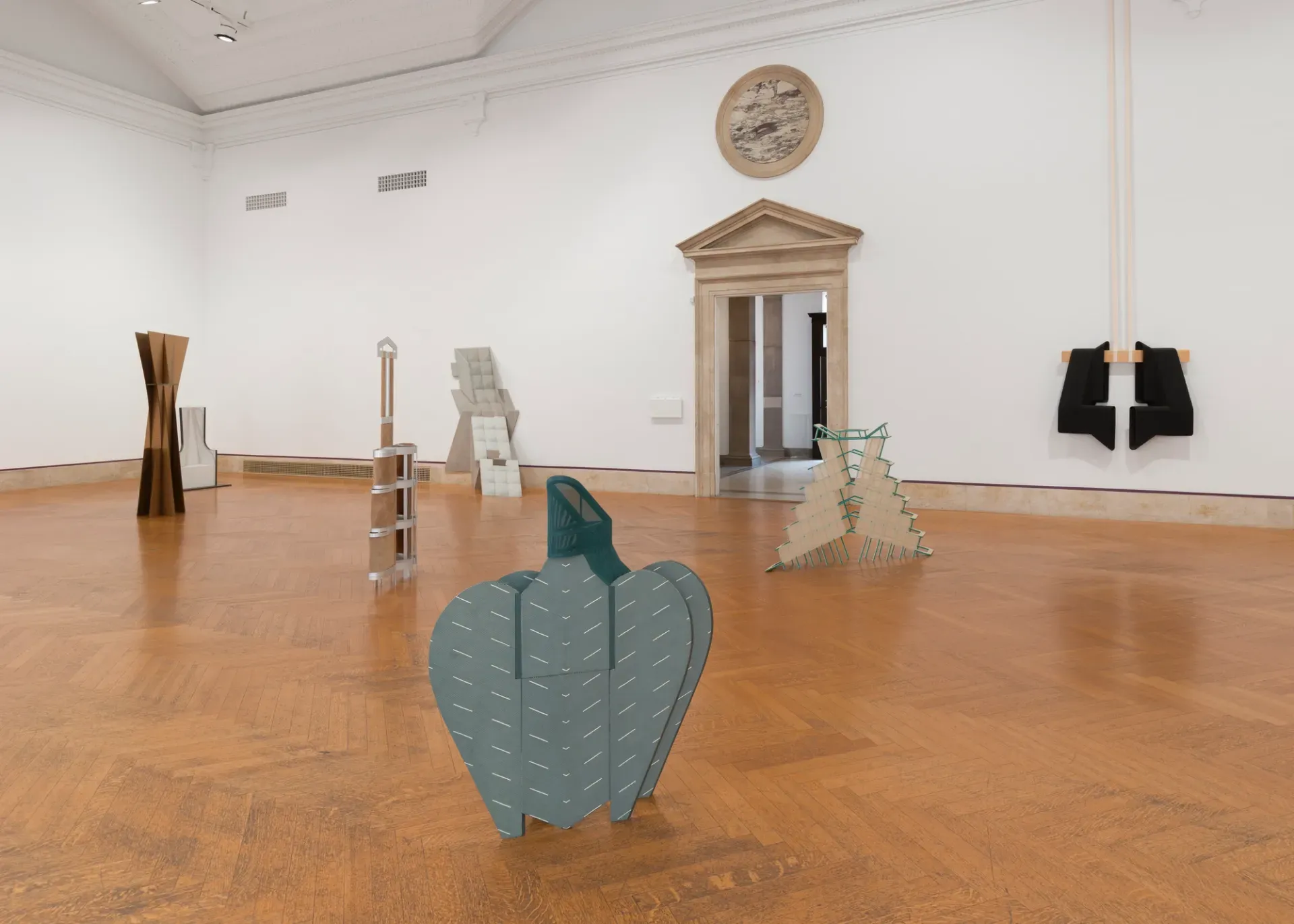
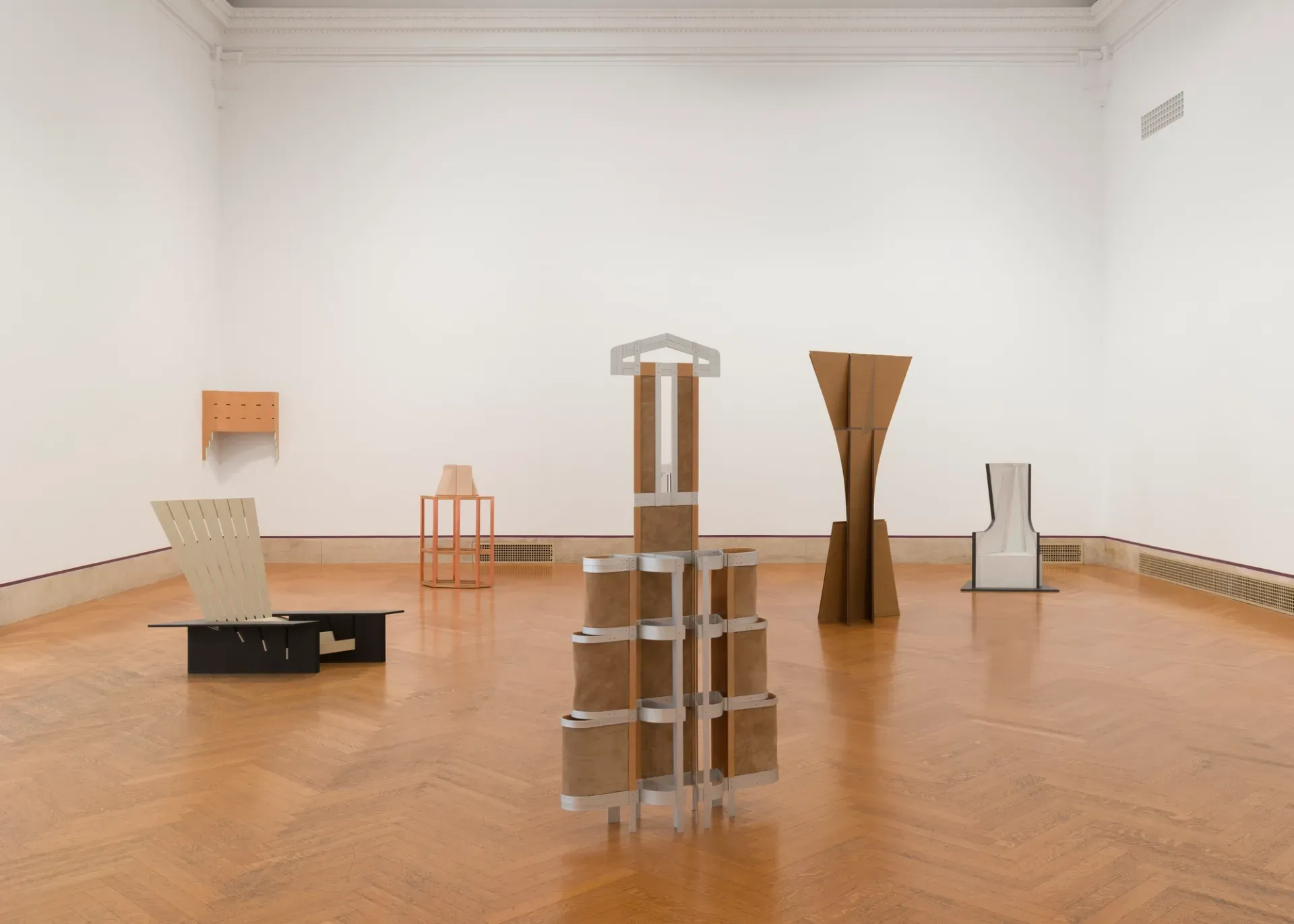
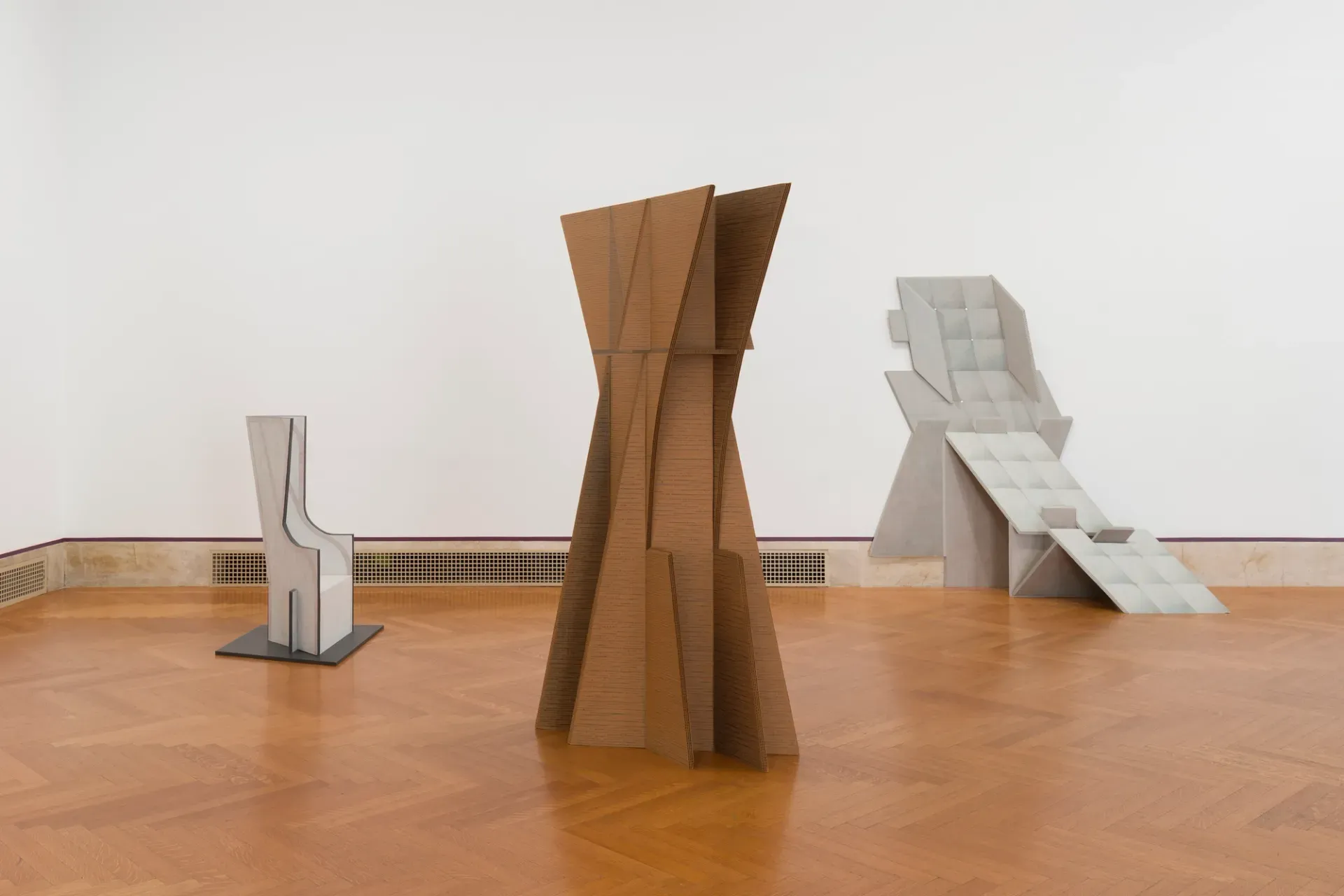
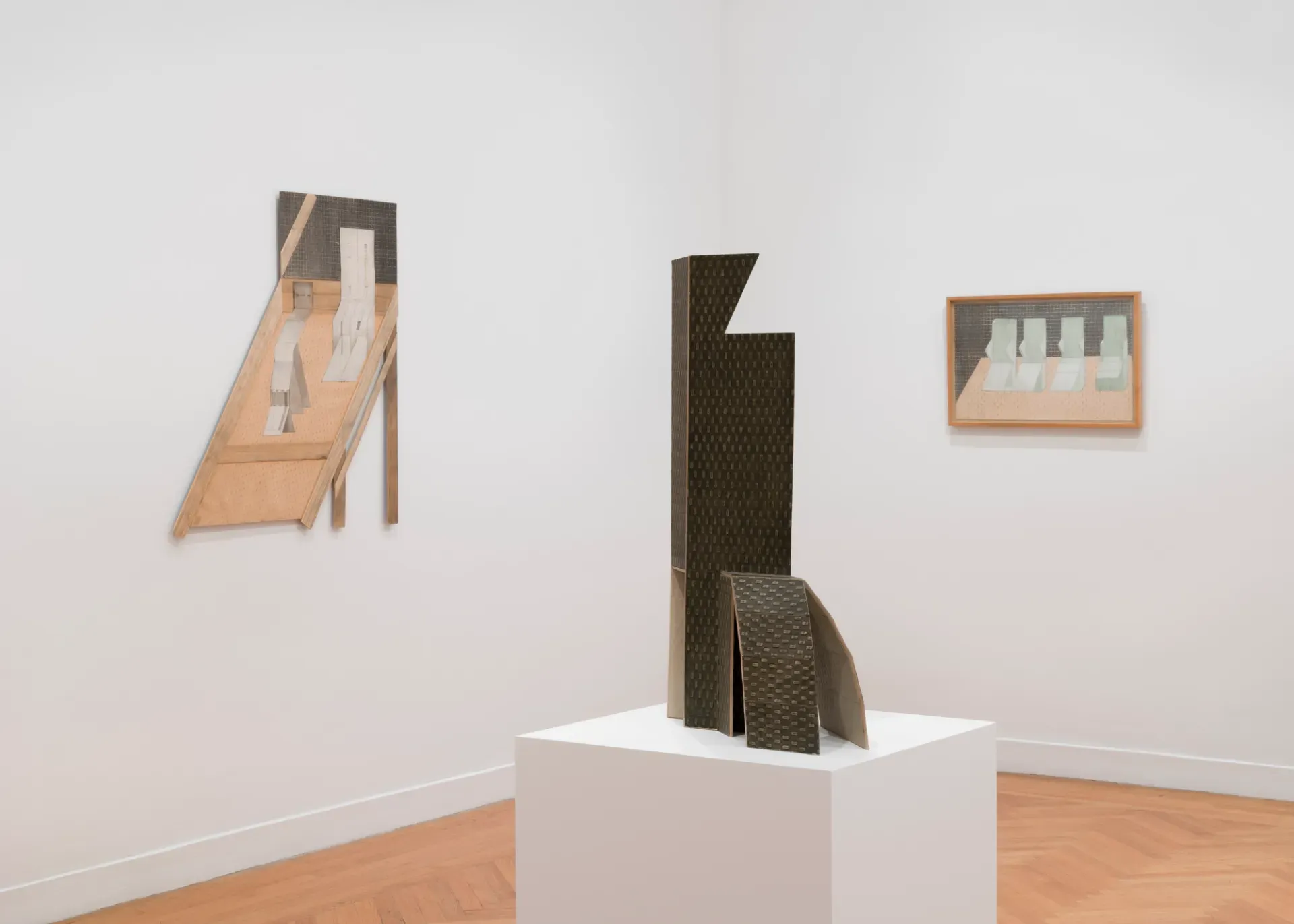
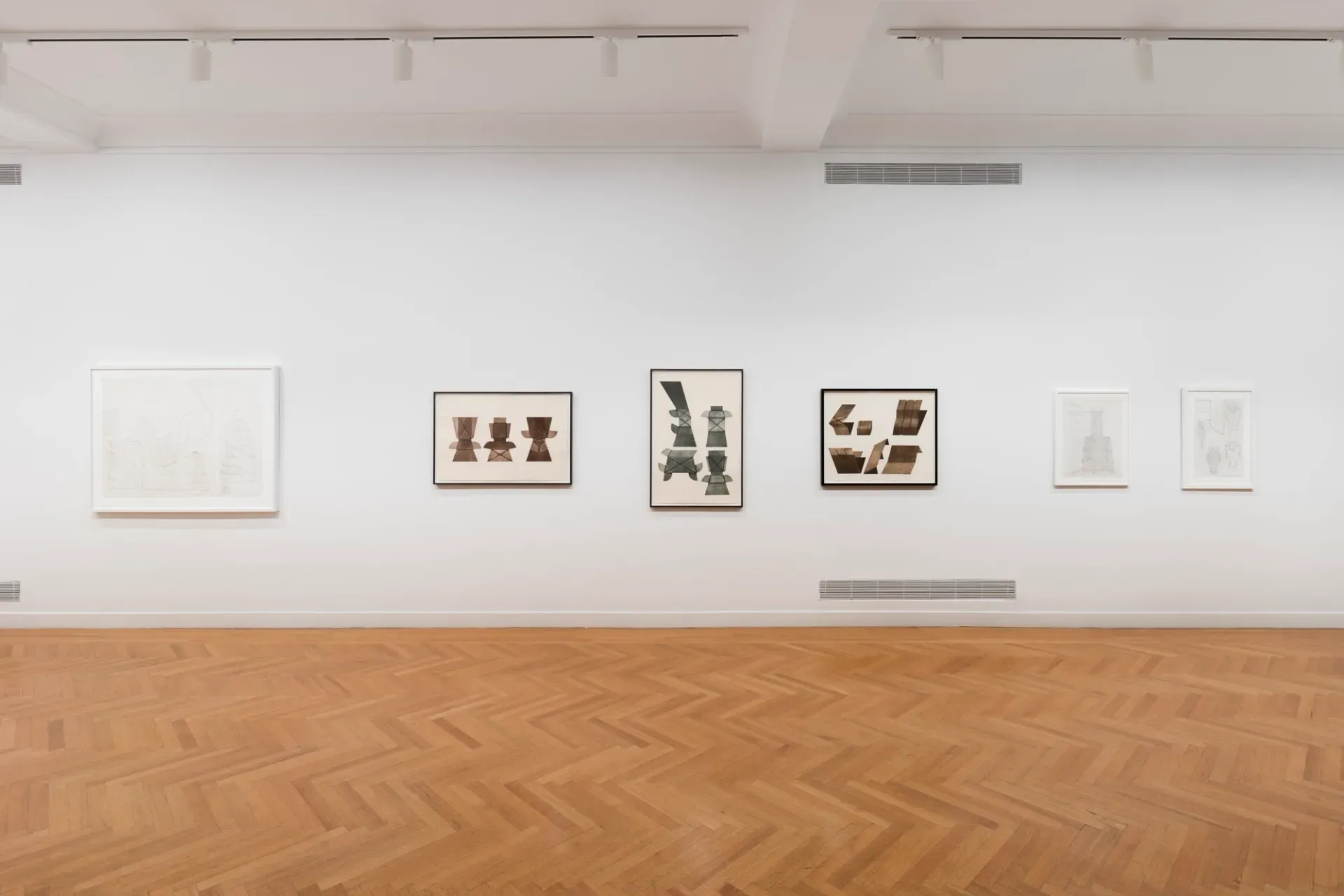
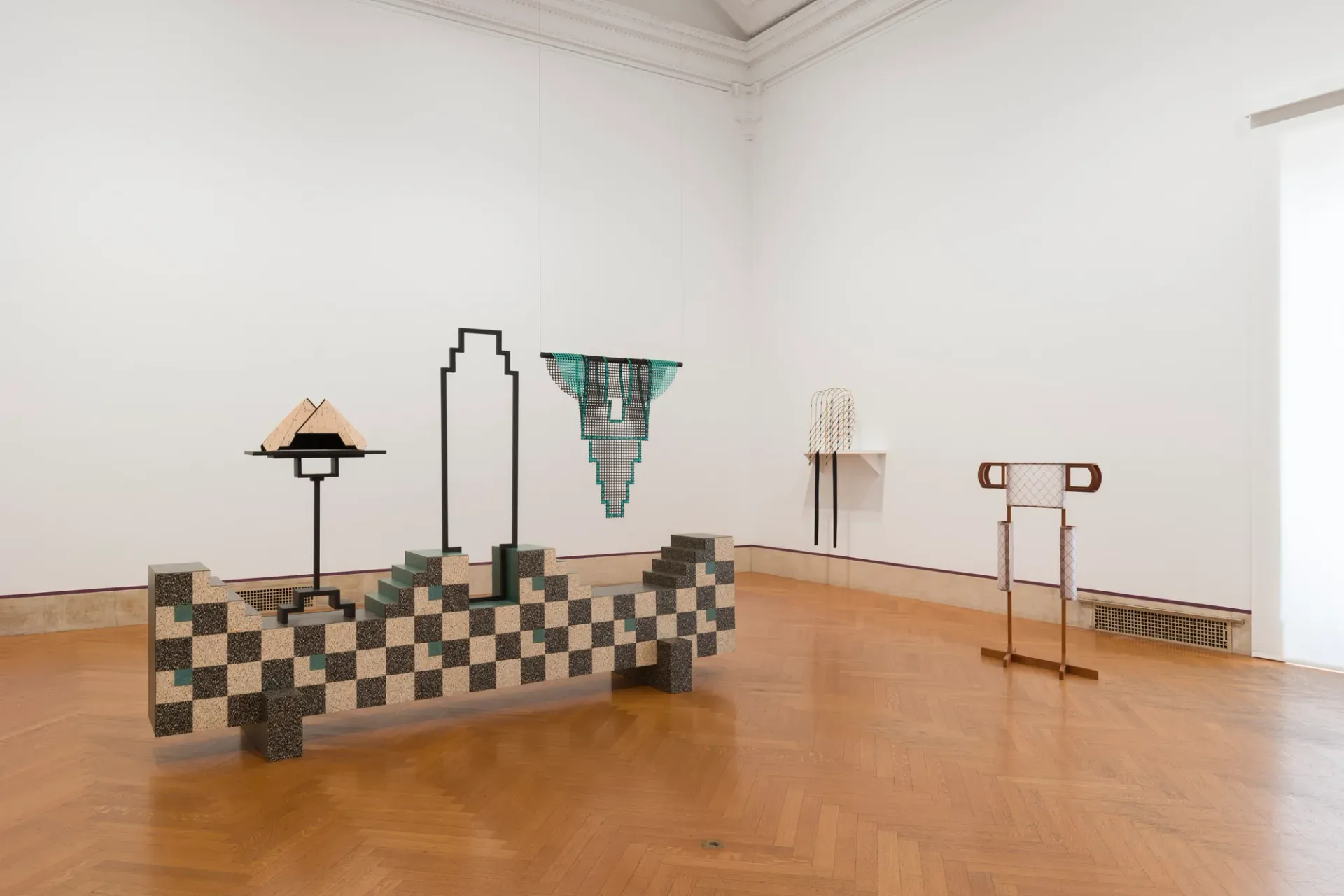
Arts and LettersDiane Simpson (b. 1935, Joliet, IL) isolates fragments of the everyday—the turn of a collar, the flounce of an apron pocket, a building facade—and transforms them into sculptures that exist between the familiar and the uncanny. Working from photographs she has collected over decades, Simpson develops each piece through meticulous axonometric drawings on graph paper, using 45-degree angles to flatten three-dimensional forms before reconstituting them as sculptures that retain those same geometric distortions. Her drawing system has its roots in the spatial perspectives of medieval paintings, Persian miniatures, and Japanese scrolls, creating what she calls a “bird’s-eye view that results in a very immediate presence.” Her material vocabulary draws from the hardware store and the domestic realm—corrugated board, medium-density fiberboard, aluminum, brass, linoleum, and galvanized steel, alongside everyday fabrics like linen, leather, and mesh. Using a jigsaw, router, and other tools and innovative sculptural techniques, she painstakingly handcrafts each work, developing methods to meet the needs of different pieces and materials. Part of the transformation involves playful shifts of scale—her works always reference the body through clothing or architecture, “the subject of the body without the body,” as she puts it, but their proportions are often surprising. “Things happen when I construct the form that I can't anticipate,” she explains, describing how this distinctive process often distances her sculptures from their sources. This exhibition, Simpson’s first solo institutional show in New York, presents nearly thirty works from 1976 to 2022 across two galleries. One gallery features her drawings and early collagraph prints, while the other includes sculptures that span her evolution from cardboard works and clothing-based sculptures to recent architectural forms, all unified by her rigorous yet intuitive approach to transformation. Arts and Letters commissioned an essay, “The Steel Curve of Adornment,” by Audrey Wollen, which accompanies the exhibition as part of our Reader series. Founded in 1898 and located in landmark buildings in Washington Heights, the American Academy of Arts and Letters is an honor society of artists, architects, composers, and writers who foster and sustain interest in the arts. Arts and Letters’s members honor and support creative individuals through over seventy annual awards and prizes and champion experimentation and the breadth of contemporary art today through an exhibition program that gives artists space, time, and resources to realize ambitious projects. The program is led by Chief Curator Jenny Jaskey, in consultation with a committee of Arts and Letters artist members including Mel Chin, Charles Gaines, Ann Hamilton, Joan Jonas, and Amy Sillman.