
Ridgewood, New York
Group Exhibition
My Armor Thinned to a Silken Scrim
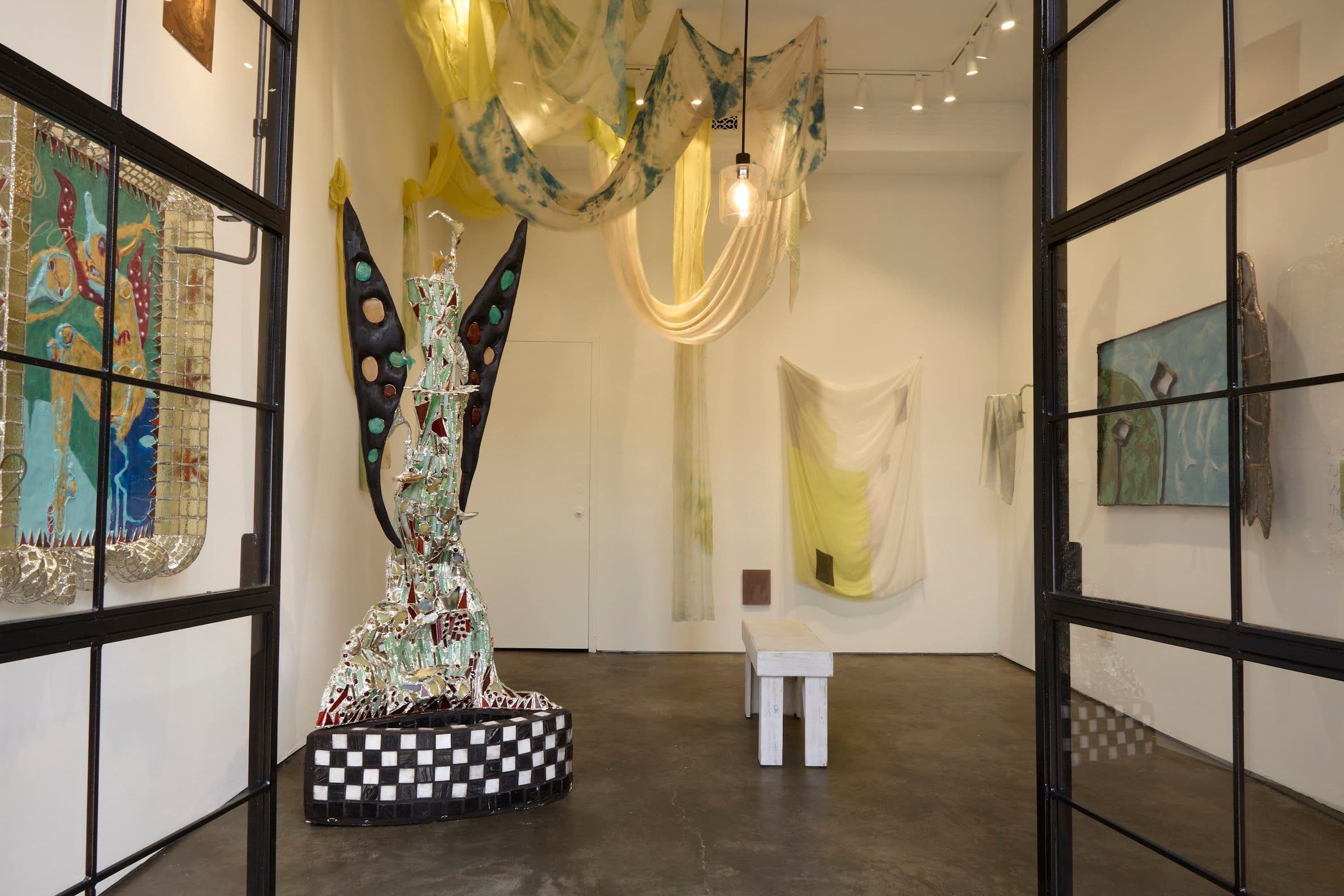
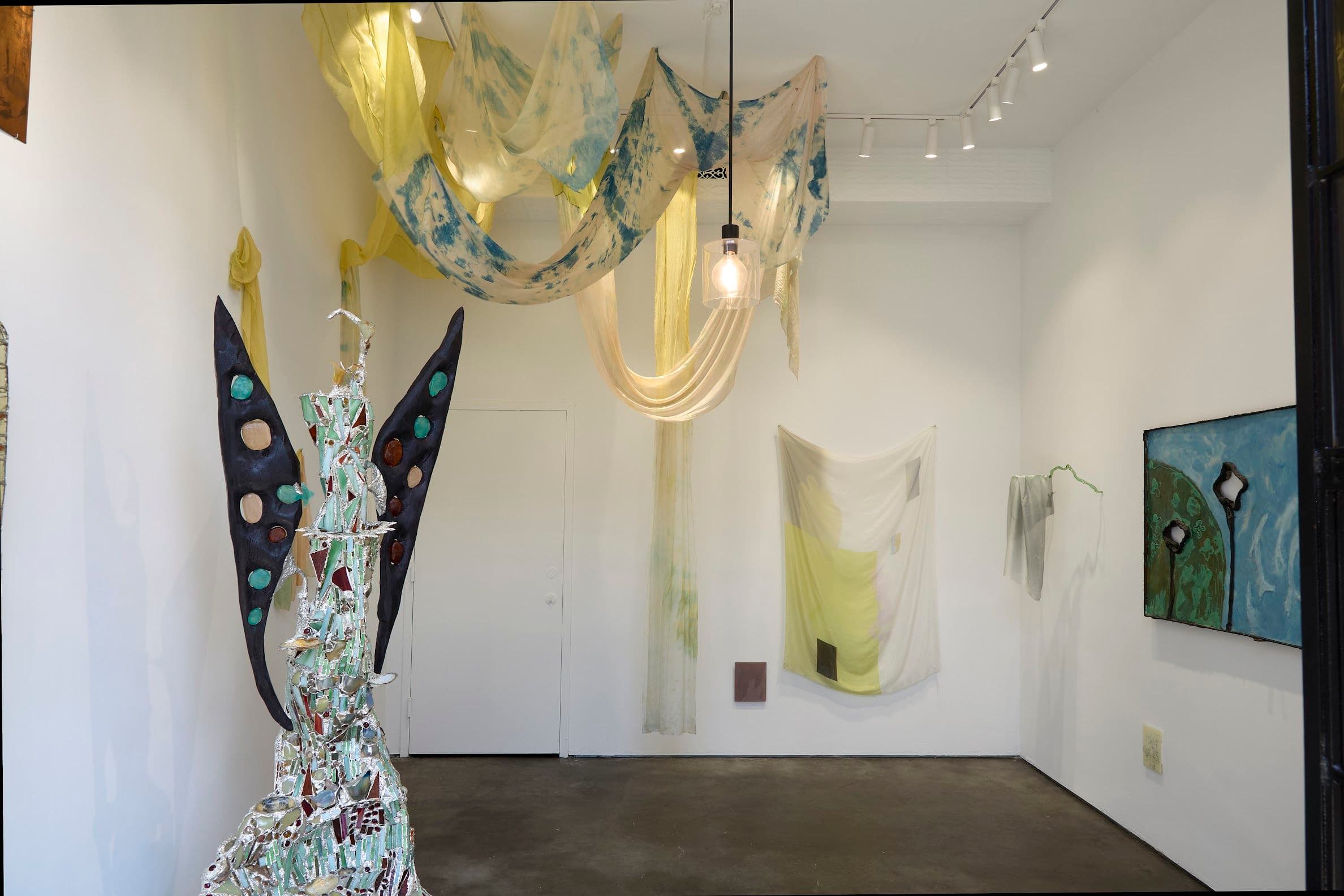
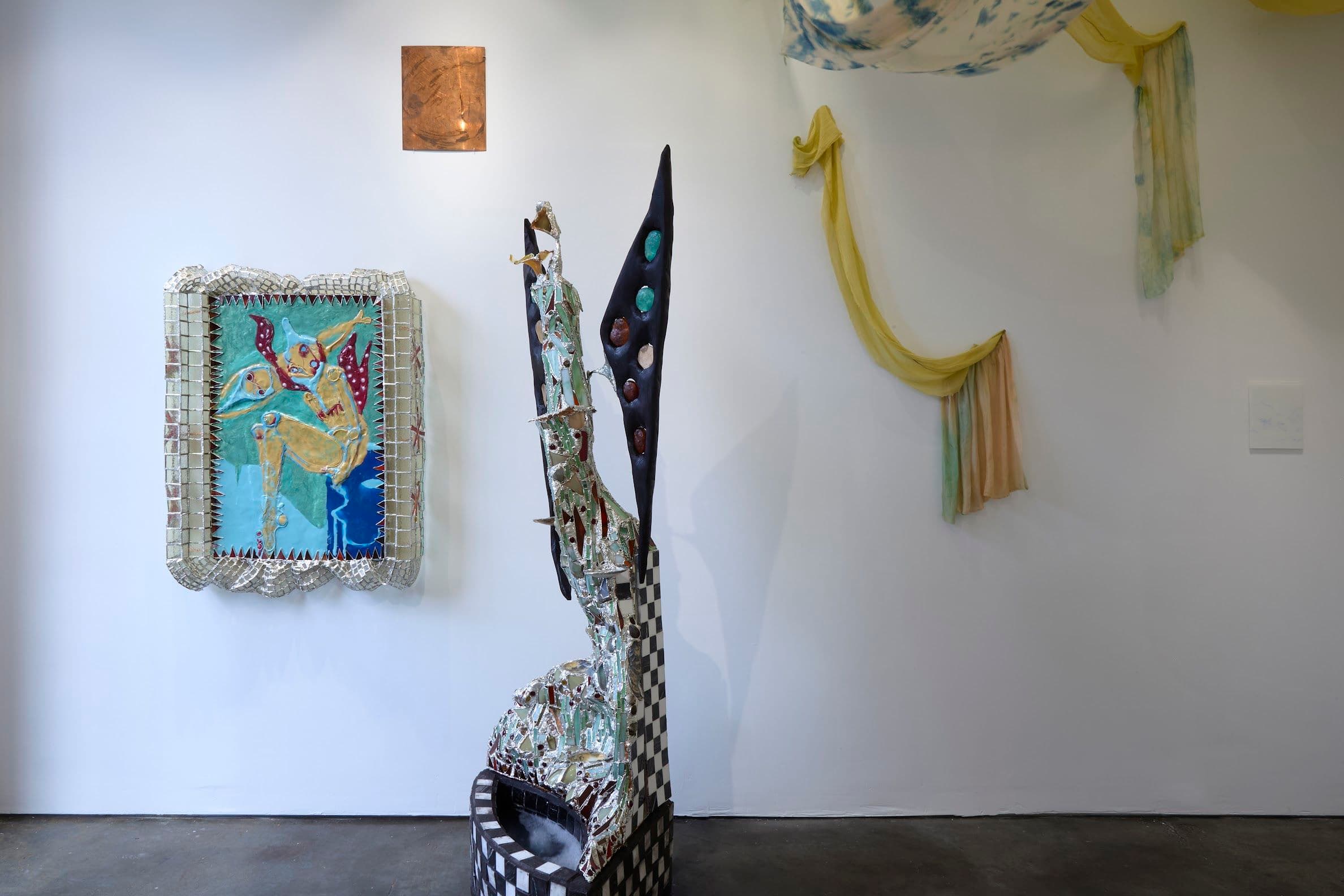
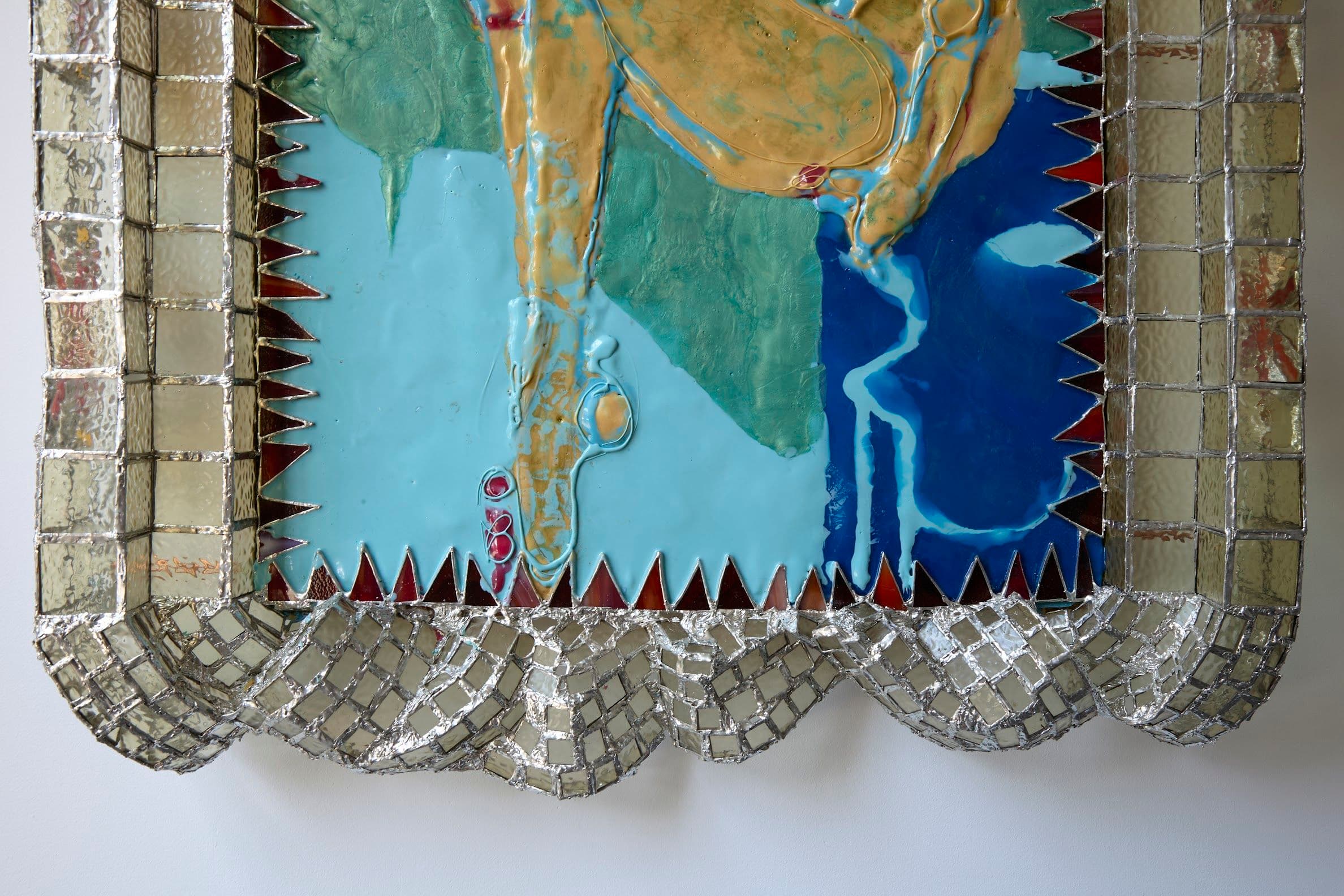
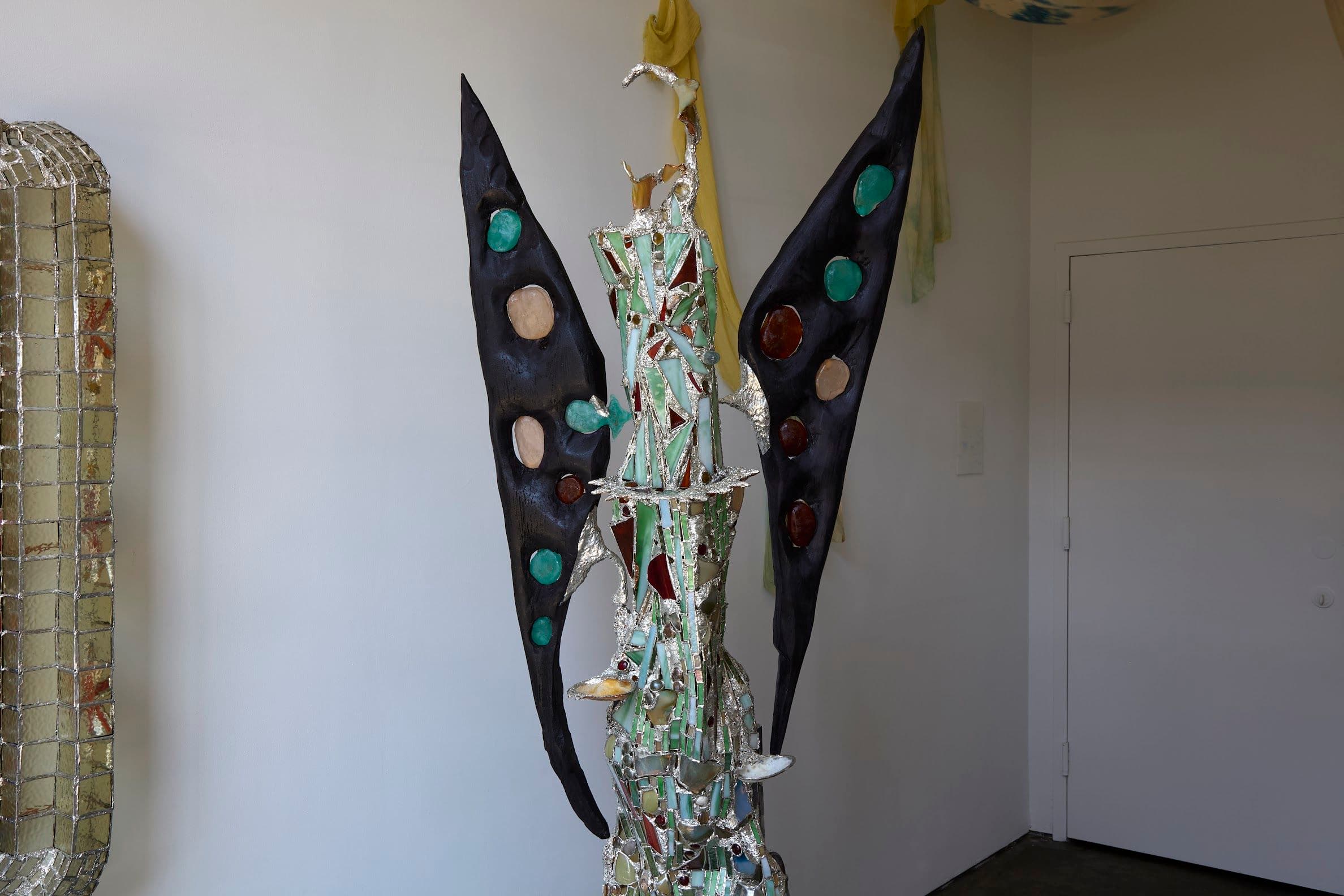
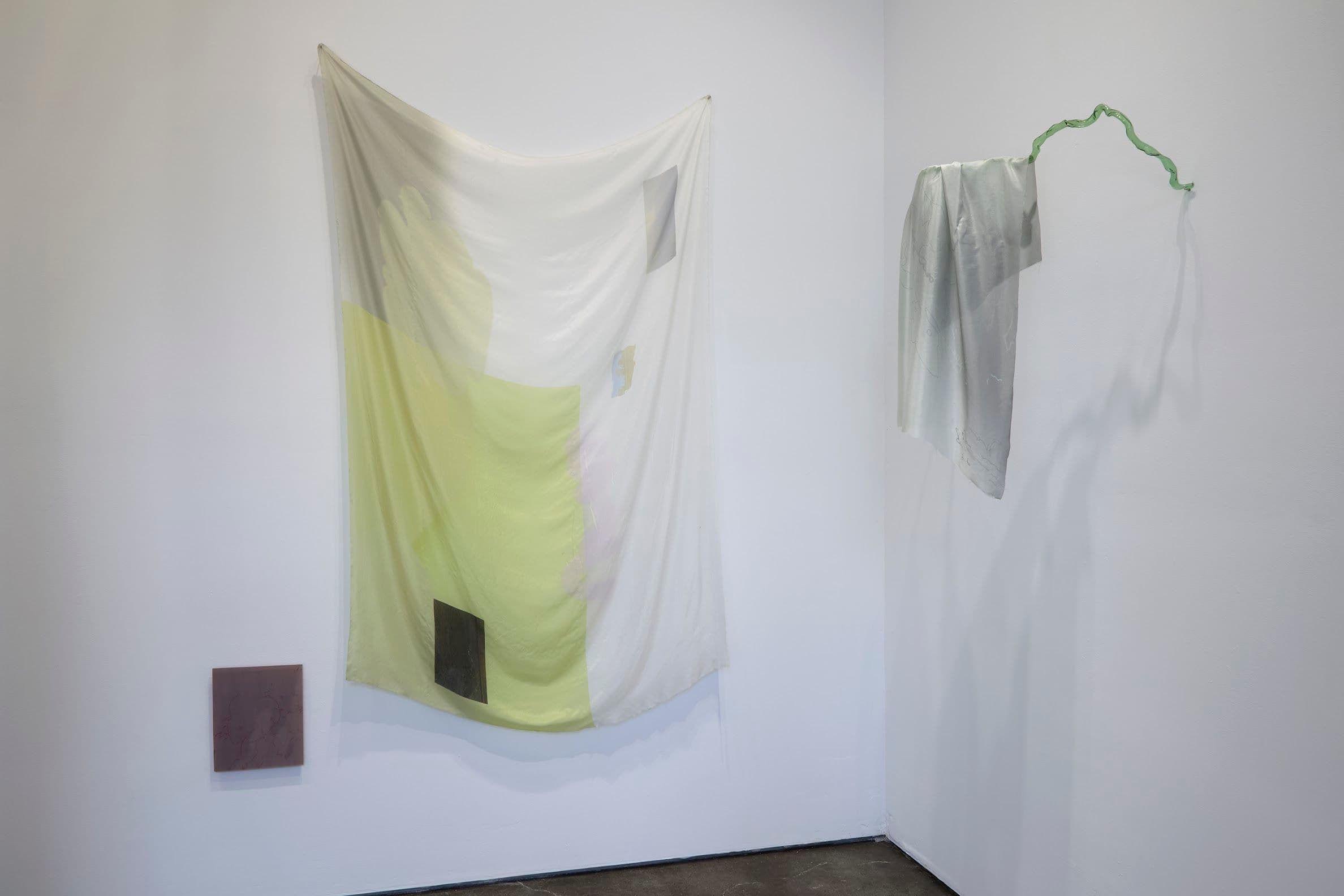
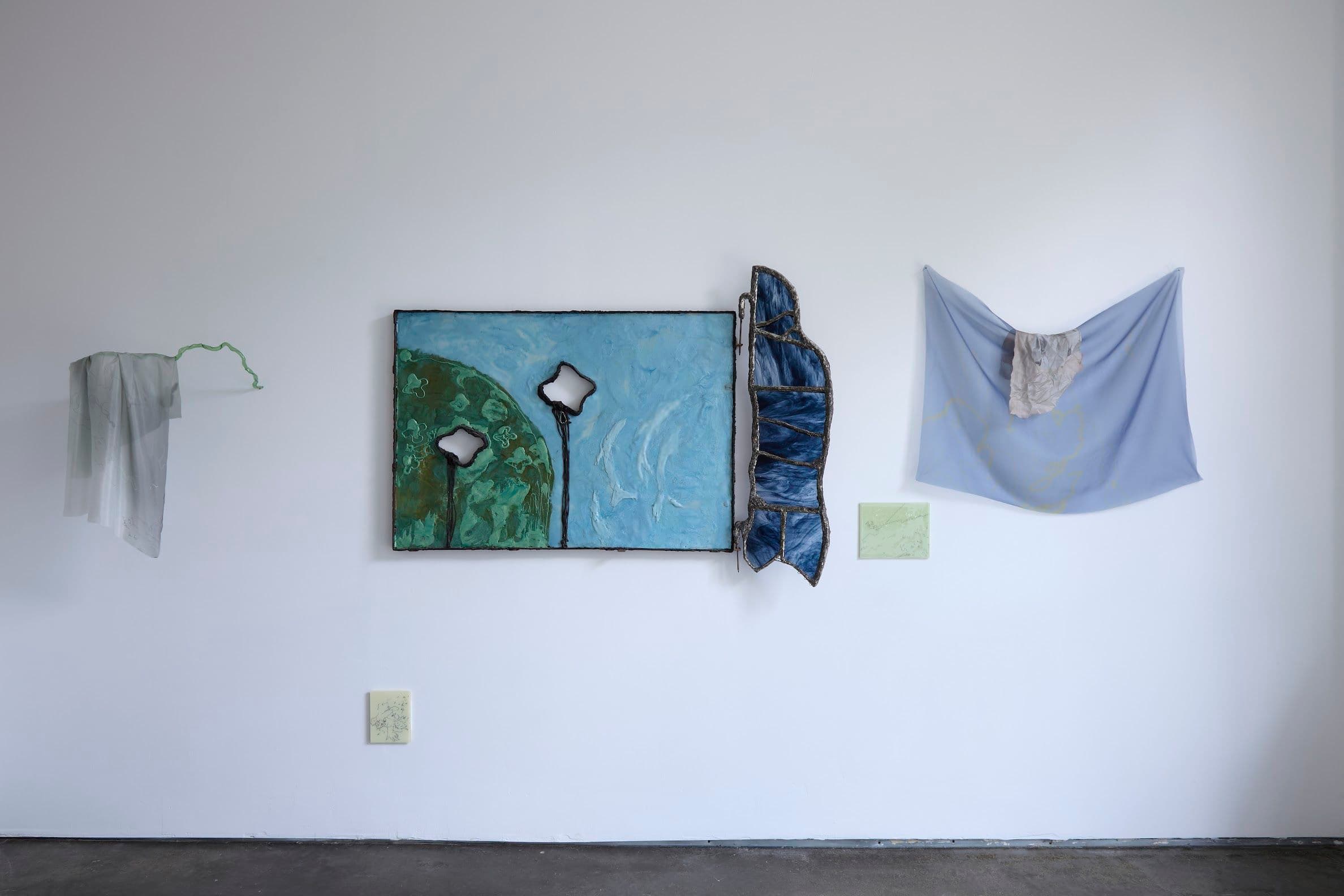
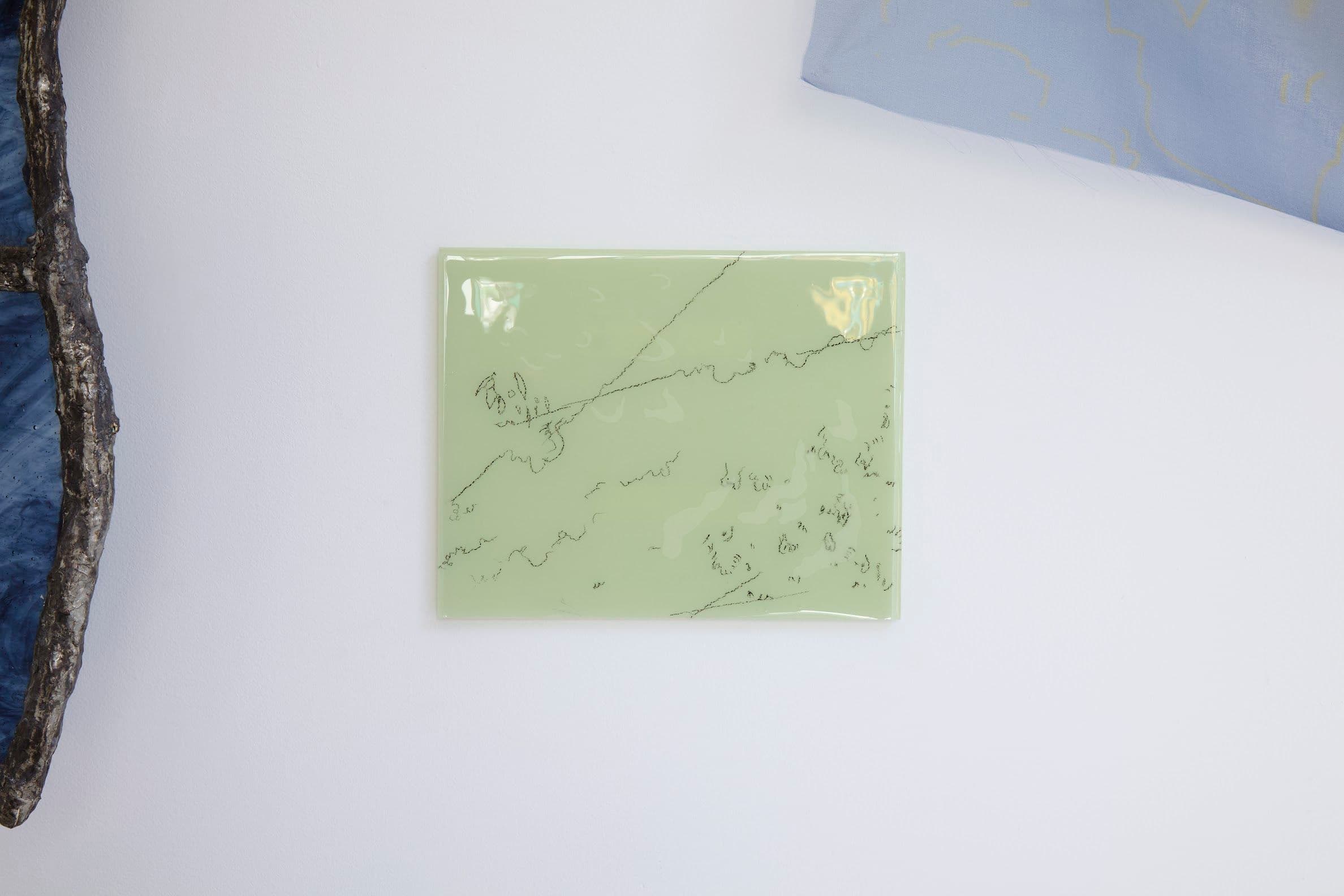
TempestEarth Ængel Rhonda Khalifeh Joell Vee Angelica Yudasto Latif is an Arabic word that means fine, delicate, tender or kind. In a reading by poet Haleh Liza Gafori, who has translated from Farsi poems by Jalāl al-Dīn Muḥammad Rūmī, or more familiarly, Rumi, one line reverberated: My armor thinned to a silken scrim Defenseless, but somehow possessing an inner integrity that will endure. She went on to describe 'Latif,' another word for god, as a lightness - delicate, silky, translucent, ephemerality as a strength, and the shedding of armor as a process of becoming. It’s not easy, she said. It’s not easy. War is an industry and one which feeds the empire we live in. To exist within this world and be secure in our humanity, enough to be able to feel our heart break and not turn off our empathy, to keep giving of ourselves to this craven world, we need spaces to rest, enjoy beauty and share our gifts with others. Gafori said, “..the feeling of being latif.. of opening, of relaxing.. if mysticism is supposed to do anything.. it’s supposed to untie the knots.” Ængel's wax paintings and glass sculptures, Khalifeh's textile installations, vee’s generous, fragile soundscapes, Yudasto’s glass and silk dovetail sculptures, carry with them softness, permeability, and readiness to transform. Textiles and glass have special qualities which lend themselves to flexibility and eternal movement. Sound and light heighten our enjoyment and add texture to our experiences of the physical realm. This suite of works inscribe memory and personal experience upon material and create a place which opens our defenses and leaves us soft, liberated, allowing us to experience our full range of humanity; merciful and compassionate, able to see and enjoy the world. I'm reminded of this line from Andrei Tarkovsky's Stalker, from 1979: "Softness is great and strength is worthless." Earth Ængel (they/them) creates from their own fluid experience, navigating a fantastical queer ecology through the dysphoria of hetero-centric late capitalism. Earth does not attempt to shame and scold these man-made values into submission but instead ingests them. They launder their consumption, laying by its deathbed—grieving, consoling the outcome—its funeral—and then resurrect it into the archive of predetermined aesthetics, bringing it into the queer afterlife. By examining the roots of aesthetics and material use in their empirical value, Earth Ængel uses heat-related practices to melt it all down. Ængel is a recent MFA graduate of Goldsmiths University in London, having completed their undergraduate BFA at Parsons School of Design. They have received awards from The Arts Council of England, Cerf+, Goldsmiths University, and the NYC Parks Department to develop their work. Their pieces have been exhibited in New York, London, Mexico City, Chicago, and Cyprus. Earth Ængel lives and works in Brooklyn, NY, with their partner Rob Rose, where together they form the art duo Ængel-Rose. Rhonda Khalifeh is a Syrian-American artist working with textiles to investigate surface and the ways in which it negotiates with, protects, and betrays the human body. She utilizes printmaking, dyeing, sewing, and digital collage to create site-responsive installations, multi-layered assemblages, and artist books. Drawing from her personal experience with assimilation in the U.S. and from stories of the Syrian Diaspora, Khalifeh uses materials with intentionality to invoke feelings such as comfort, belonging, and loss. As she layers and reworks different materials, she reflects on safety, security, and the right to movement while questioning what or who gets left behind and what endures. Khalifeh is an interdisciplinary artist based in the Hudson Valley. She received her MFA from the fiber department at Cranbrook Academy of Art in 2017 and has been an artist in residence at SVA Bio Art Lab, Textile Arts Center, and Center for Book Arts. Khalifeh’s work has been exhibited across the country and can be found in several public collections including the Met Museum, New York Public Library, and Fine Arts Library at Harvard University. She published Project Z (2018) and Project Z Book II (2022) with Open Projects Press. Joell Vee - “My broader practice moves across media—visual art, sound, performance, and text—because I often don’t feel at home in just one form. I’m interested in what happens in the spaces between: between languages, between disciplines, between ideas of self. My work often explores embodiment, perception, and the liminal—what is sensed but not always named." vee is a visual and sound artist, actor, and translator from Brooklyn, NY. Her work moves between sound collage, performance, and works on paper, exploring themes of embodiment, gender trouble and liminality. She approaches voice as a site of instability and transformation—layered, relational, and always in flux. Angelica Yudasto is a multi-disciplinary artist who explores bodily impressions and the vulnerability inherent in fragility and dissolution. Her site-sensitive installations are temporary recreations of her internal psyche, using fragmented forms and residual traces to transform the environment. Her works are often momentary and transient. Recently, Yudasto has been experimenting with flame-worked glass and digitally printed fibers to expand her internal meditations in response to physical space. The resulting autobiographical pieces map and trace her memories, reflecting her attraction to soft objects, drawing, translucency, and mirroring. Born in Lima, Peru, and raised in Jakarta, Indonesia, Yudasto's experiences inform her artistic practice. She has held solo exhibitions at Tutu Gallery and Ki Smith Gallery in 2022, and participated in group exhibitions, including shows at the Blackfish Gallery in Portland, OR, the Art on the Vine Art Auction at the Portland Art Museum, and "If I know 3 languages then I can laugh 3 times as much," curated by Claire Foussard as part of Spring Break LA in 2024. Her residencies include Boyd’s Station Residency, Haystack Mountain School of Craft, the Marie Walsh Sharpe Foundation, the Wassaic Project, and Studio Kura, where she held a solo exhibition in Itoshima, Japan, in 2023.