

Institutions, Venice
William Kentridge
Self-Portrait as a Coffee Pot
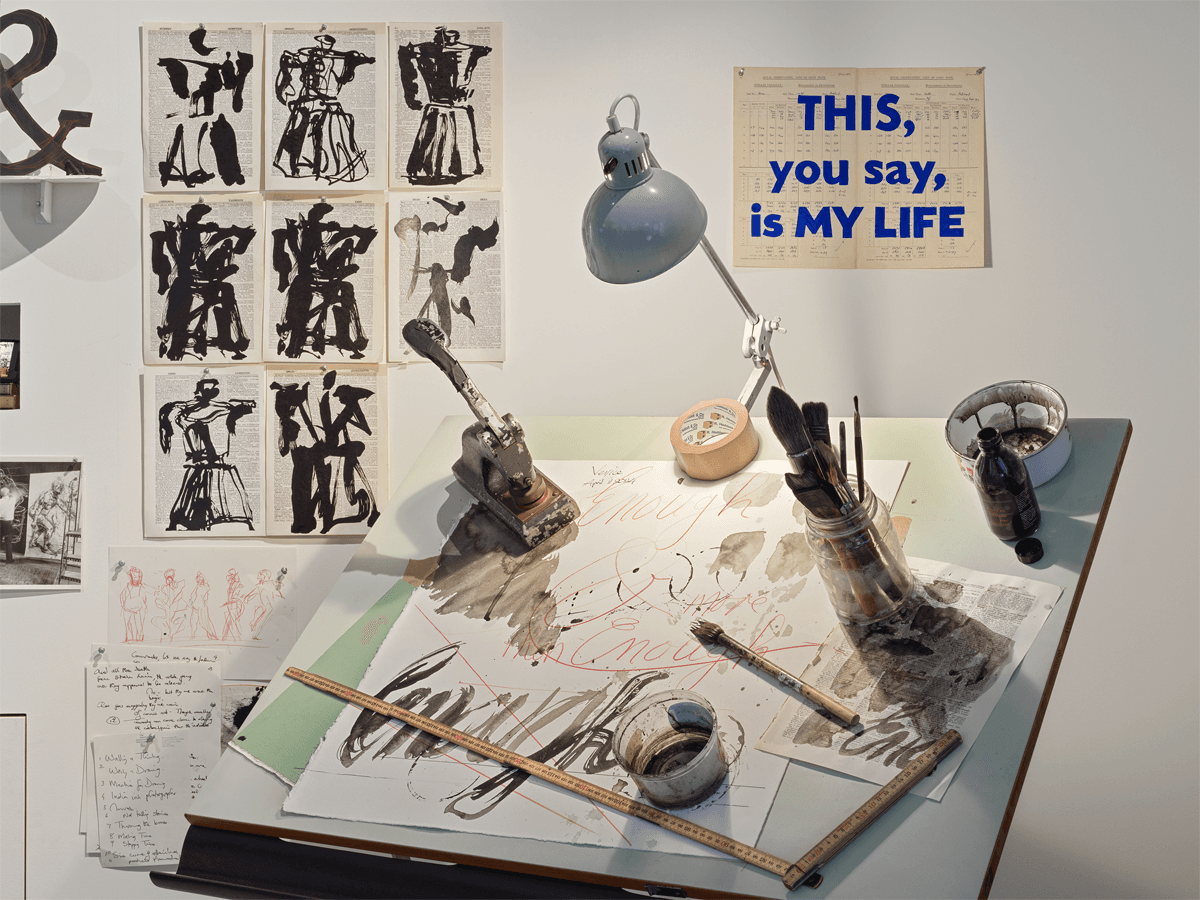
Arsenale Institute for Politics of RepresentationFor his 2024 new exhibition at Arsenale Institute for Politics of Representation in Venice, South African artist William Kentridge, renowned for his animated drawings for projection, as well as his sculpture, theatre and opera productions over the last forty years, collaborates with curator Carolyn Christov-Bakargiev, friend and author of the foundational monograph on his work published in 1998, to premiere his intriguing new nine-episode video series, Self-Portrait as a Coffee Pot. This exhibition of thirty-minute episodes by Kentridge that were originally intended as a series for online viewing, is an experiment in embodiment and phenomenological experience in the digital age, and a reflection on what might happen in the brain and in the studio of an artist, today. Innovative arthouse distributor Mubi has acquired global streaming rights for the nine-episode series, created and directed by William Kentridge, executive produced by Rachel Chanoff and Noah Bashevkin of The Office Performing Arts + Film, Joslyn Barnes of Louverture Films and the William Kentridge Studio, and edited by Walter Murch, Janus Fouché and Žana Marović. Shot in his Johannesburg studio during and in the aftermath of the 2020–2022 Covid-19 pandemic, and completed in 2023, these works will be viewed in a unique concentrated environment that partially recreates the studio where they were made. ‘Filming began in the first lockdown and the studio mimicked the closed spaces of Covid’, states Kentridge, ‘but the studio is also an enlarged head, a chamber for thoughts and reflections where all the drawings, photos and detritus on the walls become these thoughts’. As a physical exhibition space, the same size as his studio, this installation becomes a place between a private and a public space, the studio of a solitary artist deeply immersed in self-reflection and the joyous space of childhood play and of collaboration with others. These works, intended ultimately for online, mobile or television viewing, are a hymn to artistic freedom, ominously revealing the lack of freedom typical of our enclosed spaces in the digital era. They also foreground how the activity of mark-making with materials constructs the self in the process of making. Furthermore, the relationship between painting and musical scores, as well as between dance and drawing, become a form of mental gymnastics or yoga for the brain, exercises to expand and improve human intelligence in our era where the prosthetics of AI and the increasing use of social media ultimately and dangerously atrophy our cognitive and emotional abilities. ‘Kentridge’s art is rooted in South Africa, where he continues to live and create most of his work’, says Christov-Bakargiev. ‘It stems from an attempt to address the nature of human emotions and memory, as well as the relationship between knowledge, desire, ethics, practice and responsibility. He investigates how our identities are shaped through our shifting ideas of history and place, looking at how we construct our histories as forms of collage and what we do with them, both singularly and collaboratively. His is an elegiac yet humorous art that explores the possibilities of poetry in contemporary society, even in the absence of utopian visions for the future, and provides an acerbic commentary on our society, while proposing a way of seeing life as a continuous process of change and uncertainty rather than as a controlled world of facts. In this new series, Kentridge’s alter egos and doppelgängers debate over a series of issues: how does memory work? What makes the self? Why does history always go wrong? One might interpret the works as a reversal of the obsessive narcissistic split personalities of our era of avatars on social media into forms of quiet psychoanalysis.’ Arsenale Institute for Politics of Representation in Venice, directed by philosopher Wolfgang Scheppe, is a space devoted to research and exhibitions that critique spectacle and investigate the politics of representation in the spirit of Situationism, of which Scheppe is an expert and the Institute the holder of one of the most comprehensive collections. Although interested in the trajectories of Situationism, Kentridge’s visual vocabulary, his costumes and designs, have often been inspired by an earlier period, in particular by Dada, Bauhaus and Constructivist precursors, including Oskar Schlemmer’s Ballet Triadique (1916–1922), and some of these costumes appear in Episode 8 of this series – Oh to Believe in Another World, which references the falling out of favour of utopian intellectuals generally through the story of Dmitri Shoshtakovic, and is also the title of a live orchestra performance and an installation by Kentridge of 2022–2023.
Visit
Castello 1430/A, Riva dei Sette Martiri