
Chelsea, New York
Gil Batle
Double Life
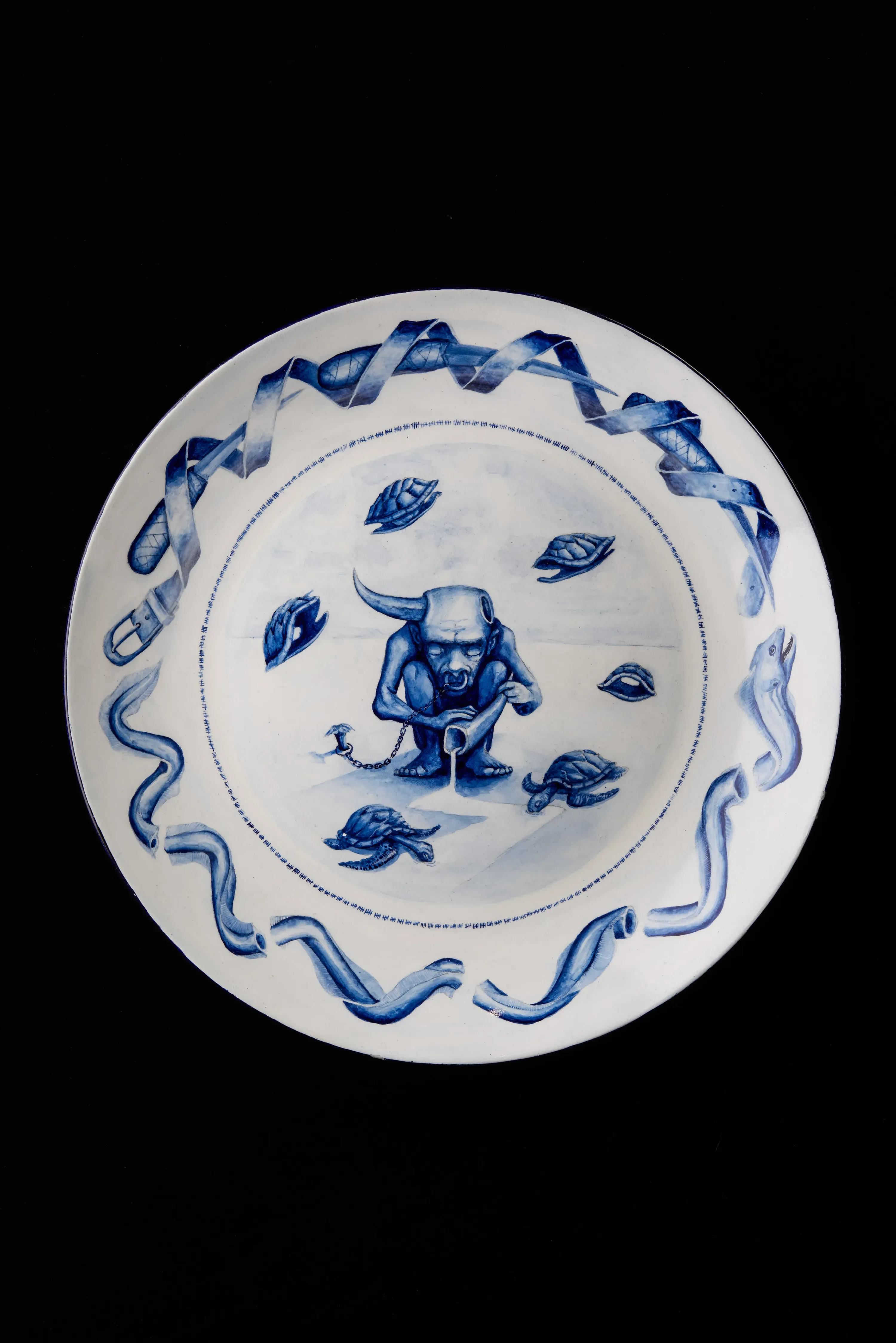
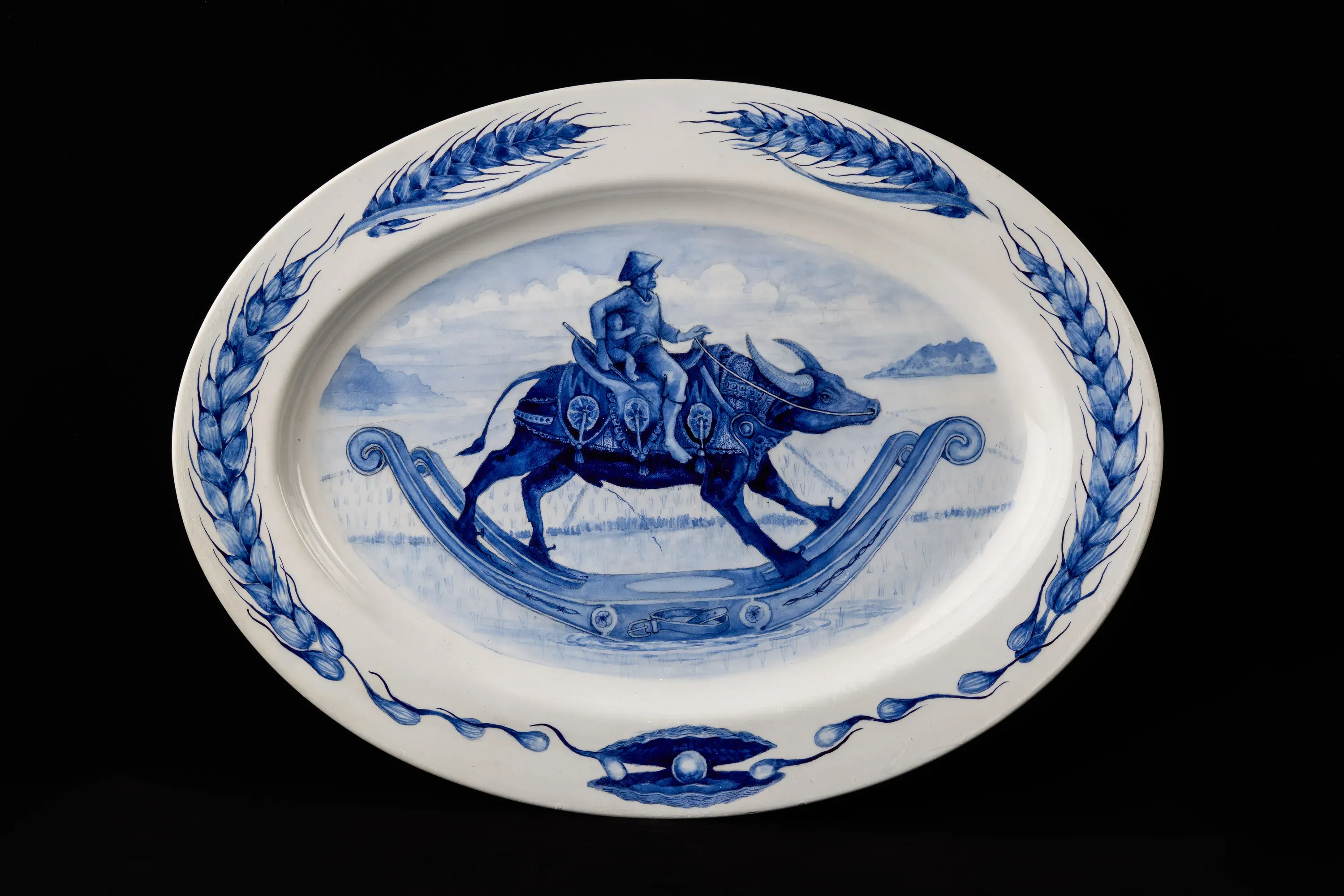
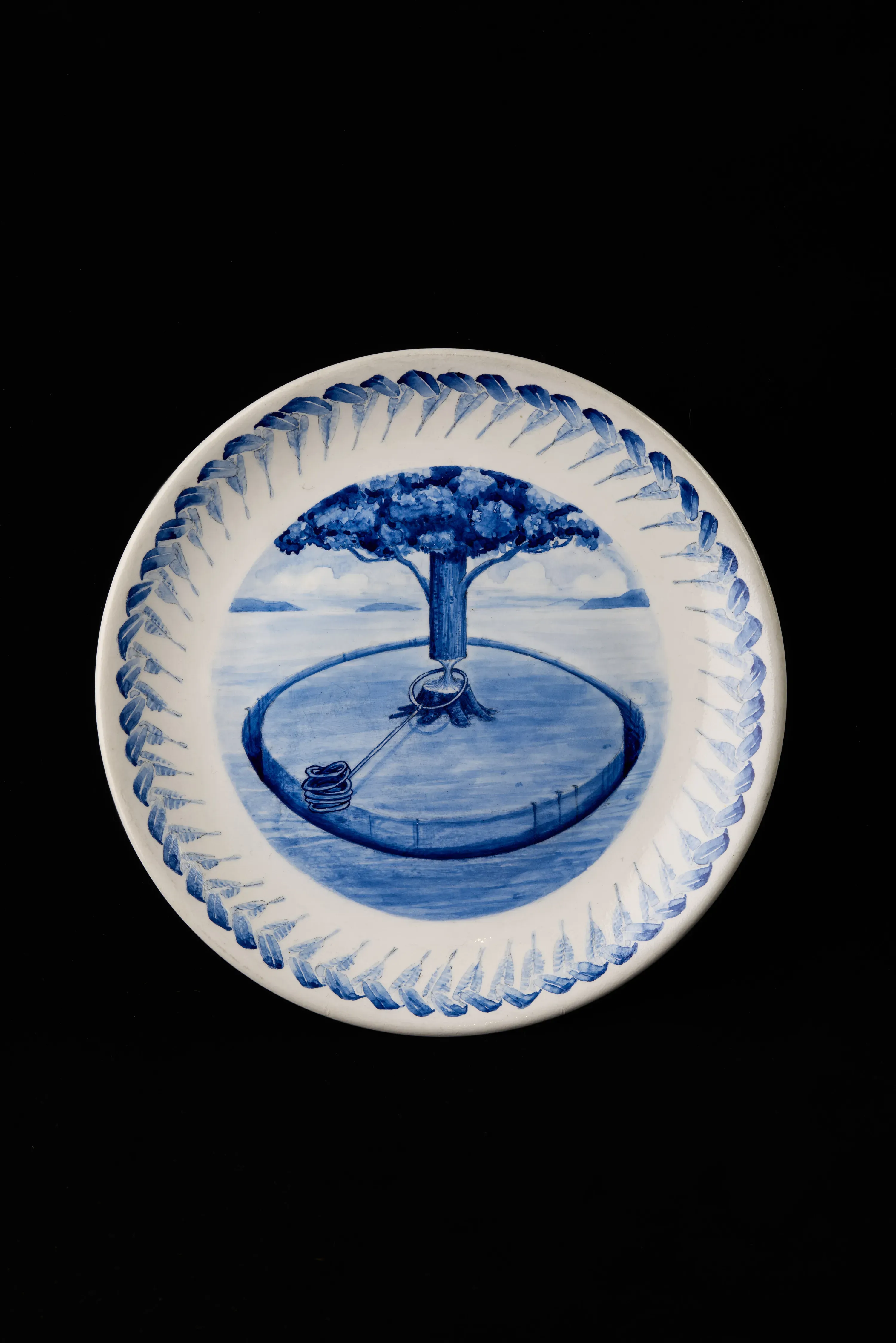
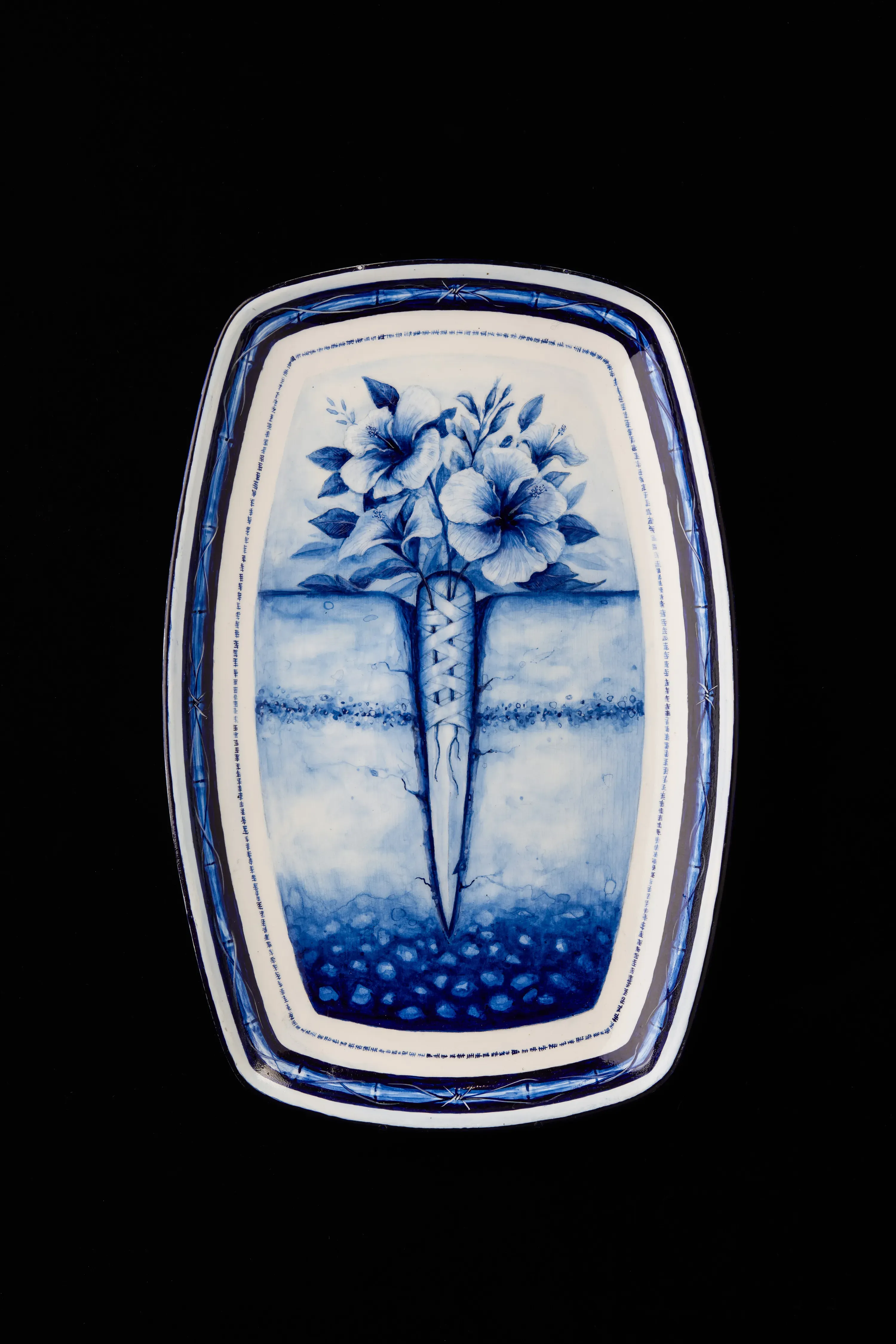
Ricco/MarescaRicco/Maresca Gallery is pleased to present an exhibition of painted plates by Gil Batle. The show marks the gallery’s first presentation devoted exclusively to this body of work, following Batle’s debut Hatched in Prison (2015), the solo exhibition Re-Formed (2018), and a one-person booth at the Independent Art Fair (2019). Taken together, those earlier presentations established Batle as a singular chronicler of incarceration and survival, carving dense narratives into ostrich eggshells and other fragile supports. The plates carry that vision into a different register: flat, frontal, domestic, and deceptively familiar. Born in 1962 in San Francisco to Filipino parents, Batle spent twenty years in and out of five California prisons for fraud and forgery. While incarcerated, his self-taught gift for drawing developed into a clandestine tattoo practice that functioned as both protection and currency. After his release, he relocated to a small island in the Philippines, where his carved eggshells transformed memories of prison life into continuous, spiraling images—stories without a fixed edge or endpoint. The plates belong to a later chapter: works made by someone who has built a life elsewhere, yet continues to carry, revise, and reimagine what came before. The blue-and-white plates began with a chance encounter, where Batle noticed a Japanese Blue Willow–style porcelain dish. Its placid scene—a monk fishing by a river, encircled by fish-scale ornament—shifted suddenly when one of the fish suggested the outline of a prison shank. Batle became captivated by that slippage between serenity and threat. Lacking the means to produce ceramics from scratch, he began painting in blue acrylic on found white plates. Their shallow wells and broad rims proved to be ideal stages for the compressed, symbolic narratives he wanted to tell. Each plate contains a small world. Island animals, dense foliage, and coastal settings mingle with figures, weapons, and emblems drawn from Batle’s past. A cuttlefish coils around a blade; birds hover near cages; foliage becomes camouflage for danger. Titles throughout the series point to the tensions animating these works: freedom and confinement, beauty and menace, daily ritual and institutional memory. A plate may first register as a souvenir or commemorative object, but a deeper look reveals many layers of meaning. Unlike the artist’s carved ostrich eggshells, which invite the eye to travel along a continuous curve, his plates confront us head-on. They draw on the clear, centralized compositions of export porcelain, devotional imagery, tattoo flash, and comics, condensing narrative into a single emblematic scene. The reserve-and-border structure of historical blue-and-white ware becomes, in Batle’s hands, a device for containing episodes of violence, longing, or uneasy stillness. At times the decorative rim reads as a protective frame; at others it seems to press inward, as though the image were under pressure. Batle uses this inherited formal language to hold together elements that might otherwise resist containment. Across the series, Batle continues to negotiate what it means to live with a double history: the years spent in prison and the years after, the United States and the Philippines, danger and relative calm. The plates do not resolve those oppositions so much as allow them to coexist on the same fragile surface. In blue pigment on ceramic, Batle gives form to a condition in which safety, like storytelling, remains provisional—something fashioned and refashioned, image by image, plate by plate.