
Chelsea, New York
Brad Hoseley
Room 208
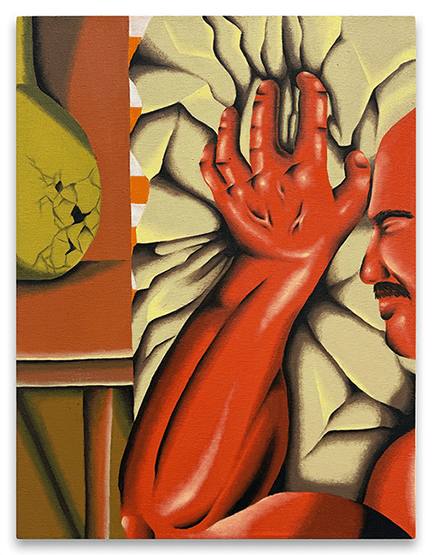
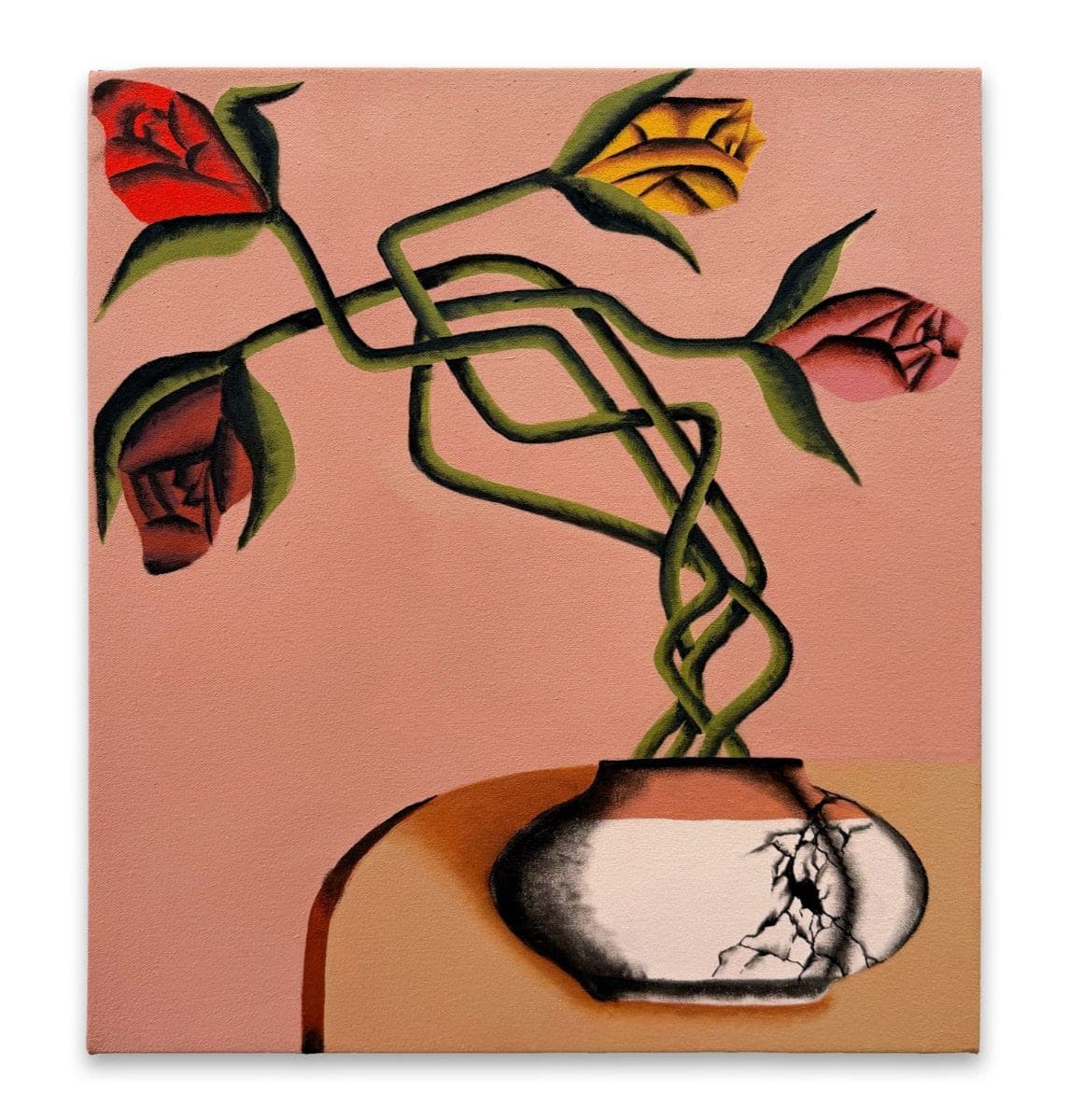
New DiscretionsNew Discretions is proud to present Room 208, a solo exhibition of new paintings by artist Brad Hoseley. Samuel Steward was a literature professor, but many knew him as Phil Sparrow when he ran around with Gertrude Stein and Alice B. Toklas back in the 1950s. He reinvented himself as a tattoo artist and writer of erotica. The flowers he tattooed bore something of a signature, what he referred to as its "phallic center." This flower is a character in the psychodrama of Brad Hoseley's new paintings, as is the cigarette, the orange, the cracked vase, and the man… or men. Hoseley’s main character is consistent, yet remains a stranger. He is understood yet anonymous, an archetype saying so much while doing so little. He projects a tension between wanting more and not. He is an avatar, balancing desire. Is he inviting you in or asking you to leave? Don’t you want both to be true? Portrayals of flowers are everywhere in the artworld right now, probably always have been. They are a personal anathema and unavoidable lure. Flowers are on Baldessari’s mocking list of art that sells well. A flower is pretty okay on its own. It probably doesn’t need to be painted. And yet, there is a perverse pleasure in Hoseley’s blossoms. The stems are full of kink and the buds, well, see Sparrow’s thoughts on the phallic center. One vase is cracked, one vase bears the flash art of famed tattooist. Room 208 provides the setting for these compositions. A hotel room, both familiar and infinitely strange, drenched in historical overtures and perverse pleasure. These works are lascivious film stills. Noir with the lights left on. Kink with more shiver. Brad Hoseley (b. 1996 Idaho) is an artist living and working in Brooklyn, New York. He received a degree in printmaking from Pacific Northwest College of Art in 2018. Hoseley is currently making paintings that reflect on daily life experience, sexual fantasy, and the breaking of heteronormative ideology. Hoseley was raised in a suburb of Idaho with very limited access to any form of queer history. In response to this initial lack, Hoseley engaged explicitly with the history of queer art and pornography through personal research and artistic practice. The results of Hoseley’s search for a queer past show in his expansive body of work—through lush scenes of tenderness, tension and chaos; both deeply erotic and curiously somber. Through the use of color, abstraction, and icons, the work becomes vignettes of surrealist spaces that sit in between fantasy and reality, playing with that tension of desire that is so uniquely queer.