
Midcity, Los Angeles
Group Exhibition
An Index of Being Alive
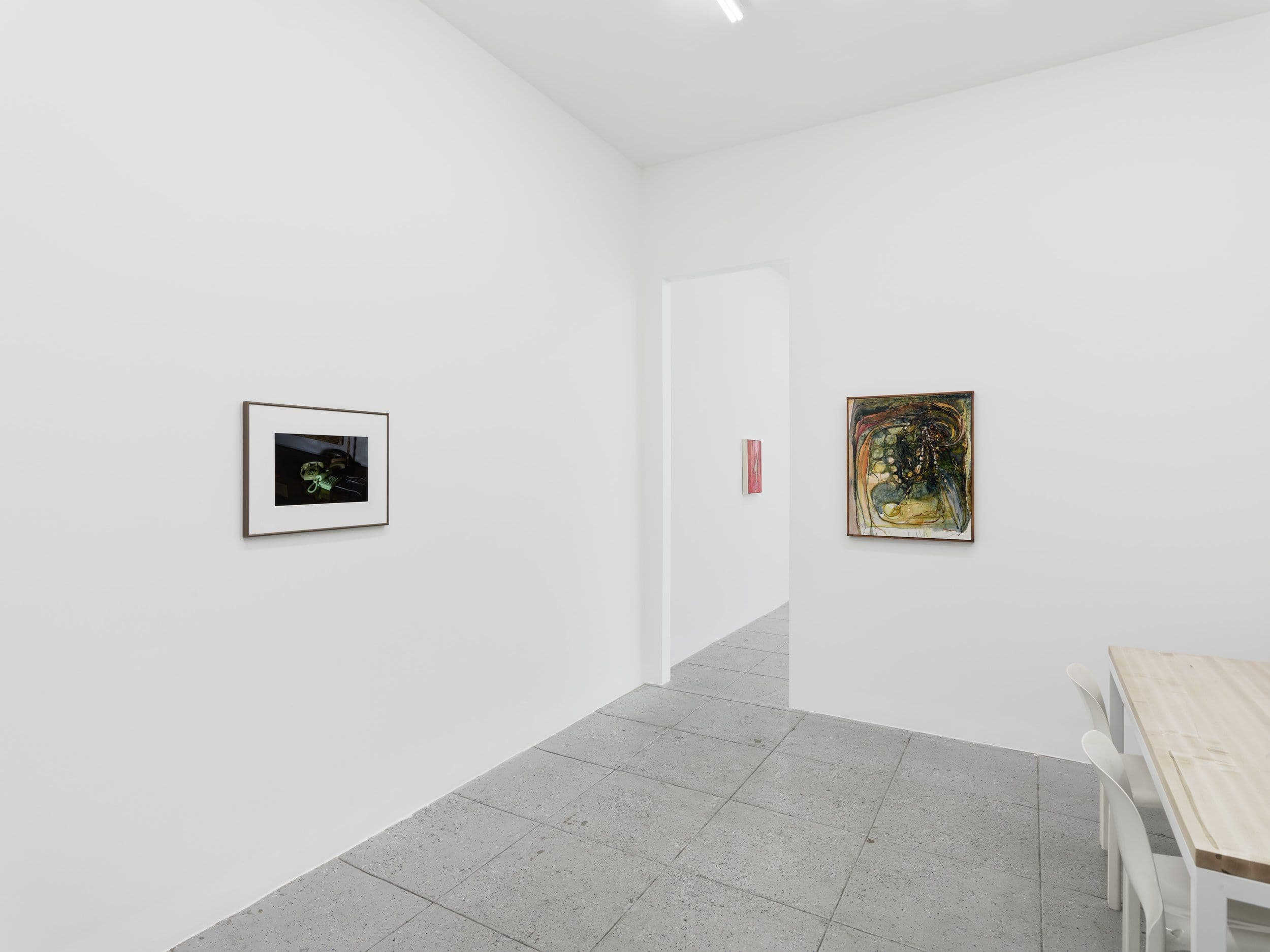
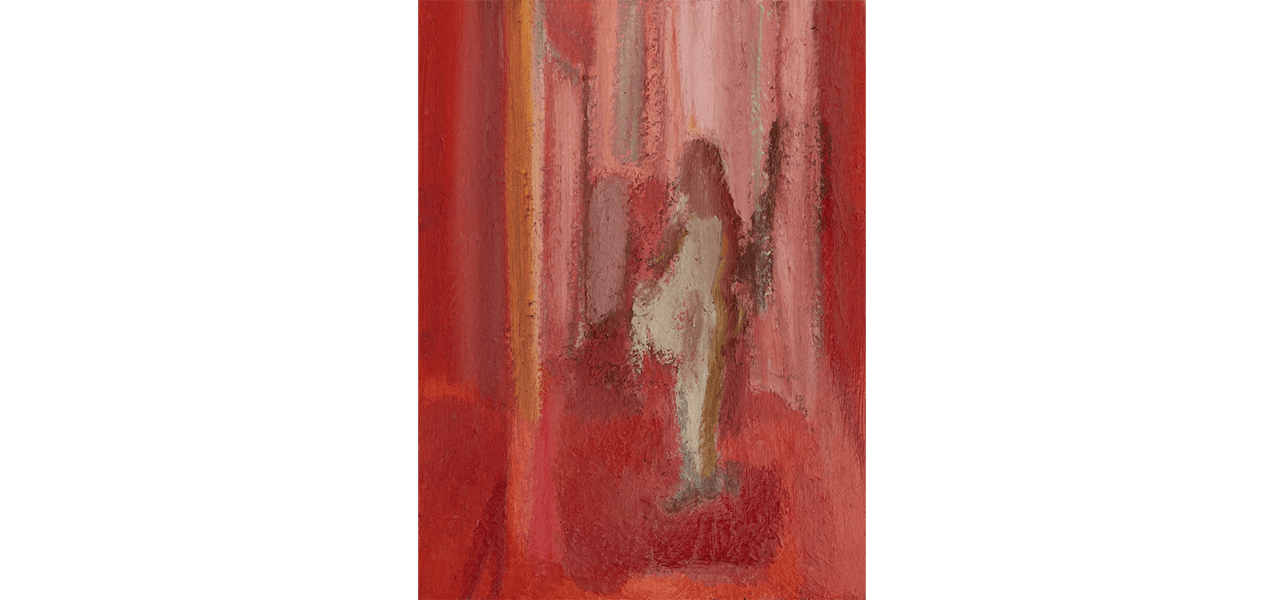
Paul SotoLoay Al Derazi, Jai Chuhan, Andrew J. Greene, Megan Plunkett, Reina Sugihara, Julia Yerger Park View / Paul Soto are pleased to present An Index of Being Alive, a group exhibition comprised of new works made by an international and intergenerational set of artists. An index of being alive highlights works that appear to possess ordinary, indexical qualities of being alive, as any human being would who––from moment to moment––possesses a body, moves through space, produces, consumes, speaks, and inhabits. In the case of these particular works, these qualities are transformed beyond rote expectation, displaying a vitality that transcends any static, ascribed meanings or data points. Their cups runneth over, so to speak, with material and visual elements that compress and abstract within their medium, releasing floods of feeling and emotion. The exhibition as a whole thus accounts for vulnerability, a felt sense of accumulated time, and other immeasurable human qualities. The exhibition opens with four sculptures from Andrew J. Greene’s (b. 1988, USA) Timeless Symbols series. These works are comprised of stainless steel stanchions with a rotating object atop each on display – a compact mirror, an hourglass, a bow, and a mask. They form a line towards the front of the gallery, denoting a passage into the space, marking that one is inside versus outside. Greene’s works traffic in vernacular commodity culture, grafting ordinary and antique Americana forms onto restrained, stylish frameworks to address taste, meaning, and ideology surrounding the lives of objects. The works rotate like they would perhaps in a shop, highlighting seemingly banal things and dramatizing their place within the viewer's world. Reina Sugihara’s (b. 1988, Japan) paintings are layered in a structured manner, in which memories of forms are painted, painted over, erased, restructured, and so on from day-to-day. Sugihara, who has a daily painting practice, will oftentimes paint over the previous day’s work, putting down a new layer onto what already lies there. This cumulative buildup possesses diaristic qualities. The previous day’s “entry," although a different shape, is inevitably tied to what lies beneath, what came before it. A linguistic pall hovers over her works, in which what is on top is inevitably seen in light of what lies below, intermingling a sense of the emergent with that of loss as production, and life, progresses. Jai Chuhan’s (b. India) paintings consider the female gaze and subjectivity in depictions of the body within room-like spaces, where figures are oftentimes placed on proscenium-like stages. She structures her compositions like arenas where she may explore the psychological tensions and symbioses between genders, and interior and exterior with expressive, brilliant, and colorful compositions. Chuhan portrays her figures with a heightened psychological sense of interiority, ones that hold a constellation of transcultural references in postures that are bent and stretched with dynamic gestures of paint. The body is presented as a contested space, politicized territory for subservience and dominance, resistance and independence, control or being out-of-control, relative to the viewer and the viewed––fractured, tense or calm, focused or blurrily glimpsed. Julia Yerger’s (b. 1993, USA) paintings are developed from an iPad practice based in Photoshop’s layering tool. Her compositions, which depict dreamy and childlike spaces and landscapes, are laid down layer by layer. In the process the artist plays with transparency and gesture in an improvisatory way, responding to the physical qualities of oil paint, its color and texture and brilliance. Certain areas fade into the background, and others come into focus, generating a personal and inventive narrative effect in which the eye glides around the canvas, bringing the work to life. Her titling also injects humorous scraps of information, shaping a vital sensibility that entwines spoken and painted languages. Megan Plunkett’s (b. 1985, USA) photographs loop in extracts mined from visual economies out in the world to address the ways in which photographs function materially within reality. Seriality, here containing slight differences across works, figures into her methodology. This gesture evinces an estranged familiarity in the viewer, drawing attention to how the photographs’ inner references operate outside. The exhibition contains photographs from Plunkett’s Invaders and Intruders series, which are photographs of telephones taken in motel rooms. Resting and seemingly tangled up on tables, these telephones appear to be multiplying out from one another, haunting presences within spectral, noir interiors. Not dissimilar in style and composition, the works’ similitude injects a sense of distance from what appears to be familiar (this genre or type of image), unsettling what might appear to be its surface mood or set of references. Loay Al Derazi’s (b. 1991, Bahrain) film work, There lies in the filthy pool of thick blood, a sinister shimmering powder that will wreck the dirty infinite…, was shot on a 16mm camera. Al Derazi works by constructing paintings and sculptures which are shaped and arranged into spaces that evoke fantastic domestic interiors. Lit with candlelight, his arrangement becomes a set for performance, one which tests the limits of the queer body physically and within a field of references. The character in the film moves through the space in a series of ritual-like gestures, evoking both mythology and horror. The film’s slowed down speed abstracts the scene, stretching out the light into lines of white that bar and bury the figure within this cavernous space. These beams of light illuminate the possessed figure at moments and obscures them at others, melting them into a liquid bath of fantasy and ecstasy.