
Matignon, Paris
Group Exhibition
L'Âge Atomique
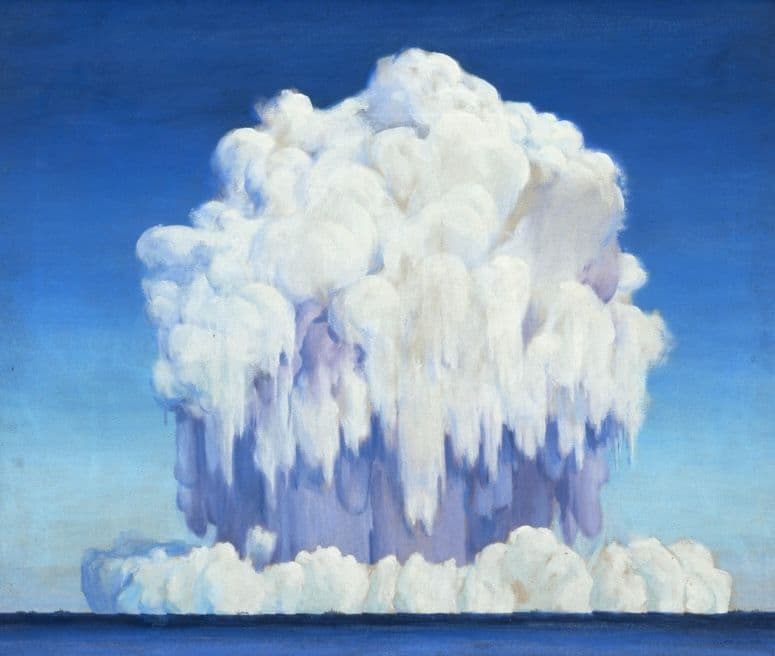
Musée d'Art Moderne de ParisTickets available at tinyurl.com/yjtn2kbj Kenneth Adam, Horst Ademeit, Ant Farm, Francis Bacon, Enrico Baj, Robert Barry, Hélène de Beauvoir, Charles Bittinger, Erik Boulatov, Chris Burden, Alberto Burri, Miriam Cahn, Valdis Celms, Julian Charrière, Bruce Conner, Gregory Corso, Salvador Dali, Gianni Dova, Marcel Duchamp, Friedrich Dürrenmatt, Jaan Elken, Bonita Ely, Lucio Fontana, Loïe Fuller, General Idea, Guy Debord, Vidya Gastaldon, Dominique Gonzalez-Foerster, Hans Grundig, Brion Gysin, Richard Hamilton, Isao Hashimoto, Raoul Hausmann, Inārs Helmūts, Justino Herrera, Hessie, "Hibakusha" (the survivors of the atomic bomb), Hi-Red Center, Gary Hill, Jessie Homer French, Pierre Huyghe, Tatsuo Ikeda, Isidore Isou, Motoharu Jōnouchi, Asger Jorn, Jugnet + Clairet, Vassily Kandinsky, Kikuji Kawada, On Kawara, György Kemény, Yves Klein, Hilma af Klint, Susanne Kriemann, Barbara Kruger, Tetsumi Kudo, Yayoi Kusama, Wifredo Lam, Mikhaïl Larionov, Jean-Jacques Lebel, Le Corbusier, Francesco Lo Savio, Piero Manzoni, Yoshito Matsushige, Roberto Matta, Herbert Matter, Gustav Metzger, Boris Mikhaïlov, László Moholy-Nagy, Henry Moore, Minoru Nakahara, Natsuyuki Nakanishi, Jürgen Nefzger, Barnett Newman, Natacha Nisic, Isamu Noguchi, Yoko Ono, Kiyoji Otsuji, Wolfgang Paalen, Eduardo Paolozzi, Claude Parent, Gaetano Pesce, Raymond Pettibon, Otto Piene, Giuseppe Pinot Gallizio, Sigmar Polke, André et Jean Polak, Jackson Pollock, Richard Pousette-Dart, Grant Powers, Margaret Raspé, Nathalie Rebholz, Stefan Rinck, Thomas Schütte, Jim Shaw, Vladimir Shevchenko, Kazuo Shiraga, Mimi Smith, Amy Sillman, Sisters Of Survival, Nancy Spero, Viatcheslav Syssoev, Atsuko Tanaka, Koichi Tateishi, Diana Thater, Shōmei Tōmatsu, Hiromi Tsuchida, Luc Tuymans, Peter Watkins, Ray Wisniewski, Wols, Yōsuke Yamahata, Vladimir Yankilevsky, Alexander Zhitomirsky [Scroll down for French version / Veuillez trouver ci-dessous la version française] The Musée d'Art Moderne de Paris is pleased to present an exploration of the art inspired by the discovery of the atom and its applications, particularly the nuclear bomb, which has profoundly altered the course of human destiny. Bringing together nearly 250 works (paintings, drawings, photographs, videos, and installations), as well as often-unseen documentation, the exhibition showcases, for the first time in a French institution, the diverse positions adopted by artists in response to scientific advancements and their ensuing controversies. Addressing a topic that remains sharply relevant, the exhibition underscores the museum's commitment to engaging with contemporary cultural and societal concerns. 1- The Disintegration of Matter At the dawn of the 20th century, scientific discoveries regarding the atom's composition and its emitted radioactivity radically transformed the relationship with matter foundational to artistic representations of reality. Matter came to be understood as energy, enabling the imagination of a form of art liberated from the weight and opacity of natural appearances. Two paths emerged: the mystic abstraction sought by Vassily Kandinsky and Hilma af Klint, and the conceptual art of Marcel Duchamp, inspired by infra-sensory phenomena. 2- The Bomb The invention of the atomic bomb and its destructive use against Japan by the United States in August 1945 marked a turning point in modern atomic history, inaugurating a new "Atomic Age." Western artists offered multiple interpretations: some maintained an aesthetic neutrality and fascination with the unknown worlds revealed by physics, others critiqued the "spectacularization" of explosions, while others attempted to represent this tragic intrusion into the human condition. Iconic artists of the latter half of the 20th century delved into the idea and history of the destructive atom and a new cosmogony: Francis Bacon, Salvador Dalí, Lucio Fontana, Gary Hill, Pierre Huyghe, Asger Jorn, Yves Klein, László Moholy-Nagy, Barnett Newman, Sigmar Polke, Jackson Pollock, Thomas Schütte, etc. Following the war, the explosion depicted by a vast mushroom cloud became an omnipresent image, emblematic of the globalization of conflict and communications. Propagated by popular culture, these representations contributed to American imperialism, technoscience, and the rise of globalized capitalism in the 50s-60s. Meanwhile, the Communist bloc pursued its own nuclear dominance propaganda campaigns. In Japan, initial representations oscillating between realism and surrealism were succeeded by collectives leading "Anti-Art" demonstrations, challenging American colonialism and Japan's new militarism. 3- The Nuclearization of the World From the 1970s onward, new forms of political engagement emerged, often linked to an increased ecological awareness of the threat nuclear energy posed to humanity. Humanity lost the central role it previously held in a tragedy in which it was both executioner and victim. Since the Chernobyl disaster (1986), all of life has become central to artistic concerns. The pacifist, anti-nuclear, or countercultural movements developed a political critique of nuclear production. In parallel with other political movements of the time, such as feminism and anti-colonialism, these voices offered a renewed interpretation of modern and contemporary art history. The Atomic Age is irrevocable, as radioactivity continues into an indefinite future. It is a history deeply rooted in our present that has yet to conclude. The exhibition offers a multifaceted journey through modern and contemporary history, where art, science, and politics have become inseparable. Curated by Julia Garimorth, chief curator at the Musée d'Art Moderne de Paris, and Maria Stavrinaki, professor in contemporary art history, University of Lausanne Scientific Advisor: Kyveli Mavrokordopoulou, researcher in art history and environmental humanities, Vrije Universiteit Amsterdam Assisted by: Sylvie Moreau-Soteras, research and documentation officer at the Musée d'Art Moderne de Paris ***** Le Musée d'Art Moderne de Paris propose de revisiter l'histoire de la modernité au XXème siècle à travers l'imaginaire de l'atome. L'exposition invite le public à une exploration des représentations artistiques suscitées par la découverte scientifique de l'atome et de ses applications, en particulier la bombe nucléaire dont les conséquences dévastatrices ont changé le destin de l'humanité. En réunissant près de 250 œuvres (peintures, dessins, photographies, vidéos et installations), ainsi qu'une documentation souvent inédite, l'exposition montre, pour la première fois dans une institution française, les positions très différentes prises par les artistes face aux avancées scientifiques et aux controverses qu'elles suscitent. Traitant d'un sujet plus que jamais d'actualité, elle s'inscrit dans la volonté du musée de faire écho, dans sa programmation, aux préoccupations culturelles et sociétales contemporaines. 1- La désintégration de la matière À l'aube du XXème siècle, les découvertes scientifiques sur la composition de l'atome et la radioactivité qui en émane bouleversent le rapport à la matière sur lequel repose la représentation artistique de la réalité. La matière est désormais comprise comme énergie, ce qui permet d'imaginer un art affranchi de la pesanteur et de l'opacité des apparences de la nature. Deux voies se dessinent : l'abstraction mystique recherchée par Vassily Kandinsky et Hilma af Klint, d'une part, et l'art conceptuel de Marcel Duchamp, inspiré par les phénomènes infra-sensibles, d'autre part. 2- La bombe L'invention de la bombe atomique et son utilisation destructrice contre le Japon par les États-Unis en août 1945 marquent un point de bascule de l'histoire moderne de l'atome, inaugurant un nouvel « Âge atomique ». Les artistes du monde occidental en proposent des lectures multiples : certains s'en tiennent à une neutralité esthète et à une fascination pour les mondes inconnus révélés par la physique, d'autres engagent une critique de la « spectacularisation » des explosions, d'autres encore tentent de représenter cette irruption du tragique au sein de la condition humaine. Les plus grands artistes de la deuxième moitié du XXème siècle investissent l'idée et l'histoire de l'atome destructeur et d'une nouvelle cosmogonie : Francis Bacon, Salvador Dalí, Lucio Fontana, Gary Hill, Pierre Huyghe, Asger Jorn, Yves Klein, László Moholy-Nagy, Barnett Newman, Sigmar Polke, Jackson Pollock, Thomas Schütte, etc. Après la guerre, l'explosion représentée par un très grand champignon devient une image omniprésente, emblématique de la mondialisation du conflit et des communications. Véhiculées par la culture populaire, ces représentations participent de l'impérialisme américain, de la technoscience et de l'essor du capitalisme mondialisé dans les années 50-60. Dans le même temps, le bloc communiste mène ses propres campagnes de propagande pour la domination nucléaire. Du côté du Japon, les premières représentations oscillant entre réalisme et surréalisme sont suivies par des collectifs qui mènent des manifestations « Anti-Art », mettant en cause le colonialisme américain et la nouvelle forme du militarisme japonais. 3- La nucléarisation du monde Progressivement, à partir des années 1970, de nouvelles formes d'engagement politique apparaissent, souvent liées à une conscience écologique accrue de la menace que peut représenter l'énergie nucléaire pour l'humanité. L'homme perd la place centrale qu'il occupait auparavant dans une tragédie dont il était à la fois le bourreau et la victime. Depuis l'accident de Tchernobyl notamment (1986), c'est désormais le vivant dans son ensemble qui se retrouve au cœur des préoccupations artistiques. Les mouvements pacifistes, antinucléaires ou contre-culturels développent une critique politique de la production nucléaire. En écho à d'autres mouvements politiques qui émergent à cette période tels que le féminisme ou l'anticolonialisme, ces voix offrent une lecture renouvelée de l'histoire de l'Art moderne et contemporain. L'Âge atomique a la particularité d'être sans retour, la radioactivité se prolongeant dans un futur indéfini. C'est une histoire plus que jamais ancrée dans notre présent même et qui n'a pas fini de s'écrire. L'exposition propose ainsi une traversée aux multiples facettes à travers l'histoire moderne et contemporaine, où l'art, la science et la politique sont devenus indissociables.