

Galleries, Basel
Jean-Francois Lauda
Like a Second Song
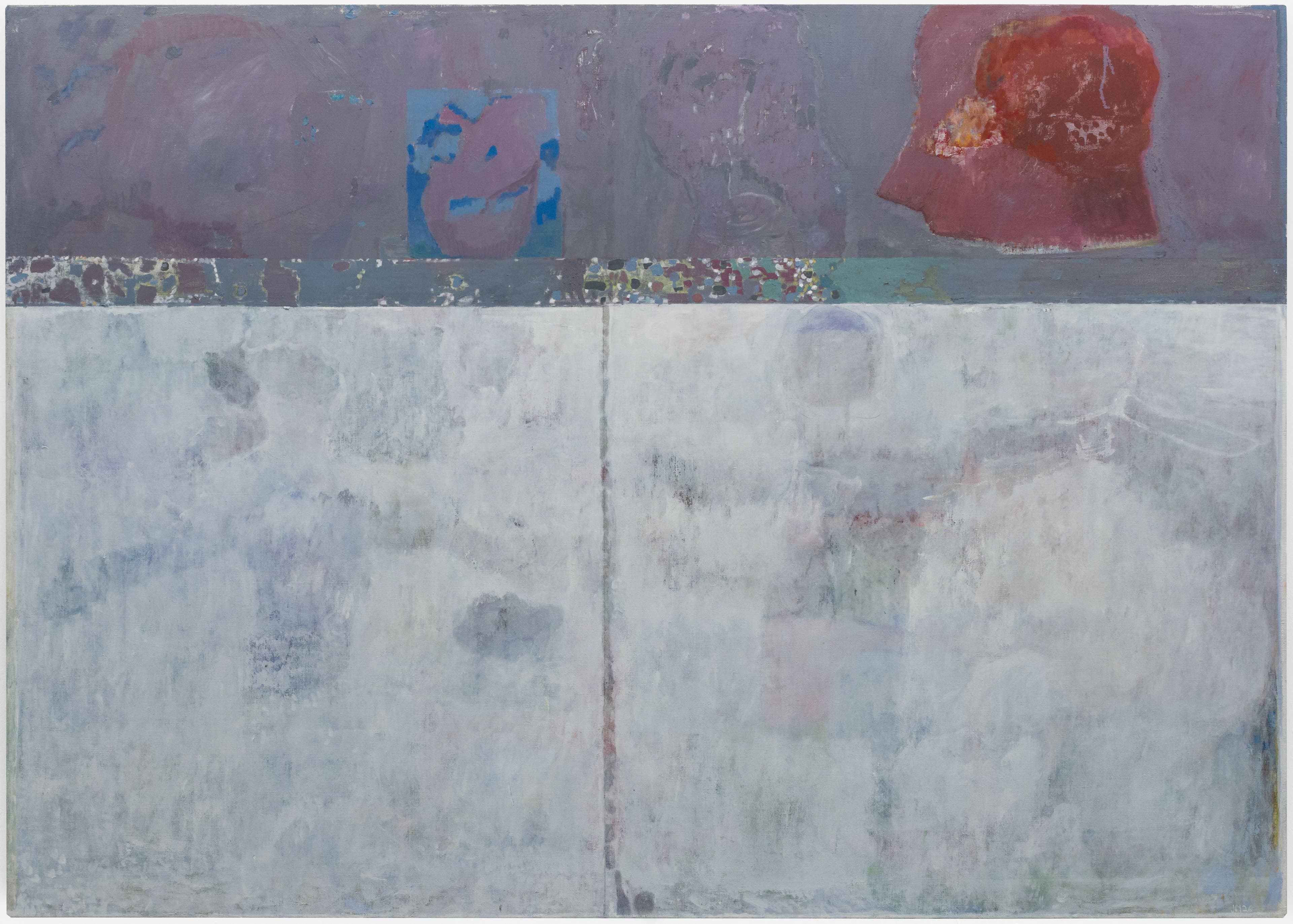
Galerie Falk LosnizaGalerie Falk Losniza is delighted to present Jean-François Lauda's solo exhibition Like a Second Song, in the gallery's main exhibition space. In Lauda's work, painting is not an eruptive act, but a controlled process in which an underlying tension remains ever-present. Here, a painting slowly takes shape through what the artist describes as a "process of decomposition": layers accumulate, erode one another, lose clarity and sink back into matter. What ultimately remains seems less constructed than survived. The exhibition includes six large paintings and eight smaller works. While these do not form strictly separate categories, they do echo one another to varying degrees of intensity. The title of the show, Like a Second Song, offers a way of understanding this structure. It refers to Lauda's deep affinity with the music of Burial, the British electronic musician whose tracks sometimes seem to carry another track pasted onto their ending; a second passage that arrives unexpectedly, like another window opening within the same piece. A similar logic unfolds in Lauda's paintings. The larger works invite a slower reading, while the smaller works appear as more compact, abrupt concentrations of the same visual language. Through grids, collage-like structures and painterly interventions, Lauda resists the formation of a fixed or unambiguous image. At times, a smaller work seems to be situated within a larger painting, interrupting any clear sense of centre or hierarchy. These fragments and smaller images function like secondary presences: they open another register within the composition, altering its rhythm without losing their own independence. Seen up close, the work begin to unravel. In some passages, the paint is so thin that it approaches the transparency of watercolour; elsewhere, it is dense and heavily worked. Certain forms seem buried beneath later layers, yet never disappear entirely. A patch of paint just misses the edge; a grainy stroke stands out due to its imperfection. Nothing is completely concealed. Each intervention, however delicate, remains retraceable. These contrasting elements prevent the eye from being drawn inwards; instead, it is constantly brought back to the surface. Here, depth arises not through perspective, but through accumulation and erosion. Through what lies buried and what resurfaces. It is a shallow depth, but one that is constantly shifting. The new works are notable for the presence of subtle figurative forms that appear, recede and reassert themselves. The distinction between abstraction and representation is no longer the actual problem here. It is self-evident, perhaps even inevitable, that the work moves between the two. Completely abstract work has rarely existed in art history: Mondrian's compositions arose from observations of trees, Raoul De Keyser's chalk lines refer to football fields, and the early works of Ellsworth Kelly still evoke the sunlight on the Seine. With Lauda, however, the process seems to run in the opposite direction. It is not reality that is reduced to abstraction; rather, the conditions in which figuration can emerge or be permitted gradually arise from the abstract painting process. While earlier works bore traces of a physical presence, the more concrete forms in these new paintings mark a clear shift. The significance of these works therefore lies not in the recollection of reality, but in the search for the final painting, of which the preceding steps are the recollection. —Pieter-Jan De Paepe