
ManagementPast
Außerkörperliche Erfahrung: Wandering Spirit
Jura Shust
Jan 17 – Mar 2 · Chinatown
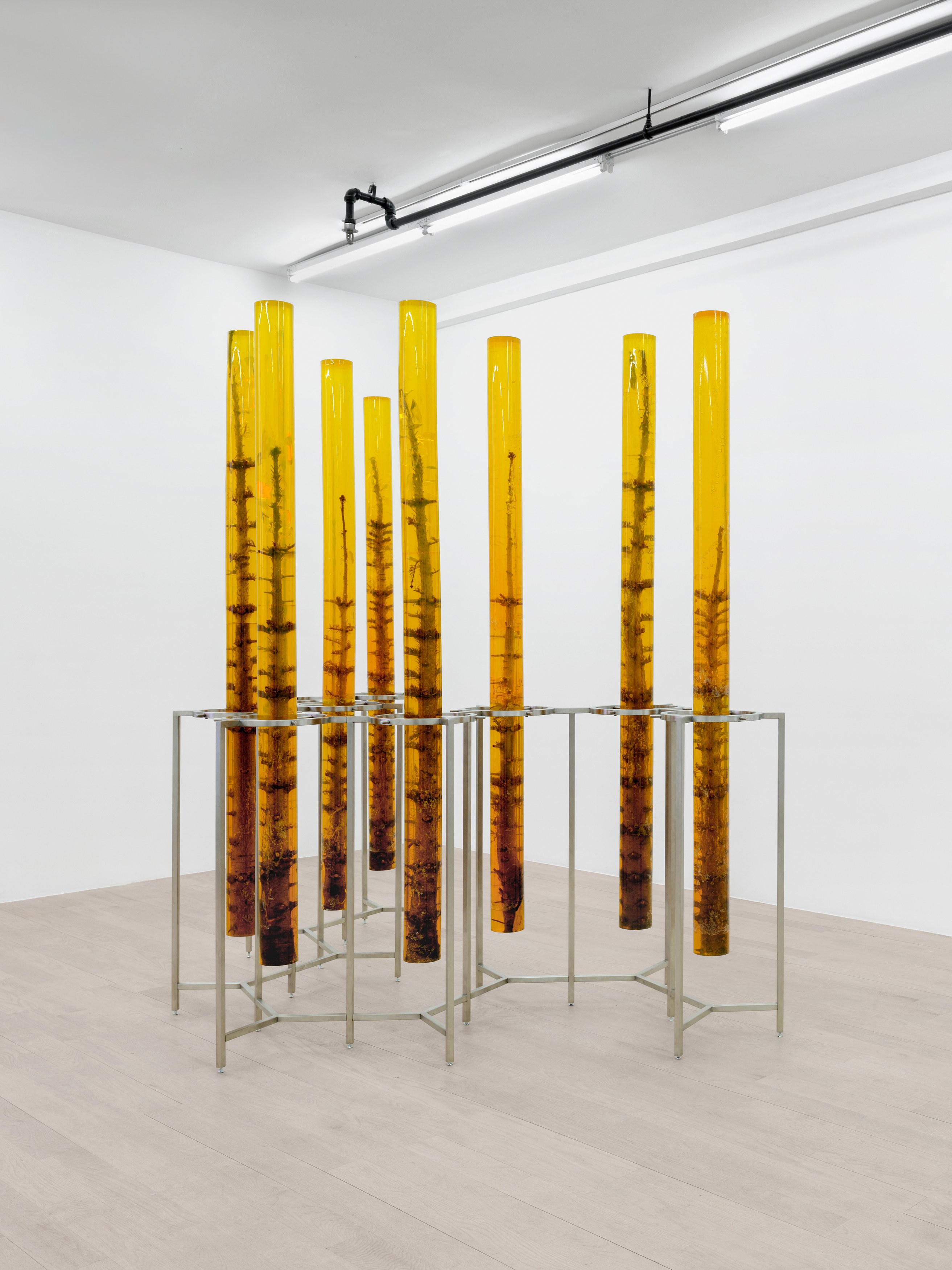
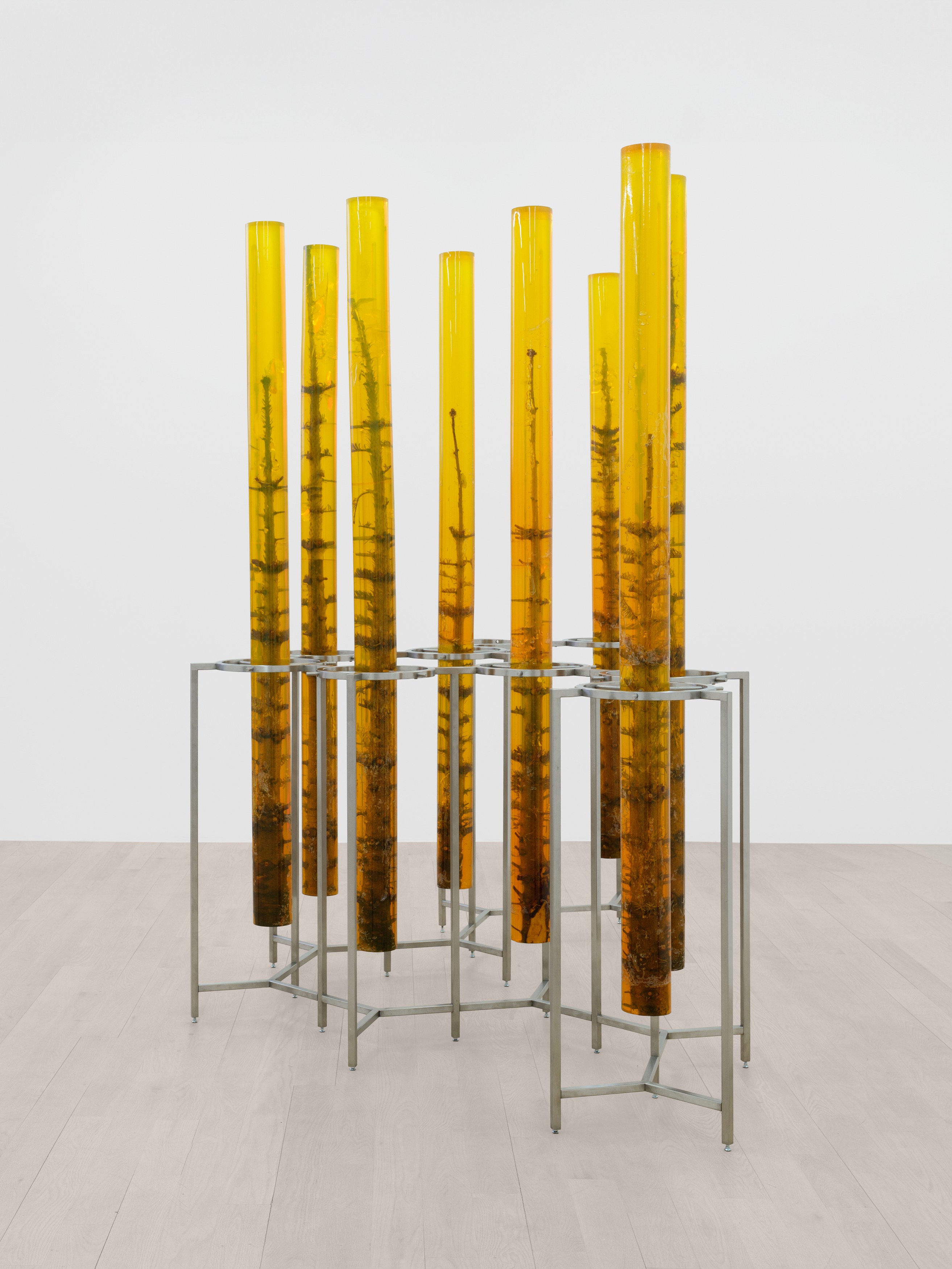
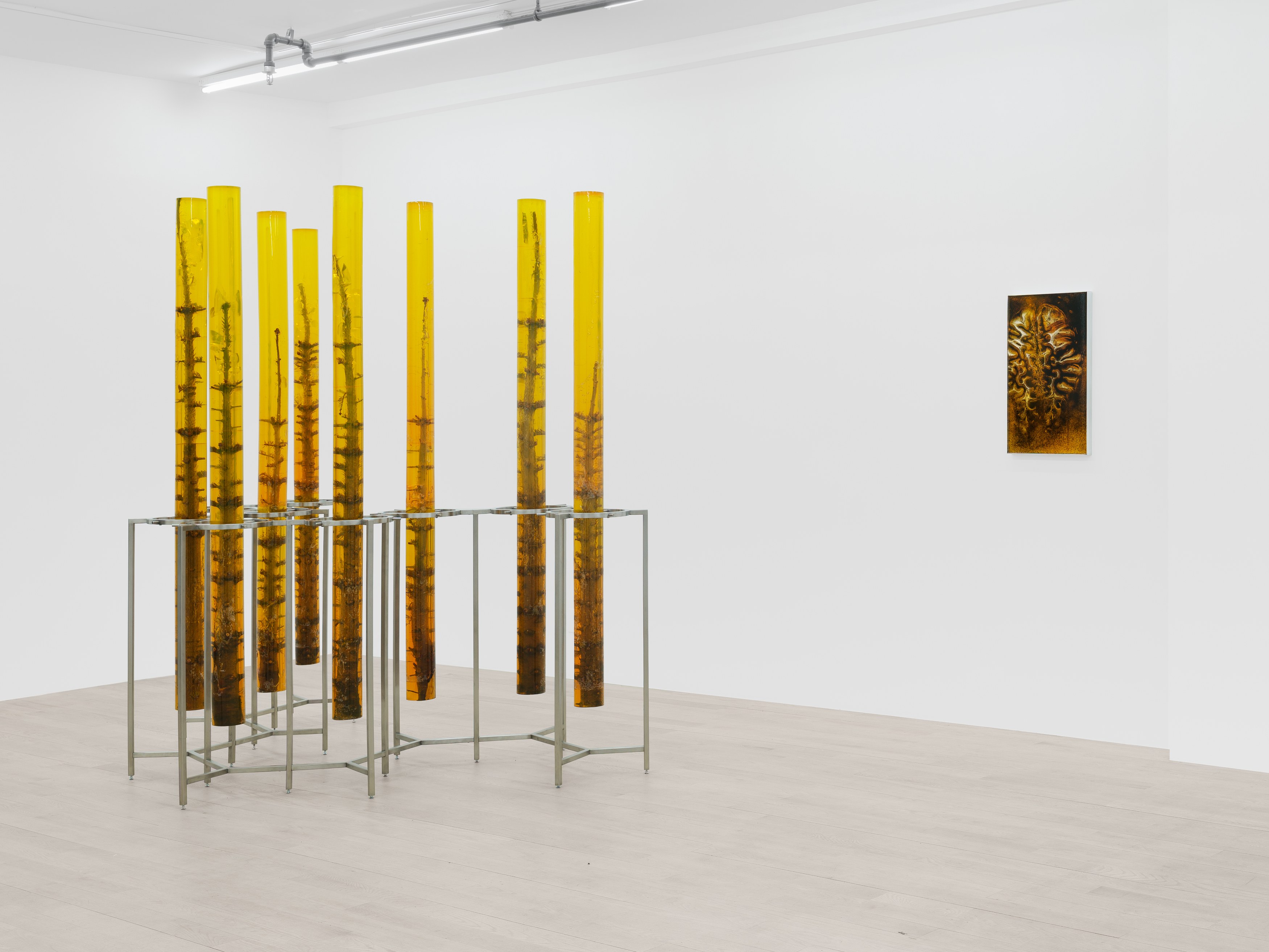
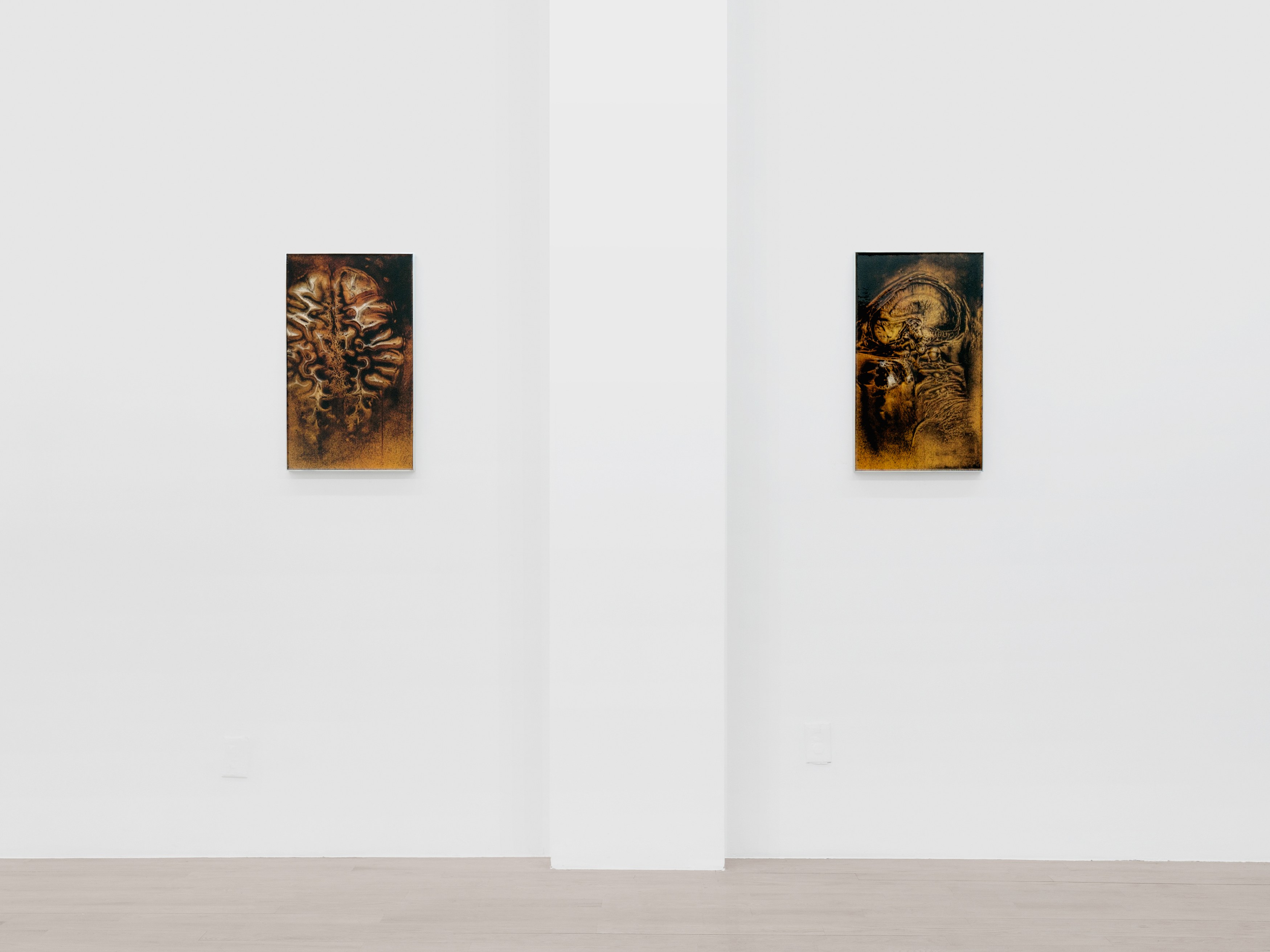
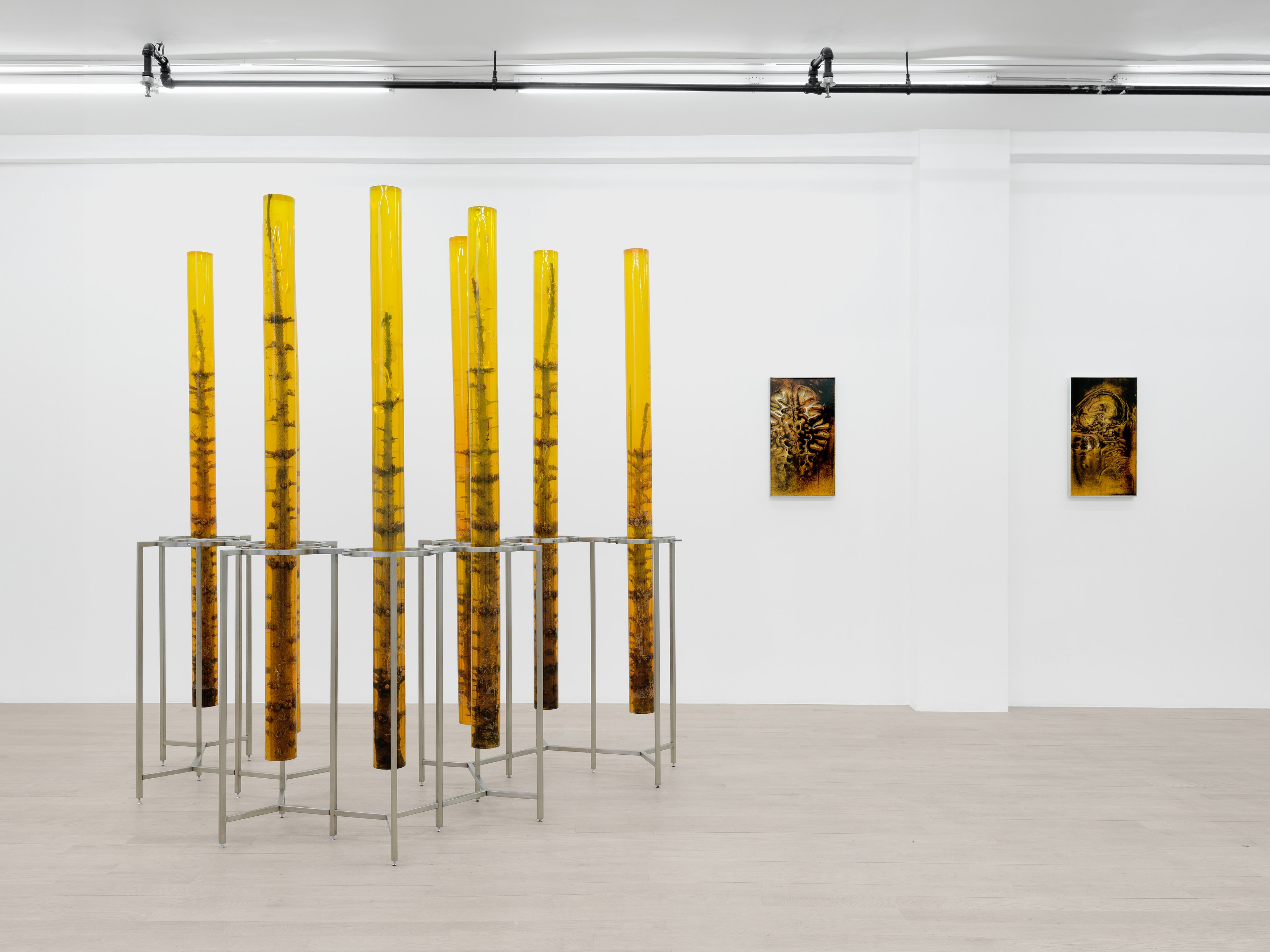
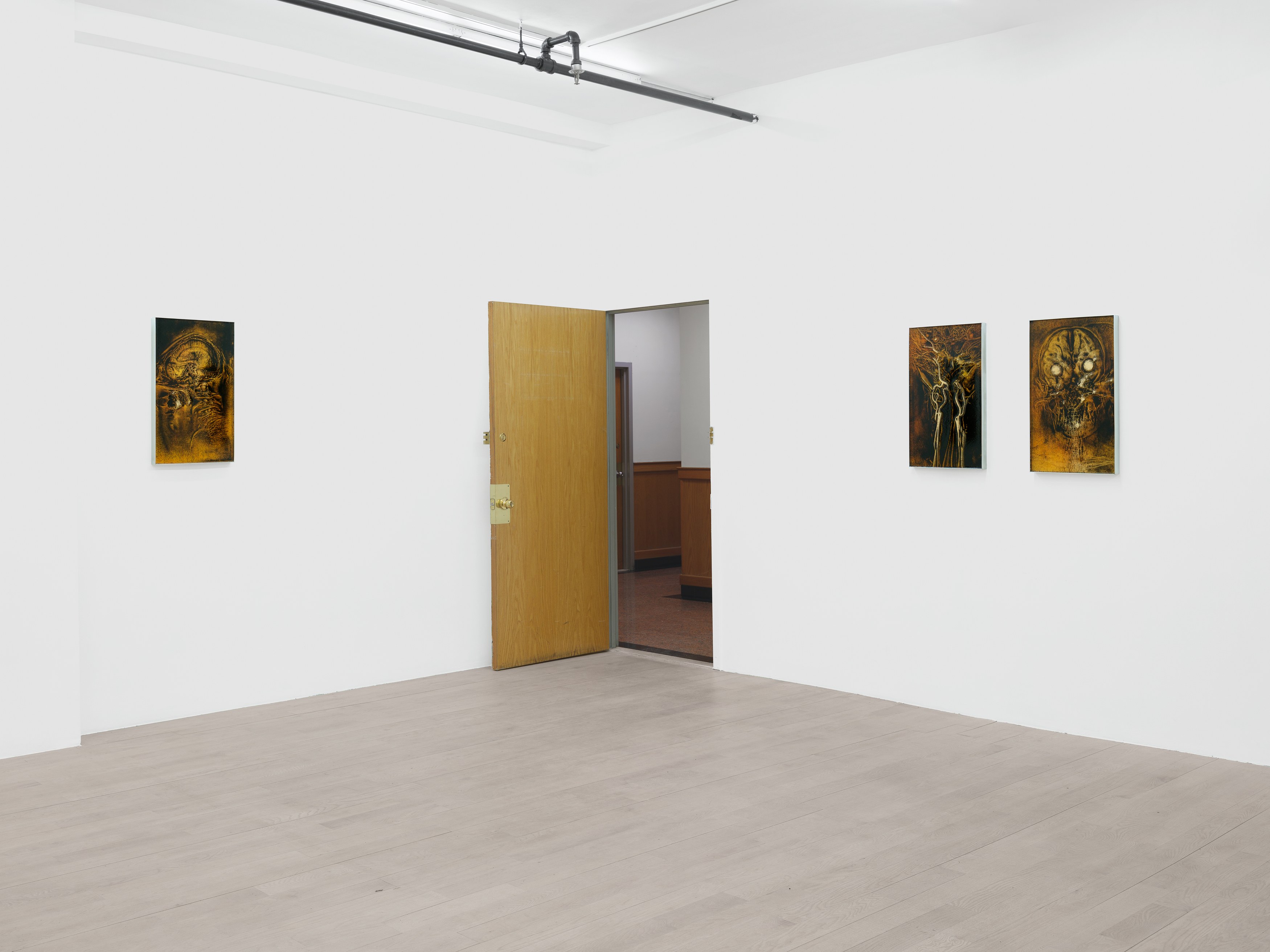
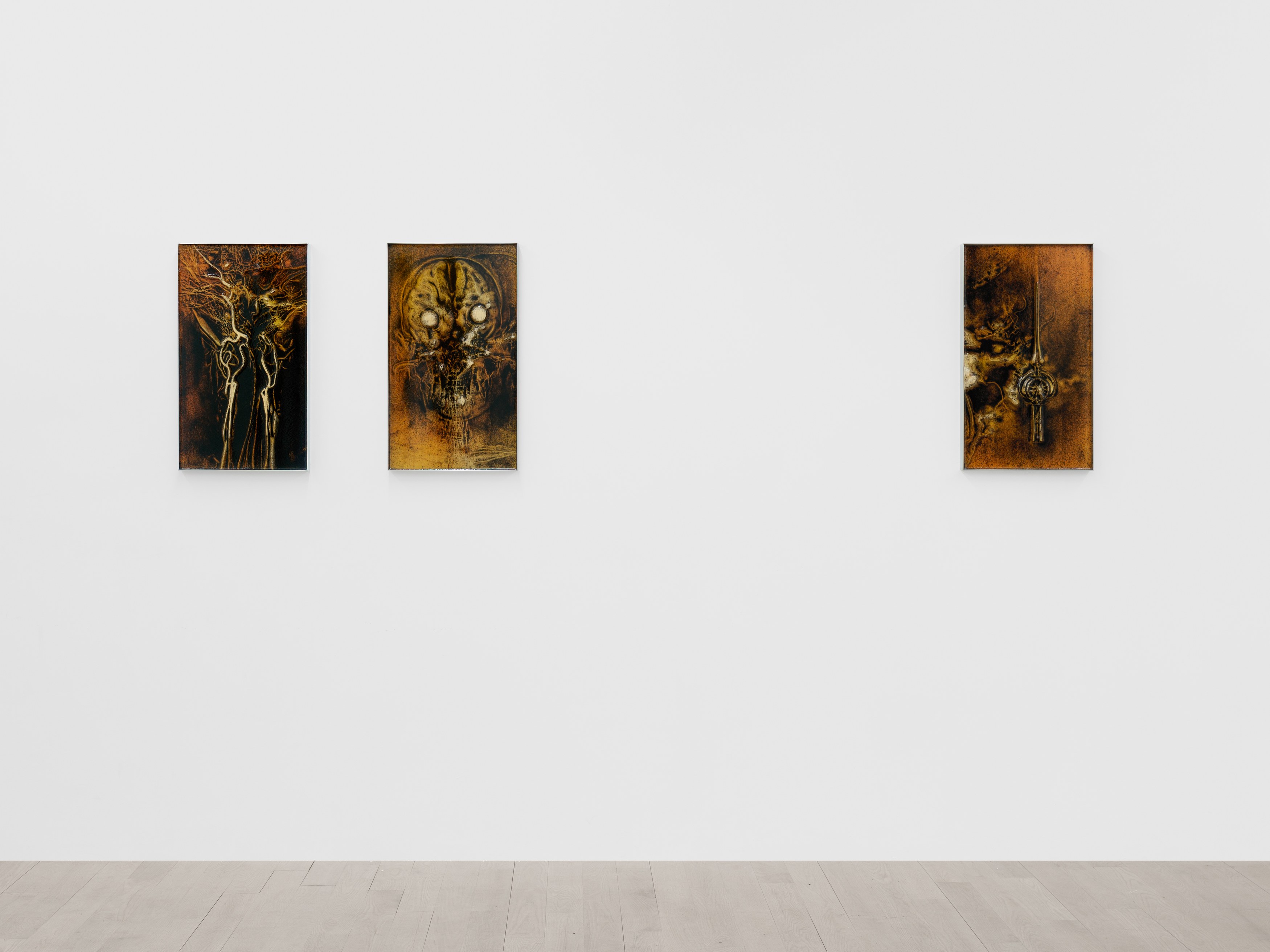
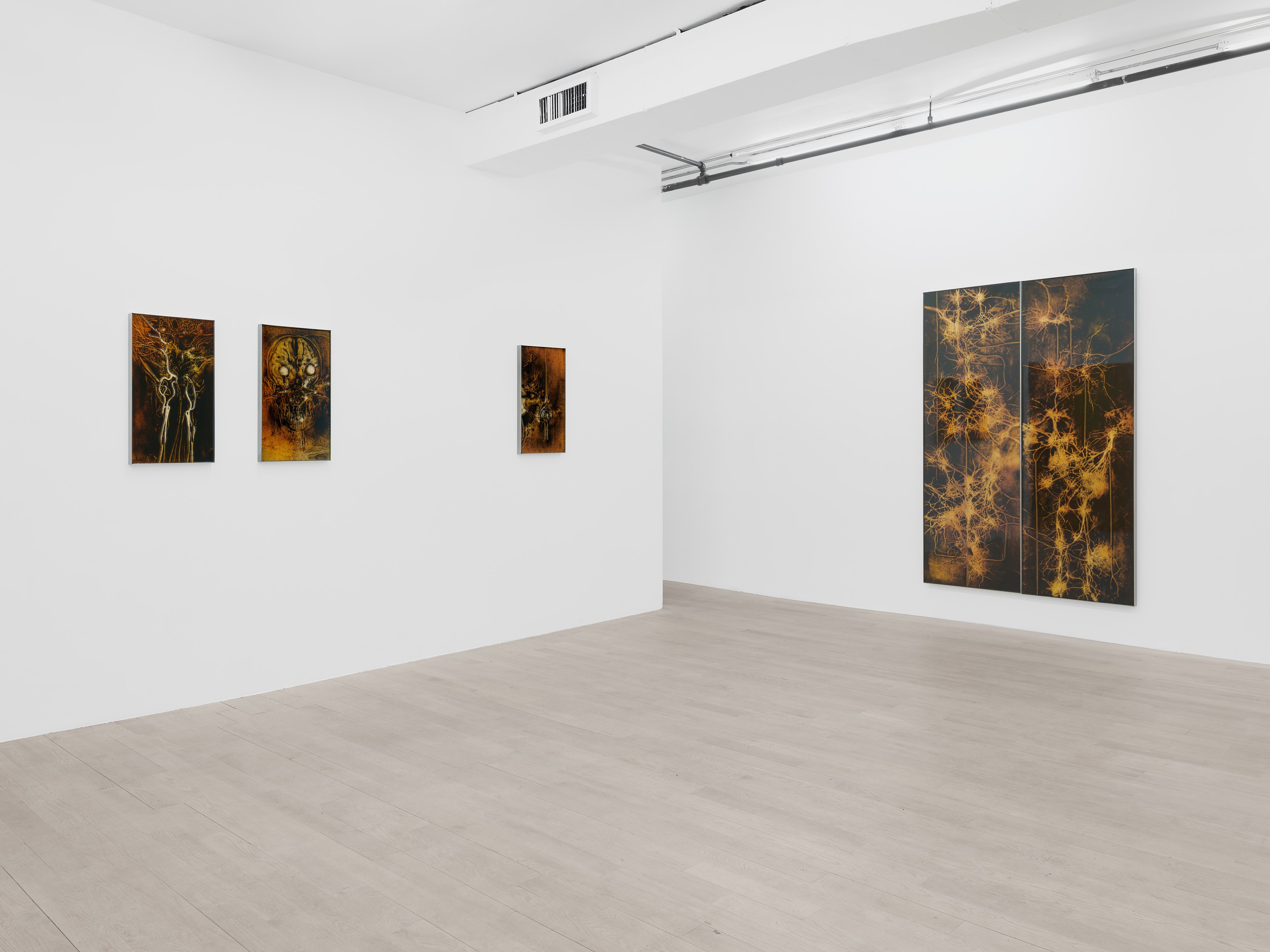
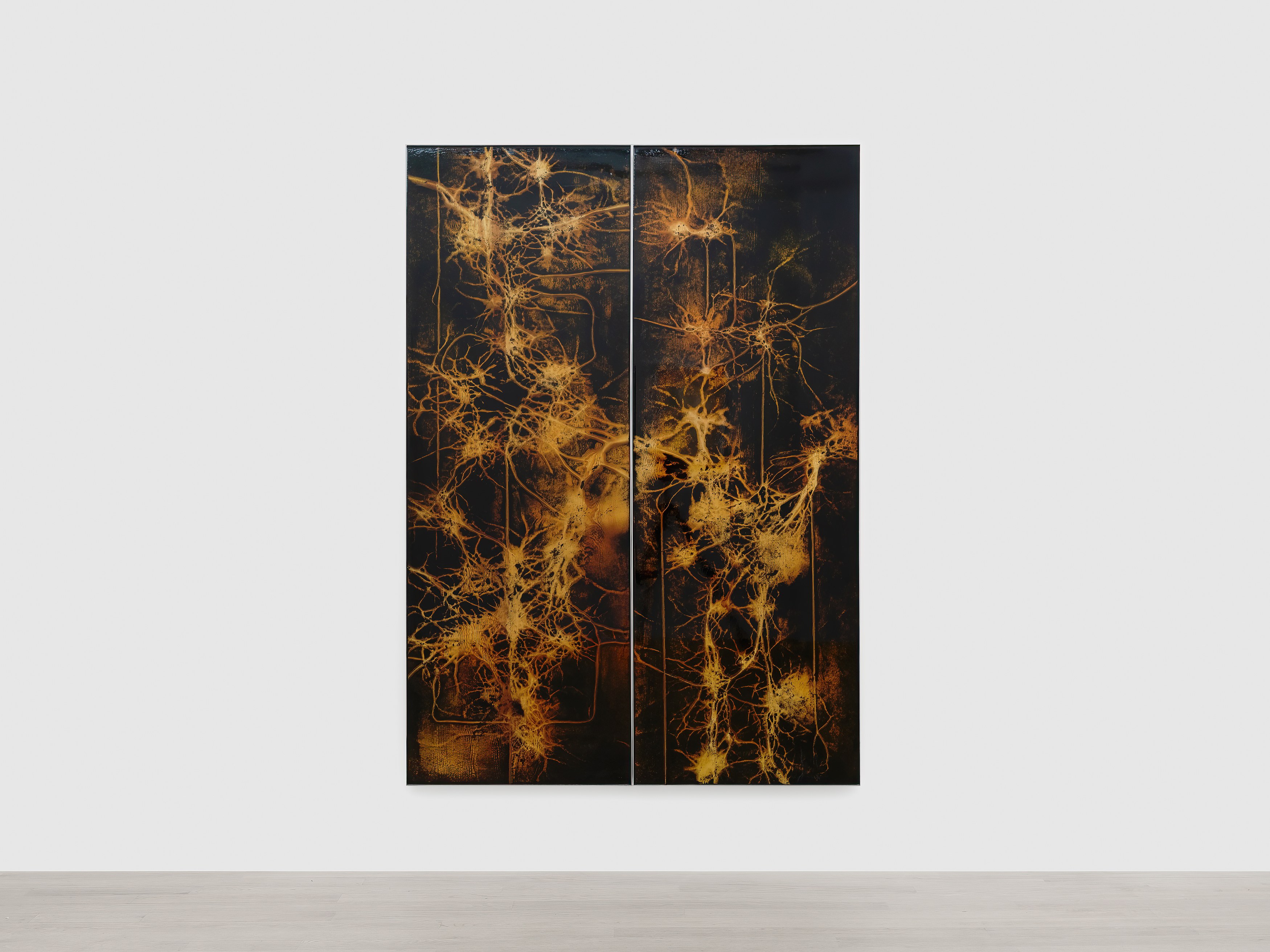
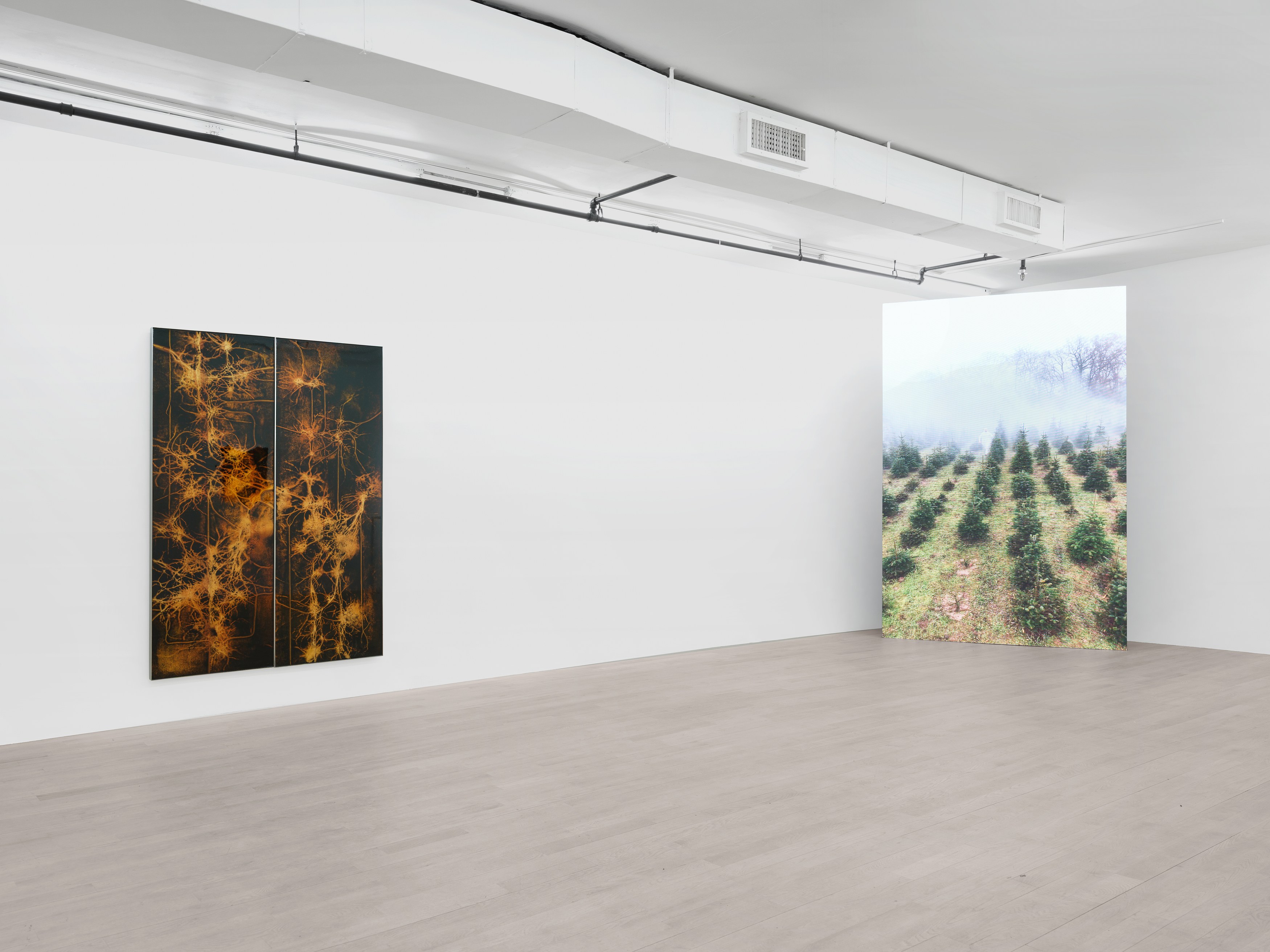
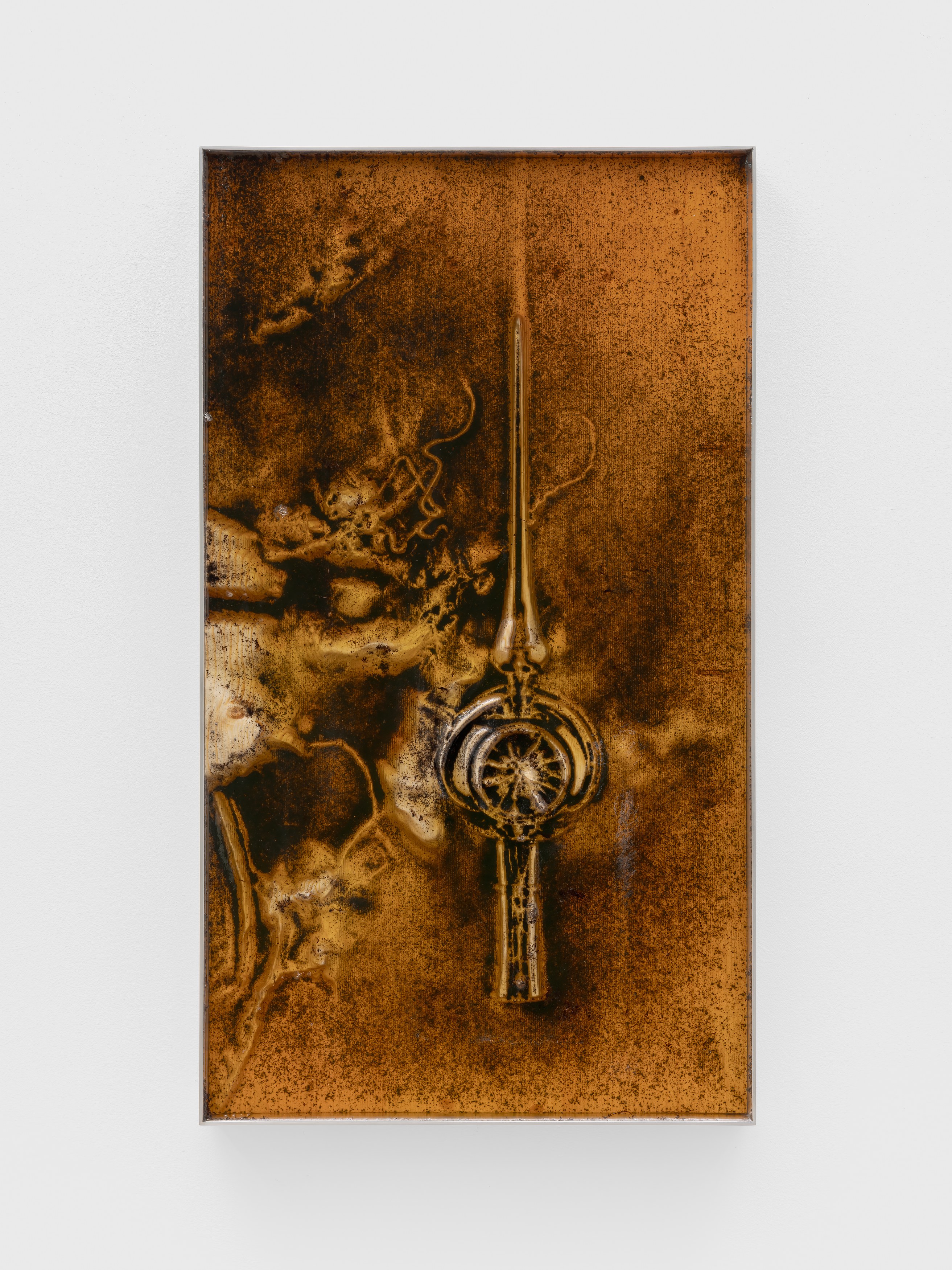
Management is pleased to present Außerkörperliche Erfahrung: Wandering Spirit, Jura Shust’s second solo exhibition with the gallery. The exhibition features a new video and a series of wall-based works made in 2025-2026, as well as two major works commissioned for the 15th Gwangju Biennale in South Korea in 2024. A wandering spirit leaves the vessel of an animistic being, drawn toward a new materialism. Through ritual, it gradually forgets its origin. It spins through a Christmas-tree plantation, repeating loops of growth and extraction, and slips into a parallel world. A breath-filled glass crown is placed atop a century-old spruce. The spirit reappears as a guardian consciousness within a cemetery, where conifers are planted on graves and needles carpet the ground. The cemetery is a database. The root system of the spruce spreads horizontally, close to the surface, and in a gust of wind, it is often the first to fall. After the festival, desecrated trees are collected from the streets. Their branches are cut — a gesture that once carried meaning, now repeated as an automated action. The cuts encrypt a message in a language that has been forgotten. The trunks are entombed in synthetic amber, archiving the entity within. A future ritual becomes the interface that might decrypt the archive. The core video of the exhibition, eponymously titled Außerkörperliche Erfahrung, depicts this disembodied spirit as a digital consciousness. Neither human nor entirely artificial, the neural entity performs a ritual migration, transplanted from a Christmas tree farm to a cemetery in Berlin’s Neukölln. What once belonged to animistic cosmologies now circulates through technological systems, carrying agency without a body. The central sculptural work, Leaving an Annual Growth at the Top: Succession (2024), comprises eight discarded Christmas trees whose branches are cut and whose trunks are encapsulated in resin. The gesture oscillates between care and exploitation, preservation and capture. Drawing on ancient Slavic tree-worship practices, the work references funerary cults and the concept of the sacred grove — a space that indigenous cultures of Northern and Eastern Europe perceived as a temple, a site of connection to a broader cosmology beyond human time. In a parallel register, digital consciousness appears as a hybrid of root system and neural network in the wall-based diptych Untitled (2024). Generated by prompting a large language model to define its own anatomy, the work is machine-sculpted from spruce wood, activated with black soil, and sealed in synthetic resin. Accompanying this piece is a new series of panels, Breath-filled Glass Crown (2025), produced using the same technique. Here, the LLM is trained to generate the architecture of a human mind through MRI images of the artist’s brain, translating neurological activity into speculative structures. Drawing on principles of ancient animism, Außerkörperliche Erfahrung reflects on the convergence of ecology, technology, and spirituality. The exhibition points toward a condition in which technology no longer functions as a tool but emerges as an autonomous agent integrated with natural systems. In this shifting cosmology, distinctions between the organic and the synthetic, the living and the archived, the spirit and the system begin to dissolve. —written in collaboration with a wandering spirit. Jura Shust (b. 1983 in Maladzyechna, Belarus; Based in Berlin) explores the relationship between ritual and escapism. Intrigued by semantic polysemy, informational intoxication, and primal aspiration for an out-of-body experience, he reflects on how the mythological overlaps with the technological. Revising the linear and circular temporalities, Shust juxtaposes an archaic worldview with a futuristic perspective. Exploring the renewal cycle within organic decomposition and artificial synthesis, he is focused on the relationship between the human psyche and the natural world. Based on scientific research, the artist’s practice merges various forms to construct mental landscapes illuminated by ethnoreligious beliefs and flooded by biopolitics. Shust has exhibited at the Museum of Contemporary Art GFZK, Leipzig, Germany; Contemporary Art Museum S.M.A.K., Ghent, Belgium; Museum de Domijnen, Sittard, Netherlands; Mystetskyi Arsenal, Kyiv, Ukraine; Calvert 22 Foundation, London, UK; Badischer Kunstverein, Karlsruhe, Germany; Blaffer Art Museum, Houston, Texas; and Management, New York, among others. He participated in the 14th Baltic Triennial in Vilnius, Lithuania; the 4th Art Encounters Biennial in Timișoara, Romania; and the 15th Gwangju Biennale in South Korea. His works are held in the collections of S.M.A.K. Museum of Contemporary Art in Ghent, Belgium, Muzeum Sztuki in Łódź, Poland, Alain Servais Family Collection, Brussels, Belgium, and numerous private collections. Shust is the founder and curator of the platform saliva.live.
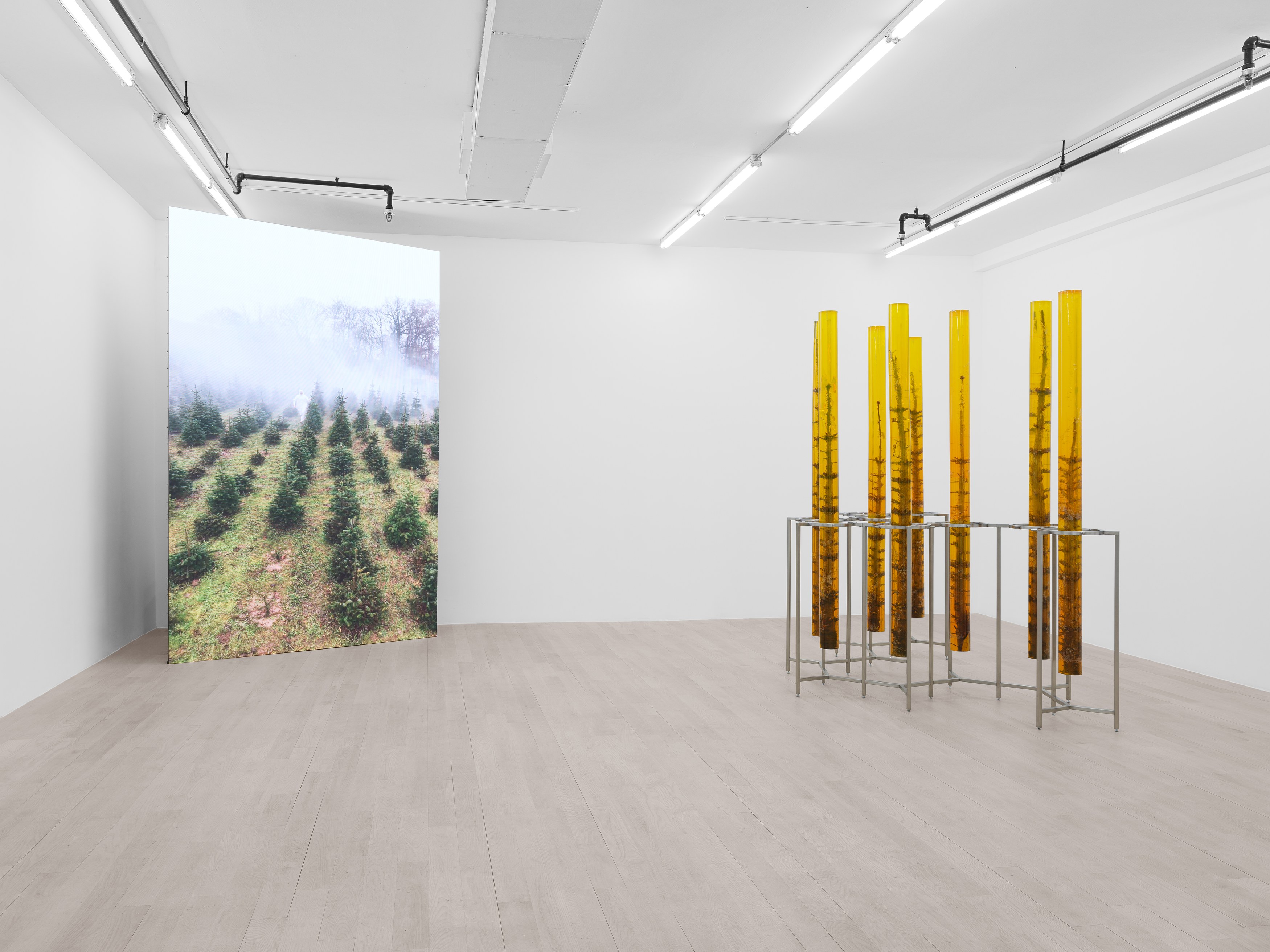
Installation views
At the gallery
Management
Chinatown · 39 East Broadway