
Tribeca, New York
Group Exhibition
Plants, Animals and Sky
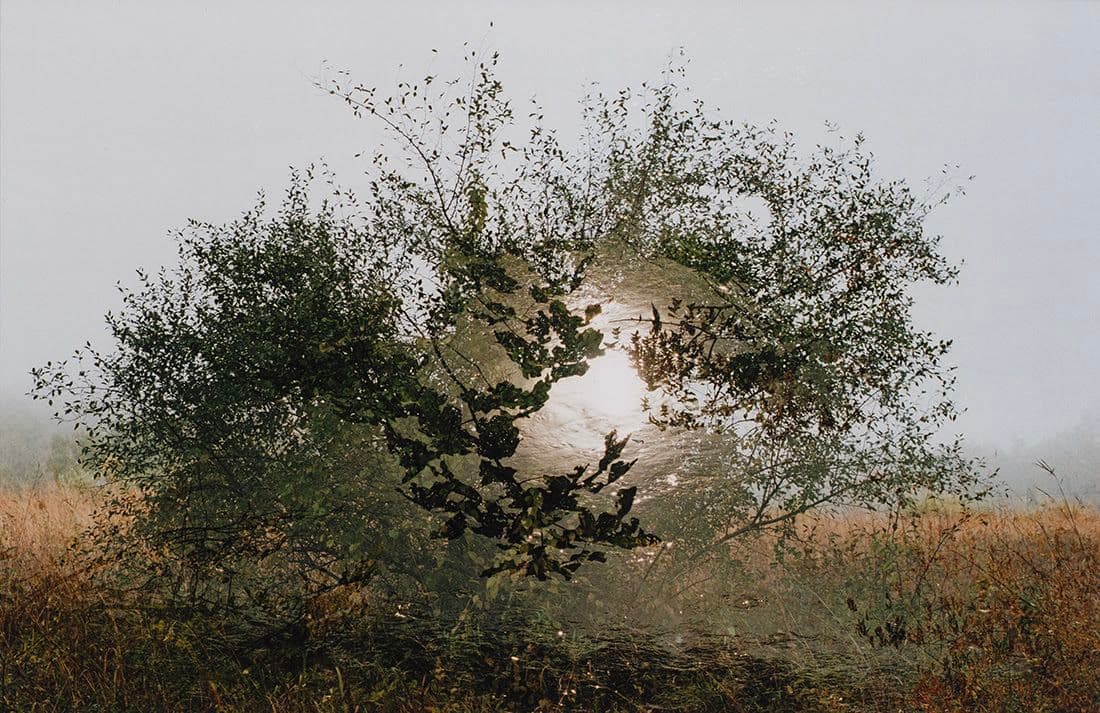
CANADAEllen Altfest, Edward Bannister, Ben Berlow, Minnie Black, Katherine Bernhardt, Katherine Bradford, Dietmar Bussee, Paula Brooks, Ross Caliendo, Leidy Churchman, Noah Cohen, Emily Cole, Mira Dancy, Francesco Igory Deiana, Joe DeNardo, Lois Dodd, Laura Donohue, Robert S. Duncanson, Sam Falls, Deborah Falls, Gerald Ferguson, Mark Fleuridor, Brianne Garcia, Eliot Greenwald, Nora Griffin, Rachel Gross, Domenico Gutknecht, Anders Hamilton, Bendix Harms, Marsden Hartley, Karsen Heagle, Marc Hundley, James Hyde, George Inness, Kahlil Robert Irving, Gerald Jackson, Matthew Day Jackson, Marci Janusz, Sahar Khoury, Elisabeth Kley, Emma Kohlmann, Sandy Litchfield, Lily Ludlow, Lauren Luloff, Diana Mallett, Lee Mary Manning, Emily Manwaring, Tony Matelli, Richard Mayhew, Dean Millien, Ilse Sørensen Murdock, Andrew Nash, Davida Nemeroff, Tessa O'Brien, Scott Reeder, Tyson Reeder, Ken D. Resseger, Joe Roberts, Joan Snyder, Mamali Shafahi, Claire Sherman, Eva Sturm-Gross, Mary Temple, Kyoshi Tsuchia, Scott Treleaven, Tabboo!, Nina de Creeft Ward, Trevor Warren, Gerald Wartofsky, Sterling Wells, Anke Weyer, Wallace Whitney, Jane Wilson, Beatriz Williams, Jimmy Wright When talking about her upbringing, Irish author Maggie O’Farrell recalls her father reading to her every night. At the time, she wished he would slip in Pipi Longstockings or a Moomin book, but he only read Irish Folktales. Later, she appreciated that these stories heavily influenced her writing. "In Irish mythology, the land itself is like a character. It has opinions. It can change the direction of its human compatriots. Trees can speak.” In the folktales and in her writing, land is not a metaphor for a conscious being — it IS the conscious being. Animal communication is not anthropomorphizing, it’s acknowledging the depth of animal experience, consciousness and spirit. Similarly, for the Luminists, the landscapes they painted in the late 1800’s were not mere metaphors for the spiritual world. Instead, they were aiming to depict the actual spirit existing in the landscape, with the light and shadow falling on the earth. The Luminist’s goal of conveying the spiritual world is alive in Dean Millien’s work. His small studio is packed full with a large roll of foil, piles of tinfoil trays, and sculptures of animals everywhere in various states of completion. It quickly becomes apparent that Dean is not just making animal bodies. Somehow, almost unbelievably, he is sculpting their spirits. Jimmy Wright began painting sunflowers when caring for his dying lover in the late 1980’s, as a way to regulate his nervous system and to care for himself through the trauma. His first painting of a dying sunflower was so large and detailed that it took him three years to complete, working in what small amounts of time he had. He finished the painting as his lover died. He has talked about taking on the romanticism of “flower painting” and subverting assumptions that painting beautiful things is a vacuous distraction from more serious subjects. In Jason Farago’s recent writing on the Richter landscape painting show at David Zwirner, he states, “There were painters, not so long ago, who could depict a rolling field without having to think about blood-and-soil nationalism, or middle-class mass tourism, or average temperatures two degrees warmer than before the Industrial Revolution.” But for painters in the 1960’s and 70’s, “Landscape painting just didn’t enjoy that guiltlessness anymore, not in the time and place where Richter began painting, and certainly not now.” Sam Falls talks about the theory of manifest destiny (America’s idea that it was ordained to conquer the continent) as an unspoken undercurrent in early Colonial American landscape painting and even in much of 20th-century land art. Falls has no interest in conquering. He allows organic elements (sun, wind, and rain) to help build his paintings. Plant material is laid on dyed canvas and left to bleach in the sun, sometimes for almost a year. When he visits his mother in Vermont, Falls lets rain set the pigment he sprinkles over arranged flowers or leaves. The results are images reflecting the ephemeral but resilient nature of growing things. How do we acknowledge art that celebrates the miracle of interspecies life, growth and death while understanding that the art was made on brutally stolen land? This group of artworks and books examines and celebrates the natural world. Our future is tied to recognizing that there is no separation between us and “nature." In a time when corporations have more rights than mountains and rivers, could curiosity, appreciation and an understanding of the natural world be a part of our preparation for the revolution or the apocalypse — whichever comes first? This show, arranged with furniture and books about nature, offers some comfort and hopefully some time and space for reflection.