
Chelsea, New York
Reinhard Mucha
Reinhard Mucha
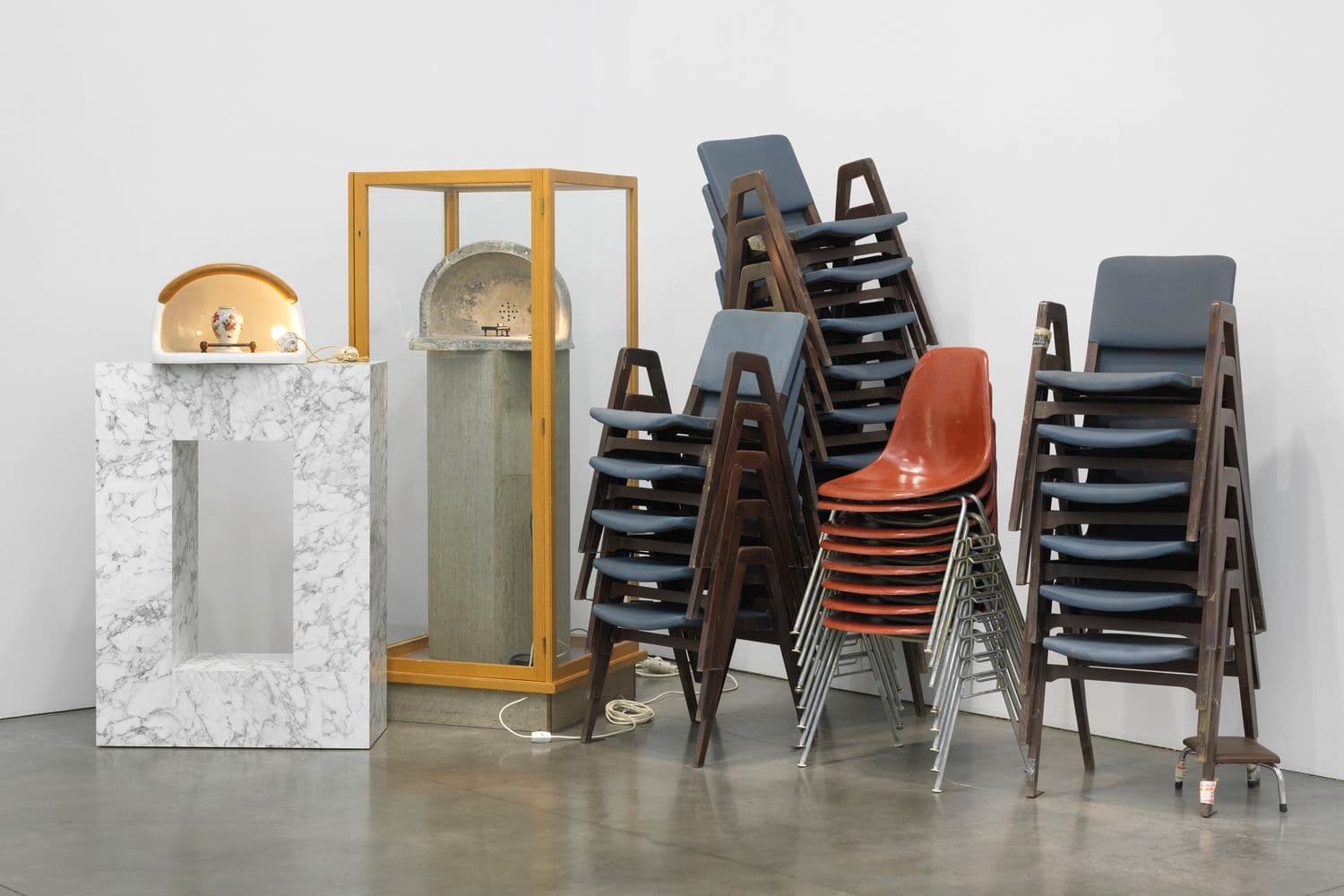
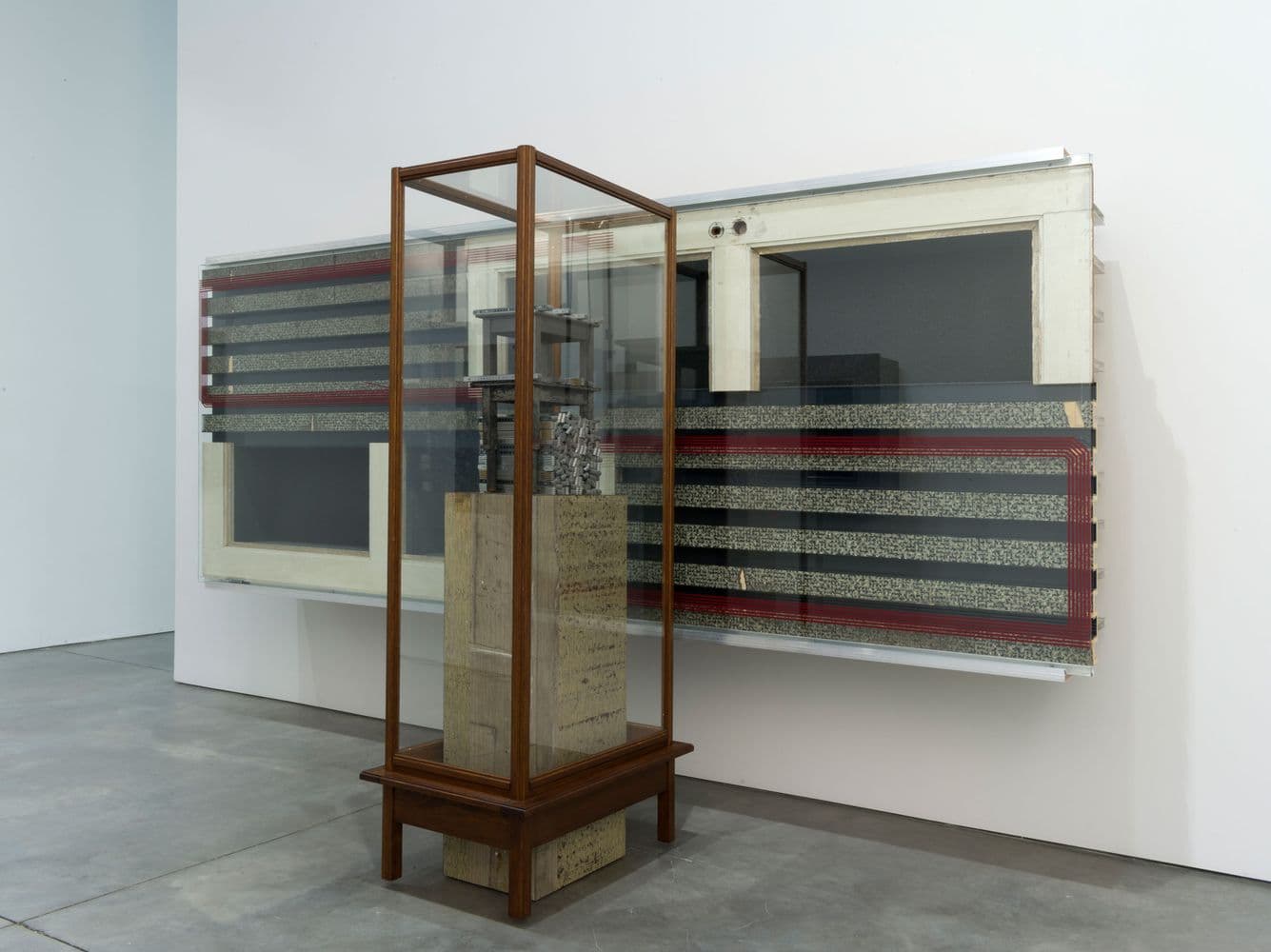
Luhring AugustineLuhring Augustine is pleased to present an exhibition of iconic works by Reinhard Mucha, selected from throughout the artist’s career. The show marks the artist’s fifth solo exhibition with the gallery, and his first major presentation since his retrospective “Der Mucha: An Initial Suspicion” at the Kunstsammlung Nordrhein-Westfalen in Düsseldorf, Germany (2022-2023). Throughout Mucha’s artistic production of the past five decades run numerous themes that include: collective identity, memory, nationhood, the psychology of architecture and institutional power, the museum as the locus for the creation of history, and the merging of industrial, historical, and political landscapes. Mucha’s complex work penetrates several dualities: connectivity and isolation, temporality and permanence, intimate narrative and national history, progress and stasis. For this exhibition, several of Mucha's emblematic vitrine works along with the free-standing sculpture, Baden-Baden / Standard II, will be presented in a site-specific installation devised by the artist, which both acknowledges his own history with the gallery’s exhibition space and highlights the rigorous, cohesive nature of his practice. In an insightful text commissioned by the gallery for the exhibition—composed in the form of a letter to the artist—Washington DC-based curator Yuri Stone, writes: "I’ve always thought of your objects as records of time in and of themselves. Your material palette is distinctly of a time before now. A time of solid wood doors, lacquer, lead paint, and fluorescent tube lights. I sense a preoccupation in your work with the things and systems we inherit: railways, bureaucracies, museum display cases, industrial production lines. You seem to suggest that modernity isn’t something we can escape or transcend—it is the very architecture in which we live and through which we remember. And yet, you transform that architecture—not by rejecting it, but by exposing it. And in this modernity we grapple with capitalism, war, joy, innovation, regression, and one another. We grapple with the uneasy realization that the very structures built to organize and contain our lives—our histories, our labor, our sense of order—also confine us. What you reveal is not a nostalgia for a lost authenticity, but a deep awareness that memory itself has become infrastructural: archived in vitrines, routed through railways, filed in drawers. The human and the mechanical, the personal and the institutional, the past and the present—these collapse into one another and often contradict each other." —Yuri Stone